Tire Sealant and Inflator Kit
 WARNING: Do not use the inflator kit on run flat tires. This could cause loss of vehicle control. WARNING: Depending on the type and extent of tire damage, some tires can only be partially sealed or not sealed at all. Loss of tire pressure can affect vehicle handling, leading to loss of vehicle control. WARNING: Do not use the kit on a previously damaged tire, for example when it has been driven under inflated. This could cause loss of vehicle control, personal injury or death. WARNING: Do not use the inflator kit on run flat tires. This could cause loss of vehicle control. WARNING: Depending on the type and extent of tire damage, some tires can only be partially sealed or not sealed at all. Loss of tire pressure can affect vehicle handling, leading to loss of vehicle control. WARNING: Do not use the kit on a previously damaged tire, for example when it has been driven under inflated. This could cause loss of vehicle control, personal injury or death. |
If your vehicle does not have a spare wheel it has a tire sealant and inflator kit. The kit is in the luggage compartment. Only use the kit supplied with your vehicle.
Note: The kit can only temporarily repair one tire puncture with a maximum puncture size of up to 6 mm (0.24 in).
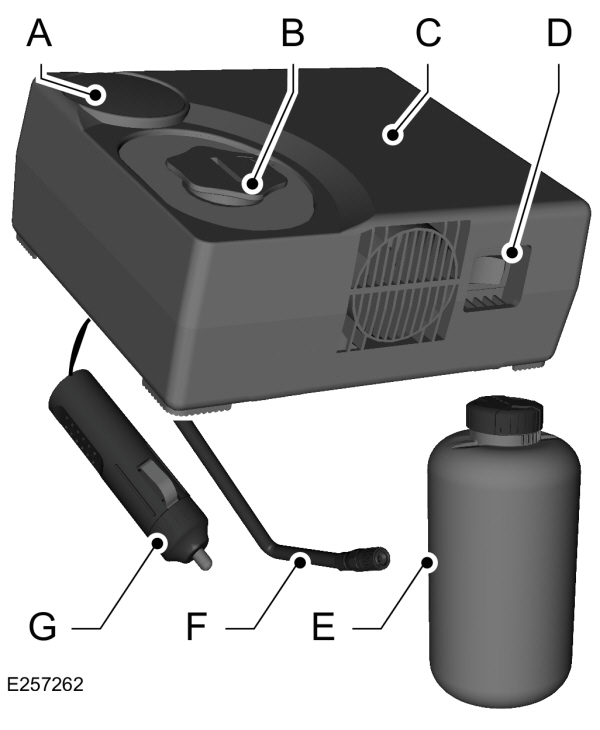
A Pressure Gauge. Pressure Gauge.B Sealant bottle access cap.C Warning label.D Power switch.E Sealant bottle.F Tire inflation pipe.G 12 volt DC power point connector.
Note: Make sure you regularly check the expiry date on the sealant bottle. |

- Gradually reduce the vehicle speed and stop your vehicle as soon as it is safe to do so.
- Apply the parking brake and switch the ignition off.
- Check for a punctured tire.
Note: Do not remove objects, for example nails or screws from a punctured tire.
Using the Tire Sealant and Inflator Kit
| WARNING: Check the sidewall of the tire prior to inflation. If there are any cracks, bumps or similar damage, do not attempt to inflate the tire. This could cause personal injury. WARNING: Watch the sidewall of the tire when inflating. If any cracks, bumps or similar damage appears, switch the compressor off and let the air out by means of the pressure relief valve. Do not continue driving with this tire. This could cause loss of vehicle control. WARNING: Do not stand directly beside the tire while the compressor is operating. This could cause personal injury if the tire bursts. WARNING: Do not leave the kit unattended when it is in use. Failure to follow this instruction could result in personal injury or death. WARNING: Do not keep the compressor operating for more than 10 minutes. This could cause the compressor to malfunction causing serious personal injury. |
To temporarily repair a punctured tire, do the following:
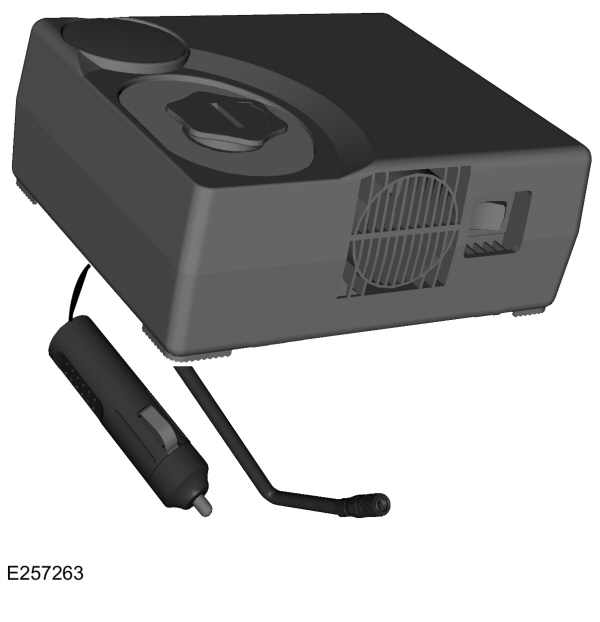
- Release the tire inflation pipe and the 12 volt DC power point connector from the underside of the compressor.
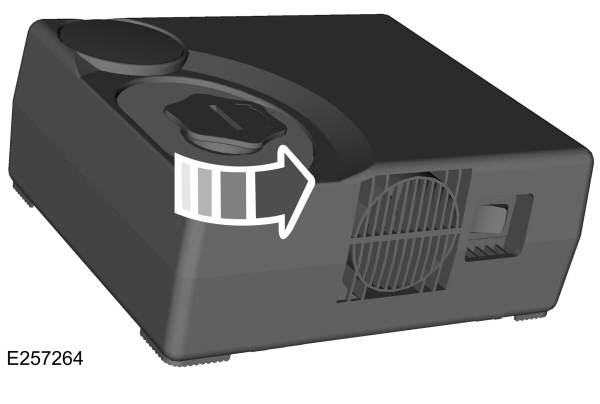
- Turn the sealant bottle access cap counterclockwise and remove it.
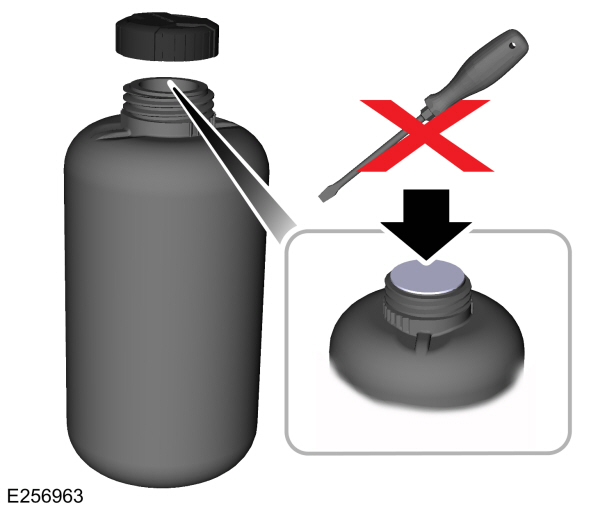
- Remove the sealant bottle cap. Do not pierce or remove the seal.
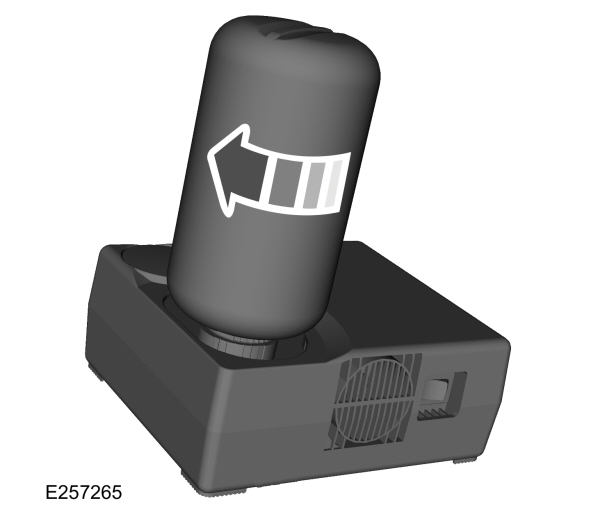
- Attach the sealant bottle to the compressor. Turn the sealant bottle clockwise until you feel a strong resistance.
Note: Attaching the sealant bottle to the compressor pierces the seal. Do not loosen the bottle as sealant could escape.
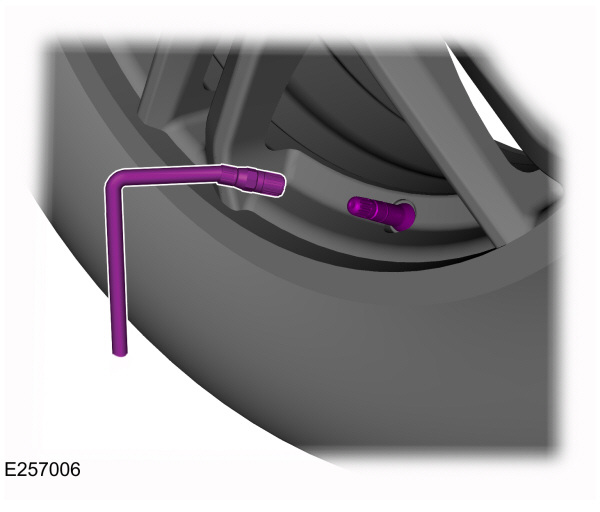
- Remove the tire valve dust cap and attach the tire inflation pipe.
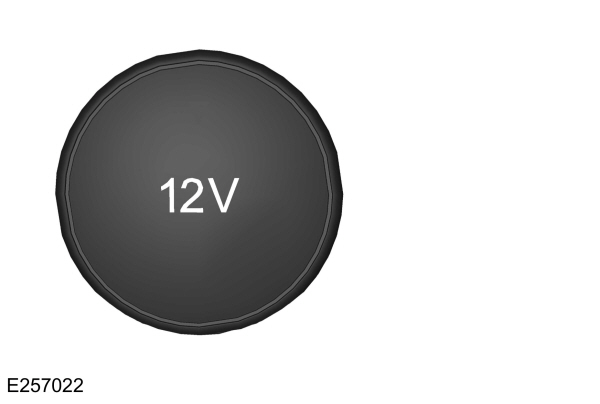
- Plug the 12 volt DC power point connector into the 12 volt DC socket. See Auxiliary Power Points.
- Start the engine.
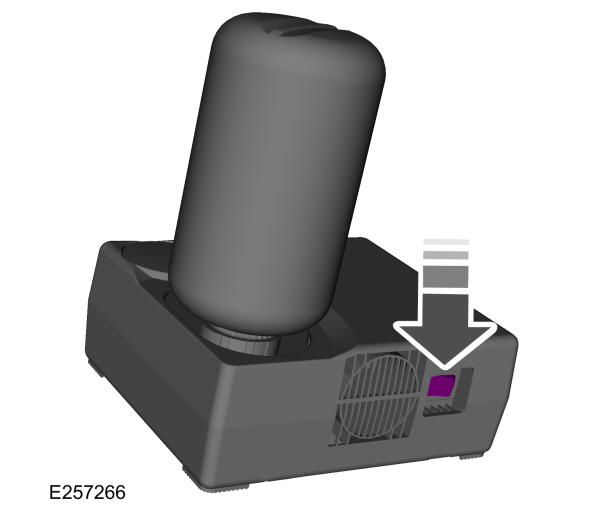
- Switch the compressor on.
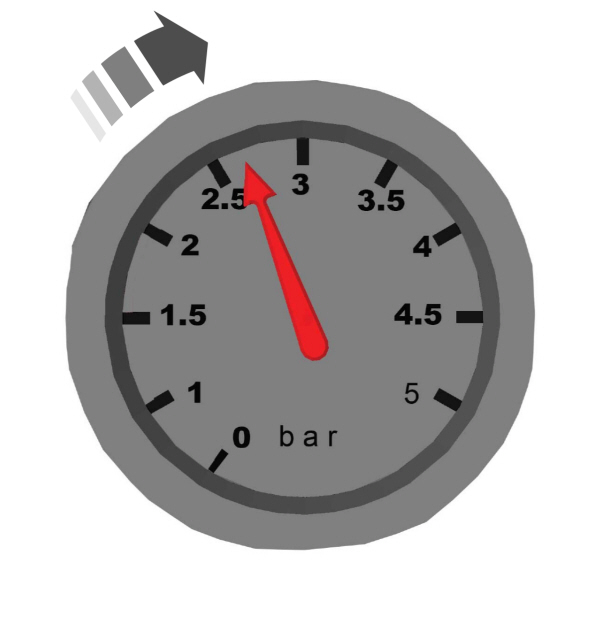
- Inflate the tire to between 2–3 bar (29–44 psi).
Note: If the tire pressure does not reach 1.8 bar (26 psi) within 10 minutes, the tire could be damaged beyond a temporary repair. Have your vehicle immediately checked. Do not drive your vehicle.
- When the tire reaches the recommended tire pressure of between 2–3 bar (29–44 psi), switch the compressor and the ignition off.
- Disconnect the tire inflation pipe and the 12 volt DC power point connector.
Note: Do not remove the sealant bottle from the compressor.
- Reinstall the tire valve dust cap.
- Place the warning label on the steering wheel and correctly stow the kit.
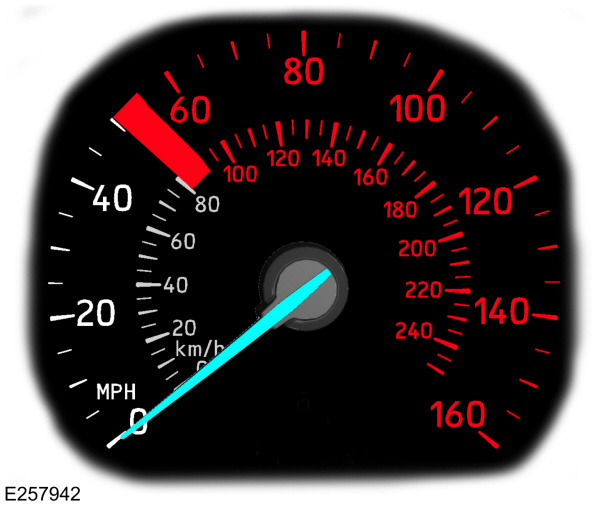
- Immediately drive your vehicle for 3–10 km (2–6 mi). Do not exceed 80 km/h (50 mph).
- After driving between 3–10 km (2–6 mi), stop your vehicle and recheck the tire pressure. See Tire Pressures - Excluding: Active/ST.
Note: If the tire pressure has dropped to 1.8 bar (26 psi) or below, the tire could be damaged beyond a temporary repair. Have your vehicle immediately checked. Do not drive your vehicle.
Note: If the tire pressure has dropped but is still above 1.8 bar (26 psi), use the kit to inflate the tire again.
After Using the Tire Sealant and Inflator Kit
| WARNING: If you experience heavy vibrations, unsteady steering behavior or noises while driving, reduce your speed gradually and stop your vehicle as soon as it is safe to do so. Recheck the tire and its pressure. If the tire pressure is less than 1.3 bar (18.9 psi) or if there are any cracks, bumps or similar damage visible, do not continue driving with this tire. This could cause loss of vehicle control. |
The kit only provides temporary mobility. Regulations concerning tire repair or replacement after using the kit could differ from country to country. We recommend you consult a tire specialist.
After using the kit:
- Do not drive your vehicle more than 200 km (124 mi) before repairing or replacing the punctured tire.
- Inform all other users of your vehicle that a tire was sealed using the kit. Make them aware of the special driving conditions that must be observed.
- Regularly check the tire pressure until the sealed tire is repaired or replaced by a tire specialist. Before the tire is removed from the rim, you must inform the tire specialist that the tire contains sealant.
- Take the kit to an authorized dealer to have the sealant bottle and the tire inflation pipe replaced.
Download Manual