Recommended Shift Speeds
Recommended Shift Speeds
For best fuel efficiency when driving your vehicle, shift to the next gear by 3000 RPM.
Shifting at a higher RPM such as 3000-6000 RPM can increase the performance capabilities of the vehicle. However, higher engine and transmission speeds can increase wear and reduce fuel economy.
When downshifting your vehicle, always shift at the lowest engine RPM possible to match your driving conditions. This is usually under 2000 RPM for all forward gears, except for downshifting into the crawler (C) gear which you should do below 1500 RPM. See Manual Transmission Precautions.
Note: Always fully depress the clutch pedal between gear shifts.
Checking the Manual Transmission Fluid Level
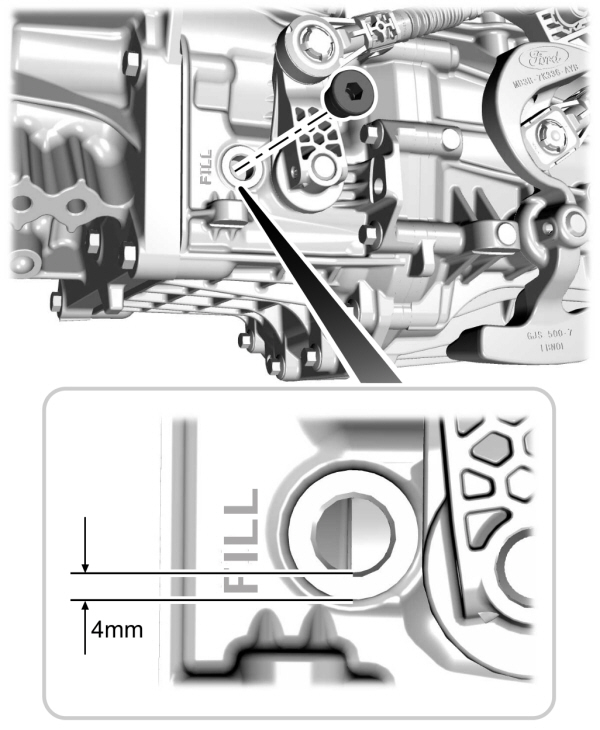
Transmission fill level is 4 mm (0.16 in) from oil fill plug.
Checking the Clutch Fluid Level
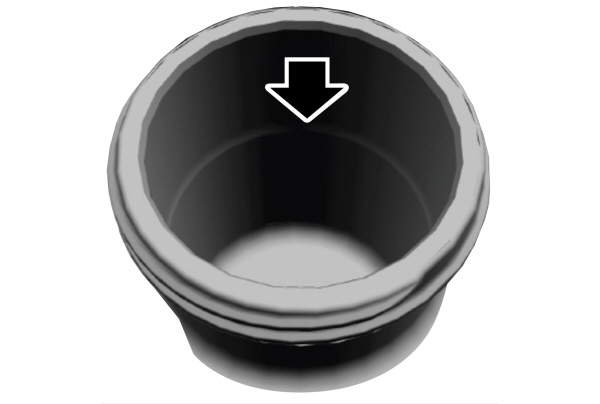
- Check the system for any visual leaks before continuing.
- Make sure the clutch pedal is in the most upward position.
- Remove the cap and diaphragm and inspect the fluid level. To avoid contamination, make sure the reservoir cap remains in place and fully tightened unless you are checking the fluid level.
- Reinstall the reservoir cap and diaphragm.
Only use fluid that meets our specifications. See Capacities and Specifications.
Note: A fluid level on the step line in the reservoir is within the normal operating range and there is no need to add fluid. A fluid level not in the normal operating range could compromise the performance of the system. Have your vehicle checked immediately.
Manual Transmission Fluid Capacity and Specification
See Manual Transmission Fluid Capacity and Specification.
Clutch Fluid Capacity and Specification
See Capacities and Specifications.
Download Manual