Fuses
Fuse block location
To prevent damage to the electrical system due to shortcircuiting or overloading, each individual circuit is provided with a fuse.
There are fuse blocks in the passenger compartment and in the engine compartment.
Passenger compartment (LHD vehicles)
The fuse blocks in the passenger compartment are located behind the fuse lid in front of the driver’s seat at the position shown in the illustration.
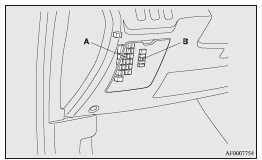
A- Main fuse block
B- Sub fuse block
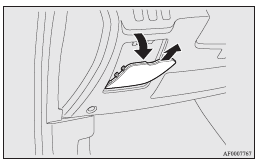
1. Open the fuse lid and pull to remove it.
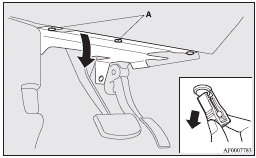
2. On vehicles with bottom cover, use the puller to loosen the 2 clips (A) and push down the bottom cover. The puller is in the fuse box in the engine compartment. Refer to “Fuse replacement”.
 Warning
► On vehicles with driver’s knee airbag, when changing fuses, do not damage the driver’s knee airbag harness or accidentally strike the airbag area with hard objects.
Improper work methods could result in an accidental deployment of the driver’s knee airbag or could turn the driver’s knee airbag inoperable. Either of these situations could result in serious injury or death.
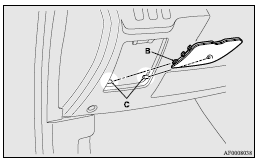
3. To put back the fuse lid, line up the fuse lid hook (B) with the clamp (C) on the instrument panel and push the lid back in.
Passenger compartment (RHD vehicles)
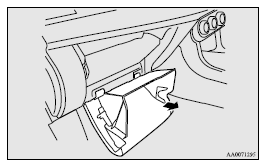
The fuse boxes in the passenger compartment are located behind the glove box at the position shown in the illustration.
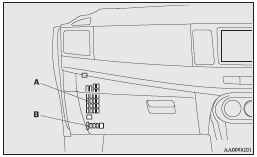
A- Main fuse block
B- Sub fuse block
1. Open the glove box.
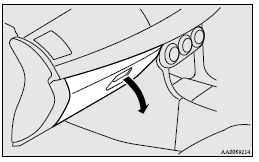
2. Move the rod (A) on the left side of the glove box to the left side of the box.
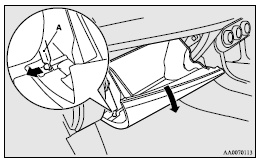
3. While pressing the side of the glove box, unhook the left and right hooks (B) and lower the glove box.
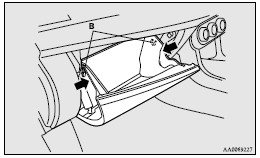
4. Remove the glove box fastener, and then remove the glove box.
Engine compartment
In the engine compartment, the fuse block is located as shown in the illustration.
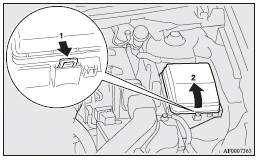
1- Push the knob.
2- Remove the cover.
Fuse load capacity
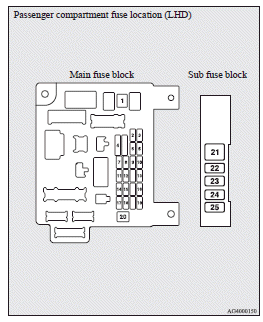
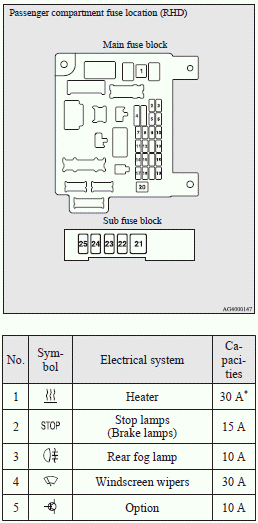
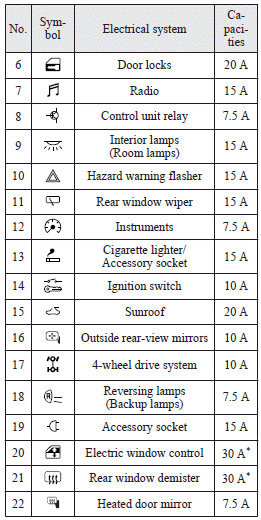
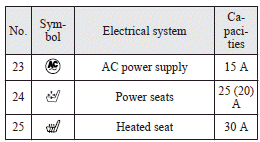
The fuse capacity and the names of electrical systems protected by the fuses are indicated on the inside of the fuse lid (LHD vehicles), the inside of the glove box (RHD vehicles) and inside of the fuse block cover (inside of the engine compartment).
Passenger compartment fuse location table
 Note
Note
► Spare fuses are provided on the lid of the fuse block in the engine compartment. Always use a fuse of the same capacity for replacement.
: Fusible link
► Some fuses may not be installed on your vehicle, depending on the vehicle model or specifications.
► The table above shows the main equipment corresponding to each fuse.
Engine compartment fuse location table
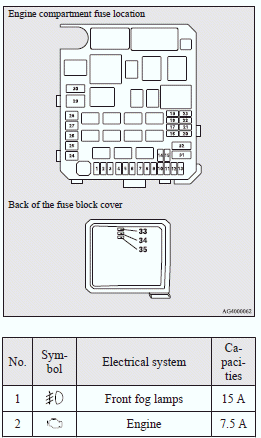
1: Except for petrol-powered vehicles equipped with turbocharger
2: Petrol-powered vehicles with turbocharger
3: Fusible link
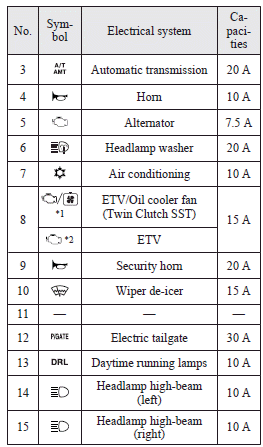
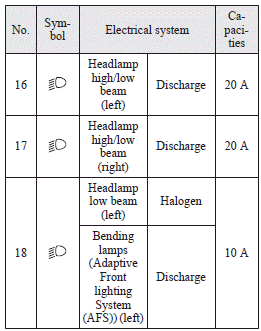
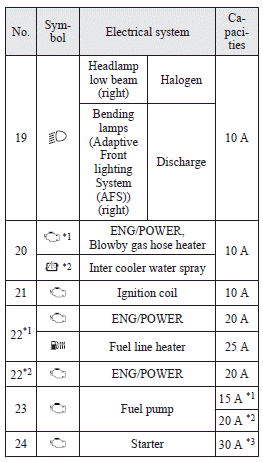
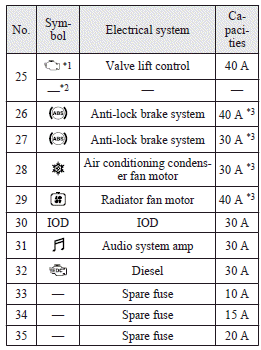
1: Except for petrol-powered vehicles equipped with turbocharger
2: Petrol-powered vehicles with turbocharger
3: Fusible link
► Some fuses may not be installed on your vehicle, depending on the vehicle model or specifications.
► The table above shows the main equipment corresponding to each fuse.
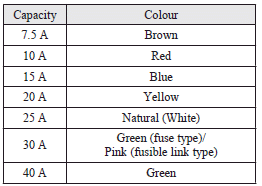
The fuse box does not contain spare 7.5 A, 25 A or 30 A fuses. If one of these fuses burns out, substitute with the following fuse.
7.5 A: 10 A spare fuse
25 A: 20 A spare fuse
30 A: 30 A audio system amp fuse
When using a substitute fuse, replace with a fuse of the correct capacity as soon as possible.
Identification of fuse
Fuse replacement
1. Before replacing a fuse, always turn off the electrical circuit concerned and place the ignition switch in the “LOCK” position.
2. Remove the fuse puller (A) from the inside of the fuse box in the engine compartment.
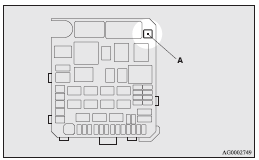
3. Referring to the fuse load capacity table, check the fuse pertaining to the problem.
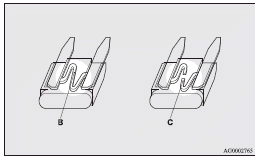
B- Fuse is OK
C- Blown fuse
Note
► If any system does not function but the fuse corresponding to that system is normal, there may be a fault in the system elsewhere. We recommend you to have your vehicle checked.
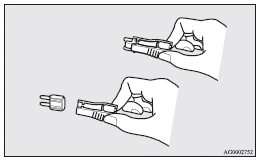
4. Insert a new fuse of the same capacity by using the fuse puller and insert the fuse at the same place in the fuse block.
 Caution
► If the newly inserted fuse blows again after a short time, we recommend you to have the electrical system checked to find the cause and rectify it.
► Never use a fuse with a capacity larger than that specified or any substitute, such as wire, foil, etc.; doing so will cause the circuit wiring to heat up and could cause a fire.
Download Manual