Pre-Collision Assist Limitations
Pre-collision assist depends on the detection ability of its camera and sensors. Any obstructions or damage to these areas can limit detection or prevent the system from functioning. See Locating the Pre-Collision Assist Sensors.
The system is active at 3 mph (5 km/h) and above.
Note: The pre-collision assist system automatically disables when you select four-wheel drive low or manually disable AdvanceTrac™.
Note: Brake support and automatic emergency braking are active at speeds up to 80 mph (130 km/h). If your vehicle has a radar sensor included with adaptive cruise control, then brake support and automatic emergency braking are active up to the maximum speed of your vehicle.
Pedestrian Detection Limitations
Pedestrian detection is active at speeds up to 50 mph (80 km/h).
Pedestrian detection operates optimally when detected hazards are clearly identifiable. System performance may reduce in situations where pedestrians are running, partly obscured, have a complex background, or cannot be distinguished from a group.
Cyclist Detection Limitations
Cyclist detection is active at speeds up to 50 mph (80 km/h).
Cyclist detection functions optimally when detected hazards are clearly identifiable. System performance may reduce in situations where cyclists are fast-moving, partly obscured, have a complex background, or cannot be distinguished from a group.
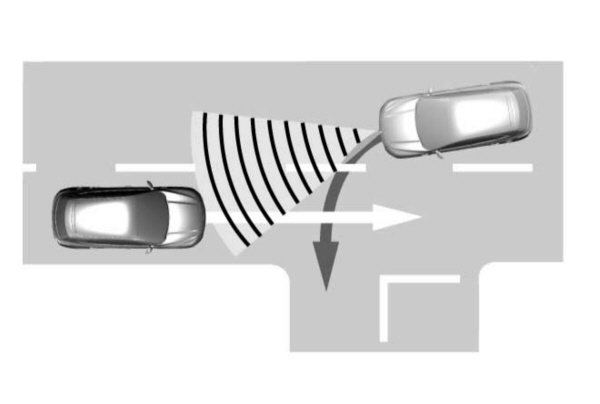
Intersection Assist (If Equipped)
If your vehicle comes with a radar sensor included in adaptive cruise control, the pre-collision assist system may operate in a scenario where you are turning across an oncoming vehicle's path. Detection of vehicles driving in an oncoming direction is active if your vehicle is driving at speeds up to 19 mph (30 km/h).
Download Manual