Locating the Blind Spot Information System Sensors
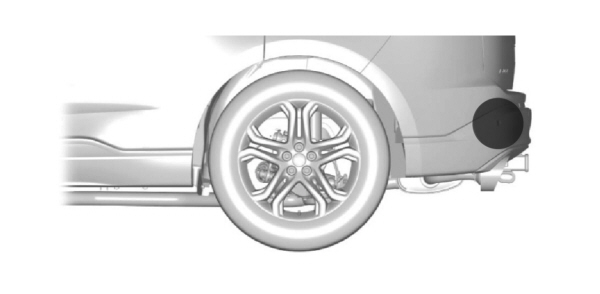
The sensors are behind the rear fascia on both sides of your vehicle.
Note: Keep the sensors free from snow, ice and large accumulations of dirt.
Note: Do not cover the sensors with bumper stickers, repair compound or other objects.
Note: Bike and cargo racks could cause false alerts due to obstruction of the sensor. We recommend switching the feature off when using a bike or cargo rack.
Note: Blocked sensors may affect system accuracy.
If the sensors become blocked, a message appears in the instrument cluster display. See Blind Spot Information System – Information Messages. The alert indicators illuminate but the system does not alert you.
WHAT IS BLIND SPOT INFORMATION SYSTEM WITH TRAILER COVERAGE
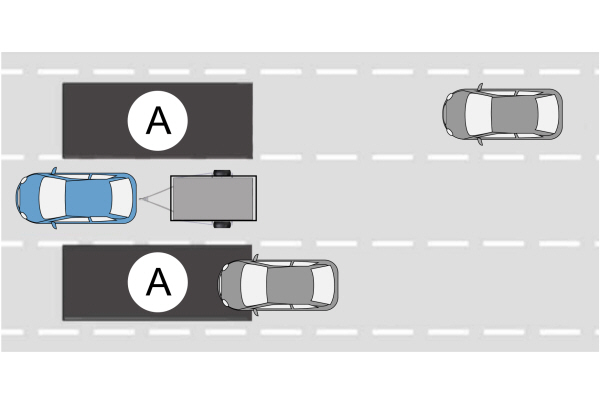
A. Trailer coverage detection zone. Trailer coverage detection zone. |
Blind spot information system detects vehicles that may have entered the blind spot zone. The detection area is on both sides your vehicle and trailer, extending rearward from the exterior mirrors to the end of your trailer.
BLIND SPOT INFORMATION SYSTEM WITH TRAILER COVERAGE LIMITATIONS
Trailer coverage only supports conventional trailers.
Make sure the trailer width is less than or equal to 8.5 ft (2.6 m) and the length is less than 33 ft (10.1 m).
Some trailers could cause a slight change in system performance:
- Large box trailers, including v-nose or horse trailers, could cause false alerts to occur when driving next to infrastructures or near parked cars. A false alert could also occur while making a 90 ° turn.
- Trailers that have a width greater than 8.5 ft (2.6 m) at the front and have a total length greater than 20 ft (6 m) could cause delayed alerts when a vehicle is passing at high speeds.
- Box trailers that have a width greater than 8.5 ft (2.6 m) at the front could cause early alerts when you pass a vehicle.
- Clam shell or v-nose box trailers with a width greater than 8.5 ft (2.6 m) at the front could cause delayed alerts when a vehicle traveling the same speed as your vehicle merges lanes.
Download Manual