Driving In Sand
When driving over sand, try to keep all four wheels on the most solid area of the trail.Steadily drive through the terrain.Apply the accelerator slowly and avoid excessive wheel slip. Do not drive your vehicle in deep sand for an extended period of time.This could overheat the system.A message appears in the instrument cluster display.
Note: If your vehicle gets stuck driving on hilly or sloping terrain, it could be rocked out by shifting between forward and reverse gears, stopping between shifts in a steady pattern. Press lightly on the accelerator in each gear.
Note: Do not rock your vehicle if the engine is not at normal operating temperature, as damage to the transmission could occur.
Note: Do not rock your vehicle for more than a minute, as damage to the transmission and tires could occur or the engine could overheat
Driving Through Shallow Water
 WARNING: Do not attempt to cross a deep or flowing body of water. Failure to follow this instruction could result in the loss of control of your vehicle, personal injury or death. WARNING: Do not attempt to cross a deep or flowing body of water. Failure to follow this instruction could result in the loss of control of your vehicle, personal injury or death. |
Note: Driving through standing water can cause vehicle damage.
Note: Engine damage can occur if water enters the air filter.
Before driving through standing water, check the depth. Never drive through water that is higher than the bottom of the front rocker area of your vehicle.
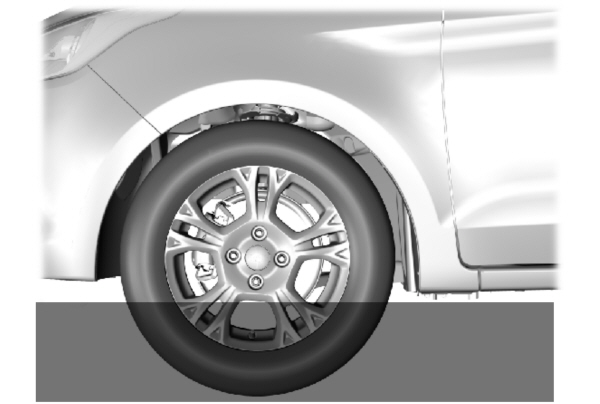
When driving through standing water, drive very slowly and do not stop your vehicle. Your brake performance and traction could be limited.After driving through water and as soon as it is safe to do so:
- Lightly press the brake pedal to dry the brakes and to check that they work.
- Turn the steering wheel to check that the steering power assist works.
Check the function of the following:
- Horn
- Exterior lights
Download Manual