Transporting children safely
 Introduction
The physical principles in the event of an accident also apply to children. However, due to their size and other factors, they face a greater risk of injury.
Children and babies must therefore always be transported in child restraint systems that are designed for their age, size, weight and body structure. In the USA and Canada, the use of tested and certified child restraint systems is required by law.
In the case of head-on collisions at speeds of between around 20 and 35 mph (30–55 km/h), a small child weighing 13 lbs (6 kg) will be subjected to forces of more than 20 times their body weight. This means that the child's effective weight will suddenly increase to up to 120 kg (260 lbs). Under such conditions, only a child restraint used in accordance with regulations can reduce the risk of injury. However, a child restraint which is not used in accordance with regulations may further increase the risk of injury!
All children (particularly children under 12 years of age) should always be transported on the rear seats in appropriate child restraint systems. However, if you must use a child restraint on the front passenger seat in exceptional circumstances, always follow all the information and warnings available at ⇒ Introduction.
You can find more information on this subject at:
-
National Highway Traffic Safety Administration (NHTSA): http://www.safercar.gov (USA)
-
Transport Canada Information Centre: http://www.tc.gc.ca (Canada)
Read and follow the instructions from the child seat manufacturer to ensure that the seat is appropriate for your child. Also be sure to read and follow all the information and warnings on child restraint systems in this manual!
 WARNING
In the event of an accident, people sitting on the front passenger seat (particularly children and small children) may suffer severe or fatal injuries if there is not sufficient distance between them and the airbag, if it is deployed (even with the Advanced Airbag System)!
-
The safest place for children is on the rear seats.
-
A suitable child restraint that is installed on the rear seat in accordance with regulations provides the highest level of protection for children and small children in most accidents.
-
Even though the Advanced Airbag System is designed to detect child restraint systems on the front passenger seat and to switch off the front passenger's front airbag, it is not possible to guarantee that the system will perform correctly under all circumstances and over the vehicle's service life.
-
In compliance with the “low risk” option for children of 3–6 years of age according to the U.S. Federal Standard, the Advanced Airbag System may be deployed if the electrical capacity of a typical one-year-old child combined with a child restraint system on the front passenger seat is exceeded and the criteria for deployment of the Advanced Airbag System are met.
Child restraints – overview
Please read the introductory information and heed the Warnings and Notice ⇒  Introduction.
All children (particularly small children and infants) must be transported in child restraints suitable for them. These child restraints must always be installed correctly. The information in the following table will help you to find the suitable child restraint for your child.
|
Child restraint type |
Use |
|---|---|
|
Rear-facing child restraint |
Birth–12 months old: A child of up to 12 months of age must always be transported in a rear-facing child restraint. There are different types of these: – Rear-facing for infants only. – Convertible and multi-purpose child restraints with greater weight and size restrictions for transporting your child in the rear-facing position for longer periods of time. |
|
Rear-facing child restraint before transitioning to the forward-facing child restraint |
1 – 3 years old: Transport your child in a rear-facing child restraint for as long as possible until they have reached the weight and size restrictions. After your child has reached the weight and size restrictions, you can transport them in a forward-facing child restraint with the appropriate safety belts. |
|
Forward facing child restraints |
4 – 7 years old: Transport your child in a forward-facing child restraint for as long as possible until they have reached the weight and size restrictions. After your child has reached the weight and size restrictions, you can transport them in a booster seat but only on the rear seats. |
|
Booster seat |
7 – 12 years old: Transport your child using a booster seat until they have grown enough to sit on the seats with a safety belt without a booster seat. The safety belt must be routed correctly ⇒ Safety belt positioning. You should continue to transport your child on the rear seats. |
The current child restraints can be secured either with a standard three-point belt or the LATCH/UAS attachment system. Many child restraints also require the use of Top Tether systems. Depending on countries and federal states, the use of Top Tether may even be required by law.
How to determine whether a child restraint is installed correctly
-
The child restraint lies flush against the seat cushion and the backrest unless the child restraint manufacturer allows a gap between the seat and child restraint.
-
The overhang of the child restraint on the seat cushion is not longer than the usual 20% of the child restraint. Always follow the instructions for the permitted child restraint overhangs.
-
You should always position the child restraint centrally on the seat.
-
The clearance of the child restraint forward and sideways is no greater than approximately one inch (2.5 cm).
-
The child restraint must not rest on the belt buckles of the seats. These could be damaged as a result.
-
When installing multiple child restraints, they must not block each other and must be free-standing and remain accessible.
-
The child restraint has been secured correctly using the three-point belt or LATCH/UAS system. The Top Tether system of the child restraint has also been used correctly as specified by the manufacturer.
 DANGER
Not using the child restraint, using it incorrectly or using the wrong child restraint increases the risk of severe or fatal injuries in the event of a collision or an accident.
-
Children sitting on the front seats may suffer severe or fatal injuries if the air bag is deployed (even if advanced airbags are used).
-
Children in a rear-facing child restraint on the front passenger seat may suffer severe or fatal injuries if the air bag is deployed.
-
Always install child restraints on the rear seats.
-
If, in exceptional circumstances, you nevertheless install a child restraint on the front passenger seat and the yellow
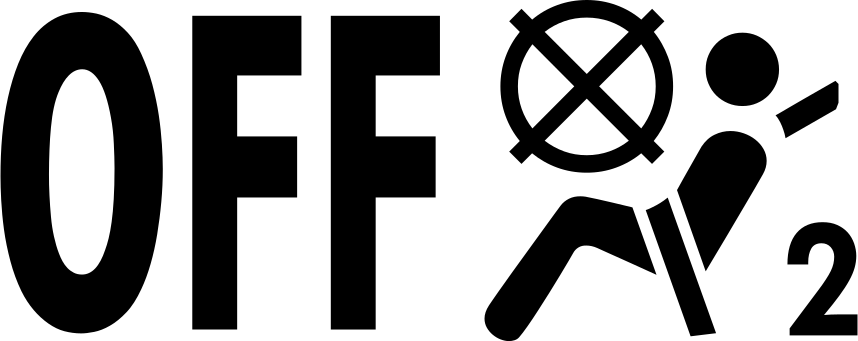 PASSENGER AIR BAG indicator light does not come on and stay on, remove the seat immediately and have the airbag system checked by an authorized Volkswagen dealer or authorized Volkswagen Service Facility. Volkswagen recommends contacting an authorized Volkswagen dealer or authorized Volkswagen Service Facility.
WARNING
If the airbag is deployed, a child restraint on the front passenger seat may collide with the airbag and the child in the child restraint may suffer severe or even fatal injuries (even if advanced airbags are used). If, in exceptional circumstances, you nevertheless install a child restraint on the front passenger seat, observe the following points:
-
Forward-facing child restraints may be situated in the deployment zone of a front passenger's front airbag and may result in severe or fatal injuries if the airbag is deployed. Always ensure that the child restraint in use has been approved by the manufacturer for use on the front passenger seat.
-
Read and always follow the child seat manufacturer's instructions.
-
Never install a child restraint without a top tether strap if this is required by the manufacturer or by law.
-
Never position a forward-facing child restraint directly on the instrument panel.
-
Adjust the seat belt adjuster so that the seat can be installed correctly.
-
Position the front passenger seat as high as possible and move it as far back as possible in order to obtain the largest possible distance to the instrument panel.
-
Make sure that the upper anchorage of the safety belt is behind the child restraint to ensure that the safety belt is routed correctly.
-
Make sue that the backrest is in the upright position.
WARNING
Any unused safety belts on the rear seats are a danger to your child when transported in a child restraint on the rear seats. By playing with the safety belts, the child may get tangled up and this could result in severe or fatal injuries.
-
Always secure unused safety belts to the rear seat. You can do this by putting them around the head restraints which are furthest away from the installed child restraint and secure the safety belt.
 NOTICE
-
Make sure not to activate the lockable belt system when you secure the safety belts that are not being used.
-
Make sure that the belt is not damaged when installing the child restraint with the safety belt, particularly if you are using the lockable belt system.
Safety notes on using child restraints
Please read the introductory information and heed the Warnings and Notice ⇒ Introduction.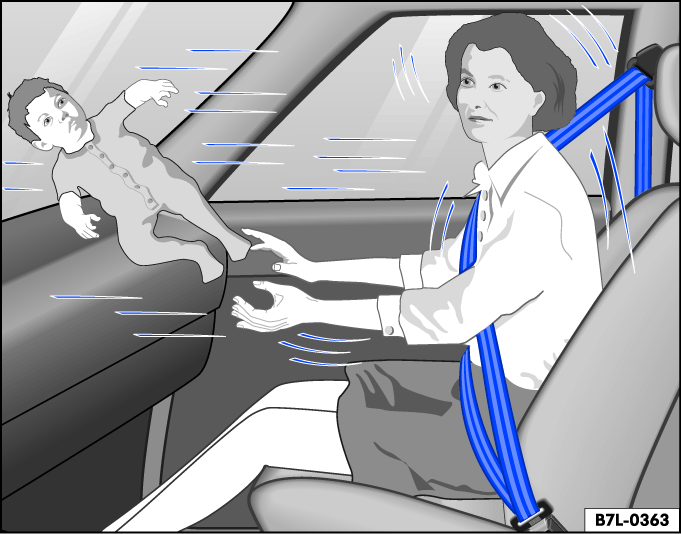
Fig. 32 Never allow children or infants to travel on your lap.
The correct use of child restraints significantly reduces the risk of injury in the event of an accident or collision!
All children, in particular children under the age of 12, must always travel in suitable child restraints on the rear seat.
Only use child restraints that are suitable for the height and weight of the child.
LATCH/UAS anchors can be used to secure child restraints on the seats without using the vehicle's safety belts. If you do want to install a child seat using the safety belts instead of LATCH/UAS anchors, please follow all instructions given by the child restraint manufacturer for guiding the belt around the child restraint and securing the child in the child restraint. Ensure that the child restraint cannot move forward or sideways by more than 1 inch (2.5 cm) after installation.
When installing a child restraint with the safety belt, you must activate the lockable belt system.
Never activate the lockable belt system when installing a booster seat or if a child is traveling without a child restraint.
Important additional information for installing child restraints on the front passenger seat
If, under exceptional circumstances, you need to install a child restraint on the front passenger seat, read and follow all warnings and instructions here ⇒ Introduction.
You can find additional information on the selection and use of child restraints here:
Transport Canada Information CentreTel.: 1-800-333-0371Tel.: 1-613-998-8616 (Ottawa)http://www.tc.gc.ca/roadsafety
National Highway Traffic Safety AdministrationTel.: 1-888-327-4236 (TTY: 1-800-424-9153)http://www.nhtsa.govhttp://www.safercar.gov
National SAFE KIDS CampaignTel.: 1-202-662-0600http://www.safekids.org
SafetyBeltSafe U.S.A.Tel.: 1-800-745-SAFE or 1-800-745-7233 (English)Tel.: 1-800-747-SANO or 1-800-747-7266 (Spanish)http://www.carseat.org
Volkswagen Customer CARETel.: 1-800-822-8987
DANGER
The use of rear-facing child restraints or infant carriers on the front passenger seat can cause severe or fatal injuries.
-
Always install rear-facing child restraints or infant carriers on the rear seat.
WARNING
Transporting children without a child restraint or with an unsuitable child restraint, or incorrectly installing a child restraint, increases the risk of severe or fatal injuries in the event of an accident or collision.
-
Only use child restraints that are suitable for the child and that comply with the regulations set out by FMVSS 210 (CMVSS 213 in Canada).
-
Only use child restraints that sit fully and evenly on the seat cushion.
-
Always follow the installation instructions given by the manufacturer of the child restraint.
-
Always observe all legal requirements regarding the installation and use of child restraints.
-
Children smaller than 4'9" (57 inches, 145 cm) must always be secured in a suitable child restraint when traveling in the vehicle.
-
Only one child must be allowed to travel in a child restraint.
-
Never drive with children, toddlers or babies on the driver's or a passenger's lap.
WARNING
Forward-facing child restraints on the front passenger seat may collide with the airbag if it is triggered, which can lead to severe or fatal injuries.
-
Always install child restraints on the rear seat.
Securing systems
Please read the introductory information and heed the Warnings and Notice ⇒ Introduction.
Different securing systems are used for safe installation of child restraints depending on the country.
Overview of securing systems
-
ISOFIX/lower LATCH anchorage points: ISOFIX/lower LATCH anchorage points are attachment systems for quick and secure attachment of child restraints in the vehicle. Attachment using ISOFIX/lower LATCH anchorage points creates a fixed connection between the child restraint and the vehicle.
The child restraint can have two fixed or flexible attachment arms. The attachment arms snap into the ISOFIX/lower LATCH anchorage points that are located between the seat and the rear seat backrest ⇒ Attaching a child restraint with ISOFIX or lower LATCH anchorage point. Reinforce the attachment using the ISOFIX/lower LATCH anchorage point by attaching using a top tether or a support bracket, if necessary.
-
Three-point automatic safety belt. If available, it is better to secure child restraints to the ISOFIX/lower LATCH anchorage point using a three-point safety belt ⇒ Securing a child restraint with a safety belt.
Additional fasteners:
-
Top Tether: the upper belt is guided over the rear seat backrest and secured to the anchorage point on the rear side of the rear seats using a hook ⇒ Securing the child restraint with the upper strap (top tether). Top Tether fastening eyelets are labeled with an anchor symbol.
-
Support base: some child restraints are supported with a support base on the vehicle floor. The support base reduces the risk of the child restraint tipping forward in the event of a collision. Only use child restraints with a support foot on the front passenger seat and the outer seats in the second row of seats →
.
WARNING
Incorrect use of the support base can cause severe or fatal injuries.
-
Make sure the support base is installed correctly and securely.
Attaching a child restraint with ISOFIX or lower LATCH anchorage point
Please read the introductory information and heed the Warnings and Notice ⇒ Introduction.
Installing child restraints with ISOFIX/lower LATCH anchorage point

Fig. 33 On the outer seats in the rear bench seat: Designation of the ISOFIX/lower LATCH anchorage points for child restraints.

Fig. 34 General example: fitting a child restraint with attachment arms.
The installation location of the ISOFIX/lower LATCH anchorage points is indicated by a symbol fig. 33.
-
Pay attention to and follow the information ⇒ Safety notes on using child restraints.
-
If necessary, fold down the protective caps of the ISOFIX/lower LATCH anchorage points.
-
Push the attachment arms of the child restraint in the direction of the arrow onto the ISOFIX/lower LATCH anchorage points fig. 34. The child restraint must engage securely and audibly.
-
Pull on both sides of the child restraint to check that the child restraint is securely locked in place.
If the child restraint is equipped with a support foot, this support foot must be positioned securely on the vehicle floor.
Using insertion guides
If the lower LATCH anchorage points for child restraints are not directly accessible, guidance fixtures can make the installation and removal of child restraints easier. To do this, first position the guidance fixtures at the lower LATCH anchorage points. Then fasten the child restraint according to the installation instructions.
NOTICE
Prevent permanent marks or damage to seat covers and cushions due to insert guides.
-
Before folding the rear seats forward or when removing the child restraint, always remove the guidance fixtures from the lower LATCH anchorage points.
Securing the child restraint with the upper strap (top tether)
Please read the introductory information and heed the Warnings and Notice ⇒ Introduction.
Fig. 35 On the rear side of the rear bench seat: Top tether anchorages for the top tether safety belt.
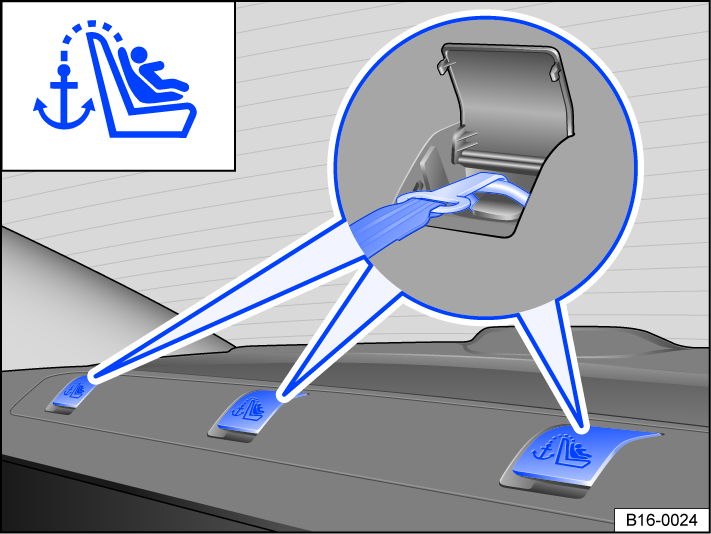
Fig. 36 On the rear side of the rear bench seat: Attached top tether safety belt.
Top tether safety belts reduce the forward movement of the child restraint during an accident. This reduces the risk of a head injury to the child.
The anchorages suitable for top tether are labeled with a symbol and may have the label “TOP TETHER” fig. 35. Fasten the top tether safety belt only to the top tether anchorages designed for this purpose.
Fastening the top tether safety belt
-
Pay attention to and follow the information ⇒ Safety notes on using child restraints.
-
Prepare the top tether safety belt on the child restraint according to the child restraint manufacturer instructions ⇒
. -
If necessary, remove the luggage compartment cover and screen separator.
-
Place the child restraint in the center of the vehicle seat cushion and fasten it securely according to the child restraint manufacturer instructions.
-
If necessary, move the rear seat backrest of the vehicle seat to an upright position and adjust to the backrest of the child restraint.
-
Locate the top tether anchorage for the respective seat fig. 35.
-
If necessary, push the head restraint upwards and guide the top tether safety belt of the child restraint to the rear under the head restraint.
Applies to child restraints with V-shaped top tether safety belt: Check that the top tether safety belt is taut on the seat and is not redirected by the bars of the head restraint.
-
Guide the top tether safety belt of the child restraint back over the seat.
-
Hook the top tether safety belt into the appropriate anchorage marked with “top tether” fig. 36.
-
Pull on the top tether safety belt.
-
Check that the hook of the top tether safety belt is closed.
-
Tighten the top tether safety belt according to the child restraint manufacturer instructions ⇒
. -
If necessary, guide the head restraint back into the starting position.
WARNING
Fastening the child restraint incorrectly increases the risk of serious and fatal injury during an accident.
-
Always follow the child restraint manufacturer instructions for fastening the child restraint in the vehicle.
-
Never fasten a child restraint without the top tether safety belt if the use of a top tether safety belt is prescribed by the child restraint manufacturer or legally required for the child restraint.
For example, the use of a top tether safety belt in conjunction with a forward-facing child restraint is legally required in Canada.
-
Always make sure that the top tether safety belt is installed taut. If it is not possible to make the top tether safety belt taut on the center seat of the second row of seats, use one of the outer seats of the second row of seats for installing the child restraint, in order to install the top tether safety belt taut.
-
Improper fastening of the top tether safety belt can lead to serious injuries during an accident. The top tether anchorages are only approved for correctly installed child restraints.
-
Always only fasten a top tether safety belt of a child restraint to a top tether anchorage.
-
Never fasten a child restraint top tether safety belt to a tie-down.
-
Never fasten a safety belt or another belt of the child restraint to a top tether anchorage.
-
Never fasten luggage or other objects to a top tether anchorage.
Releasing the top tether safety belt
-
Release the top tether safety belt according to the child restraint manufacturer instructions.
-
Release the catch on the hook and release the top tether safety belt from the top tether anchorage.
Securing a child restraint with a safety belt
Please read the introductory information and heed the Warnings and Notice ⇒ Introduction.
Securing a child restraint with a safety belt
-
Pay attention to and follow the information ⇒ Safety notes on using child restraints.
-
Adjust the height of the safety belt so that the belt webbing runs naturally along the child restraint without any sharp bends in the webbing.
-
Route the safety belt according to the instructions provided by the child restraint manufacturer and guide the belt through the child restraint.
-
Make sure the safety belt is not twisted.
-
Activate the lockable safety belt and insert the buckle tongue into the safety belt buckle belonging to the corresponding seat until the safety belt buckle audibly clicks into place .
Lockable safety belt
If the belt webbing is fully pulled out and you hear a clicking sound when the safety belt is retracted, this is a lockable safety belt ⇒ Using safety belts. The locking mechanism on the safety belt must only be used to fasten specific child restraint systems ⇒ Child restraints – overview. An activated locking mechanism must be released when a vehicle occupant fastens their safety belt. To release the locking mechanism, push the red button in the belt buckle and guide the belt back fully by hand ⇒ Fastening and unfastening the safety belts.
Keep any safety belts that are not being used out of the reach of children
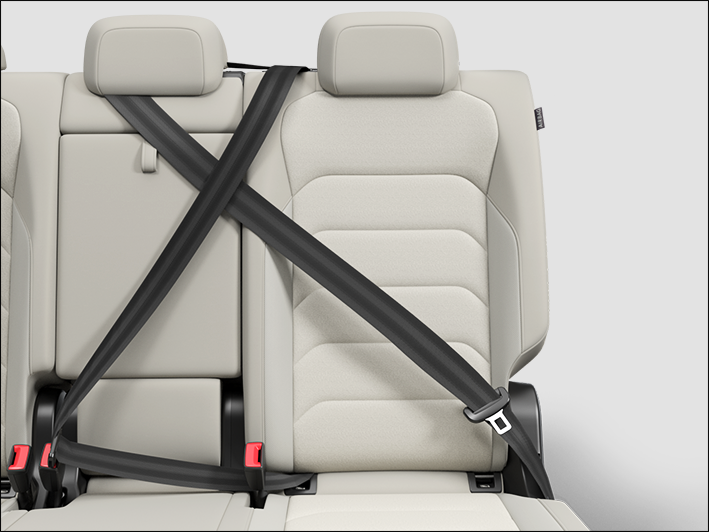
Fig. 37 Keep any safety belts that are not being used away from children.
Secure any safety belts not being used to prevent a child from playing with the safety belt and getting caught in it. The procedure for securing a safety belt that is not being used depends on the seating position.
To secure a safety belt that is not being used for one of the outer seats:
-
Position the safety belt around the head restraint of the center seating position fig. 37.
-
Make sure that the safety belt is out of range of the child so that the child cannot touch it or play with it.
-
Make sure that the safety belt is not blocking the lower anchors.
If the anchor points are blocked, this may mean that you cannot install the child restraint properly in the anchor points.
-
Do not activate the lockable safety belt.
Otherwise, it is very difficult to retract the safety belt into its normal position. You should not hear any clicking noises when the safety belt is retracted.
To secure a safety belt that is not being used for the middle seat:
-
Fasten the safety belt fig. 37.
-
Pull the shoulder strap on the safety belt out fully to activate the lockable safety belt. You should hear a clicking noise when the safety belt is rolled up again.
-
Let the safety belt roll up fully. Pull the safety belt to make sure that the lockable safety belt is activated and the safety belt is properly fastened and tightened so that the child cannot get hold of the belt or play with it.
If a child is secured on a seat in the second row, adjust the position in front of the child restraint to ensure that the child has enough space. For example, adjust the front passenger seat to the size of the child and the child directly behind them. Always pay attention to the correct seating position ⇒ Seating position.
if no child restraints are needed, move all the safety belts back into their normal storage positions so that the safety belts are available for normal use.
Installing on the center seating position
When installing a child restraint on the center seating position, it is especially important to install correctly because this seating position is narrower than both of the outer seats. If the child restraint is wider than the seat surface, the belt buckle of the adjacent seating position may be covered and could then be damaged. When installing child seats, always ensure that all belt buckles are easily accessible.
-
If nothing else is specified by the child restraint manufacturer, the child restraint must rest close against the backrest and seat surface and must not overlap seat surfaces.
-
The child restraint must be installed straight and centered on the seating position, and it must not be able to move more than 2.5 cm (approx. 1 inch).
-
The child restraint must not rest on the belt buckles.
-
When installing multiple child restraints, the child restraints must not become caught on one another.
In some cases, even if a child restraint is installed correctly on the center seating position, it may cover the belt buckles and could then damage them and make the belt buckles unusable. This can occur if the child restraint slides on the seat surface while driving. Therefore, check the position of the child restraint regularly to ensure that the belt buckles are neither covered nor damaged.
WARNING
A child that is in a child restraint that has been secured with the anchor points or with a safety belt may play with any unused safety belts on the rear seat and get tangled up, which could result in serious or even fatal injuries.
-
Always keep any safety belts for the rear seats that are not being used out of the reach of children.
Securing a booster seat with a safety belt
Please read the introductory information and heed the Warnings and Notice ⇒ Introduction.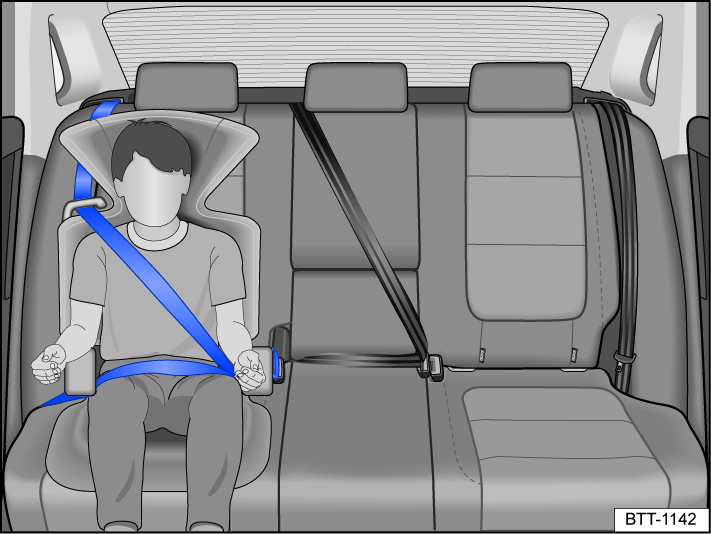
Fig. 38 Correctly secured child on a booster seat.
Children between the ages of around 8 and 12 are best protected when they travel on a booster seat that is suitable for their age and height.
The safety belts in the vehicle are usually only suitable for children taller than 4'9" (57 inches, 145 cm). Booster seats ensure that children under this height can be correctly secured using the safety belt.
-
Never activate the lockable belt system when securing a child with a booster seat.
-
The upper area of the belt must always be positioned on the child's shoulder. Ensure that the belt does not rest on the child's face or neck.
-
The lap belt must always run across the child's lap. It must never run across the child's stomach.
Children taller than 4'9" (57 inches, 145 cm) can generally be secured using the safety belt. Pay attention to the information at ⇒ Safety belt positioning.
A child no longer needs a booster seat when they are taller than 4'9" (57 inches, 145 cm) if the following requirements are met:
-
The child can sit with their back fully against the backrest.
-
The child's knees bend over the edge of the seat.
-
The child's feet sit fully flat on the vehicle floor.
-
The child can comfortably stay in this position for the entire journey.
Children aged 12 or under must always travel on a rear seat.
WARNING
Not using a booster seat or incorrectly using a booster seat or safety belt can cause severe or fatal injuries in the event of an accident or collision.
-
Always observe all instructions regarding the installation and use of child restraints and booster seats.
-
If, under exceptional circumstances, you need to install a booster seat on the front passenger seat, ensure that the PASSENGER AIR BAG
indicator light turns on and remains on.
Download Manual