Safety belts
 Introduction
Check the condition of all of the safety belts regularly. If there is damage to the belt fabric, the belt connections, the retractor or the buckle, have the affected safety belt replaced immediately by an authorized Volkswagen dealer or authorized Volkswagen Service Facility ⇒  . The authorized Volkswagen dealer or authorized Volkswagen Service Facility must use the correct parts for the vehicle, equipment and model year. Volkswagen recommends contacting an authorized Volkswagen dealer or authorized Volkswagen Service Facility.
 WARNING
The risk of serious and fatal injuries increases if the safety belts are not worn or are worn incorrectly. The optimum protection is only achieved if the safety belts are worn and used correctly.
-
Safety belts are the most effective way to reduce the risk of serious and fatal injuries in a collision. To protect the driver and passengers, the safety belts must always be worn correctly when the vehicle is in motion.
-
Before every trip, everyone in the vehicle must seat themselves correctly, fasten the safety belt that belongs to the seat they are using, and keep it fastened while the vehicle is in motion. This applies to all passengers and at all times, including during city driving.
-
Secure children in the vehicle with a child restraint that is appropriate for their weight and height and with the safety belt used correctly ⇒ Transporting children safely.
-
Only begin driving once all passengers are wearing their safety belts correctly.
-
Only ever insert and latch the buckle tongue in the belt buckle for the corresponding seat. Using a buckle from another seat reduces the protection provided by the safety belt and can cause serious injuries.
-
Never allow foreign objects or fluid to enter the openings in the belt buckles. This could impair the function of the belt buckles and safety belts.
-
Never unfasten the safety belt while the vehicle is in motion.
-
Secure only one person with a safety belt.
-
Never allow children or infants to ride on anyone's lap and never allow children or infants to be secured together with anyone in the same safety belt.
-
Do not wear extremely bulky, loose clothing in the vehicle, such as a coat over a sports jacket, because this could impair the fit and function of the safety belt.
WARNING
Damaged safety belts create a serious risk and can cause serious or fatal injuries.
-
Never allow safety belts to become caught in the door or the seat mechanisms because the belts could be damaged.
-
If the belt webbing or other parts of the safety belt are damaged, the safety belts could tear during a collision or sudden breaking maneuver.
-
Have damaged safety belts replaced immediately with new safety belts that are approved for the vehicle by Volkswagen. Safety belts that are stretched during a collision must be replaced by an authorized Volkswagen dealer or authorized Volkswagen Service Facility. Volkswagen recommends contacting an authorized Volkswagen dealer or authorized Volkswagen Service Facility. It may be necessary to replace them even if there is no visible damage. The anchors for the safety belts must also be checked.
-
Never try to repair, modify, or remove the safety belts yourself. Have all repairs to safety belts, safety belt retractors, and buckle components performed only by an authorized Volkswagen dealer or authorized Volkswagen Service Facility. Volkswagen recommends contacting an authorized Volkswagen dealer or authorized Volkswagen Service Facility.
Warning light
Please read the introductory information and heed the Warnings and Notice ⇒ Introduction.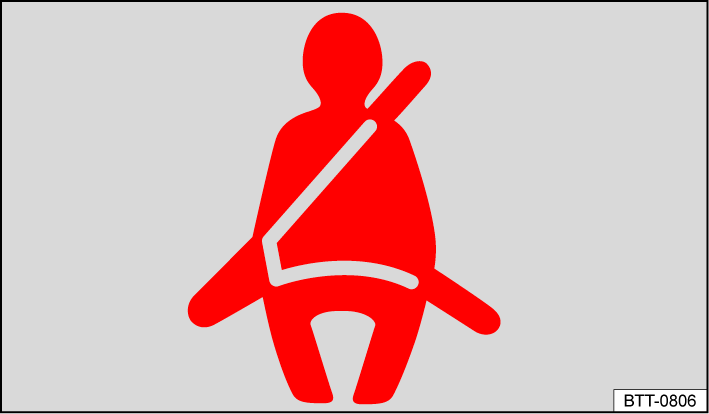
Fig. 15 In the instrument cluster display: warning light.
 The driver or front passenger has not fastened their safety belt. Fasten all safety belts.
When the ignition is switched on, several warning and indicator lamps light up temporarily as a function check. They then turn off after a few seconds.
A chime also sounds.
When the ignition is switched on, the red  warning light comes on for six seconds. A chime also sounds for up to six seconds if the driver safety belt is not fastened. The chime ends when the driver fastens their safety belt. The warning lamps and chime go off when the driver and front passenger have fastened their safety belts.
If the driver and front passenger do not both fasten their safety belts within 10 seconds after the warning chime has ended and the vehicle is driving at a speed above approx. 15 mph (approx. 25 km/h), the chime sounds again for approx. 6 seconds, then stops for approx. 24 seconds, and then sounds again for approx. 6 seconds. The same happens if one of the safety belts is released while driving. The red warning light comes on. A warning chime also sounds for up to two minutes at 24-second intervals. The chime does not sound at speeds below approx. 5 mph (approx. 8 km/h).
When the ignition is switched on, the red warning light comes on until the driver and front passenger have both fastened their safety belts.
WARNING
The risk of serious and fatal injuries increases if the safety belts are not worn or are worn incorrectly. The optimum protection is only achieved if the safety belts are worn and used correctly.
Frontal collisions and the laws of physics
Please read the introductory information and heed the Warnings and Notice ⇒ Introduction.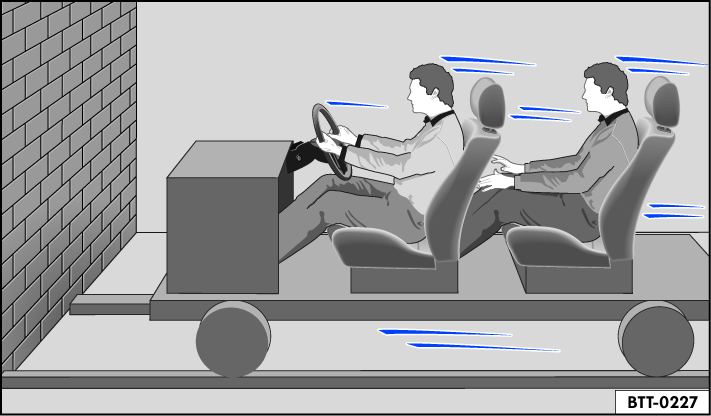
Fig. 16 A vehicle with occupants who are not wearing safety belts drives toward a wall.
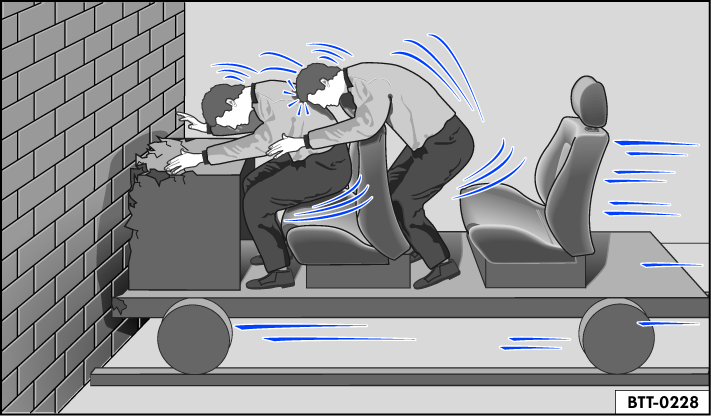
Fig. 17 A vehicle with occupants who are not wearing safety belts collides with a wall.
The physical principle of a frontal collision is a simple concept. Once the vehicle is in motion, the vehicle and its occupants possess energy called “kinetic energy” fig. 16.
The higher the vehicle speed and the higher the weight, the more energy must be absorbed in the event of a collision.
However, the vehicle speed is the more significant factor. For example, if the speed doubles from approx. 15 mph (approx. 25 km/h) to approx. 31 mph (50 km/h), then the kinetic energy quadruples.
The amount of “kinetic energy” depends greatly on the vehicle speed and on the weight of the vehicle and the occupants. If speed and weight increase, more energy must be absorbed in the event of an accident.
Vehicle occupants who are not wearing safety belts are also not “connected” to the vehicle. In a frontal collision, individuals who are not wearing safety belts will continue to move at the same speed the vehicle was moving before the collision, until something stops their movement. Since the vehicle occupants in the example are not wearing safety belts, the entire amount of kinetic energy possessed by the vehicle occupants would only be absorbed by the impact on the wall fig. 17.
At speeds of approx. 19 mph (approx. 30 km/h) to approx. 31 mph (approx. 50 km/h), the force applied against the bodies of passengers can easily exceed approx. 2200 lbs (1000 kg) in the event of a collision. The force applied against a person’s body will increase even more at higher speeds.
This example applies not just to frontal collisions, but to all types of accidents and collisions.
What happens to vehicle occupants who do not wear safety belts?
Please read the introductory information and heed the Warnings and Notice ⇒ Introduction.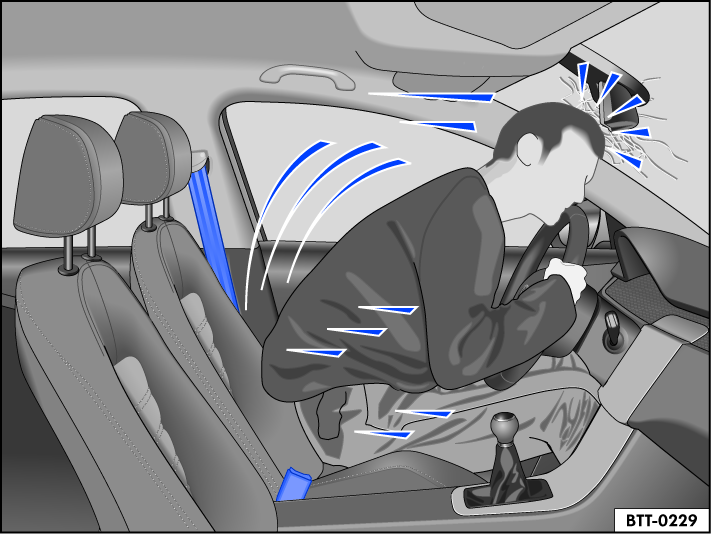
Fig. 18 A driver not wearing a safety belt is propelled forward.
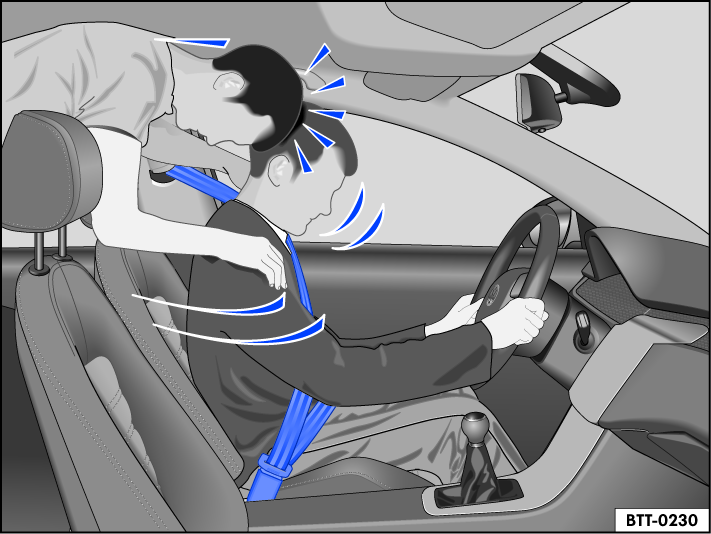
Fig. 19 A passenger in the rear seat who is not wearing a safety belt will be propelled forward toward the driver who has their own safety belt fastened.
Many believe that a person can support their body with their hands during a minor collision. That is incorrect.
Even at low impact speeds, enough force is applied to the body that it is not possible to support the body with arms and hands. In the event of a frontal collision, vehicle occupants who are not wearing safety belts could be propelled forward and collide with components in the vehicle interior, such as the steering wheel, instrument panel, or windshield fig. 18.
The airbag system is not a replacement for safety belts. Deployed airbags only offer supplemental protection. Airbags do not deploy during all types of collisions. Even if the vehicle is equipped with an airbag system, all vehicle occupants, including the driver, must fasten their own safety belts and keep them fastened correctly while the vehicle is in motion. This reduces the risk of severe or fatal injuries in the event of a collision, regardless of whether the seating position is equipped with an airbag.
Airbags and safety belt pretensioners can only trigger once. To achieve the optimum protective function, the safety belts must always be fastened correctly. This is also true during accidents where the airbags do not deploy. Vehicle occupants who are not wearing safety belts could be propelled out of the vehicle and this could result in even more severe or fatal injuries.
It is also important for passengers on the rear seats to have their own safety belts fastened correctly, since they could be propelled through the vehicle without control. A passenger on the rear seat without their own safety belt fastened is endangering themselves as well as the driver and the other passengers in the vehicle fig. 19.
Protection provided by safety belts
Please read the introductory information and heed the Warnings and Notice ⇒ Introduction.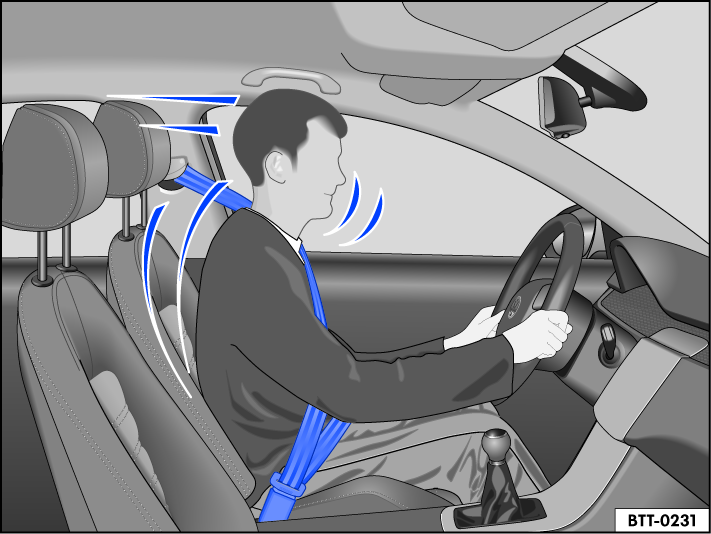
Fig. 20 Driver that is restrained during a braking maneuver by a safety belt that is fastened correctly.
Safety belts that are fastened correctly can make a significant difference. Safety belts that are fastened correctly hold vehicle occupants in the correct seating position and considerably reduce the kinetic energy in the event of a collision. The safety belts also help to reduce the risk of uncontrolled movements that could otherwise cause serious injuries. Safety belts that are fastened correctly also reduce the risk of being propelled out of the vehicle fig. 20.
Vehicle occupants with safety belts that are fastened correctly benefit greatly from this, because the kinetic energy is absorbed by the safety belts. The structure in the front of the vehicle and other passive safety features in the vehicle such as the airbag system also ensure that the kinetic energy will be reduced. The accumulated energy reduces along with the risk of injury.
These examples describe frontal collisions. It should be understood that safety belts that are fastened correctly also substantially reduce the risk of injury in all other types of collisions. Therefore, safety belts must always be fastened before every trip, even if driving “just around the corner”. Make sure that all passengers also have their own safety belts fastened correctly.
Accident statistics have indicated that safety belts that are fastened correctly considerably reduce the risk of injuries and increase the probability of survival in the event of a severe collision. Safety belts that are fastened correctly also increase the protective effect of deployed airbags in the event of an accident. For this reason, the use of safety belts is legally required in most countries.
Even though the vehicle is equipped with airbags, the safety belts must be fastened. For example, the front airbags only deploy in certain frontal collisions. The front airbags do not deploy in minor frontal collisions, minor side-impact collisions, rear collisions, rollovers, or in accidents where the airbag deployment value in the control module was not exceeded. The same also applies to other airbags in the vehicle.
Therefore, always wear the appropriate safety belt correctly, and make sure all passengers have their own safety belts fastened correctly.
Using safety belts
Please read the introductory information and heed the Warnings and Notice ⇒ Introduction.
Checklist
Using safety belts → :

Check the condition of all of the safety belts regularly.
-
Keep safety belts clean.
-
Always keep foreign objects and fluids far away from the safety belt, the safety belt buckle, and the slot in the safety belt buckle.
-
Do not pinch or damage the safety belt and/or belt buckle, for example closing it in a door.
-
Never remove, modify, or repair the safety belt and belt fastening elements.
-
Always fasten the safety belt correctly before you begin driving and keep it fastened while driving.
Twisted safety belt
If the safety belt is difficult to pull out of the belt guide, the safety belt may have been pulled out too quickly when positioning the belt and may have become twisted within the side trim panel:
-
Slowly and carefully pull the safety belt out completely by the belt buckle.
-
Untwist any twisted sections of the safety belt and guide the belt back slowly by hand.
If you cannot untwist the safety belt, fasten the safety belt anyway. The twist must not be in a section of the belt that rests directly on the body. Go to an authorized Volkswagen dealer or authorized Volkswagen Service Facility immediately to have the belt untwisted. Volkswagen recommends contacting an authorized Volkswagen dealer or authorized Volkswagen Service Facility.
Lockable safety belt
The safety belts on the rear seats and the safety belt on the front passenger seat are lockable and have an emergency locking function. If a child restraint system is installed with a safety belt, the safety belt must be locked so that the belt webbing cannot unroll. With the locking function, you can adjust the safety belt so that a child restraint is properly installed. A child restraint can be secured accordingly, for example so that it does not tilt sideways when cornering.
Pull the safety belt fully out to determine whether a safety belt is lockable. If the belt webbing is fully pulled out and you hear a “clicking” sound when it is rolled up, it is a lockable safety belt. Test the locking function by pulling on the safety belt. If the locking function is active, do not pull out the safety belt any further. You can now only roll the safety belt up.
The locking mechanism on the safety belt must only be used to fasten specific child restraint systems ⇒ Child restraints – overview.
An activated locking mechanism must be released when a vehicle occupant fastens their safety belt. To release the locking mechanism, push the red button in the belt buckle and guide the belt back fully by hand ⇒ Fastening and unfastening the safety belts.
WARNING
Incorrect handling of the safety belts increases the risk of severe or fatal injuries.
-
Check the safety belts and associated components regularly to ensure they function correctly.
-
Safety belts cannot be repaired; they must be replaced.
-
Always keep the safety belt clean.
-
Do not pinch or damage the safety belt or allow it to rub against any objects with sharp edges.
-
Always keep the belt buckle and insertion guide for the belt buckle free of foreign objects and fluids.
Fastening and unfastening the safety belts
Please read the introductory information and heed the Warnings and Notice ⇒ Introduction.
Safety belts that are fastened correctly hold vehicle occupants in the correct position during braking maneuvers or in a collision, in order to provide the maximum protection → .
Fastening the safety belt
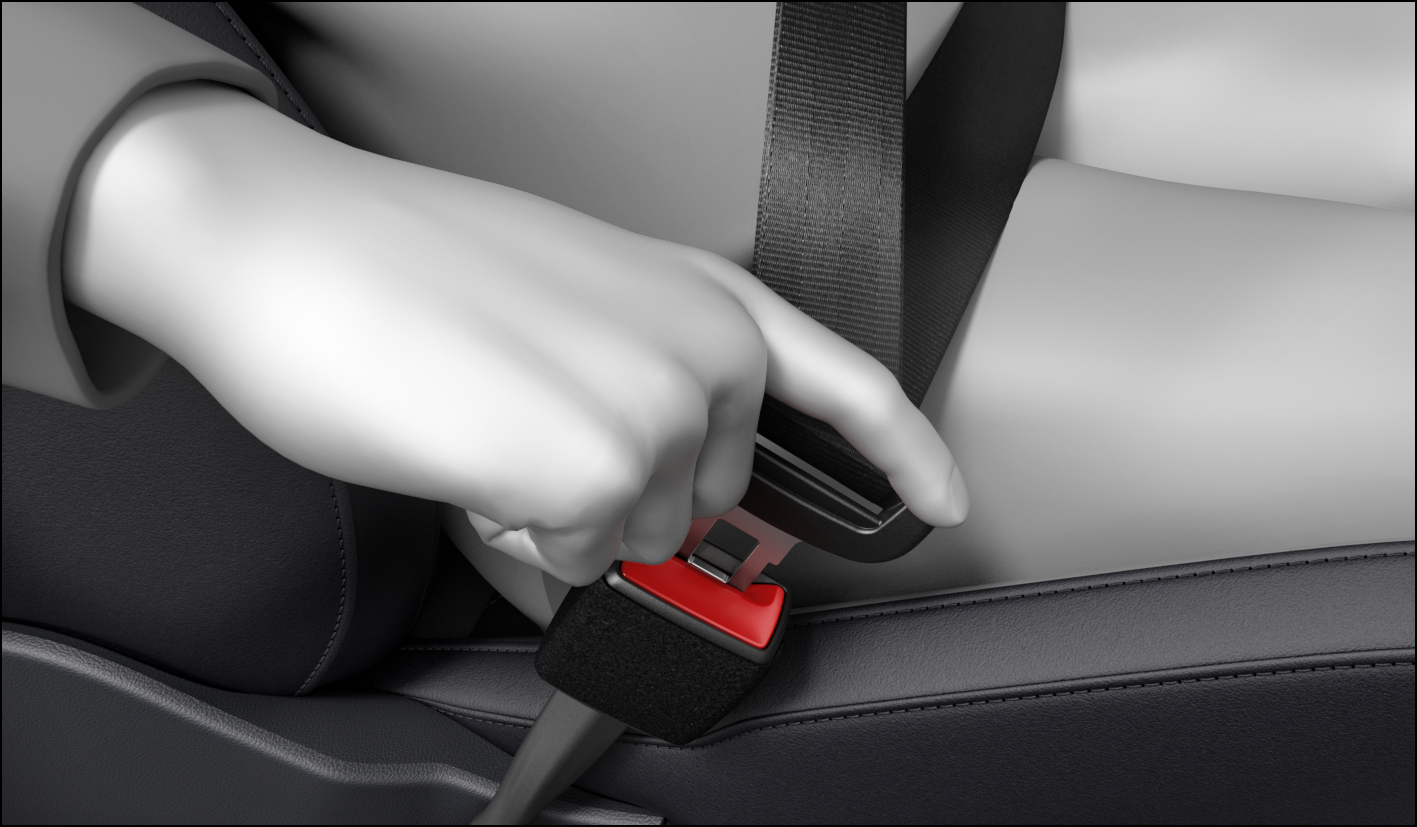
Fig. 21 Inserting the buckle tongue into the safety belt buckle.
Always fasten the safety belts before driving.
-
Adjust the front seat and head restraint correctly ⇒ Seating position.
-
Have the rear seat backrest locked into place in an upright position →
. -
Grab the belt and pull it evenly over the chest and pelvis. Do not twist the belt while doing this →
. -
Insert the buckle tongue securely in the safety belt buckle for that seat fig. 21.
-
Pull on the safety belt to make sure the buckle tongue is latched correctly in the safety belt buckle.
Unfastening the safety belt
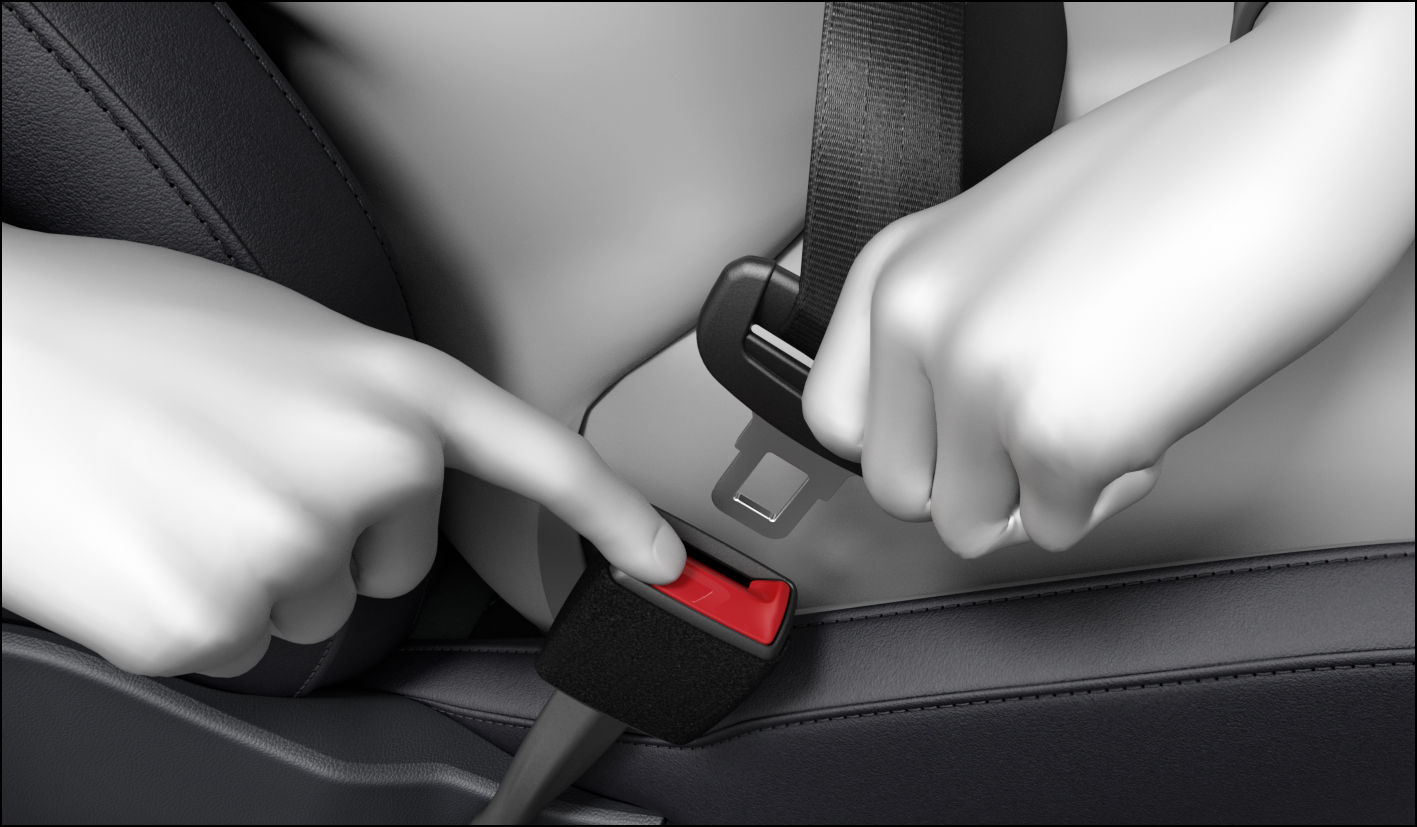
Fig. 22 Releasing the buckle tongue from the safety belt buckle.
Only unfasten the safety belt while the vehicle is stationary → .
-
Press the red button in the safety belt buckle fig. 22.
The buckle tongue will pop out.
-
Guide the belt back by hand so that the belt rolls up easily, the belt does not twist, and the trim panel is not damaged.
WARNING
Incorrect belt routing can cause serious or fatal injuries in the event of an accident.
-
Optimum protection from the safety belts is only possible when the backrest is in an upright position and the safety belts are worn correctly according to the body size of the passenger.
-
Unfastening the safety belt while driving can lead to serious or fatal injuries in the event of an accident or braking maneuver.
Safety belt positioning
Please read the introductory information and heed the Warnings and Notice ⇒ Introduction.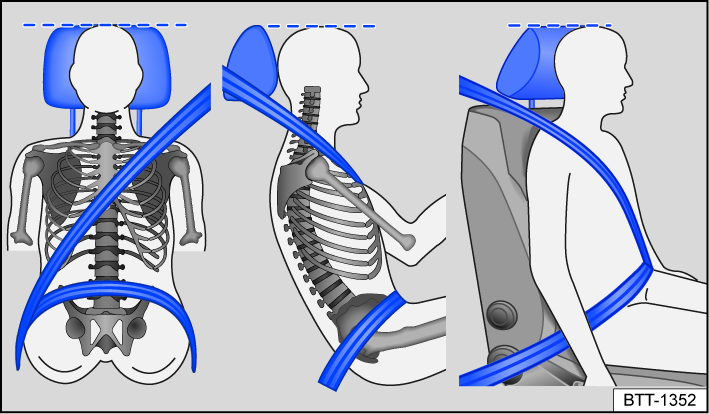
Fig. 23 Correct safety belt positioning and correct head restraint adjustment.
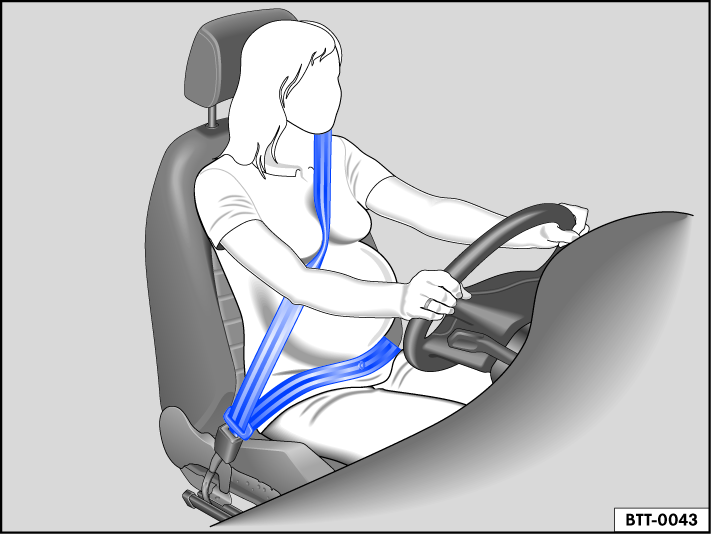
Fig. 24 Correct safety belt positioning for pregnant women.
Safety belts only offer the optimum protection during a collision and reduce the risk of serious injury or death if they are fastened and positioned correctly. The correct safety belt position also holds the vehicle occupant in place so that the airbags can provide their maximum protection if they deploy. Therefore, all vehicle occupants should always fasten their own safety belts and make sure they are positioned correctly fig. 23.
An incorrect seating position can cause severe or fatal injuries ⇒ Seating position.
Correct safety belt positioning
-
The shoulder belt section of the safety belt must always be positioned over the center of the shoulder and never across the neck, above the arm, under the arm, or behind the back.
-
The lap section of the safety belt must always lie across the lap and never over the stomach.
-
The safety belt must always rest flat and securely on the body. Retighten the belt if necessary.
For pregnant women, the safety belt must rest evenly across the chest and as low and flat as possible on the lap, so that no pressure is applied to the lower abdomen. This should be done throughout the entire pregnancy fig. 24.
Adjusting the safety belt position to body size
The belt positioning can be adjusted with the following equipment:
-
Belt height adjusters for the front seats ⇒ Safety belt height adjuster.
-
Height-adjustable front seats ⇒ Seating position.
WARNING
Incorrect safety belt positioning can cause serious injuries in the event of an accident or during sudden braking or driving maneuvers.
-
Optimum protection from the safety belts is only possible when the backrest is in an upright position and the safety belts are worn correctly.
-
The safety belt itself or a loose safety belt can cause serious injuries if it shifts onto soft areas of the body, such as the stomach.
-
The shoulder portion of the safety belt must lie over the center of the shoulder, and never under the arm or across the neck.
-
The safety belt must lie flat and securely on the upper part of the body.
-
The lap section of the safety belt must lie across the lap and never over the stomach. The safety belt must lie flat and securely on the lap. Retighten the belt if necessary.
-
The lap belt section of the safety belt must sit as low as possible on the lap of pregnant women and lie flat under the “rounding” of the abdomen.
-
Do not twist the safety belt while wearing it.
-
Never hold the safety belt away from the body with your hand.
-
Do not guide the safety belt over hard or breakable objects, such as eyeglasses, pens, or keys.
-
Do not modify how the safety belt is routed using belt clips, retaining loops, or similar objects.
 Persons who cannot achieve the optimum belt routing due to physical conditions should contact an authorized Volkswagen dealer or authorized Volkswagen Service Facility about possible special modifications that can be used to achieve the best possible protection with the safety belt and airbags. Volkswagen recommends contacting an authorized Volkswagen dealer or authorized Volkswagen Service Facility.
Safety belt height adjuster
Please read the introductory information and heed the Warnings and Notice ⇒ Introduction.
Fig. 25 Next to the front seats: safety belt height adjuster.
You can use the safety belt height adjuster to adjust the safety belt routing on the front seats in the shoulder region according to the individual’s body size, so that the safety belt can be correctly fastened:
-
Push down and hold the safety belt height adjustment button in the direction of the arrows fig. 25.
-
Slide the safety belt height adjuster upward or downward until the safety belt lies over the center of the shoulder ⇒ Safety belt positioning.
-
Release the safety belt height adjustment button.
-
Pull hard on the safety belt to check that the safety belt height adjuster is engaged.
WARNING
Never adjust the safety belt height while driving.
Automatic safety belt retractor, safety belt pretensioner, safety belt load limiter
Please read the introductory information and heed the Warnings and Notice ⇒ Introduction.
The vehicle seat belts are part of the vehicle safety concept⇒ Airbag system. The vehicle safety concept has the following key functions:
Automatic safety belt retractor
Every safety belt is equipped with an automatic safety belt retractor on the shoulder belt section. If the safety belt is pulled slowly or while driving normally, the shoulder belt will be able to move freely. The automatic safety belt retractor blocks the safety belt from moving if the safety belt is pulled out quickly, for example during sudden braking maneuvers, when driving on hills, when driving around curves and when accelerating.
Safety belt pretensioners
The safety belts for the driver and front seat passenger are equipped with safety belt pretensioners.
Safety belt pretensioners are activated by sensors and tighten the safety belts in the event of severe front-on, side and rear collisions or if the vehicle rolls over. If the safety belt is loose, it retracts to reduce the forward movement of the vehicle occupants or movement in the direction of the collision. The safety belt pretensioner works together with the airbag system. The safety belt pretensioner is not activated during a rollover accident if the Side Curtain Protection® airbags are not deployed.
Fine dust may appear if airbags deploy. This is completely normal and does not indicate a fire in the vehicle.
WARNING
The safety belt pretensioners only provide protection for one deployment. If the safety belt pretensioners deploy, the system must be replaced.
-
Have deployed safety belt pretensioners and affected system components replaced immediately with new parts that are approved by Volkswagen for the vehicle.
-
Only have suitably qualified professionals make repairs or modifications to a vehicle. Authorized Volkswagen dealers and authorized Volkswagen Service Facilities have the required tools, diagnostic devices, repair information, and qualified personnel. Volkswagen recommends contacting an authorized Volkswagen dealer or authorized Volkswagen Service Facility.
-
Never install safety belt pretensioner components removed from scrap vehicles or from recycling.
-
Never modify any components of the safety belt pretensioners.
Safety belt load limiter
Safety belt load limiters reduce the force placed on the body by the safety belts during a collision.
When disposing of the vehicle or of individual system components, all safety precautions must be observed. An authorized Volkswagen dealer or authorized Volkswagen Service Facility will be familiar with these provisions ⇒ Safety belt pretensioner servicing and disposal. Volkswagen recommends contacting an authorized Volkswagen dealer or authorized Volkswagen Service Facility.
Safety belt pretensioner servicing and disposal
Please read the introductory information and heed the Warnings and Notice ⇒ Introduction.
When working on safety belt pretensioners, as well as when removing and installing other vehicle components as part of repair work, the safety belts can become damaged without you noticing. This may cause the safety belt pretensioner to function incorrectly or prevent it from functioning in the event of an accident.
The instructions must be followed so that the effectiveness of the safety belt pretensioner is not impaired and removed components do not cause injuries and environmental pollution. An authorized Volkswagen dealer or authorized Volkswagen Service Facility will be familiar with these provisions. Volkswagen recommends contacting an authorized Volkswagen dealer or authorized Volkswagen Service Facility.
WARNING
Repairs that you perform yourself or that are performed incorrectly on the safety belts, automatic safety belt retractors, and safety belt pretensioners can increase the risk of severe or fatal injuries. The safety belt pretensioner may not deploy when it should, or it may deploy unexpectedly.
-
Never perform repairs, adjustments, or removal and installation of components of the safety belt pretensioners or safety belts yourself. Only have these procedures performed by an authorized Volkswagen dealer or authorized Volkswagen Service Facility ⇒ Accessories, replacement parts, repairs, and modifications. Volkswagen recommends contacting an authorized Volkswagen dealer or authorized Volkswagen Service Facility.
-
Safety belts, safety belt pretensioners and automatic safety belt retractors cannot be repaired. These components must be replaced.

Some parts of the vehicle, such as the airbag module and safety belt pretensioners, may contain perchlorate. Special handling may be necessary. For further information, visit https://dtsc.ca.gov/perchlorate.
Download Manual