TIRE INFLATION PRESSURE
CHECKING THE SPECIFIED TIRE INFLATION PRESSUREThe recommended cold tire inflation pressure and tire size are displayed on the tire and loading information label. (Vehicle identification)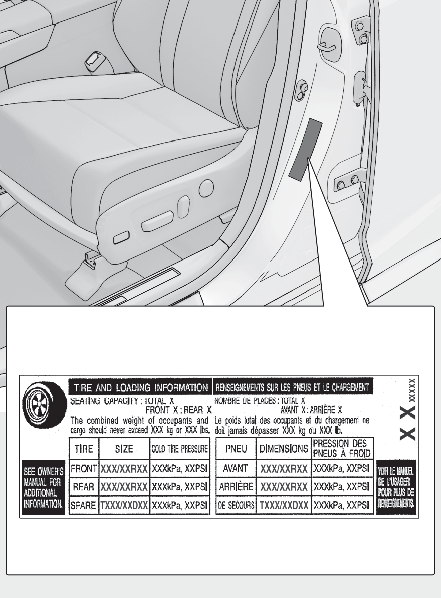
INSPECTION AND ADJUSTMENT PROCEDURE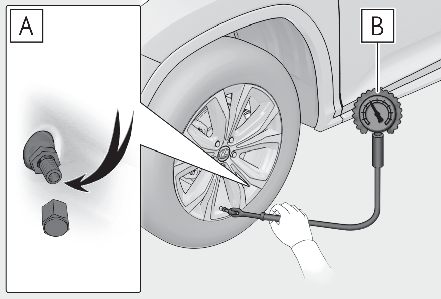
Tire valveTire pressure gaugeRemove the tire valve cap.Press the tip of the tire pressure gauge onto the tire valve.Read the pressure using the gauge gradations.If the tire inflation pressure is not at the recommended level, adjust the pressure.If you add too much air, press the center of the valve to deflate.After completing the tire inflation pressure measurement and adjustment, apply soapy water to the valve and check for leakage.Put the tire valve cap back on.Note:Tire inflation pressure check intervalYou should check tire inflation pressure every two weeks, or at least once a month. Do not forget to check the spare.Effects of incorrect tire inflation pressureDriving with incorrect tire inflation pressure may result in the following:Reduced fuel economyReduced driving comfort and poor handlingReduced tire life due to wearReduced safetyDamage to the drive trainIf a tire needs frequent inflating, have it checked by your Lexus dealer.Instructions for checking tire inflation pressureWhen checking tire inflation pressure, observe the following:Check only when the tires are cold.If your vehicle has been parked for at least 3 hours or has not been driven for more than 1 mile or 1.5 km, you will get an accurate cold tire inflation pressure reading.Always use a tire pressure gauge.It is difficult to judge if a tire is properly inflated based only on its appearance.It is normal for the tire inflation pressure to be higher after driving as heat is generated in the tire. Do not reduce tire inflation pressure after driving.Never exceed the vehicle capacity weight.Passengers and luggage weight should be placed so that the vehicle is balanced.WARNING:Proper inflation is critical to save tire performanceKeep your tires properly inflated.If the tires are not properly inflated, the following conditions may occur which could lead to an accident resulting in death or serious injury:Excessive wearUneven wearPoor handlingPossibility of blowouts resulting from overheated tiresAir leaking from between tire and wheelWheel deformation and/or tire damageGreater possibility of tire damage while driving (due to road hazards, expansion joints, sharp edges in the road, etc.)NOTICE:When inspecting and adjusting tire inflation pressureBe sure to put the tire valve caps back on.If a valve cap is not installed, dirt or moisture may get into the valve and cause an air leak, resulting in decreased tire inflation pressure.
Download Manual