AHB (AUTOMATIC HIGH BEAM)
The Automatic High Beam uses a camera sensor located behind the upper portion of the windshield to assess the brightness of the lights of vehicles ahead, streetlights, etc., and automatically turns the high beams on or off as necessary.WARNING:Limitations of the Automatic High BeamDo not overly rely on the Automatic High Beam. Always drive safely, taking care to observe your surroundings and turning the high beams on or off manually if necessary.To prevent incorrect operation of the Automatic High Beam systemDo not overload the vehicle.ACTIVATING THE AUTOMATIC HIGH BEAMPress the Automatic High Beam switch.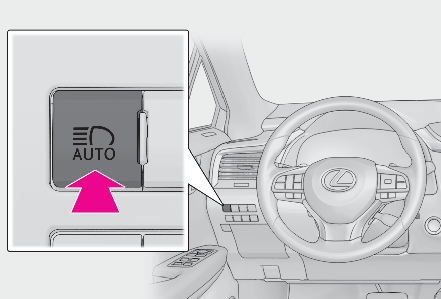
Turn the headlight switch to the or position.The Automatic High Beam indicator will come on when the system is operating.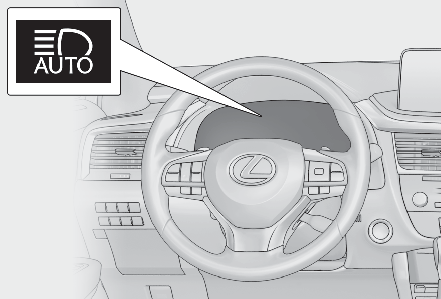
Note:Conditions to turn the high beams on/off automaticallyWhen all of the following conditions are met, the high beams will be turned on automatically (after approximately 1 second):The vehicle speed is approximately 21 mph (34 km/h) or more.The area ahead of the vehicle is dark.There are no vehicles ahead with headlights or tail lights turned on.There are few streetlights on the road ahead.If any of the following conditions is met, the high beams will turn off automatically:The vehicle speed is below approximately 17 mph (27 km/h).The area ahead of the vehicle is not dark.Vehicles ahead have their headlights or tail lights turned on.There are many streetlights on the road ahead.Camera sensor detection informationThe high beams may not be automatically turned off in the following situations:When a vehicle suddenly appears from around a curveWhen the vehicle is cut in front of by another vehicleWhen vehicles ahead cannot be detected due to repeated curves, road dividers or roadside treesWhen vehicles ahead appear in a faraway lane on a wide roadWhen the lights of vehicles ahead are not onThe high beams may be turned off if a vehicle ahead that is using fog lights without its headlights turned on is detected.House lights, street lights, traffic signals, and illuminated billboards or signs and other reflective objects may cause the high beams to change to the low beams, or the low beams to remain on.The following factors may affect the amount of time taken for the high beams to turn on or off:The brightness of the headlights, fog lights, and tail lights of vehicles aheadThe movement and direction of vehicles aheadWhen a vehicle ahead only has operational lights on one sideWhen a vehicle ahead is a two-wheeled vehicleThe condition of the road (gradient, curve, condition of the road surface, etc.)The number of passengers and amount of luggage in the vehicleThe high beams may turn on or off unexpectedly.Bicycles or similar vehicles may not be detected.In the following situations the system may not be able to correctly detect the surrounding brightness level. This may cause the low beams to remain on or the high beams to flash or dazzle pedestrians or vehicles ahead. In such a case, it is necessary to manually switch between the high and low beams.When driving in inclement weather (heavy rain, snow, fog, sandstorms, etc.)When the windshield is obscured by fog, mist, ice, dirt, etc.When the windshield is cracked or damagedWhen the camera sensor is deformed or dirtyWhen the temperature of the camera sensor is extremely highWhen the surrounding brightness level is equal to that of headlights, tail lights or fog lightsWhen headlights or tail lights of vehicles ahead are turned off, dirty, changing color, or not aimed properlyWhen the vehicle is hit by water, snow, dust, etc. from a preceding vehicleWhen driving through an area of intermittently changing brightness and darknessWhen frequently and repeatedly driving ascending/descending roads, or roads with rough, bumpy or uneven surfaces (such as stone-paved roads, gravel roads, etc.)When frequently and repeatedly taking curves or driving on a winding roadWhen there is a highly reflective object ahead of the vehicle, such as a sign or mirrorWhen the back of a preceding vehicle is highly reflective, such as a container on a truckWhen the vehicle’s headlights are damaged or dirty, or are not aimed properlyWhen the vehicle is listing or titling due to a flat tire, a trailer being towed, etc.When the headlights are changed between the high beams and low beams repeatedly in an abnormal mannerWhen the driver believes that the high beams may be flashing or dazzling pedestrians or other driversTemporarily lowering sensor sensitivityThe sensitivity of the sensor can be temporarily lowered.Turn the engine switch off while the following conditions are met.The headlight switch is in or .The headlight switch lever is in high beam position.Automatic High Beam switch is on.Turn the engine switch to IGNITION ON mode.Within 60 seconds after step 2, repeat pulling the headlight switch lever to the original position then pushing it to the high beam position quickly 10 times, then leave the lever in high beam position.If the sensitivity is changed, the Automatic High Beam indicator is turn on and off 3 times.Automatic High Beam (headlights) may turn on even when the vehicle is stopped.TURNING THE HIGH BEAMS ON/OFF MANUALLYSWITCHING TO THE HIGH BEAMSPush the lever away from you.The Automatic High Beam indicator will turn off and the high beam indicator will turn on.Pull the lever to its original position to activate the Automatic High Beam system again.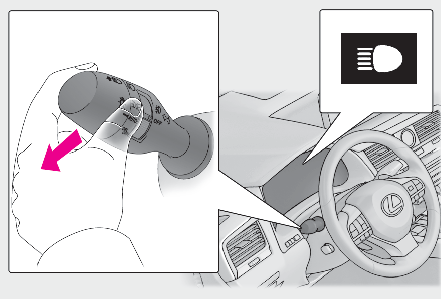
SWITCHING TO THE LOW BEAMSPress the Automatic High Beam switch.The Automatic High Beam indicator will turn off.Press the switch to activate the Automatic High Beam system again.
TEMPORARILY SWITCHING TO THE LOW BEAMSPull the lever toward you and then return it to its original position.The high beams are on while the lever is pulled toward you, however, after the lever is returned to its original position, the low beams remain on for a certain amount of time. Afterwards, the Automatic High Beam will be activated again.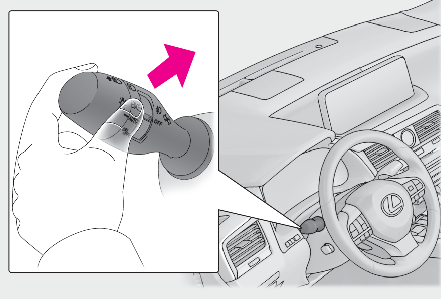
Note:Temporarily switching to the low beamsIt is recommended to switch to the low beams when the high beam may cause problems or distress to other drivers or pedestrians nearby.
Download Manual