BSM (BLIND SPOT MONITOR)*
*If equippedThe Blind Spot Monitor is a system that uses rear side radar sensors installed on the inner side of the rear bumper on the left and right side to assist the driver in confirming safety when changing lanes.WARNING:Cautions regarding the use of the systemThe driver is solely responsible for safe driving. Always drive safely, taking care to observe your surroundings.The Blind Spot Monitor is a supplementary function which alerts the driver that a vehicle is in a blind spot of the outside rear view mirrors or is approaching rapidly from behind into a blind spot. Do not overly rely on the Blind Spot Monitor. As the function cannot judge if it is safe to change lanes, over reliance could lead to an accident resulting in death or serious injury.As the system may not function correctly under certain conditions, the driver’s own visual confirmation of safety is necessary.SYSTEM COMPONENTS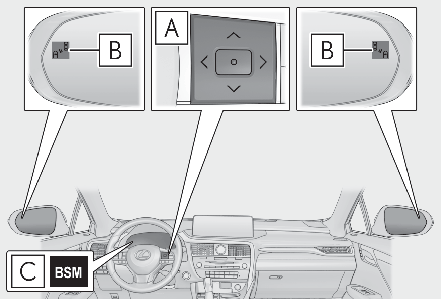
Meter control switchesTurning the Blind Spot Monitor on/off.Outside rear view mirror indicatorsWhen a vehicle is detected in a blind spot of the outside rear view mirrors or approaching rapidly from behind into a blind spot, the outside rear view mirror indicator on the detected side will illuminate. If the turn signal lever is operated toward the detected side, the outside rear view mirror indicator flashes.BSM indicatorIlluminates when the Blind Spot Monitor is enabledNote:Outside rear view mirror indicator visibilityIn strong sunlight, the outside rear view mirror indicator may be difficult to see.When “ Blind Spot Monitor Unavailable” is shown on the multi-information displayIce, snow, mud, etc., may be attached to the rear bumper around the sensors. (To ensure the system can operate properly) The system should return to normal operation after removing the ice, snow, mud, etc. from the rear bumper. Additionally, the sensors may not operate normally when driving in extremely hot or cold environments.CustomizationSome functions can be customized. (Customizable features)WARNING:To ensure the system can operate properlyBlind Spot Monitor sensors are installed behind the left and right sides of the rear bumper respectively. Observe the following to ensure the Blind Spot Monitor can operate correctly.Keep the sensors and the surrounding areas on the rear bumper clean at all times.If a sensor or its surrounding area on the rear bumper is dirty or covered with snow, the Blind Spot Monitor may not operate and a warning message (When “Blind Spot Monitor Unavailable” is shown on the multi-information display) will be displayed. In this situation, clear off the dirt or snow and drive the vehicle with the operation conditions of the BSM function (The Blind Spot Monitor is operational when) satisfied for approximately 10 minutes. If the warning message does not disappear, have the vehicle inspected by your Lexus dealer.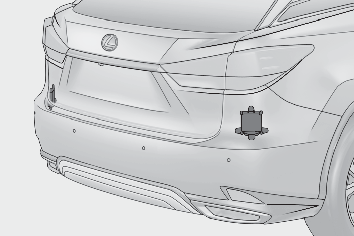
Do not attach stickers to the sensor or surrounding area on the rear bumper.Do not subject a sensor or its surrounding area on the rear bumper to a strong impact.If a sensor is moved even slightly off position, the system may malfunction and vehicles may not be detected correctly.In the following situations, have your vehicle inspected by your Lexus dealer.A sensor or its surrounding area is subject to a strong impact.If the surrounding area of a sensor is scratched or dented, or part of them has become disconnected.Do not disassemble the sensor.Do not modify the sensor or surrounding area on the rear bumper.If a sensor or the rear bumper needs to be removed/installed or replaced, contact your Lexus dealer.Do not paint the rear bumper any color other than an official Lexus color.TURNING THE BLIND SPOT MONITOR ON/OFFUse the meter control switches to turn on/off the function.Press or to select .Press or to select and then press .BLIND SPOT MONITOR OPERATIONVEHICLES THAT CAN BE DETECTED BY THE BLIND SPOT MONITORThe Blind Spot Monitor uses rear side radar sensors to detect the following vehicles traveling in adjacent lanes and advises the driver of the presence of such vehicles via the indicators on the outside rear view mirrors.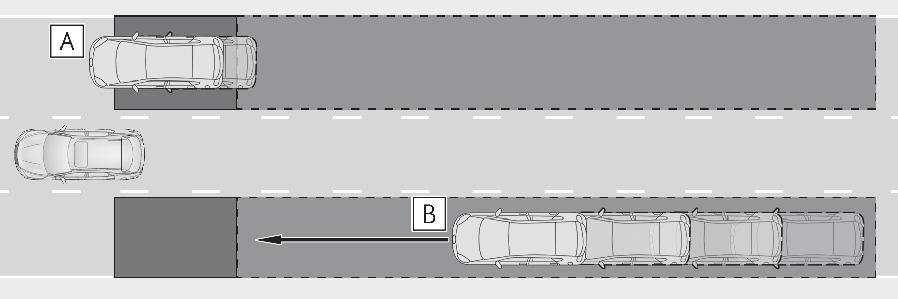
Vehicles that are traveling in areas that are not visible using the outside rear view mirrors (the blind spots)Vehicles that are approaching rapidly from behind in areas that are not visible using the outside rear view mirrors (the blind spots)THE BLIND SPOT MONITOR DETECTION AREASThe areas that vehicles can be detected in are outlined below.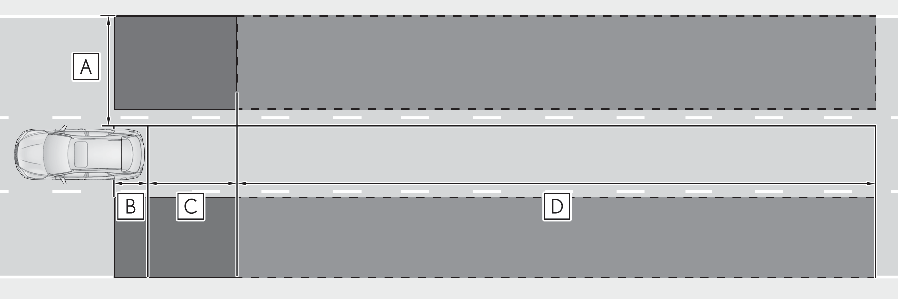
The range of each detection area is:Approximately 1.6 ft. (0.5 m) to 11.5 ft. (3.5 m) from either side of the vehicle*1Approximately 3.3 ft. (1 m) forward of the rear bumperApproximately 9.8 ft. (3 m) from the rear bumperApproximately 9.8 ft. (3 m) to 197 ft. (60 m) from the rear bumper*2*1The area between the side of the vehicle and 1.6 ft. (0.5 m) from the side of the vehicle cannot be detected.*2The greater the difference in speed between your vehicle and the detected vehicle is, the farther away the vehicle will be detected, causing the outside rear view mirror indicator to illuminate or flash.Note:The Blind Spot Monitor is operational whenThe Blind Spot Monitor is operational when all of the following conditions are met:The Blind Spot Monitor is on.The shift lever is in a position other than R.The vehicle speed is greater than approximately 10 mph (16 km/h).The Blind Spot Monitor will detect a vehicle whenThe Blind Spot Monitor will detect a vehicle present in the detection area in the following situations:A vehicle in an adjacent lane overtakes your vehicle.You overtake a vehicle in an adjacent lane slowly.Another vehicle enters the detection area when it changes lanes.Conditions under which the system will not detect a vehicleThe Blind Spot Monitor is not designed to detect the following types of vehicles and/or objects:Small motorcycles, bicycles, pedestrians, etc.*Vehicles traveling in the opposite directionGuardrails, walls, signs, parked vehicles and similar stationary objects*Following vehicles that are in the same lane*Vehicles traveling 2 lanes away from your vehicle*Vehicles which are being overtaken rapidly by your vehicle**Depending on the conditions, detection of a vehicle and/or object may occur.Conditions under which the system may not function correctlyThe Blind Spot Monitor may not detect vehicles correctly in the following situations:When the sensor is misaligned due to a strong impact to the sensor or its surrounding areaWhen mud, snow, ice, a sticker, etc. is covering the sensor or surrounding area on the rear bumperWhen driving on a road surface that is wet with standing water during bad weather, such as heavy rain, snow, or fogWhen multiple vehicles are approaching with only a small gap between each vehicleWhen the distance between your vehicle and a following vehicle is shortWhen there is a significant difference in speed between your vehicle and the vehicle that enters the detection areaWhen the difference in speed between your vehicle and another vehicle is changingWhen a vehicle enters a detection area traveling at about the same speed as your vehicleAs your vehicle starts from a stop, a vehicle remains in the detection areaWhen driving up and down consecutive steep inclines, such as hills, dips in the road, etc.When driving on roads with sharp bends, consecutive curves, or uneven surfacesWhen vehicle lanes are wide, or when driving on the edge of a lane, and the vehicle in an adjacent lane is far away from your vehicleWhen an accessory (such as a bicycle carrier) is installed to the rear of the vehicleWhen there is a significant difference in height between your vehicle and the vehicle that enters the detection areaImmediately after the Blind Spot Monitor is turned onInstances of the Blind Spot Monitor unnecessarily detecting a vehicle and/or object may increase in the following situations:When the sensor is misaligned due to a strong impact to the sensor or its surrounding areaWhen the distance between your vehicle and a guardrail, wall, etc. that enters the detection area is shortWhen driving up and down consecutive steep inclines, such as hills, dips in the road, etc.When vehicle lanes are narrow, or when driving on the edge of a lane, and a vehicle traveling in a lane other than the adjacent lanes enters the detection areaWhen driving on roads with sharp bends, consecutive curves, or uneven surfacesWhen the tires are slipping or spinningWhen the distance between your vehicle and a following vehicle is shortWhen an accessory (such as a bicycle carrier) is installed to the rear of the vehicle
Download Manual