Vehicle care
Tips on vehicle care
Regular and expert care helps to preserve the value of your vehicle. Such expert care may also be one of the requirements of your New Vehicle Limited Warranty if corrosion repair or repainting is necessary.
The longer stains, dirt, and other deposits remain on the surfaces of vehicle components and upholstery, the more difficult it may be to clean them. High temperatures (including strong sunlight) increase the corrosive effects. If stains, dirt and deposits are left untreated for a long time, they may become impossible to remove.
Vehicle care products are available from your authorized Volkswagen dealer or authorized Volkswagen Service Facility.
 WARNING
Improper care and cleaning of vehicle components can impact the safety features of the vehicle and cause severe injuries.
- Always clean and maintain vehicle components according to manufacturer's instructions.
- Only use approved or recommended cleaners.
- Never use vehicle care products containing solvents. Solvents can damage plastics, the airbag housing, and other vehicle materials.
- Protect arms and hands from sharp vehicle parts, for example, while cleaning the underbody of the vehicle.
WARNING
Dirty or fogged up windows reduce visibility and increase the risk of accidents and severe injuries.
- Do not drive until you have clear visibility through all windows.
- Remove ice, snow, and condensation from all inside and outside window surfaces.
- Do not treat the windshield with water-repellent window coating agents. In unfavorable conditions, they can reduce visibility.
WARNING
Vehicle care products can be dangerous. Improper use can cause accidents, burns, poisoning, or other serious personal injuries.
- Always store vehicle care products only in original containers that are securely closed.
- Always read and heed all the instructions and all WARNINGS on the package.
- To reduce the risk of poisoning, never use empty food or beverage containers that might mislead someone into drinking from them.
- Always keep vehicle care products out of the reach of children.
- Always use such products outdoors or in well-ventilated areas, because harmful vapors may be released when these products are used.
- Never use fuel, turpentine, engine oil, nail polish remover or other volatile fluids for vehicle care. They are poisonous and highly flammable.
 CAUTION
Sharp edges under the vehicle can cut exposed skin.
- Always protect your hands and arms from cuts on sharp metal edges when cleaning the underbody, the inside of the wheel housings, etc.
 NOTE
NOTE
Stains, dirt, and other deposits with aggressive and solvent-based ingredients can cause irreparable damage to the vehicle equipment, even if left for only a short time.
- Do not let stains, dirt, and other deposits dry.
- Have stubborn stains removed by your authorized Volkswagen dealer or authorized Volkswagen Service Facility.
NOTE
Vehicle care products containing solvents can damage plastics and other vehicle materials.

When buying vehicle care products, try to choose those that are not harmful to the environment.
Never throw out vehicle care products with ordinary household waste. Always read and heed all the instructions and all WARNINGS on the package.
Washing the vehicle
The vehicle underbody should be washed regularly and thoroughly.
Automatic car wash
Pay close attention to the information provided by the car wash operator, especially if you have installed additional accessories on the vehicle, such as a spoiler, a roof rack, or an antenna .
- Volkswagen recommends using brushless car wash facilities.
- Switch off the windshield wipers and the rain sensor.
- Fold in the outside mirrors.
Washing with a power washer
Always follow the instructions for the power washer. This especially applies to the pressure and spraying distance .
- Use water only up to a maximum temperature of +140 °F (+60 °C).
- Do not clean windows that are iced over or covered in snow with a power washer.
- Move the jet of water smoothly so that the nozzle is at least 20 inches (50 cm) away from the vehicle.
- Do not point the water jet at the same location for too long. Instead, leave stubborn dirt to soak.
- If possible, do not direct the water jet at seals, decorative trim, tires, rubber hoses, insulation materials, door locks or any other sensitive components.
- Sensors, camera lenses, and decorative and protective films should be sprayed directly only for brief periods of time .
Never use concentrated jet nozzles or so-called dirt blasters .
Never use a power washer to clean the engine compartment .
Washing by hand
Washing by hand is a gentle way to clean your vehicle. However, there are also some things to note for this .
- First soften the dirt with plenty of water and then rinse off as much dirt as possible.
- Clean the vehicle with a soft sponge, washing mitt, or brush using only light pressure. Start on the roof and work down.
- Rinse the sponge, glove, or brush thoroughly and often.
- Clean the wheels and under the door sills last. Use a different sponge or wash mitt.
Use a cleaning shampoo for very stubborn dirt only.
Waxing
A good coat of wax helps to protect the vehicle paint. When water no longer forms small drops and runs off when the paint is clean, apply a new coat of good hard wax to protect the vehicle again.
Even if a wax solution is used regularly at the car wash, Volkswagen recommends applying a coat of hard wax at least twice a year to protect the paint.
Polishing
Polish your vehicle if the paint has lost its shine and the gloss cannot be brought back with wax.
The vehicle must be waxed after polishing if the polish used does not contain wax compounds to seal the paint.
WARNING
After the vehicle has been washed, the wet brakes or, in winter, brake discs or pads coated with ice, react slower and need longer stopping distances.
- Always dry the brakes and clean off any ice coatings with a few careful applications of the brake. Make sure not to endanger other motorists or cyclists or disobey legal requirements.
WARNING
Improper use of power washers can cause serious invisible permanent damage leading to tire failure and loss of vehicle control. This can cause accidents and severe personal injury.
- Keep sufficient distance between water jet and tires. Never wash tires with a nozzle that sprays the water out in a direct stream regardless of the distance to the tire and even for a very short time.
- Never use dirt blasters to clean tires. Even spraying from a relatively long distance for a very short time can do visible or invisible damage to tires.
NOTE
Serious vehicle damage may occur if the vehicle is not washed correctly.
- The water temperature must not be more than +140 °F (+60 °C).
- Do not wash the vehicle in direct sunlight.
- Do not use insect sponges, abrasive kitchen sponges or similar things to clean the vehicle. These can damage the paint finish.
- Never clean headlights with a dry cloth or sponge. Always use a wet cloth or sponge. For best results use soapy water.
- When washing or rinsing the vehicle in cold weather, do not let water get into the lock cylinders or point the hose at gaps around the doors, hood, or trunk lid. The water could freeze on the locks and seals and make it difficult to open the vehicle!
- When outside temperatures are low, wipe the rubber seals and their contact surfaces dry to help prevent freezing.
- In order for any sensors located on the outside of the vehicle to work correctly, they must be kept clean and clear of snow and ice.
- When using a power washer or steam cleaner, only spray the sensors directly for a short period of time and always keep the nozzle at least 4 inches (10 cm) from the sensor.
- Do not clean icy or snow-covered windows with a power washer.
NOTE
To help prevent vehicle damage in a car wash:
- Compare the vehicle track width with the dimensions of the guide rails in the car wash to help prevent damage to wheel rims and tires!
- Switch off the rain sensor before driving the vehicle through a car wash .
- Make sure there is enough clearance for the height and width of the vehicle.
- To help prevent paint damage to the engine hood, place wiper blades against the windshield after they have dried. Do not let them snap back into place.
- Fold the outside mirrors toward the vehicle body.
- Lock the trunk lid to help prevent unintentional opening in the car wash.
Wash the vehicle only at specifically designated wash locations to help prevent water contaminated with oil, grease and fuel from entering the storm drain sewer system. In some areas it is against the law to wash motor vehicles anywhere than other than at specified designated car washing locations.
Exterior care and cleaning
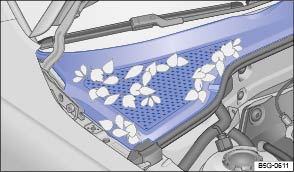
Fig. 199 Between the engine compartment and the windshield: plenum chamber.
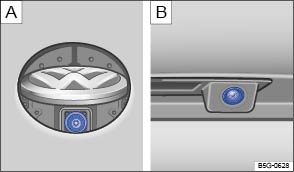
Fig. 200 In the trunk lid: Location of the rear view camera (depending on equipment). Under the Volkswagen emblem or above the rear license plate.
Windows and outside mirrors
Use a commercially available alcohol-based window cleaner or a silicone remover to remove rubber, oil, grease and silicone deposits from the windows and outside mirrors .
Dry windows and mirrors with a clean chamois or a lint-free cloth. Do not use a chamois that has been used to wipe painted surfaces because it will have absorbed an oily residue that will smear the glass surfaces.
Remove snow from all windows and outside mirrors with an appropriate brush. When using an ice scraper, always scrape in one direction by pushing the scraper away from you. Dirt can scratch the glass when pulling the scraper backward. The best way to remove ice is with a deicer spray.
Removing wax residue
Automatic car washes and vehicle care products can leave a wax residue on all glass surfaces. These wax residues can only be removed with special cleaners or cleaning cloths. Wax residue left on the windshield can cause the windshield wipers to grab and squeak instead of gliding smoothly. We recommend that after every car wash you remove any wax residue left on the windshield with a window cleaning cloth/chamois.
Windshield wiper squeak and grab can be reduced by filling the windshield washer fluid tank with a wiper fluid containing wax-removing agents. Make sure to maintain the proper mixing ratio when refilling the washer fluid tank. Grease-removing cleaning agents cannot remove wax residue .
Windshield cleaners, special cleaners, and cleaning cloths are available from your authorized Volkswagen dealer and authorized Volkswagen Service Facility.
Wiper blades
.
Paint
Always treat surfaces carefully in order to prevent damage to the paint coat. Use a clean, soft cloth and a mild soap solution1) or cleaning clay to remove any light dirt immediately, e.g. deposits, insect residue, or cosmetics.
Repair minor paint damage with a touch-up pen. Refer to the vehicle identification label for the paint code.
- Overflowing fuel or service fluids: clean immediately.
- Flash rust deposits: moisten deposits with a soap solution. Then remove any deposits with cleaning clay.
- Corrosion: have removed by a qualified workshop.
Engine compartment and plenum chamber
The engine compartment of a vehicle is a dangerous area .
Regularly remove leaves and other debris from the plenum chamber cover by hand or with a vacuum cleaner . Have the area under the perforated cover cleaned by an authorized Volkswagen dealer or authorized Volkswagen Service Facility.
If necessary, have the engine compartment professionally cleaned by an authorized Volkswagen dealer or authorized Volkswagen Service Facility. Incorrect cleaning procedures could remove corrosion protection and damage electrical components, among other things.
Never use a power washer to clean the engine compartment . Water sprayed or poured into the engine compartment could enter directly into the vehicle interior through the plenum chamber.
Camera lenses and sensors
Wet the camera lens with a commercially available alcohol-based glass cleaner and clean with a soft cloth .
- Park the vehicle in a safe place on a firm, level surface.
- Switch on the ignition (but do not start the engine).
- Apply the parking brake to help prevent the vehicle from moving .
- Shift into reverse (R).
Keep camera lenses and sensors clean and free of snow and ice.
Remove snow with a brush. Do not use warm or hot water to remove ice. Remove ice with deicer spray .
Chrome and aluminum parts
- Clean the surface in a dust-free environment using a clean, soft cloth and a mild soap solution2).
- If the surface is especially dirty, use a special solvent-free cleaning material.
- Then polish chrome and aluminum parts with a soft, dry cloth .
- Chrome parts can be treated with hard wax.
- Clean anodized parts with a chrome and aluminium cleaning material.
Headlights and taillights
Clean the lights with a soft, damp cloth and a mild soap solution2). Only use alcohol-free, solvent-free cleaning materials.
Wheel rims
Remove dirt and gritting salt deposits with plenty of water. If road salt and brake dust are not removed regularly, they can corrode the metal.
For alloy wheels:Every 2 weeks: clean the wheel rims with an acid-free detergent specifically designed for light alloy wheels. Every 3 months: Volkswagen recommends applying a hard wax compound to the wheel rims. Do not use car polish or other abrasive products.
- Paint or protective coating damage: Repair the damaged area right away. If necessary, have the damage repaired by an authorized Volkswagen dealer or authorized Volkswagen Service Facility.
- Stubborn brake dust: Remove with an industrial cleaner.
Deicing door lock cylinders
Volkswagen recommends using only genuine Volkswagen deicer spray with lubricating and anti-corrosive properties to deice door lock cylinders. Do not use door lock deicer sprays containing grease solvents as they can cause the lock cylinder to rust.
Cleaning the power sunroof
Dirt and debris can prevent the power sunroof from working properly.
Remove leaves and other objects from the sunroof guide rails regularly either by hand or using a vacuum cleaner .
WARNING
Undercoating and rustproofing products can catch fire on the hot exhaust system or any other hot engine component.
- Never apply additional undercoating or rustproofing on or near the exhaust manifold, the exhaust pipes, the catalytic converter, the heat shields, or any other hot vehicle component.
WARNING
Injuries, scalding, electric shock, accidents, and fire hazards can occur while working on the engine or in the engine compartment!
- Before working in the engine compartment, be sure to familiarize yourself with the necessary procedures and generally accepted safety precautions .
- Volkswagen recommends having the work performed by an authorized Volkswagen dealer or authorized Volkswagen Service Facility.
NOTE
Antennas and heating elements on the insides of windows can be damaged if not cleaned properly.
- Never use warm or hot water to remove snow and ice from windows and mirrors. This could cause the glass to crack!
- The heating elements for the rear defroster are on the inside of the rear window. Do not put stickers over the heating elements on the inside of the rear window and never clean the inside of the windows with corrosive or acidic cleaning agents or other chemicals that could damage the heating elements.
- Antennas installed on the insides of windows can be damaged by abrasive objects or by corrosive or acidic cleaning agents or other chemicals. Do not place any stickers on the windshield-integrated antenna and never clean the antenna with corrosive or acidic cleaning agents or other chemicals.
NOTE
Serious vehicle damage may occur if the vehicle is not cared for correctly.
- Do not clean or polish in direct sunlight.
- Do not clean, wax or polish your vehicle if it is dirty, or in a sandy or dusty place.
- Do not use abrasive cleaners or abrasive sponges.
- Do not polish dirty surfaces.
- Do not use cleaning materials that contain solvents.
- Do not use hard wax or polish on matte-finished parts, plastic parts, headlights and rear lights, or chrome and aluminum parts.
- Do not spray or pour water (for example, with a power washer) into the plenum chamber.
NOTE
Chrome wheel covers and hubcaps can have an extra coating. Do not treat them with chrome care or polishing products. Use regular paint care and polishing products.
NOTE
Do not attempt to clean the drain tubes for the power sunroof. This could result in vehicle damage caused by punctured or damaged drain tubes.
- Volkswagen recommends having the work performed by an authorized Volkswagen dealer or authorized Volkswagen Service Facility.
NOTE
Improper cleaning may damage the camera lenses.
- Never use abrasive cleaning agents to clean the camera lens.
- Never remove snow or ice on the camera lens with warm or hot water.
NOTE
The plenum chamber can become blocked by leaves and dirt. Any water that cannot drain away could enter the passenger compartment.
- Have the area under the perforated cover cleaned by an authorized Volkswagen dealer or authorized Volkswagen Service Facility.
Wash the engine compartment only in special wash bays so that the oily dirt and fuel residue that are washed off the vehicle will not enter the sewage system. In some areas it illegal to wash the engine compartment anywhere other than at such specified locations.

Do not apply any rubber care products to the rubber seals on the body in the areas around the windows in the driver and front passenger doors. The product could run down onto the windows and smudge them.
1) Mild soap solution: 2 tablespoons of liquid soap in 1 quart (liter) of water.
2) Mild soap solution: 2 tablespoons of liquid soap in 1 quart (liter) of water.
Interior care and cleaning
Fabrics, microfiber fabric, and leatherette
Only use cleaning products approved by Volkswagen. Do not treat fabrics with leather care products, solvents, floor wax, shoe polish, stain remover or similar products.
If the upholstery and fabric trim pieces are heavily soiled, see your authorized Volkswagen dealer or authorized Volkswagen Service Facility before you begin cleaning to learn about suitable cleaning options. If necessary, have the cleaning done by a professional.
- Dust and dirt particles in pores, folds, and seams can have a scouring effect on surfaces: Vacuum upholstery, fabric trim, microfiber fabric, and carpeting regularly with a suitable brush attachment to help prevent permanent surface damage.
- Grease-based stains such as oil, lipstick, etc.: Remove fresh stains with an absorbent cloth.
- Special stains such as ballpoint pen or nail polish: Use cleaning products approved by Volkswagen or a mild soap solution1).
Leather upholstery
Clean with a cotton cloth and a mild soap solution1) . Do not let water soak through the leather or penetrate into seams.
Clean dried stains with a special stain remover designed for leather.
After each cleaning, apply cream that waterproofs the leather and protects it against the sun. Such creams also nourish the leather, let it breathe, keep it flexible and moisturized. At the same time it protects the surface.
Do not treat leather with solvents, floor wax, shoe polish, stain remover, or similar products.
- If necessary, refresh fading spots with a specially-colored leather cream.
- Grease-based stains, such as oil, lipstick, etc.: Remove fresh stains as soon as possible with an absorbent cloth.
- Special stains, such as ballpoint pen, marker, nail polish, latex paint, or shoe polish: Clean with a special stain remover designed for leather.
Plastic components, the instrument panel, storage compartments, and cup holders
Moisten a clean, lint-free cloth with a mild soap solution1) and clean plastic or rubber parts.
If this is not sufficient, then use a special solvent-free care and cleaning product designed for plastics .
Some storage compartments and cup holders may have a removable rubber or felt insert at the bottom. Clean inserts with a vacuum cleaner.
Controls
Remove coarse dirt and dirt that is difficult to reach using a soft brush. Then use a clean, soft cloth and a mild soap solution2). Do not allow liquids to enter the controls.
Displays
Use a cleaning cloth with a little water, a suitable glass cleaner or LCD cleaner. Do not clean displays with a dry cloth. Switch off the Infotainment system before cleaning.
Rubber door and window seals
Use a soft, lint-free cloth and water to remove dust and dirt from the rubber seals.
Treat regularly with a suitable rubber care product.
Safety belts
If a safety belt is dirty, this can prevent the belt from working properly. Keep safety belts clean and regularly check all safety belts for damage.
Safety belts must never be taken apart for cleaning.
Carefully pull the dirty safety belt out of the retractor and keep it out. Remove coarse dirt with a soft brush . Clean the safety belt with a mild soap solution2). After cleaning, always give the safety belts time to dry thoroughly before letting them retract. This helps prevent damage to the retractor.
Wooden trim
Clean with a soft cloth and a mild soap solution2).
Care and treatment of upholstery
Modern clothing fabrics such as dark denim may not be completely colorfast. Even with normal use, dye from these and other fabrics can rub off on seat upholstery and leave visible discolorations (especially on light-colored seat upholstery). This is caused by a lack of colorfastness in the clothing fabric, not by any fault in the seat upholstery fabric. To help prevent damage to the seat upholstery, always make sure your clothing is colorfast. Volkswagen recommends having a qualified specialist remove any discolorations from the seat upholstery.
Airbag components and electrical connectors may be installed in the driver seat, the front passenger seat, and in the outer rear seats. Damaging, cleaning and handling incorrectly, or wetting or soaking these seat surfaces and backrests can damage the vehicle electrical system and prevent the airbag system from working properly .
Electrical components and connectors that could be damaged by incorrect cleaning or handling are installed in power seats and heated seats . This can also result in damage to other parts of the vehicle electrical system.
- Do not use power washers, steam cleaners, or cooling spray.
- Do not turn on the seat heating to dry the seats.
- Do not use detergent pastes or mild detergent solutions.
- Do not wet the surface completely.
- Open Velcro® fasteners can damage upholstery, fabric, and trim. Before you get into the vehicle, close all Velcro® fasteners that could come into contact with upholstery fabrics and cloth trim.
- Sharp-edged objects and items on clothing and belts (such as belt clips, mobile phone cases, zippers, rivets, and rhinestones) can damage upholstery material and fabric trim. To help prevent damage, do not let such items come into direct contact with the upholstery and fabric trim.
- In the event of uncertainty, contact your authorized Volkswagen dealer or authorized Volkswagen Service Facility.
WARNING
If there is a malfunction in the airbag system, the airbag may not deploy correctly or at all, or it may deploy unexpectedly. This could cause fatal injuries.
- Have the airbag system inspected immediately by your authorized Volkswagen dealer or authorized Volkswagen Service Facility.
WARNING
Using solvents or other improper cleaning products on surfaces where airbags are located can change the way airbags deploy in a crash.
- Products containing solvents will change the properties of the plastics and may cause plastic parts to break and fly around when the airbag deploys in a crash, causing injury.
- Never use solvents or cleaners on the steering wheel horn pad or on the instrument panel because they can damage the airbag cover or change the stiffness or strength of the material so that the airbag cannot deploy and protect properly.
- When cleaning the horn pad and instrument panel, use only a soft, dry cloth or a cloth moistened with plain water.
WARNING
Damage to safety belts reduces their overall effectiveness and increases the risk of serious personal injury and death whenever the vehicle is being used.
- Check the condition of all safety belts and buckles regularly. If you notice that the safety belt webbing, hardware, retractor, buckle, or any other part of the safety belts is damaged, immediately have an authorized Volkswagen dealer or authorized Volkswagen Service Facility replace the safety belt with the correct replacement belt for your vehicle model and model year.
- Never use chemical cleaning agents, solvents, or any substance that may damage or weaken the safety belt webbing or any other parts of the safety belt. Never let the belts come into contact with corrosive fluids or sharp objects. Otherwise, the safety belt webbing will be significantly weakened.
- After cleaning, always give the safety belts time to dry completely before letting them retract. The moisture can damage the retractor and keep it from working properly.
- Never let foreign objects or liquids get into the safety belt latch. This could prevent the belt buckles and safety belts from working properly.
- Damaged safety belts must be replaced; they cannot be repaired.
- Never try to repair a damaged safety belt yourself. Never remove or modify the safety belts in any way.
- Safety belts that were subject to stress in an accident and stretched must be replaced with a correct, new safety belt, preferably by an authorized Volkswagen dealer or authorized Volkswagen Service Facility.
- Replacement after a crash may be necessary even if a safety belt shows no visible damage. Anchorages that have been loaded must also be inspected.
NOTE
- Vehicle care products containing solvents can cause irreparable damage to plastics and other vehicle materials.
- Stains, dirt and other deposits that contain aggressive substances or solvents can corrode vehicle materials and cause permanent damage, even after brief contact with the surface.
- Remove stains, dirt, and other deposits as quickly as possible and do not allow them to dry.
- To help prevent damage, have stubborn stains removed by a professional who has the necessary expertise and experience.
NOTE
Disregarding the upholstery-related checklist may lead to damage or discoloration of upholstery and fabric trim.
- Please note and follow the points listed in the checklist.
NOTE
If the upholstery on power seats, heated seats, or seats with airbag components is wet, electrical components and the vehicle electrical system could be damaged.
- If the seating surface becomes soaked, have it dried and the system components checked immediately by an authorized Volkswagen dealer or authorized Volkswagen Service Facility.
- Do not use steam cleaners because the steam could cause the dirt to penetrate deeper into the fabric and make it impossible to remove.
- Power washers and cooling sprays can damage the upholstery.
NOTE
- Clean only the carpet and floor mats with brushes. Other textile surfaces can be damaged by brushes.
- If detergent pastes or mild detergent solutions are applied with a damp cloth or sponge, the surfactants in the detergent may cause visible lines to form at the edges of the area where the detergent was applied. These lines are generally difficult or impossible to remove.
NOTE
- Do not soak microfiber fabric.
- Do not treat microfiber fabric with leather care products, solvents, floor wax, shoe polish, stain remover or similar products.
- Do not use brushes for damp cleaning, because they can damage upholstery surfaces.
- Do not use a steam cleaner, because dirt will penetrate deeper into the fabric.
NOTE
- Stains that have been left in place too long will penetrate the surface of the leather and cannot be removed.
- Never treat leather with solvents, floor wax, shoe polish, stain remover or similar products.
- Wipe up spilled liquids immediately with an absorbent cloth. Liquid can penetrate leather surfaces and seams within a few seconds.
- If the vehicle is left in the sun for a long time, cover the upholstery to protect the leather from direct sunlight and to help prevent fading and discoloration.
NOTE
- Do not clean leatherette with solvents, floor wax, shoe polish, stain remover, or similar products. These can cause the material to become brittle and break.
- Sharp-edged objects and items on clothing and belts (such as belt clips, mobile phone cases, zippers, rivets, and rhinestones) can damage upholstery material and fabric trim.
- If the vehicle is left in the sun for a long time, cover the upholstery to protect the leatherette from direct sunlight and to help prevent fading or discoloration.
Volkswagen recommends having any discoloration removed by an authorized Volkswagen dealer or authorized Volkswagen Service Facility.
Slight discoloration caused by wear and tear is normal.
1) Mild soap solution: 2 tablespoons of liquid soap in 1 quart (liter) of water.
2) Mild soap solution: 2 tablespoons of liquid soap in 1 quart (liter) of water.
Download Manual