Automatic and DSG® transmission
How the DSG® automated transmission works
Your vehicle may be equipped with a special DSG® automated transmission that combines the performance and economy of a standard manual transmission with the comfort and convenience of a conventional automatic transmission. The DSG transmission housing contains two clutches, one that works with the odd-numbered gears (1, 3, 5 and R) and the other that works with the even-numbered gears (2, 4, 6). The dual clutch configuration enables rapid shifts between gears without loss of traction as the dual clutch seamlessly transfers the engine power from one driveshaft to the other during gear shifts. An output shaft for each of the two gearbox units transmits the drive to the driven wheels via a differential. The DSG electronic control unit, sensors, and hydraulic control for clutch engagement and gear selection form one compact weight-saving unit.
Thanks to the dual-clutch design, the DSG system is more efficient than a conventional automatic transmission. For example, while idling, a torque converter in a conventional automatic transmission is engaged all the time (increasing load and engine fuel consumption), while the DSG gradually opens the clutch, allowing the engine to idle freely. In most cases, this efficiency combined with its low weight and intelligent control means that DSG can achieve the same or better fuel consumption than a manual transmission. The clutches, like the clutch in a standard manual transmission are subject to wear over time. The DSG transmission requires periodic maintenance that is described in the ,ChapterWarranty and Maintenance.
Automatic or DSG® transmission selector lever
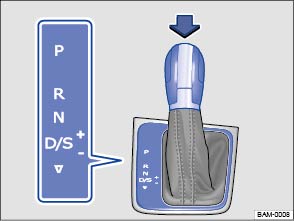
Fig. 104 Automatic or DSG transmission selector lever with shift lever release button (arrow).
If the ignition is switched on, either the current selector lever position or the current gear is shown in the instrument cluster display.
 – Park
The drive wheels are mechanically locked. Select only when the vehicle is not moving. To change the selector lever position, switch on the ignition (if it is off) and then press the selector lever release button while holding down the brake pedal.
 – Reverse
The reverse gear is engaged. Shift into reverse only when the vehicle is not moving.
 – Neutral
Transmission is in neutral position. No power is transmitted to the wheels and no engine braking is available.
 /
/ – Drive or Sport Drive
Standard driving position D: All forward gears shift up and down automatically. The transmission shifts as needed depending on engine load, individual driving style, and vehicle speed.
Sport driving position S: All forward gears automatically upshift later and downshift earlier than in position D to take full advantage of the engine's power reserves. The transmission shifts as needed depending on engine load, individual driving style, and vehicle speed.
Switch between Drive (D) and Sport drive (S) by pulling the selector lever once to the rear from gear position D/S . The selector lever always returns to gear position D/S.
It is possible to access Tiptronic selection from gear position D/S when either Drive (D) or Sport drive (S) is active .
Tiptronic mode: In Tiptronic mode, M and the current gear number may appear in the instrument cluster along with the current Tiptronic gear.
Automatic Shift Lock (ASL)
The Automatic Shift Lock (ASL) in Park (P) and Neutral (N) prevents drive positions from being engaged inadvertently, which would cause the vehicle to move.
To release ASL, you must switch on the ignition, depress the brake pedal and hold it down while pressing the release button on the selector lever handle in the direction of the arrow to move the selector lever out of Park (P) and into a drive gear.
The ASL is not engaged if the selector lever is moved quickly through Neutral (N) (e.g., when shifting from Reverse (R) to Drive (D/S)). This makes it possible to rock the vehicle backwards and forwards if it is stuck in snow or mud. The ASL engages automatically if the brake pedal is not depressed, the selector lever is in Neutral (N) for more than about 1 second, and the vehicle is traveling no faster than about 3 mph (5 km/h).
 WARNING
Moving the selector lever to the wrong position can cause loss of vehicle control, a collision, and serious personal injury.
- Never accelerate when moving the selector lever.
- When the engine is running and a drive position is engaged, the vehicle will start to move as soon as the brake pedal is released.
- Never shift into Reverse (R) or Park (P) when the vehicle is moving.
WARNING
Unintended vehicle movement can cause serious personal injury.
- Never get out of the driver's seat while the engine is running, especially when the transmission is in a drive gear. If you must leave your vehicle while the engine is running, always set the parking brake and shift the transmission to Park (P).
- Never leave the vehicle in Neutral (N). It will roll down hills, whether the engine is running or not.
- When the engine is running and a drive gear - Drive or Sport Drive (D/S) or Reverse (R) - has been selected, press and hold the brake pedal to keep the vehicle from moving. The vehicle may creep and move forward or backward even if the engine is idling slowly.
- Never shift into Reverse (R) or Park (P) when the vehicle is moving.
 NOTE
NOTE
Even though the transmission is in Park (P), the vehicle may move a couple of inches (a few centimeters) forwards or backwards if you take your foot off the brake pedal after stopping the vehicle without first setting the parking brake.

If the selector lever is moved into Neutral (N) by mistake when the vehicle is moving, take your foot off the accelerator pedal. Wait until the engine speed has dropped to idle speed before moving the selector lever into a drive gear.
Leaving the selector lever for a long period of time in any position other than Park (P) when the ignition is switched off can drain the 12 Volt vehicle battery.
Shifting with Tiptronic®
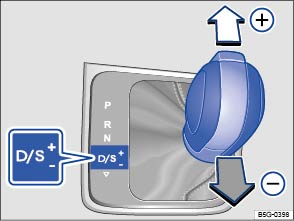
Fig. 105 Selector lever in Tiptronic position.
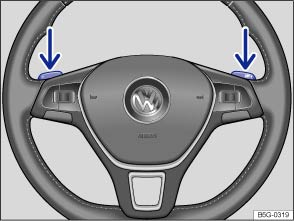
Fig. 106 Steering wheel with Tiptronic shift paddles (if equipped).
Tiptronic lets you upshift and downshift manually with the automatic or DSG transmission. When Tiptronic mode is used, the transmission stays in the current gear and does not upshift or downshift automatically unless the transmission senses a situation where upshifting or downshifting is necessary to keep the engine from over- or under-revving.
Using Tiptronic with the selector lever
- Push the selector lever sideways to the right from the D/S position into the Tiptronic position .
- Briefly push the selector lever forward ⊕ to upshift into a higher gear or pull it backward ㊀ to downshift into a lower gear .
Using Tiptronic with the shift paddles behind the steering wheel (if equipped)
- The paddles (arrows) work when the selector lever is in the Tiptronic position or when the selector lever is in Drive or Sport Drive (D/S). You do not have to move the selector lever over to the right into the Tiptronic position.
- To upshift, pull the paddle on the right
+ toward you.
- To downshift, pull the paddle on the left – toward you.
- To switch off Tiptronic mode, pull the paddle on the right
Tiptronic will switch off automatically if the shift paddles have not been used for a while and the selector lever is not in the Tiptronic position.
NOTE
- During acceleration, the transmission will shift automatically into the next higher gear before reaching maximum engine speed (rpm).
- If you use Tiptronic to shift into a lower gear, the transmission will downshift only when doing so will not over-rev the engine.
Driving with automatic or DSG® transmission
All forward gears shift up and down automatically.
Driving on hills
The steeper the slope, the lower the gear that must be selected. Lower gears increase the braking effect of the engine. Never coast downhill in Neutral (N).
- Reduce speed.
- Switch to Tiptronic mode by moving the selector lever from Drive or Sport Drive (D/S) to the right into the Tiptronic position .
- Downshift by pulling the selector lever back briefly (-).
- OR: Downshift using the paddles on the steering wheel .
Vehicles with Hill Start Assist (Hill Hold): If you stop and start up again when going uphill, the Hill Start Assist feature can help prevent the vehicle from rolling backwards as long as the engine is running .
Vehicles without Hill Start Assist (Hill Hold): If you stop on a hill with the vehicle in gear, you must depress the brake pedal or engage the parking brake to keep the vehicle from rolling. Do not release the brake pedal or the parking brake until the vehicle has started to move forward .
Coasting with DSG® automated transmission
In coasting mode, the momentum of the vehicle can be used to help save fuel. The clutch opens and the engine no longer brakes the vehicle, so the vehicle can coast over a longer distance. The coasting feature only works when the selector lever is in position D/S and the vehicle speed is between about 25–80 mph (40–130 km/h).
Starting coasting mode:
- Select the Eco driving mode from the driving mode selection menu .
- Remove your foot from the accelerator pedal. The engine is disengaged and runs in coasting mode. The vehicle rolls without the braking effect of the engine.
Cancelling coasting mode:
- Press the brake pedal briefly.
- OR Pull a shift paddle toward the steering wheel .
- OR Move the selector lever to the Tiptronic position.
- OR Change the driving mode from Eco to another driving mode .
Kick-down acceleration
The kick-down feature permits maximum acceleration when the selector lever is in the Drive or Sport Drive (D/S) position or in Tiptronic mode.
If you push the accelerator all the way down, the vehicle will automatically downshift, depending on vehicle speed and engine speed (rpm). This feature lets you take advantage of the full acceleration capacity of the vehicle .
With kick-down acceleration, the transmission will stay in the current gear longer and not upshift until the engine reaches maximum rpm.
Launch control program
The launch control program lets you take advantage of maximum acceleration from a standstill.
- Switch off Anti-Slip Regulation (ASR). Golf R only: Switch off Anti-Slip Regulation (ASR) and Electronic Stability Control (ESC) .
- Firmly depress and hold the brake pedal with your left foot.
- Make sure your steering wheel is straight and the front wheels are pointing straight ahead.
- Move the selector lever into Sport Drive (S) or the Tiptronic position. For vehicles with Driving Mode Selection, select the Sport or Race driving mode .
- With your right foot, depress the accelerator pedal all the way. The engine speed automatically increases to about 3200 rpm (Golf GTI) or 4000 rpm (Golf R) and stays there.
- Remove your left foot from the brake . The vehicle will accelerate from a stop at the maximum rate.
- Once you have accelerated, switch ASR back on again!
WARNING
Rapid acceleration can cause skidding and loss of traction, especially on slippery roads, resulting in a loss of vehicle control, collisions, and serious personal injury.
- Only use the kick-down feature, Launch Control Program, or fast acceleration if visibility, weather, road, and traffic conditions permit and other drivers will not be endangered by your driving and the vehicle's acceleration.
- Always adapt your driving to the traffic flow.
- Note that the drive wheels can spin and the vehicle can swerve when ASR is switched off, especially when the road is slippery.
- Once you have accelerated, switch ASR back on again.
NOTE
- When stopping on hills with the transmission in a drive gear, do not use the accelerator to help prevent the vehicle from rolling backwards. This can cause the automatic or DSG transmission to overheat and be damaged.
- Never let the vehicle coast or roll down a hill in Neutral (N), especially when the engine is not running. The transmission will not be lubricated and will be damaged.
- Launch Control acceleration uses the maximum acceleration capability of the vehicle but places significant loads on the drive train and related parts. If you do use the Launch Control feature, do not use it regularly or often to help prevent unnecessary wear on the vehicle and its systems.
Tips and troubleshooting
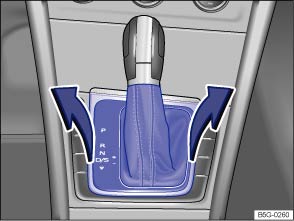
Fig. 107 Removing the selector gate cover.
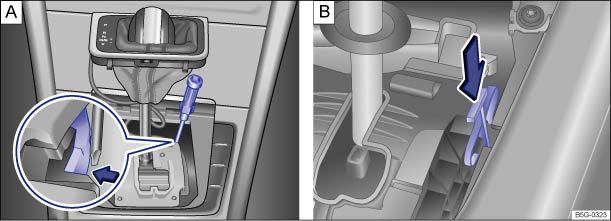
Fig. 108 Releasing the selector lever lock (versions and ).
When the ignition is switched on, several warning and indicator lights come on briefly for a function check. They go out after a few seconds.
 Transmission overheating
The yellow indicator light comes on.
An acoustic warning may sound and a text message may also appear in the instrument cluster.
The DSG transmission may overheat due to frequent starts, extended creeping, or stop-and-go traffic.
- Shift the selector lever to the P position and let the transmission cool down.
- If the warning does not turn off,
do not continue driving!
- See your authorized Volkswagen dealer for assistance. Otherwise, serious clutch or transmission damage could result.
 If the engine does not start
The green indicator light comes on.
The brake pedal is not depressed.
- Depress the brake pedal.
- Make sure the transmission selector lever is in position P.
- Try to start the engine again .
- Also refer to electronic parking brake .
If the vehicle does not shift
The green indicator light flashes along with a text message in the instrument cluster display.
In rare cases, the ASL may not engage on vehicles with a DSG® automated transmission. If this happens, power to the drive wheels will be interrupted to prevent the vehicle from moving unexpectedly.
- Depress the brake pedal.
- Press the release button on the transmission selector lever and try to shift again.
- OR: Shift the selector lever to Neutral (N) or Park (P), then try to select a drive position again.
Emergency release for the transmission selector lever lock
If the power supply fails (due to a dead vehicle battery, for example) and the vehicle has to be pushed or towed, the emergency release must be used to move the selector lever to Neutral (N). You will need the screwdriver from the vehicle tool kit to release the selector lever .
The emergency release is under the selector gate cover on the right side when viewed in the driving direction.
- Set the parking brake. If the parking brake cannot be set, you must find another way to help prevent the vehicle from moving .
- Switch off the ignition.
- Open the storage compartment in front of the selector lever
- Using your hands, pull upward on the front of the selector gate cover to release it, then pull the selector lever sleeve upward .
- Slip the cover up and over the selector lever .
Depending on equipment, the selector lever can be released differently.
- With the screwdriver from the vehicle tool kit, carefully push the colored release lever in the direction of the arrow and hold it in this position .
- Press the release button in the selector lever handle and shift the selector lever to Neutral (N).
- Carefully press the selector gate cover back in place, making sure that the electrical wiring stays in the correct position and is not pinched or damaged.
- With the screwdriver from the vehicle tool kit, carefully push down on the middle of the colored release lever in the direction of the arrow and hold it in this position.
- Press the release button in the selector lever handle and shift the selector lever to Neutral (N).
- Carefully press the selector gate cover back in place, making sure that the electrical wiring stays in the correct position and is not pinched or damaged.
Emergency shift program
If all selector lever position indicators in the instrument cluster display are highlighted against a bright background, there is a system malfunction. The automatic or DSG transmission will then operate in the emergency shift program. The emergency shift program lets you drive the vehicle, but at a reduced speed and without being able to use all of the forward gears.
In some cases, vehicles with a DSG transmission may not be able to shift into reverse. It is then impossible to drive the vehicle backwards.
In any event, have the automatic or DSG transmission checked by an authorized Volkswagen dealer or authorized Volkswagen Service Facility.
If the vehicle does not move even though a drive position is selected with the transmission selector lever
If the vehicle does not move in the desired direction, the system may not have engaged the drive position correctly.
- Press the brake pedal and select the drive position again.
- If the vehicle still does not move in the desired direction, there is a system malfunction. See your authorized Volkswagen dealer or authorized Volkswagen Service Facility for assistance to have the system checked.
WARNING
Never shift the transmission out of Park (P) without first firmly applying the parking brake. Otherwise, the vehicle can start to roll unexpectedly, especially on hills or inclines, and cause an accident and serious injuries.
WARNING
Failure to heed warning lights and instrument cluster text messages can cause the vehicle to break down in traffic and result in a collision and serious personal injury.
- Never ignore warning lights or text WARNINGS.
- Always stop the vehicle as soon as it is safe to do so.
- Whenever stalled or stopped for repair, move the vehicle a safe distance off the road, turn on the emergency flashers, stop the engine, and use other warning devices to warn approaching traffic.
NOTE
Even with the selector lever is in Neutral (N), the automatic or DSG transmission will be damaged if the vehicle is towed (or you let it coast) for an extended period or at high speed with the engine shut off.
NOTE
- As soon as you get any of these warnings about transmission overheating, you must either park the vehicle in a safe place or drive faster than 12 mph (20 km/h).
- If the text message and acoustic warning repeat themselves every 10 seconds or so, you must park the vehicle in a safe place as soon as you can safely do so and stop the engine. Let the transmission cool down.
- To help prevent damage to the transmission, do not drive the vehicle again until the acoustic warning has stopped. As long as the engine is overheated, avoid stop and start driving and avoid low speeds (walking pace).
Download Manual