Child safety and child restraints
 Introduction to the subject
In this chapter you will find information on the following subjects:
The physical principles of what happens when your vehicle is in a collision or other accident also apply to children . But unlike adults and teenagers, their muscles and bones are not fully developed. In many respects children are at greater risk of serious injury in accidents than are adults.
Because children's bodies are not fully developed, they must use restraint systems especially designed for their size, weight, and body structure. Many countries and all states of the United States and provinces of Canada have laws requiring the use of approved child restraint systems for infants and small children.
In a frontal crash at a speed of 20–35 mph (30–56 km/h), the forces acting on a 13 pound (6 kg) infant will be more than 20 times the weight of the child. This means the effective weight of the child would suddenly increase to more than 260 pounds (120 kg). Under these conditions, only an appropriate child restraint properly used can reduce the risk of serious injury. Child restraints, like adult safety belts, must be used properly to be effective. Used improperly, they can increase the risk of serious injury in an accident.
All children, especially those 12 years and younger, must always ride in the back seat properly restrained for their age and size. If you must install a child restraint on the front passenger seat in exceptional circumstances, be sure to read and heed the important information and warnings in the section of this Manual that begins on . Infants and other children who are properly restrained in an appropriate child restraint that is for their size and age can benefit from the protection that supplemental side airbags provide in some kinds of crashes.
For more information, please see information provided by the:
- National Highway Traffic Safety Administration (NHTSA), currently at: http://www.safercar.gov (for the USA)
- Transport Canada Information Centre, currently at: http://www.tc.gc.ca (for Canada)
Consult the child restraint manufacturer's instructions to be sure the seat is right for your child's size . Please be sure to read and heed all of the important information and WARNINGS about child safety, Advanced Airbags, and the installation of child restraints in this Manual.
There is a lot you need to know about the Advanced Airbags in your vehicle and how they work when infants and children in child restraints are on the front passenger seat. Because of the large amount of important information, we cannot repeat it all here. We urge you to read the detailed information in this Manual about airbags and the Advanced Airbag System in your vehicle and the very important information about transporting children on the front passenger seat. Please be sure to heed the WARNINGS - they are extremely important for your safety and the safety of your passengers, especially infants and small children.
 DANGER!
Children on the front seat of any car, even with Advanced Airbags, can be seriously injured or even killed when an airbag inflates.
- A child in a rearward-facing child restraint installed on the front passenger seat will be seriously injured and can be killed if the front airbag inflates.
- The inflating airbag will hit the child restraint or infant carrier with great force and will smash the child restraint and child against the backrest, center armrest, door or roof.
- Always install rearward-facing child restraints on the rear seat.
- If you have, in exceptional circumstances, nevertheless decided to install a rearward-facing child restraint on the front passenger seat and the PASSENGER AIR BAG
light does not come on and stay on whenever the ignition is on, immediately install the rearward-facing child restraint on the rear seat and have the airbag system inspected right away by your authorized Volkswagen dealer or authorized Volkswagen Service Facility.
 WARNING
Accident statistics have shown that children are generally safer in the rear seat area than in the front seating position. Always restrain any child age 12 and under in the rear.
- All vehicle occupants and especially children must be restrained properly whenever riding in a vehicle. An unrestrained or improperly restrained child could be injured by striking the interior or by being ejected from the vehicle during a sudden maneuver or impact. An unrestrained or improperly restrained child is also at greater risk of injury or death through contact with an inflating airbag.
- A suitable child restraint properly installed and used at one of the rear seating positions provides the highest degree of protection for infants and small children in most accident situations.
WARNING
Forward-facing child restraints installed on the front passenger seat may interfere with the deployment of the airbag and cause serious personal injury to the child.
- If exceptional circumstances require the use of a forward-facing child restraint on the front passenger's seat, the child's safety and well-being require the following special precautions to be taken:
- Always make sure that the forward-facing seat has been designed and certified by its manufacturer for use on a front passenger seat with a front and side airbag.
- Always carefully follow the manufacturer's instructions provided with the child restraint or infant carrier.
- Never install a child restraint without a properly attached top tether strap if the child restraint manufacturer's instructions require the top tether strap for proper installation, or if required by law. For example, the use of a top tether strap for forward-facing child restraints is required by law in Canada.
- Never put the forward-facing child restraint up against or very near the instrument panel.
- Always set the safety belt upper anchorage to the adjustment position that permits proper installation in accordance with the child restraint manufacturer's instructions.
- Always move the front passenger seat to the highest position in the up and down adjustment range and move it back to the rearmost position in the seat's fore and aft adjustment range, as far away from the airbag as possible before installing the forward-facing child restraint.
- Always make sure that the safety belt upper anchorage is behind the child restraint and not next to or in front of the child restraint so that the safety belt will be properly positioned.
- Always make sure that nothing is in the way that prevents the front passenger's seat from being moved to the rearmost position in its fore and aft adjustment range.
- Always make sure that the backrest is in the upright position.
- Never place objects on the seat (such as a laptop, CD player, or electronic games device). These may influence the electrical capacitance measured by the capacitive passenger detection system and can also fly around in an accident and cause serious personal injury.
- If a seat heater has been retrofitted or otherwise added to the front passenger seat, never install any child restraint system on this seat.
- Make sure that there are no wet objects (such as a wet towel) and no water or other liquids on the front passenger seat cushion.
- Always make sure that the PASSENGER AIR BAG
- If the PASSENGER AIR BAG
- Always buckle the child restraint firmly in place even if a child is not sitting in it. A loose child restraint can fly around during a sudden stop or in a collision.
- Always read and heed all WARNINGS whenever using a child restraint in a vehicle. See , , and .

Always replace child restraints that were installed in a vehicle during a crash. Damage to a child restraint that is not visible could cause it to fail in another collision situation.
Child restraints – Overview
Read and follow the introductory information and safety information first
All children and especially infants must be properly restrained in a child restraint appropriate for their size and age whenever riding in a vehicle. Their safety also requires that the child restraint be properly installed. There are many car seat choices on the market. You can use the information below to help you choose a car seat that best meets your child’s needs.
| Type of child restraint | Applies to |
|---|---|
| Rear-facing child restraint | Birth to 12 months: Your child under age 1 should always ride in a rear-facing car seat. There are different types of rear-facing car seats: – Infant-only seats can only be used rear-facing. – Convertible and all-in-one car seats typically have higher height and weight limits for the rear-facing position, allowing you to keep your child rear-facing for a longer period of time. |
| Rear-facing child restraint before moving to a forward-facing child restraint | 1–3 years: Keep your child rear-facing as long as possible. It’s the best way to keep him or her safe. Your child should remain in a rear-facing car seat until he or she reaches the top height or weight limit allowed by the car seat’s manufacturer. Once your child outgrows the rear-facing car seat, your child is ready to travel in a forward-facing car seat with a harness and tether. |
| Forward-facing child restraint | 4–7 years: Keep your child in a forward-facing car seat with a harness and tether until he or she reaches the top height or weight limit allowed by the car seat’s manufacturer. Once your child outgrows the forward-facing car seat with a harness, it’s time to travel in a booster seat, but still in the back seat. |
| Booster seat | 7–12 years: Keep your child in a booster seat until he or she is big enough to fit in a safety belt properly. For a safety belt to fit properly, the lap belt must lie snugly across the upper thighs, not the stomach. The shoulder belt should lie snugly across the shoulder and chest and not cross the neck or face. Remember: your child should still ride in the back seat because it’s safer there. |
Today's child restraints are designed to be secured to the vehicle either with the standard 3 point lap and shoulder belt or with the LATCH/UAS lower universal anchorages. Many child restraints also require the use of a top tether strap. Depending on your state or country, top tether straps may also be required by law. The top tether strap reduces the forward movement of the child restraint in a crash, to help reduce the risk of head injury if the child hits the vehicle interior.
Your vehicle has the following installation options in the rear seats:
| Child restraint installation | Rear seats |
|---|---|
| LATCH/UAS lower universal anchorages | Anchorages available for the 2 outboard seating positions. |
| Top tether anchorages | |
| Safety belts with the switchable locking feature |
The LATCH/UAS lower universal anchorage attachment points are on the lower part of the rear seat backrest for the 2 outboard seating positions. The circular markings on the lower anchorage points help you to locate the lower anchorages .
How to tell if the child restraint is properly installed
- The child restraint is flush with both the seat cushion and the seat backrest, unless a small gap between the child restraint and the seat backrest is allowed by the child restraint manufacturer.
- The child restraint does not hang over the edge of the vehicle seat by more than the generally accepted 20% of the child restraint. Always follow the overhang limits allowed by the child restraint manufacturer.
- The child restraint is centered in the seating position and is not installed at an angle.
- The child restraint does not move forward or sideways by more than about 1 inch (2.5 cm).
- The child restraint does not contact or push against any of the safety belt buckles, because this can cause damage to the buckles and make the buckles unusable or unsafe.
- The child restraints do not interfere with each other and each remains fully functional and accessible to properly restrain and protect each child.
- The child restraint is installed with LATCH/UAS or the vehicle safety belt according to the weight limits stated on the child restraint and the child restraint’s top tether is used as instructed by the child restraint manufacturer.
More information:
- Important safety instructions for using child restraints
- Using a child restraint on the rear seat
- Infant seats
- Convertible child restraints
- Booster seats and safety belts
- Installing child restraints with a safety belt
Child restraints and the Advanced Airbag System
Read and follow the introductory information and safety information first
Advanced front airbag system and children
Your vehicle is equipped with a front Advanced Airbag System that complies with United States Federal Motor Vehicle Safety Standard (FMVSS) 208 and with Canada Motor Vehicle Safety Standard (CMVSS) 208 as applicable at the time your vehicle was manufactured.
The Advanced Airbag System in your vehicle has been certified to meet the low risk requirements for 3 to 6 year-old children (as defined in the standard) on the passenger side and small adults on the driver side. Low risk deployment occurs in those crashes that take place at lower decelerations as defined in the electronic control unit. The low risk deployment criteria are intended to reduce the risk of injury through interaction with the airbag that can occur in these collisions, for example, by being too close to the steering wheel or instrument panel when the airbag inflates.
In addition, the system has been certified to comply with the suppression requirements of the Safety Standard, to turn off the front airbag automatically for infants up to 12 months who are restrained on the front passenger seat in child restraints that are listed in the Standard.
Even though your vehicle is equipped with an Advanced Airbag System, all children, especially those 12 years and younger, must always ride in the back seat properly restrained for their age and size. The airbag on the passenger side makes the front seat a potentially dangerous place for a child to ride. The front seat is not the safest place for a child in a forward-facing child restraint. It is a very dangerous place for an infant or a larger child in a rearward-facing seat.
The vehicle's Advanced Airbag System has a capacitive passenger detection system in the front passenger seat cushion that can detect the presence of a baby or a child in a child restraint system on this seat.
The capacitive passenger detection system measures the capacitance of the child and the child restraint and a child blanket on the front passenger seat. The capacitance due to the presence of a child, a child restraint, and a baby blanket on the front passenger seat is related to the child restraint system resting on the seat. The capacitance of a child restraint system varies depending on the type of system and specific make and model.
The electrical capacitance of the various types, makes, and models of child restraints specified by the U.S. National Highway Traffic Safety Administration (NHTSA) in the relevant safety standard are stored in the Advanced Airbag System control unit together with the capacitances typical of infants and a 1 year-old child. When a child restraint is used on the front passenger seat with a typical 1 year-old infant, the Advanced Airbag System compares the capacitance measured by the capacitive passenger detection system with the data stored in the electronic control unit.
Child restraints and Advanced Airbags
No matter what child restraint you use, make sure that it has been certified to meet U.S. Federal Motor Vehicle Safety Standard 213 (FMVSS 213) or, if you live in Canada, Canada Motor Vehicle Safety Standard 213 (CMVSS 213). Also make sure that the child restraint you are using has been certified by its manufacturer for use with an airbag. Always be sure that the child restraint is properly installed at one of the rear seating positions. If in exceptional circumstances you must use it on the front passenger seat, carefully read all of the information on child safety and Advanced Airbags and heed all of the applicable WARNINGS. Make certain that the child restraint is correctly recognized by the capacitive passenger detection system inside the front passenger seat, that the passenger front airbag is switched off, and that the airbag status is always correctly signaled by the PASSENGER AIR BAG
light.
Many types and models of child restraints have been available over the years, new models are introduced regularly incorporating new and improved designs and older models are taken out of production. Child restraints are not standardized. Child restraints of the same type typically have different weights and sizes and different footprints, the size and shape of the bottom of the child restraint that sits on the seat, when they are installed on a vehicle seat. These differences make it virtually impossible to certify compliance with the requirements for Advanced Airbags with each and every child restraint that has ever been sold in the past or will be sold over the course of the useful life of your vehicle.
For this reason, the United States National Highway Traffic Safety Administration has published a list of specific types, makes and models of child restraints that must be used to certify compliance of the Advanced Airbag System in your vehicle with the suppression requirements of Federal Motor Vehicle Safety Standard 208. These child restraints are:
Subpart A. Car bed child restraints
| Model | Manufactured on or after |
|---|---|
| Angel Guard Angel Ride AA2403FOF | September 25, 2007 |
Subpart B. Rear-facing child restraints
| Model | Manufactured on or after |
|---|---|
| Century Smart Fit 4543 | December 1, 1999 |
| Cosco Arriva 22-013 PAW and base 22-999 WHO | September 25, 2007 |
| Evenflo Discovery Adjust Right 212 | December 1, 1999 |
| Graco Infant 8457 | December 1, 1999 |
| Graco Snugride | September 25, 2007 |
| Peg Perego Primo Viaggio SIP IMUN00US | September 25, 2007 |
Subpart C. Forward-facing and convertible child restraints
| Model | Manufactured on or after |
|---|---|
| Britax Roundabout E9L02xx | September 25, 2007 |
| Cosco Touriva 02519 | December 1, 1999 |
| Cosco Summit Deluxe High Back Booster 22-262 | September 25, 2007 |
| Cosco High Back Booster 22-209 | September 25, 2007 |
| Evenflo Tribute V 379xxxx | September 25, 2007 |
| Evenflo Medallion 254 | December 1, 1999 |
| Evenflo Generations 352xxxx | September 25, 2007 |
| Graco ComfortSport | September 25, 2007 |
| Graco Toddler SafeSeat Step 2 | September 25, 2007 |
| Graco Platinum Cargo | September 25, 2007 |
WARNING
To reduce the risk of serious injury, always make sure that the PASSENGER AIR BAG
light comes on and stays on whenever a child restraint is installed on the front passenger seat and the ignition is switched on.
- Take the child restraint off the front passenger seat and install it properly at one of the rear seat positions if the PASSENGER AIR BAG
- Have the airbag system inspected immediately by your authorized Volkswagen dealer or authorized Volkswagen Service Facility.
Important safety instructions for using child restraints
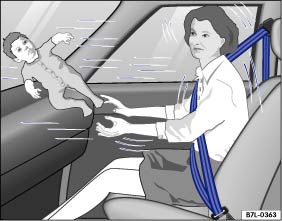
Fig. 41 Never let babies or older children ride in a vehicle while sitting on the lap of another passenger.
Read and follow the introductory information and safety information first
Proper use of child restraints greatly reduces the risk of injury in a collision or other kind of accident!
All children, especially those 12 years and younger, must always ride in the back seat properly restrained for their age and size.
Always use the right child restraint for each child and always use it properly.
LATCH/UAS lower universal anchorages secure the child restraint system in the seat without using the vehicle's safety belts. Anchorages provide a secure and easy-to-use attachment and minimize the possibility of improper child restraint installation. If you decide to install a child restraint system using the standard safety belt instead of the LATCH/UAS anchorages for the respective seating position, be sure to always carefully follow the child restraint manufacturer's instructions on how to route the safety belt properly through the child restraint and how to restrain the child in the child restraint.
When using the vehicle safety belt to install a child restraint, you must activate the switchable locking feature on the safety belt to help prevent the child restraint from moving .
Do not use the switchable locking feature when using the vehicle's safety belt to restrain a child on a booster seat.
Push the child restraint down with your full weight to get the safety belt really tight so that the seat cannot move forward or sideways more than about 1 inch (2.5 cm).
Important additional information about installing a child restraint system on the front passenger seat:
If you must install a child restraint on the front passenger seat in exceptional circumstances, be sure to read and heed the important information and warnings in the section of this Manual that begins on .
There are also additional adjustments that must be made in order to be able to properly install a child restraint on the front passenger seat:
Set the safety belt upper anchorage for the front passenger seat so that the available safety belt is long enough to properly install the child restraint. Always follow the child restraint manufacturer's installation instructions .
Move the front passenger seat to the highest position in the seat's up and down adjustment range and to the rearmost position in the seat's fore and aft adjustment range, as far away from the airbag as possible before installing the forward-facing child restraint and make sure the backrest is in the upright position .
Always make sure that the safety belt upper anchorage is behind the child restraint and not next to or in front of the child restraint so that the safety belt will be properly positioned.
Always remember: Even though your vehicle is equipped with an Advanced Airbag System, all children, especially those 12 years and younger, must always ride in the back seat properly restrained for their age and size.
DANGER!
Never install rearward-facing child restraints or infant carriers on the front passenger seat.
- A child will be seriously injured and can be killed when the passenger airbag inflates – even with an Advanced Airbag System.
- The inflating airbag will hit the child restraint or infant carrier with great force and will smash the child restraint and child against the backrest, center armrest, door or roof.
- Always install rearward-facing child restraints and infant carriers on the rear seat.
WARNING
Not using a child restraint, using the wrong child restraint, or improperly installing a child restraint increases the risk of serious personal injury and death in a collision or other emergency situation.
- All vehicle occupants and especially children must always be restrained properly whenever riding in a vehicle.
- An unrestrained or improperly restrained child can be injured or killed by being thrown against the inside of the vehicle or by being ejected from it during a sudden maneuver or impact.
- An unrestrained or improperly restrained child is at much greater risk of injury or death by being struck by an inflating airbag.
- Commercially available child restraints are required to comply with U.S. Federal Motor Vehicle Safety Standard FMVSS 213 (in Canada CMVSS 213).
- When buying a child restraint, select one that fits your child and the vehicle.
- Volkswagen does not recommend using child restraints that rest on legs or tube-like frames. They do not provide adequate contact with the seat.
- Always check that the child restraint has been properly installed.
- Only use child restraint systems that fully contact the flat portion of the seat cushion. The child restraint must not tip or lean to either side.
- Always make sure the child restraint does not hang over the edge of the vehicle seat by more than the generally accepted 20% of the child restraint. Always follow the overhang limits allowed by the child restraint manufacturer.
- Always make sure that the child restraint is securely installed and cannot move forward or sideways more than about 1 inch (2.5 cm).
- Always make sure that the child restraint is not installed at an angle.
- Always make sure that the child restraint does not contact or push against any safety belt buckles, because this can cause damage to the buckles and make the buckles unusable or unsafe.
- Always heed all legal requirements pertaining to the installation and use of child restraints and carefully follow the instructions provided by the manufacturer of the seat you are using.
- For safety reasons, children under 4 ft. 9 in. (57 inches / 1.45 meters) may not wear standard safety belts. Children must always be restrained by a proper child restraint system. Otherwise, they could sustain injuries to the abdomen and neck areas during sudden braking maneuvers or accidents.
- Never let more than one child occupy a child restraint.
- Never let babies or older children ride in a vehicle while sitting on the lap of another passenger.
- Holding a child in your arms is never a substitute for a child restraint system.
- The strongest person could not hold the child with the forces that exist in an accident. The child will strike the interior of the vehicle and can also be struck by another passenger.
- The child and the passenger can also injure each other in an accident.
WARNING
Forward-facing child restraints installed on the front passenger's seat can interfere with the airbag when it inflates and cause serious injury to the child.
- Always install child restraints on the rear seat.
- If exceptional circumstances require the use of a forward-facing child restraint on the front passenger's seat, the child's safety and well-being require the following special precautions to be taken:
- Always make sure that the forward-facing seat has been designed and certified by its manufacturer for use on a front passenger seat with a front and side airbag.
- Always carefully follow the manufacturer's instructions provided with the child restraint or carrier.
- Never install a child restraint without a properly attached top tether strap if the child restraint manufacturer's instructions require the top tether strap for proper installation, or if required by law. For example, the use of a top tether strap for forward-facing child restraints is required by law in Canada.
- Never put the forward-facing child restraint up against or very near the instrument panel.
- Always set the safety belt upper anchorage to the adjustment position that permits proper installation in accordance with the child restraint manufacturer's instructions.
- Always move the front passenger seat to the highest position in the up and down adjustment range and move it back to the rearmost position in the seat's fore and aft adjustment range, as far away from the airbag as possible before installing the forward-facing child restraint.
- Always make sure that the safety belt upper anchorage is behind the child restraint and not next to or in front of the child restraint so that the safety belt will be properly positioned.
- Always make sure that nothing is in the way that prevents the front passenger's seat from being moved to the rearmost position in its fore and aft adjustment range.
- Always make sure that the backrest is in the upright position.
- Never place additional items (such as laptop, CD player, or electronic games device) on the seat that can influence the capacitance registered by the capacitive passenger detection system and can cause injury in a crash.
- If a seat heater has been retrofitted or otherwise added to the front passenger seat, never install any child restraint system on this seat.
- Make sure that there are no wet objects (such as a wet towel) and no water or other liquids on the front passenger seat cushion.
- Always buckle the child restraint firmly in place even if a child is not sitting in it. A loose child restraint can fly around during a sudden stop or in a collision.
- Always read and heed all WARNINGS whenever using a child restraint in a vehicle. See , , and .
WARNING
To reduce the risk of serious injury, always make sure that the PASSENGER AIR BAG
light comes on and stays on whenever a child restraint is installed on the front passenger seat and the ignition is switched on.
- If the PASSENGER AIR BAG
- Take the child restraint off the front passenger seat and install it properly at one of the rear seat positions if the PASSENGER AIR BAG
- Have the airbag system inspected immediately by an authorized Volkswagen dealer or authorized Volkswagen Service Facility.
Using a child restraint on the rear seat
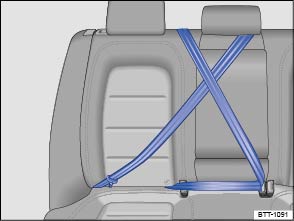
Fig. 42 Keep unused safety belts away from children in child restraints.
Read and follow the introductory information and safety information first
Important special steps when installing a child restraint with LATCH/UAS lower universal anchorages or with the vehicle safety belt.
You must take special precautions when installing a LATCH/UAS child restraint behind the front passenger or driver seats. Always route the center safety belt and the unused safety belt for the seating position where the child restraint is being installed securely out of the child’s reach. Securing the safety belts will help prevent a child from playing with an unused safety belt and becoming entangled with it .
Securing the unused safety belts out of the child's reach
Secure an unused safety belt to help prevent a child from playing with and becoming entangled in the safety belt. The method for securing an unused safety belt depends on the seating position.
- Route the safety belt around the head restraint for the center seating position .
- Make sure the safety belt is out of the child’s reach, so that the child cannot grab and play with it.
- Make sure that the safety belt does not block the LATCH/UAS lower universal anchorages. This could prevent you from correctly installing a child restraint with the LATCH/UAS lower universal anchorages.
- Do not activate the switchable locking feature. Otherwise it will be very difficult to wind the safety belt back into its normal position. You should not hear a clicking sound when the safety belt retracts.
- Buckle the safety belt .
- Pull the shoulder belt portion of the safety belt all the way out of the retractor to activate the switchable locking feature. You should hear a clicking noise as the belt winds back into the retractor.
- Let the safety belt fully retract and then pull on it to make sure the switchable locking feature is active and the safety belt is properly fastened and tight so that the child cannot grab and play with the safety belt.
When a child safety seat is secured on the rear bench, adjust the position of the front seat to provide the child with sufficient space. Therefore, adjust the front seat to the size of the child safety seat and the child. Consider the proper seating position of the passenger .
When child restraints are not needed, be sure to remove the safety belt(s) from around the head restraint(s), unbuckle the center safety belt, and return all safety belts to their normal stored positions so that they will be available for regular use.
How to tell if the child restraint is properly installed
- The child restraint is flush with both the seat cushion and the seat backrest, unless a small gap between the child restraint and the seat backrest is allowed by the child restraint manufacturer.
- The child restraint does not hang over the edge of the vehicle seat by more than the generally accepted 20% of the child restraint. Always follow the overhang limits allowed by the child restraint manufacturer.
- The child restraint is centered in the seating position and is not installed at an angle.
- The child restraint does not move forward or sideways by more than about 1 inch (2.5 cm).
- The child restraint does not contact or push against any of the safety belt buckles, because this can cause damage to the buckles and make the buckles unusable or unsafe.
- The child restraint is installed with LATCH/UAS or the vehicle safety belt according to the weight limits stated on the child restraint and the child restraint’s top tether is used as instructed by the child restraint manufacturer.
WARNING
A child in a child restraint installed with the LATCH/UAS lower universal anchorages or with the standard safety belt on the rear seat may play with unused rear seat safety belts and become entangled, resulting in serious personal injury and even death.
- Always secure unused rear seat safety belts out of the reach of children in child restraints such as by properly routing them around the head restraint adjacent to the seating position where the child restraint is installed.
 NOTE
NOTE
The outboard safety belts may become damaged if they are secured improperly.
- Be careful not to activate the switchable locking retractor when routing the unused safety belt around the head restraint adjacent to the seat where a child restraint has been installed. Otherwise it will be very difficult to wind the safety belt back into its normal position.
- Only pull the unused safety belt out far enough to allow you to route the belt around the head restraint. If the safety belt is pulled out too far, the switchable locking feature will be activated.
- When installing a child restraint, be careful not to get the belt caught in the structure of the child restraint and become damaged, especially when the switchable locking feature has been activated.
Infant seats
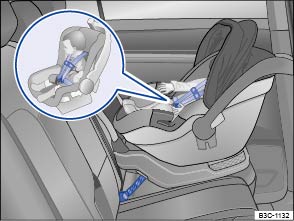
Fig. 43 Example of a rearward-facing infant seat properly installed on the rear seat.
Read and follow the introductory information and safety information first
The American Academy of Pediatrics (AAP) recommends that all infants should ride in rear-facing car safety seats (in which the child faces the back of the vehicle) starting with their first ride home from the hospital. All infants and toddlers (generally up to age 3) should ride in a rear-facing car safety seat as long as possible – or until they reach the highest weight or height allowed by their child restraint’s manufacturer. These infant seats support the baby's back, neck and head in a collision. Rear-facing child restraints can be used safely only on the rear seat of the vehicle .
Before installing a child restraint on the front passenger seat, be sure to follow the special instructions and heed the warnings and .
- When using the vehicle safety belt to install a child restraint (except a booster seat), you must activate the switchable locking feature on the safety belt to help prevent the child restraint from moving . Always follow the child restraint manufacturer’s instructions when installing a child restraint.
- Attach the Top Tether strap or straps to the tether anchorage for the seating position where the child restraint is being installed with either the LATCH/UAS system or with a safety belt .
- Follow the manufacturer's instructions for positioning the handle of the car seat when it is installed in the vehicle.
The airbag on the passenger side makes the front seat a potentially dangerous place for a child to ride. The front seat is not the safest place for a child in a forward-facing child restraint. It is a very dangerous place for an infant or a larger child in a rearward-facing seat.
You must take special precautions when installing a child restraint with the vehicle safety belt or with LATCH/UAS lower universal anchorages behind the front passenger seat or behind the driver seat. Always route the center safety belt and the unused safety belt for the seating position where the child restraint is being installed securely out of the child’s reach. Securing the safety belts will help prevent a child from playing with an unused safety belt and becoming entangled with it , .
DANGER!
Not using a child restraint, using the wrong child restraint or improperly installing a child restraint increases the risk of serious personal injury and death in a collision or other emergency situation.
- Never install rearward-facing child restraints or infant carriers on the front passenger seat, even with an Advanced Airbag System. A child will be seriously injured and can be killed when the inflating airbag hits the child restraint or infant carrier with great force and smashes the child restraint and child against the backrest, center armrest, door or roof.
- Always install rearward-facing child restraints and infant carriers on the rear seat.
- Never install a rearward-facing child restraint in the forward-facing direction. These restraints are designed for the special needs of infants and very small children and cannot protect them properly if the seat is forward-facing.
- If you must install a rearward facing child restraint on the front passenger seat because of exceptional circumstances, but the PASSENGER AIR BAG
- Always read and heed all WARNINGS whenever using a child restraint in a vehicle. See , , and .
WARNING
A child in a child restraint installed with the LATCH/UAS lower universal anchorages or with the standard safety belt on the rear seat may play with unused rear seat safety belts and become entangled, resulting in serious personal injury and even death.
- Always secure unused rear seat safety belts out of the reach of children in child restraints such as by properly routing them around the head restraint adjacent to the seating position where the child restraint is installed.
NOTE
- Be careful not to activate the switchable locking retractor when routing the unused safety belt around the head restraint adjacent to the seat where a child restraint has been installed.
- Only pull the unused safety belt out far enough to allow you to route the belt around the head restraint.
- When installing a child restraint with a safety belt, be careful not to get the belt caught in the structure of the child restraint and become damaged, especially when the switchable locking feature has been activated.
Convertible child restraints
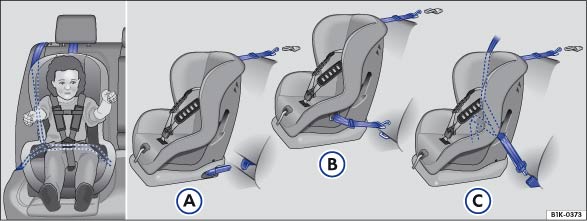
Fig. 44 All convertible child restraints have lower anchors and a top tether. Figures Ⓐ and Ⓑ show how to correctly install a LATCH/UAS seat. Figure Ⓒ shows the set up of a seat using the vehicle's safety belt system.
Read and follow the introductory information and safety information first
Children between 1 and about 7 years old must always be properly restrained in a child restraint certified for their size and weight .
Once your child outgrows the rear-facing car seat (generally up to age 3), your child is ready to travel in a forward-facing car seat with a harness. Keep your child in a forward-facing car seat with a harness until he or she reaches the top height or weight limit allowed by your car seat’s manufacturer.
Before installing a child restraint on the front passenger seat, be sure to follow the special instructions and heed the warnings and .
- When using the vehicle safety belt to install a child restraint, you must activate the switchable locking feature on the safety belt to help prevent the child restraint from moving .
- Push the child restraint down with your full weight to get the safety belt really tight so that the seat cannot move forward or sideways more than about 1 inch (2.5 cm).
- Make sure that the child restraint is centered in the seating position and is not installed at an angle.
- The child restraint must not contact or push against any of the safety belt buckles, because this can cause damage to the buckles and make the buckles unusable or unsafe.
- Fasten the harness webbing that is part of the child restraint system securely and pull it tight so that you can only slip one finger underneath the shoulder belt portion at the child's chest.
- Attach the Top Tether strap to the tether anchorage for the seating position where the child restraint is being installed with either the LATCH/UAS system or the safety belt .
The airbag on the passenger side makes the front seat a potentially dangerous place for a child to ride. The front seat is not the safest place for a child in a forward-facing child restraint. It is a very dangerous place for an infant or a larger child in a rearward-facing seat.
You must take special precautions when installing a child restraint with the vehicle safety belt or with LATCH/UAS lower universal anchorages behind the front passenger seat or behind the driver seat. Always route the center safety belt and the unused safety belt for the seating position where the child restraint is being installed securely out of the child’s reach. Securing the safety belts will help prevent a child from playing with an unused safety belt and becoming entangled with it , .
DANGER!
Not using a child restraint, using the wrong child restraint or improperly installing a child restraint increases the risk of serious personal injury and death in a collision or other emergency situation.
- Children on the front seat of any car, even with Advanced Airbags, can be seriously injured or even killed when an airbag inflates.
- A child in a rearward-facing child restraint installed on the front passenger seat will be seriously injured and can be killed if the front airbag inflates – even with an Advanced Airbag System.
- The inflating airbag will hit the child restraint or infant carrier with great force and will smash the child restraint and child against the backrest, center armrest, door or roof.
- Always install rearward-facing child restraints on the rear seat.
- If you must install a rearward facing child restraint on the front passenger seat because of exceptional circumstances, but the PASSENGER AIR BAG
- Always read and heed all WARNINGS whenever using a child restraint in a vehicle. See , , and .
WARNING
An improperly installed child restraint can interfere with the airbag as it deploys and seriously injure or even kill the child – even with an Advanced Airbag System.
- If exceptional circumstances require the use of a forward-facing child restraint on the front passenger's seat, the child's safety and well-being require the following special precautions to be taken:
- Forward-facing child restraints installed on the front passenger seat may interfere with the deployment of the airbag and cause serious personal injury to the child.
- Always make sure that the forward-facing seat has been designed and certified by its manufacturer for use on a front passenger seat with a front and side airbag.
- Always carefully follow the manufacturer's instructions provided with the child restraint or carrier.
- Never install a child restraint without a properly attached top tether strap if the child restraint manufacturer's instructions require the top tether strap for proper installation, or if required by law. For example, the use of a top tether strap for forward-facing child restraints is required by law in Canada.
- Never put the forward-facing child restraint up against or very near the instrument panel.
- Always set the safety belt upper anchorage to the adjustment position that permits proper installation in accordance with the child restraint manufacturer's instructions.
- Always move the front passenger seat to the highest position in the up and down adjustment range and move it back to the rearmost position in the seat's fore and aft adjustment range, as far away from the airbag as possible before installing the forward-facing child restraint.
- Always make sure that the safety belt upper anchorage is behind the child restraint and not next to or in front of the child restraint so that the safety belt will be properly positioned.
- Always make sure that nothing is in the way that prevents the front passenger's seat from being moved to the rearmost position in its fore and aft adjustment range.
- Always make sure that the backrest is in the upright position.
- Never place objects on the seat (such as a laptop, CD player, or electronic games device). These may influence the electrical capacitance measured by the capacitive passenger detection system and can also fly around in an accident and cause serious personal injury.
- If a seat heater has been retrofitted or otherwise added to the front passenger seat, never install any child restraint system on this seat.
- Make sure that there are no wet objects (such as a wet towel) and no water or other liquids on the front passenger seat cushion.
- Make sure that the PASSENGER AIR BAG
- If the PASSENGER AIR BAG
- Always buckle the child restraint firmly in place even if a child is not sitting in it. A loose child restraint can fly around during a sudden stop or in a collision.
WARNING
A child in a child restraint installed with the LATCH/UAS lower universal anchorages or with the standard safety belt on the rear seat may play with unused rear seat safety belts and become entangled, resulting in serious personal injury and even death.
- Always secure unused rear seat safety belts out of the reach of children in child restraints such as by properly routing them around the head restraint adjacent to the seating position where the child restraint is installed.
NOTE
- Be careful not to activate the switchable locking retractor when routing the unused safety belt around the head restraint adjacent to the seat where a child restraint has been installed.
- Only pull the unused safety belt out far enough to allow you to route the belt around the head restraint.
- When installing a child restraint with a safety belt, be careful not to get the belt caught in the structure of the child restraint and become damaged, especially when the switchable locking feature has been activated.
Booster seats and safety belts
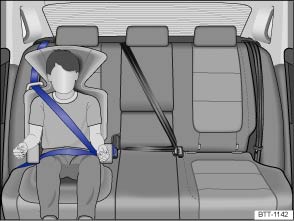
Fig. 45 Child properly restrained in a booster seat on the rear seat.
Read and follow the introductory information and safety information first
Children between about 8 to 12 years old are best protected in child safety seats designed for their age and weight. Experts say that the skeletal structure, particularly the pelvis, of these children is not fully developed, and they must not use the vehicle safety belts without a suitable child restraint.
The vehicle's safety belts alone will not fit most children until they are at least 4 ft. 9 in. (57 inches / 1.45 meters) tall. Booster seats raise these children up so that the safety belt will pass properly over the strong parts of their bodies and the safety belt can help protect them in a collision.
- Do not use the switchable locking feature when using the vehicle's safety belt to restrain a child on a booster seat.
- Always position the shoulder portion of the safety belt midway over the child's shoulder. If you must transport an older child in a booster seat on the front passenger seat, you can use the safety belt height adjustment to help adjust the shoulder portion properly.
- Always make sure that the shoulder portion is snug across the shoulder and chest and never rests against or across the child's neck or face.
- Always make sure that the child can wear the lap belt portion across the upper thighs and never over the stomach or abdomen.
Children who are at least 4 ft. 9 in. (57 inches / 1.45 meters) tall can generally use the vehicle's 3 point lap and shoulder belts. Never use the lap belt portion of the vehicle's safety belt alone to restrain any child, regardless of how big the child is. Always remember that children do not have the pronounced pelvic structure required for the proper function of lap belt portion of the vehicle's 3 point lap and shoulder belts. The child's safety absolutely requires that a lap belt portion of the safety belt be fastened snugly across the upper thighs. Never let the lap belt portion of the safety belt pass over the child's stomach or abdomen.
It is usually best to put these children in appropriate booster seats and keep them in a booster seat until they are big enough to fit in a safety belt properly. Be sure the booster seat meets all applicable safety standards.
Booster seats raise the seating position of the child and reposition both the lap and shoulder parts of the safety belt so that they pass across the child's body in the right places. The routing of the belt over the child's body is very important for the child's protection, whether or not a booster seat is used. Children age 12 and under must always ride in the rear seat.
Keep your child in a booster seat until he or she is at least 4 ft. 9 in. (57 inches / 1.45 meters) tall AND your child is:
- tall enough to sit without slouching; and
- able to keep his or her back against the vehicle seat; and
- able to keep his or her knees naturally bent over the edge of the vehicle seat; and
- able to keep his or her feet flat on the floor; and
- able to sit in that position during the entire trip.
The way the safety belt passes over the child’s body is important for their safety and protection in a crash. Always make sure you child can wear the safety belt properly:
- The lap belt must lie snugly across the upper thighs, not the stomach.
- The shoulder belt must lie snugly across the shoulder and chest, and never cross the neck or face.
- Never let a child put the shoulder belt under the arm or behind the back, because it could cause severe injuries in a crash.
Always check belt fit on the child in every vehicle. A booster seat may be needed in some vehicles and not in others. If the safety belt does not fit properly, the child must continue to use a booster seat. Regardless of whether the child is using a booster or is able to properly wear the standard safety belt properly without a booster seat, keep your child in the back seat. Accident statistics show that children are safer on the rear seat than on the front seat.
In a collision, airbags must inflate within a blink of an eye and with considerable force. In order to do its job, the airbag needs room to inflate so that it will be there to protect the occupant as the occupant moves forward into the airbag.
Even Advanced Airbags can injure children when they inflate. A vehicle occupant who is out of position and too close to the airbag gets in the way of an inflating airbag. When an occupant is too close, he or she will be struck violently and will receive serious or possibly even fatal injuries.
In order for the airbag to offer protection, it is important that all vehicle occupants, especially children, who must be in the front seat under exceptional circumstances, be properly restrained and as far away from the airbag as possible. By keeping room between the child's body and the front of the passenger compartment, the airbag can inflate completely and provide supplemental protection in certain frontal collisions.
You must take special precautions when installing a booster seat with the vehicle safety belt behind the front passenger seat or behind the driver seat. Always route and secure the unused center safety belt to help prevent a child from playing with the unused safety belt and becoming entangled in it , .
WARNING
Not using a booster seat, using the booster seat improperly, incorrectly installing a booster seat or using the vehicle safety belt improperly increases the risk of serious personal injury and death in a collision or other emergency situation. To help reduce the risk of serious personal injury and/or death:
- Never use the switchable locking feature when using the vehicle's safety belt to restrain a child on a booster seat.
- Always make sure to position the shoulder portion of the 3 point belt over the middle of the child's shoulder.
- Never let the shoulder portion of the safety belt rest against or across the neck, face, chin, or throat of the child.
- Always make sure the lap belt portion of the 3 point belt is worn snugly across the upper thighs. Never let the lap belt portion of the safety belt pass over the child's stomach or abdomen.
- Never let a child put the shoulder belt under the arm or behind the back, because it could cause severe injuries in a crash.
- Failure to properly route safety belts over a child's body will cause severe injuries in a collision or other emergency situation.
- Children on the front seat of any car, even with Advanced Airbags, can be seriously injured or even killed when an airbag inflates.
- Never let a child stand or kneel on any seat, for example, the front seat.
- Never let a child ride in the cargo area of your vehicle.
- Always remember that a child leaning forward, sitting sideways or out of position in any way during a collision can be struck by a deploying airbag. This will result in serious personal injury or death.
- If you must install a booster seat on the front passenger seat because of exceptional circumstances, the PASSENGER AIR BAG
- If the PASSENGER AIR BAG
- Take the child restraint off the front passenger seat and install it properly at one of the seating positions on the rear seat if the PASSENGER AIR BAG
- Always read and heed all WARNINGS whenever using a child restraint in a vehicle. See , , and .
WARNING
A child in a child restraint installed with the LATCH/UAS lower universal anchorages or with the standard safety belt on the rear seat may play with unused rear seat safety belts and become entangled, resulting in serious personal injury and even death.
- Always secure unused rear seat safety belts out of the reach of children in child restraints such as by properly routing them around the head restraint adjacent to the seating position where the child restraint is installed.
Installing child restraints with a safety belt
Read and follow the introductory information and safety information first
Safety belts for the rear seats and the front passenger seat must be locked with the switchable locking feature to properly secure child restraints.
Child restraints are designed to be secured to the vehicle either with the 3 point lap and shoulder belt or with LATCH/UAS lower universal anchorages. The child restraint may also have a Top Tether strap, which must be used if required by the child restraint manufacturer or by law .
Regardless of the kind of child restraint that you use, always make sure that the child restraint is properly secured in the vehicle; otherwise the child could be seriously injured in a crash. Always follow legal requirements regarding the installation of child restraints.
Place the child restraint on a seat, preferably on a rear seat .
Switchable locking feature
Whenever a child restraint (except a booster seat) is installed with a safety belt, the safety belt must be locked so that the safety belt webbing cannot unreel . The switchable locking feature lets you lock the belt so that a child restraint can be properly installed and, for example, so that it cannot tip to the side when the vehicle goes around a corner.
Installing the child restraint on a rear seat
Always carefully follow the child restraint manufacturer's instructions when installing a child restraint in your vehicle .
- Make sure that the child restraint is centered in the seating position and is not installed at an angle.
- Make sure that the child restraint does not contact or push against any of the safety belt buckles, because this can cause damage to the buckles and make the buckles unusable or unsafe.
- Always make sure the child restraint does not hang over the edge of the vehicle seat by more than the generally accepted 20% of the child restraint. Always follow the overhang limits allowed by the child restraint manufacturer.
- Route the safety belt around or through the child restraint using the proper path for the safety belt as specified by the child restraint manufacturer.
- Insert the belt tongue into the buckle for that seating position.
- Make sure that the red release button faces away from the child restraint so that it can be unbuckled quickly.
- Remove all slack from the lap belt portion of the safety belt and hold it tightly against the child restraint.
- Push the child restraint down with your full weight to make sure that the child restraint will be properly installed with the safety belt really tight.
- Activate the belt's switchable locking feature .
- Pull on the safety belt to make sure the safety belt is properly fastened and tight.
- Check the child restraint for proper installation by pulling on the child restraint at the place where the vehicle's safety belt goes into the child restraint. The child restraint should not move forward or sideways by more than about 1 inch (2.5 cm).
Special instructions for installing child restraints if the child restraint must be installed on the front seat
Always carefully follow the child restraint manufacturer's instructions when installing a child restraint in your vehicle .
Place the child restraint on a seat, preferably on a rear seat . If in exceptional circumstances you must install the child restraint on the front seat, be sure to follow the special instructions and heed the WARNINGS below.
- Make sure the front seat backrest is in the upright position.
- Move the front passenger seat to the rearmost position in the seat's fore and aft adjustment range, as far away from the airbag as possible.
- Set the front passenger's safety belt height adjuster so that available safety belt length is sufficient to properly install the child restraint.
- Always make sure that the safety belt upper anchorage is behind the child restraint and not next to or in front of the child restraint so that the safety belt will be properly positioned.
- Route the safety belt around or through the child restraint using the proper path for the safety belt as specified by the child restraint manufacturer.
- Insert the belt tongue into the buckle for that seating position.
- Make sure that the red release button faces away from the child restraint so that it can be unbuckled quickly.
- Remove all slack from the lap belt portion of the safety belt and hold it tightly against the child restraint.
- Push the child restraint down with your full weight to make sure that the child restraint will be properly installed with the safety belt really tight.
- Activate the belt's switchable locking feature .
- Pull on the safety belt to make sure the safety belt is properly fastened and tight.
- Check the child restraint for proper installation by pulling on the child restraint at the place where the vehicle's safety belt goes into the child restraint. The child restraint should not move forward or sideways by more than about 1 inch (2.5 cm).
- Make sure that the child restraint is centered on the seat and is not installed at an angle.
- After checking to make sure that the child restraint is properly installed, make certain that the child restraint is correctly recognized by the capacitive passenger detection system in the front passenger seat and that the PASSENGER AIR BAG
Always remember: Even though your vehicle is equipped with an Advanced Airbag System, all children, especially those 12 years and younger, must always ride in the back seat properly restrained for their age and size.
Activating the switchable locking feature
- Slowly pull the shoulder belt portion of the safety belt all the way out of the retractor.
- While keeping your weight on the child restraint, guide the shoulder belt portion of the safety belt back into the retractor until the belt lies flat and is tightened against the child restraint.
- You should hear a clicking noise as the belt winds back into the inertia reel of the safety belt retractor. Test the switchable locking feature by pulling on the belt. You should no longer be able to pull the belt out of the retractor. The switchable locking feature is now active.
Deactivating the switchable locking feature
The switchable locking feature for child restraints will be deactivated automatically when the belt is wound all the way back into the retractor.
- Press the red button on the safety belt buckle. The belt tongue will pop out of the buckle.
- Guide the safety belt back by hand so that it rolls easily onto the retractor and the trim around the retractor will not be damaged.
Always let the safety belt retract completely into its stowed position. The safety belt can now be used as an ordinary safety belt without the switchable locking feature for child restraints.
If the switchable locking feature should be activated inadvertently, the safety belt must be unfastened and guided completely back into its stowed position to deactivate this feature. If the switchable locking feature is not deactivated, the safety belt will gradually become tighter and uncomfortable to wear.
WARNING
Using the wrong child restraint or an improperly installed child restraint can cause serious personal injury or death in an accident.
- Always make sure that the safety belt retractor is locked when installing a child restraint, except a booster seat. An unlocked safety belt retractor cannot hold the child restraint in place during normal driving or in a crash.
- Always buckle the child restraint firmly in place even if a child is not sitting in it. A loose child restraint can fly around during a sudden stop or in a collision.
- Always make sure the seat backrest to which the child restraint is installed is in an upright position and securely latched into place and cannot fold forward. Otherwise, the seat backrest with the child restraint attached to it could fly forward in a collision or other emergency situation.
- Always read and heed all WARNINGS whenever using a child restraint in a vehicle . Special precautions apply when installing a child restraint on the front passenger seat , and , and .
WARNING
Improperly installed child restraints increase the risk of serious personal injury and death in a collision.
- Never unfasten the safety belt to deactivate the switchable locking feature for child restraints while the vehicle is moving. You would not be restrained and could be seriously injured in an accident.
NOTE
When installing a child restraint, be careful not to get the belt caught in the structure of the child restraint and become damaged, especially when the switchable locking feature has been activated.
Securing the child restraint with LATCH/UAS lower universal anchorages
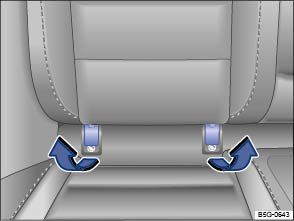
Fig. 46 On the rear outboard seat backrests: Removing the covers (if equipped) on the LATCH/UAS lower universal anchorages.
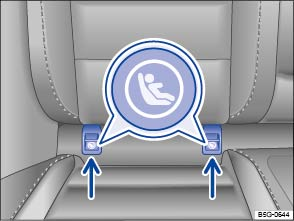
Fig. 47 On the rear outboard seat backrests: Markings on the LATCH/UAS lower universal anchorages.
Read and follow the introductory information and safety information first
LATCH is used in the United States and stands for Lower Anchors and Tethers for Children. In Canada, UAS (Universal Anchorage System) is used to describe the combination of top tether straps and lower anchorages.
All child restraints manufactured after September 1, 1999 must have LATCH/UAS lower universal anchorages.
The LATCH/UAS lower universal anchorage attachment points are on the lower part of the rear seat backrest for the 2 outboard seating positions. Each lower universal anchorage point may have a cover. The circular markings on the anchorage points help you to locate the lower anchorages (arrows). If necessary, remove the covers to access the lower anchorage points and stow the covers in a clean, secure location for future use.
LATCH/UAS lower universal anchorages secure the child restraint system in the seat without using the vehicle's safety belts. Anchorages provide a secure and easy-to-use attachment and minimize the possibility of improper child restraint installation.
Remember that the LATCH/UAS lower universal anchorage points are only intended for installation and attachment of child restraints specifically certified for use with these lower universal anchorages. Child restraints that are not equipped with the LATCH/UAS lower universal anchorage attachments can still be installed with vehicle safety belts according to the child restraint manufacturer's instructions. You must never mount two child restraint systems to one LATCH/UAS lower universal anchorage point at the same time. For instance, you must not install a child restraint with LATCH/UAS lower universal anchorage points on one of the outboard seating positions and then use the inboard anchorage to also install a child restraint in the center of the rear seat that itself is not equipped with LATCH/UAS lower universal anchorage points.
The child restraint must not contact or push against any of the safety belt buckles to help prevent damage to the buckles, which can make the buckles unusable or unsafe.
There are 2 ways to attach an appropriate child restraint to the LATCH/UAS lower universal anchorages:
Rigid connectors on bars at the back of the child restraint:
- Make sure the seat backrest of the rear seat bench is in the upright position and securely latched in place.
- Release or deploy the top tether strap (if one is required by the child restraint manufacturer or by law) to secure the seat .
- Guide the upper tether strap under the rear head restraint (raise the head restraint if necessary).
- Attach the tether strap anchorage hook into the opening of the tether anchorage.
- Attach the connectors onto the LATCH/UAS lower universal anchorages.
- Make sure you hear the child restraint click securely into place.
- Tighten the top tether strap (if there is one) to secure the seat .
- Pull on both sides of the child restraint once you've installed it to make certain it is secure and properly attached.
Releasing
- Release the top tether strap (if one is required by the child restraint manufacturer or by law).
- Release the lower latch from the LATCH/UAS lower universal anchorages following the child restraint manufacturer's instructions.
Hooks attached to adjustable straps (hook-on connectors)
- Make sure the seat backrest of the rear seat bench is in the upright position and securely latched in place.
- Attach the hook-on connectors with the spring catch release onto the LATCH/UAS lower universal anchorage so that the connectors lock into place.
- Pull on the connector attachments to make sure that it is properly attached to the LATCH/UAS lower universal anchorage.
- Pull straps tight following the child restraint manufacturer's instructions.
- Release or deploy the top tether strap (if one is required by the child restraint manufacturer or by law) to secure the seat .
- Guide the upper tether strap under the rear head restraint (raise the head restraint if necessary).
- Guide the tether strap between the rear seat back and the luggage compartment cover.
- Attach the tether strap anchorage hook into the opening of the tether anchorage and pull the top tether strap tight.
- After you have installed the child restraint, pull on both of the adjustable straps on the child restraint and pull also on the tether strap to make certain the seat is secure and properly attached.
Releasing
- Loosen the tension on the hook-on connector straps following the child restraint manufacturer's instructions.
- Release the top tether strap (if one is required by the child restraint manufacturer or by law).
- Depress the spring catch on the hook.
- Hold the spring catch in the depressed position.
- Move the hook in the direction of the vehicle floor so that there is enough space to release the connector from the lower anchorage.
You must take special precautions when installing a child restraint with the vehicle safety belt or with LATCH/UAS lower universal anchorages behind the front passenger seat or behind the driver seat. Always route the unused center seat safety belt and the unused safety belt for the seating position where the LATCH/UAS child restraint is being installed around the rear head restraint behind the child restraint to help prevent a child from playing with the unused belt and becoming entangled in it.
WARNING
Improper use of the LATCH/UAS system can increase the risk of serious personal injury and death in an accident.
- Always carefully follow the child restraint manufacturer's instructions for proper installation of the child restraints and proper use of tether straps as well as the LATCH/UAS lower universal anchorages or safety belts in your vehicle.
- Never mount two child restraint systems on one LATCH/UAS lower universal anchorage point.
- These anchors were developed only for child restraints using the LATCH/UAS system.
- Never attach other child restraints, belts, luggage or other things to the LATCH/UAS anchorages.
- Always make sure that you hear a click when latching the seat in place. If you do not hear a click, the seat is not secure and could fly forward and hit the interior of the vehicle or be ejected from the vehicle.
NOTE
A child restraint may damage the seat upholstery or the safety belt buckles if installed improperly or left on the seat when not in use.
- When installing, make sure that the child restraint does not contact or push against any of the safety belt buckles, because this can cause damage to the buckles and make the buckles unusable or unsafe.
Be careful not to activate the switchable locking retractor when routing the safety belts around the head restraints. Only pull the safety belt out far enough to allow you to route the belt around the head restraint.
Securing a child restraint with the Top Tether strap
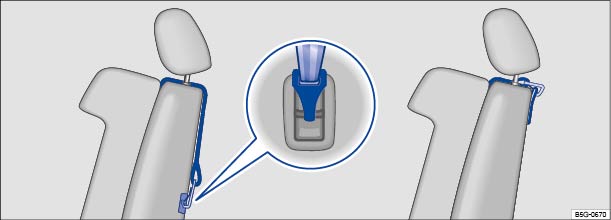
Fig. 48 Example of a mounted upper tether strap: The version on the left shows an outer seating position. The version on the right shows the center seating position.
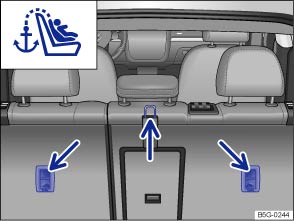
Fig. 49 Anchorages for the top tether strap on the back of the rear seat.
Read and follow the introductory information and safety information first
The Top Tether strap reduces the forward movement of the child restraint in a crash; this helps to reduce the risk of head injury.
Installing the Top Tether strap
- Release or deploy the Top Tether strap on the child restraint according to the child restraint manufacturer's instructions .
- Remove the luggage compartment cover, if necessary.
- Locate the tether anchor behind the rear seat backrest .
- Outer seating position: Guide the upper tether strap under the outer rear head restraint (raise the head restraint if necessary). For child restraints with V-tether straps: Always make sure that the head restraint guide rods do not interfere with any part of the top tether strap.
- Center seating position: Guide the upper tether strap under the center rear head restraint only when it is pushed all the way up. If the tether strap hook is too big to pass under the center head restraint, push the head restraint all the way down and guide the strap over the center head restraint.
- Guide the tether strap between the rear seat backrest and the luggage compartment cover.
- Attach the tether strap anchorage hook into the opening of the tether anchorage .
- Pull on the tether strap hook so that the spring catch of the hook is engaged.
- Tighten the tether strap firmly following the child restraint manufacturer's instructions.
- Move the head restraint back into the original position, if necessary .
Releasing the tether strap
- Loosen the tension on the tether strap following the child restraint manufacturer's instructions.
- Depress the spring catch on the hook and release it from the anchorage.
WARNING
Improper installation of child restraints will increase the risk of injury and death in a crash.
- Always follow the instructions provided by the manufacturer of the child restraint when installing it in your vehicle.
- Never install a child restraint without a properly attached top tether strap if the child restraint manufacturer's instructions require the top tether strap for proper installation, or if required by law. For example, the use of a top tether strap for forward-facing child restraints is required by law in Canada.
- Improper use of top tether straps and anchors can lead to injury in a collision. The anchors are designed to withstand only those loads imposed by correctly fitted child restraints.
- Never attach two child restraint systems to one top tether strap or top tether anchorage.
- Never attach a child restraint tether strap to a tie-down hook in the luggage compartment.
- Never use child restraint top tether anchorages to secure safety belts or other kinds of occupant restraints.
- Never secure or attach any luggage or other items to the Top Tether anchorages.
NOTE
If you leave the child restraint with the tether strap firmly installed for several days, this could leave a mark on the upholstery on the seat cushion and backrest in the area where the tether strap was installed. The upholstery would also be permanently stretched around the tether strap. This applies especially to leather seats.
Sources of information about child restraints and their use
Read and follow the introductory information and safety information first
The following are some sources of additional information about child restraint selection, installation and use:
Safety authorities advise that the best child safety seat is the one that fits your child and fits in your vehicle, and that you will use correctly and consistently.
Try before you buy!
Transport Canada Information Centre
1-800-333-0371
1-613-998-8616 (Ottawa)
National Highway Traffic Safety Administration
1-888-327-4236 (TTY: 1-800-424-9153)
National SAFE KIDS Campaign
1-202-662-0600
SafetyBeltSafe U.S.A.
1-800-745-SAFE or 1-800-745-7233 (English)
1-800-747-SANO or 1-800-747-7266 (Spanish)
Volkswagen Customer CARE
1-800-822-8987
Download Manual