Child restraint systems
A child restraint system for a small child or baby must itself be properly restrained on the seat with the latch anchors or the lap portion of the lap/shoulder belt.
The laws of all 50 states of the U.S.A. And canada now require the use of child restraint systems.
Points to remember
Studies have shown that installing a child restraint on a rear seat is much safer than installing one on the front passenger seat.
- Choose a child restraint system that suits your vehicle and is appropriate to the age and size of the child.
- For installation details, follow the instructions provided with the child restraint system.
General installation instructions are provided in this manual.
Types of child restraints
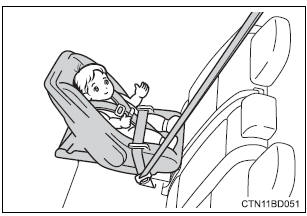
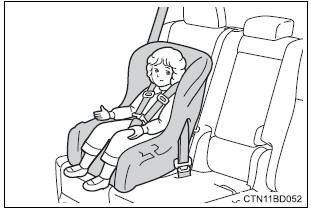
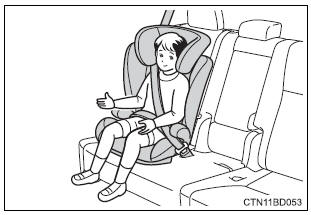
Child restraint systems are classified into the following 3 types according to the age and size of the child:
- Rear facing „o infant seat/convertible seat
- Forward facing „o convertible seat
- Booster seat
Selecting an appropriate child restraint system
- use a child restraint system appropriate for the child until the child becomes large enough to properly wear the vehicle's seat belt.
- If the child is too large for a child restraint system, sit the child on a rear seat and use the vehicle's seat belt.
 Warning Warning
Child restraint precautions
When children are in the vehicle
Do not allow children to play with the seat belt. If the seat belt becomes twisted around a child's neck, it may lead to choking or other serious injuries that could result in death. If this occurs and the buckle cannot be unfastened, scissors should be used to cut the belt. When the child restraint system is not in use
|
Installing child restraints
Follow the child restraint system manufacturer’s instructions.
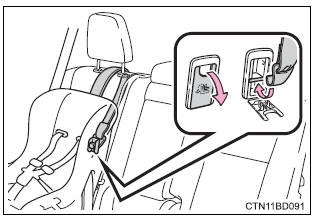
Firmly secure child restraints to the seats using the latch anchors or a seat belt. Attach the top tether strap when installing a child restraint.
The lap/shoulder belt can be used if your child restraint system is not compatible with the latch (lower anchors and tethers for children) system.
Child restraint latch anchors
- 8-seat models
Latch anchors are provided for the outboard second seats. (Buttons displaying the location of the anchors are attached to the seats.)
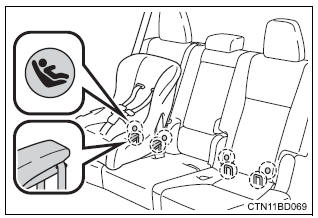
- 7-Seat models
Latch anchors are provided for both second seats. (Buttons displaying the location of the anchors are attached to the seats.)
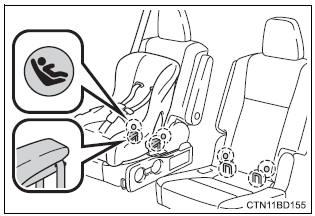
Seat belts equipped with a child restraint locking mechanism (alr/elr belts except driver's seat belt)
Anchor brackets (for top tether strap)
- Second seats (8-seat models)
An anchor bracket is provided for each second seat.
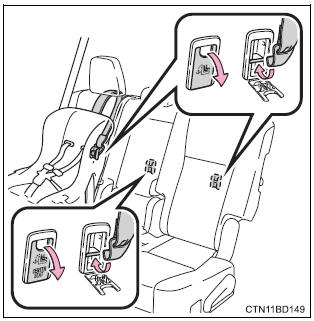
- Second seats (7-seat models)
An anchor bracket is provided for both second seats.
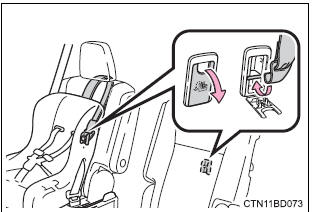
- Third seats
An anchor bracket is provided for the third center seat.
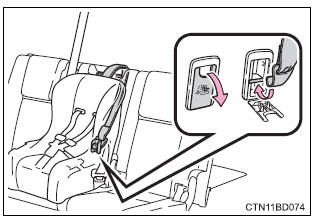
Installation with latch system
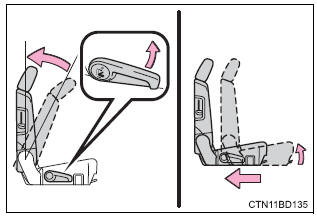
- Fold the seatback while pulling the lever. Return the seatback and secure it at the 1st lock position (most upright position).
Move the seat as far back as possible.
If your child restraint system interferes with a head restraint and cannot be installed properly, install the child restraint system after removing the head restraint.
- Widen the gap between the seat cushion and seatback slightly.
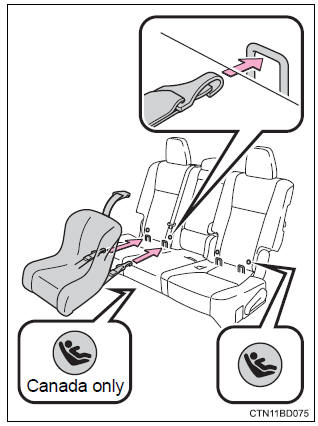
- Type a
- Latch the hooks of the lower straps onto the latch anchors.
If the child restraint has a top tether strap, the top tether strap should be latched onto the top tether strap anchor.
For owners in canada: the symbol on a child restraint system indicates the presence of a lower connector system.
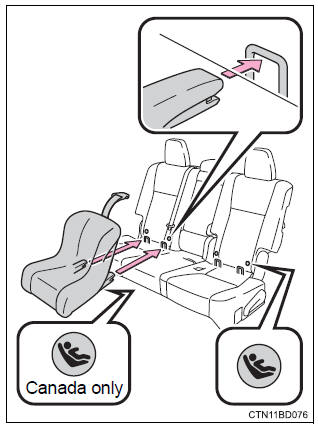
- Type b
- Latch the buckles onto the latch anchors.
If the child restraint has a top tether strap, the top tether strap should be latched onto the top tether strap anchor.
For owners in canada: the symbol on a child restraint system indicates the presence of a lower connector system.
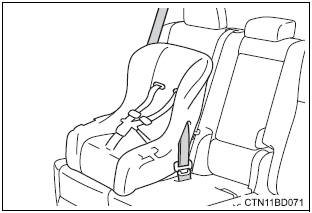
Installing child restraints using a seat belt (child restraint lock function belt)
- Rear-facing - infant seat/convertible seat
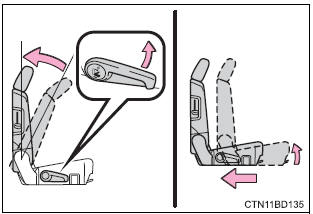
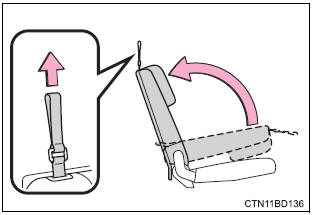
- Adjusting the seat
- Second seats
Fold the seatback while pulling the lever. Return the seatback and secure it at the 1st lock position (most upright position).
Move the seat as far back as possible.
- Third seats
Fold the seatback while pulling the strap. Return the seatback and secure it at the 1st lock position (most upright position).
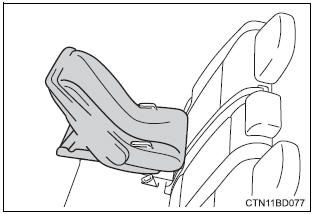
- Place the child restraint system on the rear seat facing the rear of the vehicle.
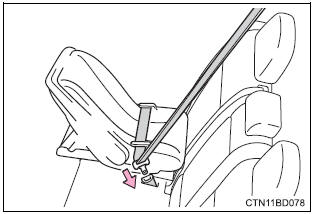
- Run the seat belt through the child restraint system and insert the plate into the buckle. Make sure that the belt is not twisted.
- Fully extend the shoulder belt and allow it to retract to put it in lock mode. In lock mode, the belt cannot be extended.
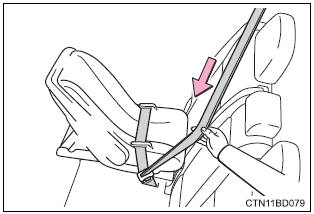
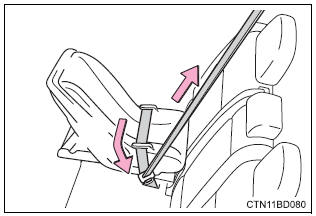
- While pushing the child restraint system down into the rear seat, allow the shoulder belt to retract until the child restraint system is securely in place.
After the shoulder belt has retracted to a point where there is no slack in the belt, pull the belt to check that it cannot be extended.
- Forward-facing - convertible seat
- Adjusting the seat
- Second seats
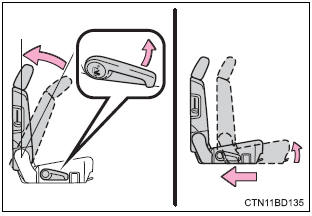
Fold the seatback while pulling the lever. Return the seatback and secure it at the 1st lock position (most upright position).
Move the seat as far back as possible.
- Third seats
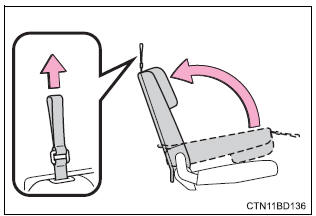
Fold the seatback while pulling the strap. Return the seatback and secure it at the 1st lock position (most upright position).
- Place the child restraint system on the seat facing the front of the vehicle.
If your child restraint system interferes with a head restraint and cannot be installed properly, install the child restraint system after removing the head restraint.
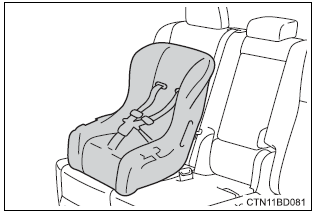
- Run the seat belt through the child restraint system and insert the plate into the buckle. Make sure that the belt is not twisted.
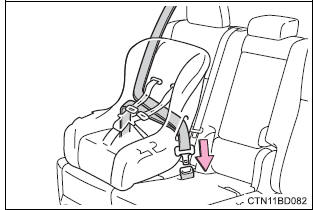
- Fully extend the shoulder belt and allow it to retract to put it in lock mode. In lock mode, the belt cannot be extended.
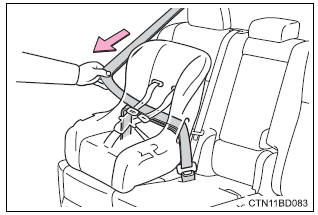
- While pushing the child restraint system into the rear seat, allow the shoulder belt to retract until the child restraint system is securely in place.
After the shoulder belt has retracted to a point where there is no slack in the belt, pull the belt to check that it cannot be extended.
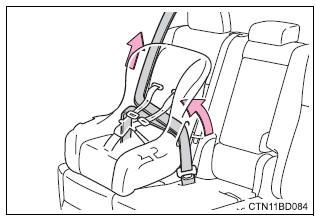
- If the child restraint has a top tether strap, the top tether strap should be latched onto the top tether strap anchor.
- Booster seat
- Adjusting the seat
- Second seats
Fold the seatback while pulling the lever. Return the seatback and secure it at the 1st lock position (most upright position).
Move the seat as far back as possible.
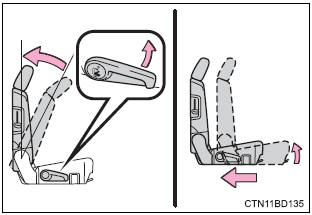
- Third seats
Fold the seatback while pulling the strap. Return the seatback and secure it at the 1st lock position (most upright position).
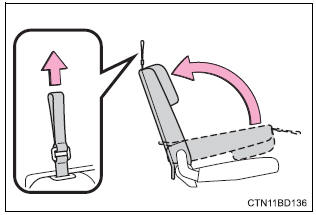
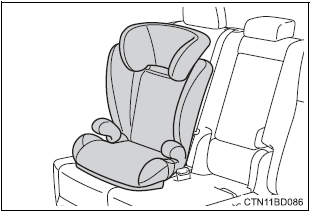
- Place the child restraint system on the seat facing the front of the vehicle.
If your child restraint system interferes with a head restraint and cannot be installed properly, install the child restraint system after removing the head restraint.
- High back type
- Booster type
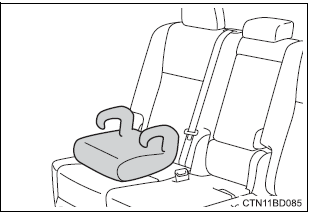
- Sit the child in the child restraint system. Fit the seat belt to the child restraint system according to the manufacturer’s instructions and insert the plate into the buckle. Make sure that the belt is not twisted.
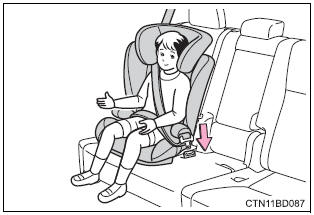
Check that the shoulder belt is correctly positioned over the child"¦s shoulder and that the lap belt is as low as possible.
Removing a child restraint installed with a seat belt
Push the buckle release button and fully retract the seat belt.
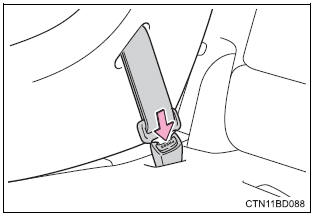
Child restraint systems with a top tether strap
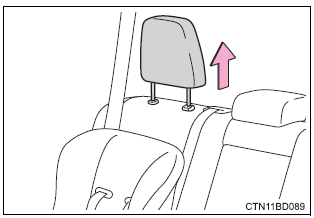
- Raise the head restraint so that the top tether strap can easily be passed between the head restraint and seatback.
If your child restraint system interferes with a head restraint and cannot be installed properly, install the child restraint system after removing the head restraint.
- Secure the child restraint system using the seat belt or latch anchors.
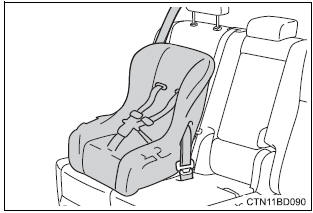
- Open the anchor bracket cover, latch the hook onto the anchor bracket and tighten the top tether strap.
Run the top tether strap under the head restraint.
Make sure the top tether strap is securely latched.
Laws and regulations pertaining to anchorages
The latch system conforms to fmvss225 or cmvss210.2.
Child restraint systems conforming to fmvss213 or cmvss213 specifications can be used.
This vehicle is designed to conform to the sae j1819.
 Warning Warning
To prevent the belt from going into alr lock mode, do not fully extend the shoulder belt. Alr mode causes the belt to tighten only. This could cause injury or discomfort to the child. When installing a child restraint system
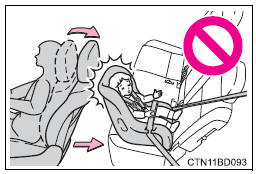
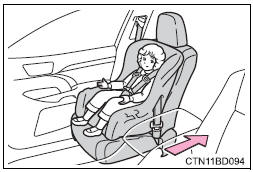
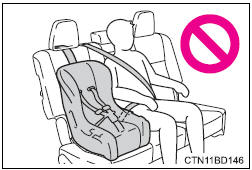
Follow the directions given in the child restraint system installation manual and fix the child restraint system securely in place. If the child restraint system is not correctly fixed in place, the child or other passengers may be seriously injured or even killed in the event of a sudden braking, sudden swerving or an accident.
When installing a child restraint system
Do not use a seat belt extender
If a seat belt extender is used when installing a child restraint system, the seat belt will not securely hold the child restraint system, which could cause death or serious injury to the child or other passengers in the event of a sudden braking, sudden swerving or an accident. To correctly attach a child restraint system to the anchors
When using the latch anchors, be sure that there are no foreign objects around the anchors and that the seat belt is not caught behind the child restraint system. Make sure the child restraint system is securely attached, or it may cause death or serious injury to the child or other passengers in the event of sudden braking, sudden swerving or an accident. |
Exhaust gas precautions
Harmful substance to the human body is included in exhaust gases if inhaled
 Warning Warning
Failure to do so may cause exhaust gases enter the vehicle and may lead to an accident caused by light-headedness, or may lead to death or a serious health hazard. Important points while driving
When parking
Exhaust pipe
The exhaust system needs to be checked periodically. If there is a hole or crack caused by corrosion, damage to a joint or abnormal exhaust noise, be sure to have the vehicle inspected and repaired by your toyota dealer. |
Download Manual