Checking and replacing fuses
If any of the electrical components do not operate, a fuse may have blown. If this happens, check and replace the fuses as necessary.
- Vehicles without a smart key system: turn the engine switch to the "lock" position.
Vehicles with a smart key system: turn the engine switch off.
- Open the fuse box cover.
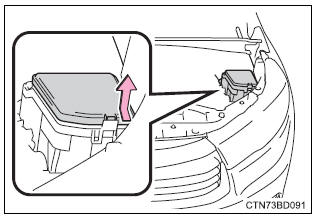
- engine compartment (type a fuse box)
Push the tab in and lift the lid off.
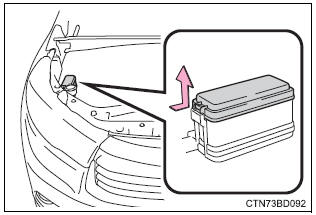
- Engine compartment (type b fuse box)
Push the tab in and lift the lid off.
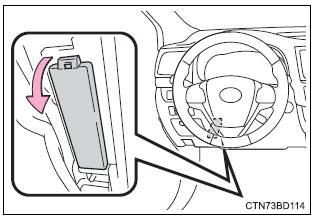
- Under the driver’s side instrument panel
Remove the lid.
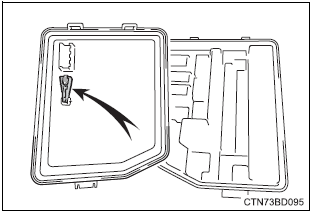
- Remove the fuse with the pullout tool.
Only type a fuses can be removed using the pullout tool.
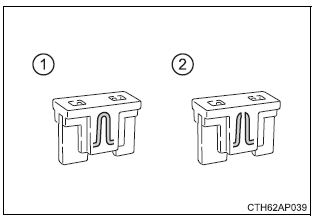
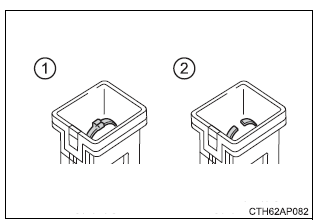
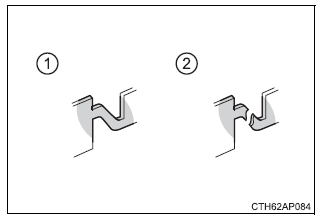
- Check if the fuse is blown.
- Normal fuse
- Blown fuse
Type a and b: replace the blown fuse with a new fuse of an appropriate amperage rating.
The amperage rating can be found on the fuse box lid.
Type c:
Contact your toyota dealer.
- Type a
- Type b
- Type c
After a fuse is replaced
- If the lights do not turn on even after the fuse has been replaced, a bulb may need replacement.
- If the replaced fuse blows again, have the vehicle inspected by your toyota dealer.
If there is an overload in a circuit
The fuses are designed to blow, protecting the wiring harness from damage.
When replacing light bulbs
Toyota recommends that you use genuine toyota products designed for this vehicle. Because certain bulbs are connected to circuits designed to prevent overload, non-genuine parts or parts not designed for this vehicle may be unusable.
 Warning Warning
Observe the following precautions. Failure to do so may cause damage to the vehicle, and possibly a fire or injury.
|
 Notice Notice
Have the cause of electrical overload determined and repaired by your toyota dealer as soon as possible. |
Download Manual