Tire pressure monitoring system
WHAT IS THE TIRE PRESSURE MONITORING SYSTEM
 The tire pressure monitoring system measures the vehicle's tire pressures. A warning lamp illuminates if one or more tires are significantly underinflated or if there is a system malfunction. The tire pressure monitoring system measures the vehicle's tire pressures. A warning lamp illuminates if one or more tires are significantly underinflated or if there is a system malfunction. |
TIRE PRESSURE MONITORING SYSTEM OVERVIEW
 WARNING: Under-inflation is the most common cause of tire failures and may result in severe tire cracking, tread separation or blowout, with unexpected loss of vehicle control and increased risk of injury. Under-inflation increases sidewall flexing and rolling resistance, resulting in heat buildup and internal damage to the tire. It also may result in unnecessary tire stress, irregular wear, loss of vehicle control and accidents. A tire can lose up to half of its air pressure and not appear to be flat! WARNING: To determine the required pressure(s) for your vehicle, see the Safety Compliance Certification Label (on the door hinge pillar, door-latch post or the door edge that meets the door-latch post, next to the driver seat) or the Tire Label on the B-Pillar or the edge of the driver door. WARNING: Under-inflation is the most common cause of tire failures and may result in severe tire cracking, tread separation or blowout, with unexpected loss of vehicle control and increased risk of injury. Under-inflation increases sidewall flexing and rolling resistance, resulting in heat buildup and internal damage to the tire. It also may result in unnecessary tire stress, irregular wear, loss of vehicle control and accidents. A tire can lose up to half of its air pressure and not appear to be flat! WARNING: To determine the required pressure(s) for your vehicle, see the Safety Compliance Certification Label (on the door hinge pillar, door-latch post or the door edge that meets the door-latch post, next to the driver seat) or the Tire Label on the B-Pillar or the edge of the driver door. |
Each tire, including the spare (if provided), should be checked monthly when cold and inflated to the inflation pressure recommended by the vehicle manufacturer on the vehicle placard or tire inflation pressure label. (If your vehicle has tires of a different size than the size indicated on the vehicle placard or tire inflation pressure label, you should determine the proper tire inflation pressure for those tires).
As an added safety feature, your vehicle has been equipped with a Tire Pressure Monitoring System (TPMS) that illuminates a low tire pressure telltale when one or more of your tires is significantly under-inflated. Accordingly, when the low tire pressure telltale illuminates, you should stop and check your tires as soon as possible, and inflate them to the proper pressure. Driving on a significantly under-inflated tire causes the tire to overheat and can lead to tire failure. Under-inflation also reduces fuel efficiency and tire tread life, and may affect the vehicle’s handling and stopping ability.
Please note that the TPMS is not a substitute for proper tire maintenance, and it is the driver’s responsibility to maintain correct tire pressure, even if under-inflation has not reached the level to trigger illumination of the TPMS low tire pressure telltale.
Your vehicle has also been equipped with a TPMS malfunction indicator to indicate when the system is not operating properly. The TPMS malfunction indicator is combined with the low tire pressure telltale. When the system detects a malfunction, the telltale will flash for approximately one minute and then remain continuously illuminated. This sequence will continue upon subsequent vehicle start-ups as long as the malfunction exists.
When the malfunction indicator is illuminated, the system may not be able to detect or signal low tire pressure as intended. TPMS malfunctions may occur for a variety of reasons, including the installation of replacement or alternate tires or wheels on the vehicle that prevent the TPMS from functioning properly. Always check the TPMS malfunction telltale after replacing one or more tires or wheels on your vehicle to ensure that the replacement or alternate tires and wheels allow the TPMS to continue to function properly.
| WARNING: Changes or modifications not expressively approved by the party responsible for compliance could void the user's authority to operate the equipment. The term "IC:" before the radio certification number only signifies that Industry Canada technical specifications were met. |
This device complies with Part 15 of the FCC Rules and with License exempt RSS Standards of Industry Canada. Operation is subject to the following two conditions:
- This device may not cause harmful interference, and
- This device must accept any interference received, including interference that may cause undesired operation.
TIRE PRESSURE MONITORING SYSTEM PRECAUTIONS
| WARNING: The tire pressure monitoring system is not a substitute for manually checking tire pressures. You should periodically check tire pressures using a pressure gauge. Failure to correctly maintain tire pressures could increase the risk of tire failure, loss of control, vehicle rollover and personal injury. WARNING: Do not use the tire pressure displayed in the information display as a tire pressure gauge. Failure to follow this instruction could result in personal injury or death. |
Note: The use of tire sealants can damage the tire pressure monitoring system.
Note: If the tire pressure monitor sensor becomes damaged it may not function.
TIRE PRESSURE MONITORING SYSTEM LIMITATIONS
When the outside temperature drops significantly, the tire pressure could decrease and activate the low tire pressure warning lamp.
The warning lamp could also illuminate when you use a spare wheel, or tire sealant from the inflator kit.
Note: Regularly checking the vehicle tire pressures can reduce the possibility for the warning lamp to illuminate due to outside air temperature changes.
Note: After you inflate the tires to the recommended pressure it could take up to two minutes of driving over 20 mph (32 km/h) for the warning indicator to turn off.
VIEWING THE TIRE PRESSURES
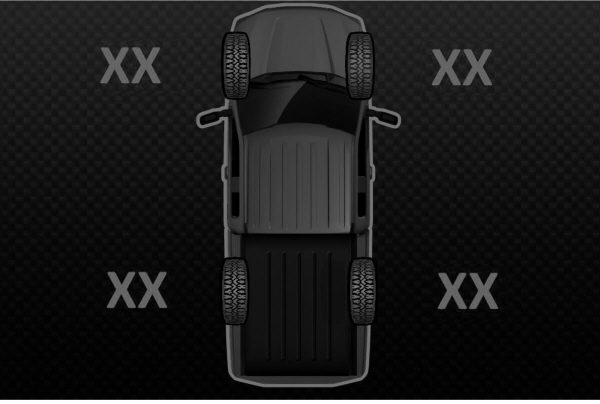
Using the instrument cluster display arrow keys navigate to the truck info section where you can view the tire pressures.
RESETTING TIRE PRESSURE MONITORING SYSTEM
TIRE PRESSURE MONITORING SYSTEM RESET PROCEDURE
| WARNING: To determine the required pressure(s) for your vehicle, see the Safety Compliance Certification Label (on the door hinge pillar, door-latch post or the door edge that meets the door-latch post, next to the driver seat) or the Tire Label on the driver or passenger side B-pillar, or the edge of the driver door. |
You must reset the tire pressure monitoring system after each tire rotation on vehicles that require different recommended tire pressures in the front tires as compared to the rear tires.
Note: To reduce the chances of interference from another vehicle, perform the system reset procedure at least three feet, one meter, away from another vehicle undergoing the system reset procedure at the same time.
Note: Do not wait more than two minutes between resetting each tire sensor or the system can time-out and you need to repeat the entire procedure on all four wheels.
- Drive the vehicle above 20 mph (32 km/h) for at least two minutes, then park in a safe location where you can easily get to all four tires and have access to an air pump.
- Switch the ignition off.
- Switch the ignition on but do not start the engine.
- Switch the hazard flashers on then off three times.
Note: You must accomplish this within 10 seconds. If you successfully enter the reset mode, the horn sounds once, the system indicator flashes and a message shows in the information display.
Note: If the system does not enter reset mode, try again starting at Step 2. If after repeated attempts to enter the reset mode, the horn does not sound, the system indicator does not flash and no message shows in the information display, contact your authorized dealer.
- Remove the valve cap from the valve stem on the left front tire. Decrease the air pressure until the horn sounds.
Note: The single horn tone confirms that the sensor identification code has been learned by the module for this position. If the horn sounds twice, the reset procedure was unsuccessful, and you must repeat it.
- Remove the valve cap from the valve stem on the right front tire. Decrease the air pressure until the horn sounds.
- Repeat the previous step on the right rear tire and then on the left rear tire.
- Switch the ignition off.
Note: If the horn sounds twice again after switching the ignition off, and repeating the procedure, contact your authorized dealer and have your vehicle checked as soon as possible.
- Set all four tires to the recommended air pressure as indicated on the Safety Compliance Certification Label.
TRAILER TIRE PRESSURE MONITORING SYSTEM (IF EQUIPPED)
Note: Additional equipment may be required for your vehicle to support trailer tire pressure and temperature monitoring. See your authorized dealer for more information.
Note: The trailer tire pressure monitoring system is not a substitute for proper tire maintenance. It is your responsibility to maintain correct tire pressures at all times.
Note: If a trailer tire is repaired, replaced or broken down for service, the screw and valve on the trailer tire pressure sensor should be replaced. See your authorized dealer for details.
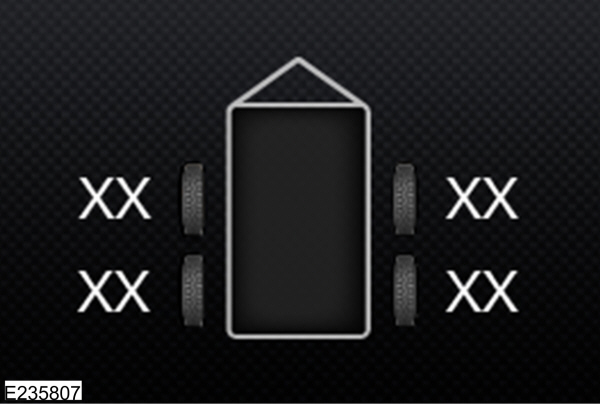
The trailer tire pressure monitoring system is an added safety feature that allows you to view your trailer tire pressures and temperatures through the information display. See Tire Pressure Monitoring System – Information Messages. Tire pressure sensors are mounted into each tire on your trailer. The sensors send a message to your vehicle indicating the current trailer tire pressure and temperature.
If the trailer tire pressure monitoring system detects that a tire is low, a warning message appears in the information display. The trailer tire information screen in the information display highlights the tire with a low pressure.
If the trailer tire pressure monitoring system detects that a tire temperature is over temp, a warning message appears in the Information display. The trailer tire information screen in the information display highlights the tire with a high temperature.
The main function of the trailer tire pressure monitoring system is to warn you when your trailer tires need air or if the tires are experiencing high temperatures. It can also warn you in the event the system is no longer capable of functioning as intended. See Tire Pressure Monitoring System – Information Messages.
WHEN A TEMPORARY SPARE OR NEW TIRE IS INSTALLED
If you have replaced a trailer tire with a new or spare tire, a warning message appears and pressure readings are no longer displayed for that tire.
To restore the full function of the trailer tire pressure monitoring system:
- Have the damaged wheel and tire assembly repaired and remounted to your trailer.
- Install the trailer tire pressure monitoring sensor into the new wheel and tire assembly.
- Perform the trailer tire pressure monitoring system reset procedure.
TRAILER TIRE PRESSURE MONITORING SYSTEM RESET PROCEDURE
Note: You need to perform the tire pressure monitoring system reset procedure after each tire rotation, or when a new trailer tire pressure sensor is installed into a trailer tire.
The trailer tire pressure monitoring system can be reset through the menu in the information display. See Tire Pressure Monitoring System – Information Messages. Performing the trailer setup process also resets the trailer tire pressure monitoring system.
Note: For further information on the trailer tire pressure monitoring system see the instructions that were included with the trailer tire pressure monitoring system kit.
TIRE PRESSURE MONITORING SYSTEM – WARNING LAMPS
| Warning Lamp | Possible Cause | Action Required |
|---|---|---|
| Solid warning lamp | One or more tires are significantly under inflated | After inflating your tires to the manufacturer’s recommended pressure as shown on the tire label, on the edge of driver door or the B-pillar, drive your vehicle for at least two minutes over 20 mph (32 km/h) before the light turns off. |
| Solid warning lamp or flashing warning lamp | Temporary spare wheel in use | Repair the damaged road wheel and tire and refit it to your vehicle to restore operation of the system. |
| Tire pressure monitoring system malfunction | If the tires are inflated to the recommended tire pressures and the temporary spare wheel is not in use, the system detected a fault that requires service.Have your vehicle checked as soon as possible. |
TIRE PRESSURE MONITORING SYSTEM – INFORMATION MESSAGES
| MESSAGE | ACTION | |
|---|---|---|
|
TIRE PRESSURE LOW |
AFTER INFLATING YOUR TIRES TO THE MANUFACTURER’S RECOMMENDED PRESSURE AS SHOWN ON THE TIRE LABEL, ON THE EDGE OF THE DRIVER DOOR OR THE B-PILLAR, DRIVE YOUR VEHICLE FOR AT LEAST TWO MINUTES OVER 20 MPH (32 KM/H) BEFORE THE LIGHT TURNS OFF. | |
|
TIRE PRESSURE MONITOR FAULT |
THE SYSTEM HAS DETECTED A FAULT THAT REQUIRES SERVICE.HAVE YOUR VEHICLE CHECKED AS SOON AS POSSIBLE. | |
|
TIRE PRESSURE SENSOR FAULT |
THE SYSTEM HAS DETECTED A FAULT THAT REQUIRES SERVICE OR A SPARE TIRE IS IN USE.HAVE YOUR VEHICLE CHECKED AS SOON AS POSSIBLE. | |
TRAILER TIRE PRESSURE MONITORING SYSTEM
| MESSAGE | ACTION |
|---|---|
|
TRAILER TIRE LOW SPECIFIED: |
ONE OR MORE TIRES ON YOUR TRAILER IS BELOW THE SPECIFIED TIRE PRESSURE. |
|
TRAILER TIRE OVER TEMPERATURE |
DISPLAYS WHEN ONE OR MORE TIRES ON YOUR TRAILER IS ABOVE THE RECOMMENDED TEMPERATURE. |
|
TRAILER TIRE PRESSURE SENSOR FAULT |
A TRAILER TIRE PRESSURE SENSOR IS MALFUNCTIONING. IF THE WARNING STAYS ON OR CONTINUES TO COME ON, CONTACT AN AUTHORIZED DEALER AS SOON AS POSSIBLE. |
|
TRAILER TIRE PRESSURE MONITOR FAULT |
THE TRAILER TIRE PRESSURE MONITORING SYSTEM IS MALFUNCTIONING. IF THE WARNING STAYS ON OR CONTINUES TO COME ON, CONTACT AN AUTHORIZED DEALER. |
|
TRAILER TIRE PRESSURE MONITOR CAPABILITY NOT DETECTED |
THE SYSTEM CANNOT DETECT THE TRAILER TIRE PRESSURE MONITORING SYSTEM. |
|
TRAILER TIRE PRESSURE INDICATION NOT SETUP SEE MANUAL |
THE TRAILER TIRE PRESSURE MONITORING SYSTEM IS NOT SETUP. |
Download Manual