Transporting children safely
The right place for children
Safety information

Do not leave children or animals unattended in the vehicle
Warning
Unattended children or animals in the vehicle can cause the vehicle to move and endanger themselves and traffic, for instance due to the following actions:
Pressing the Start/Stop button.
Releasing the parking brake.
Opening and closing the doors or windows.
Engaging selector lever position N.
Using vehicle equipment.
There is a risk of accidents or injuries. Do not leave children or animals unattended in the vehicle. Take the vehicle key with you when exiting and lock the vehicle.
Children in the vehicle's heated interior
Warning
A hot vehicle may result in death to persons, especially children, or animals. There is a risk of injury or danger to life. Do not leave persons, especially children, or animals unattended in the vehicle.
Allow the child restraint system to cool down
Warning
Exposure to intense sunlight can cause child restraint systems and their components to become very hot. Persons may sustain burn injuries when touching the hot components. There is a risk of injury. Do not expose the child restraint system to direct sunlight or cover where necessary. If necessary, let the child restraint system cool down before transporting a child. Do not leave children unattended in the vehicle.
Children in the rear seat
General information
Accident research shows that the safest place for children is in the rear seat.
Children younger than 13 years of age or shorter than 5 ft/150 cm should be transported in the rear seat in suitable child restraint systems designed for the age, weight and size of the child. Children 13 years of age or older must wear a seat belt as soon as a suitable child restraint system can no longer be used due to their age, weight, or size.
Safety information
Use suitable child restraint systems
Warning
The seat belt cannot be fastened correctly on children shorter than 5 ft/150 cm without suitable additional child restraint systems. The protective effect of safety gear, including seat belts, can be limited or lost when seat belts are fastened incorrectly. An incorrectly fastened seat belt can cause additional injuries, for instance in the event of an accident, braking or evasive maneuvers. There is a risk of injury or danger to life. Secure children shorter than 5 ft/150 cm using suitable child restraint systems.
Children on the front passenger seat
General information
Before using a child restraint system on the front passenger seat, ensure that the front, knee, and side airbags on the passenger's side are deactivated.
Additional information:
For automatic deactivation of front passenger airbags.
Safety information
Deactivating the front passenger airbags
Warning
Active front passenger airbags can injure a child in a child restraint system when the airbags are deployed. There is a risk of injury. Make sure that the front passenger airbags are deactivated and that the PASSENGER AIRBAG OFF indicator light lights up.
Installing child restraint systems
General information
Pay attention to the specifications and the operating and safety information of the child restraint system manufacturer when selecting, installing, and using child restraint systems.
Safety information
Child restraint systems after an accident
Warning
The protective effect of child restraint systems and their fastening systems which have been damaged or exposed to an accident can be limited or lost. A child cannot be properly restrained in the event of an accident, braking or evasive maneuvers. There is a risk of injury or danger to life.
Do not use child restraint systems which have been damaged or exposed to an accident.
If attachment systems have been damaged or strained by an accident, have them checked and replaced by an authorized service center or another qualified service center or repair shop.
Ensuring the stability of the child restraint seat
Warning
The stability of the child restraint system is limited or compromised with incorrect seat setting or improper installation of the child seat. There is a risk of injury or danger to life. Make sure that the child restraint system fits securely against the backrest. If possible, adjust the backrest tilt for all affected backrests and correctly adjust the seats. Make sure that seats and backrests are securely engaged or locked. If possible and necessary, adjust the height of the head restraints or remove them.
On the front passenger seat
Deactivating the airbags
Deactivating the front passenger airbags
Warning
Active front passenger airbags can injure a child in a child restraint system when the airbags are deployed. There is a risk of injury. Make sure that the front passenger airbags are deactivated and that the PASSENGER AIRBAG OFF indicator light lights up.
Before installing a child restraint system in the front passenger seat, make sure that the front, knee and side airbags on the passenger's side are deactivated.
Additional information:
For automatic deactivation of front passenger airbags.
Seat position and height
After installing a child restraint system, move the front passenger seat as far back as it will go and, if possible, bring it up to the highest position. This seat position and height ensure the best possible position for the belt and offers optimal protection in the event of an accident.
If the upper attachment point of the seat belt is located in front of the belt guide of the child restraint seat, move the front passenger seat carefully forward until the best possible belt guide position is reached.
Backrest width
Adjustable backrest width: before installing a child restraint system in the front passenger seat, open the backrest width completely. Do not change the backrest width again and do not call up a memory position.
Child seat security
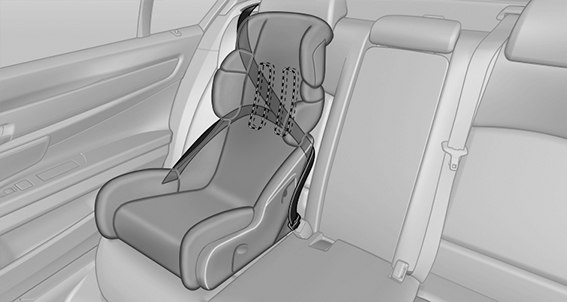
The seat belts in the rear and the front passenger seat belt can be permanently locked to fasten child restraint systems.
Locking the seat belt
Pull out the belt strap completely.
Secure the child restraint system with the seat belt.
Allow the belt strap to be pulled in and pull it tight against the child restraint system. The seat belt is disabled.
Unlocking the seat belt
Unbuckle the seat belt buckle.
Remove the child restraint system.
Allow the belt strap to be pulled in completely.
LATCH child seat mountings
General information
LATCH: Lower Anchors and Tether for Children.
Pay attention to the specifications, operating tips and safety instructions from the child restraint system manufacturer when selecting, installing, and using LATCH child restraint fixing systems.
Mounts for the lower LATCH anchors
General information
The lower anchors may be used to attach the CRS to the vehicle seat up to a combined child and CRS weight of 65 lbs/30 kg when the child is restrained by the internal harnesses.
Safety information
Properly engaging the lower LATCH anchors
Warning
If the lower mountings of the child restraint system are not correctly engaged, the protective effect of the child restraint system is limited. There is a risk of injury or danger to life. Make sure that the lower mountings are correctly engaged and that the child restraint system fits securely against the backrest.
Use attachment points only for child restraint systems
Warning
The mounts for the lower mountings and attachment points of the child restraint system are intended for attaching child restraint systems only. If other objects are attached, the mounts or attachment points can be damaged. There is a risk of injury or risk of damage to property. Only attach child restraint systems at the corresponding mounts for the lower mountings or attachment points.
Position
|
Icon |
Meaning |
|---|---|
|
|
The corresponding icon shows the mounts for the lower LATCH anchors. Seats equipped with lower mountings are marked with a pair (2) of LATCH icons. For vehicles equipped with a middle seat: It is not recommended to use the inner lower mountings of standard outer LATCH positions to fasten a child restraint system on the middle seat. Use the vehicle seat belt instead for the middle seat. |

Before installing the LATCH child restraint fixing systems
Pull the seat belt away from the area of the child seat mountings.
Installation of the LATCH child restraint fixing systems
Mount child restraint system, see manufacturer's information.
Ensure that both LATCH anchors are properly engaged.
Child restraint systems with tether strap
General information
When attaching child restraint systems to the upper attachment points, observe the specifications and the operating and safety information of the child restraint system manufacturer.
Safety information
Make sure the upper retaining strap is routed correctly
Warning
If the upper retaining strap is incorrectly used for the child restraint system, the protective effect is reduced. There is a risk of injury. Ensure that the upper retaining strap is guided to the upper attachment point without twisting and not over sharp edges.
Lock rear seat backrests correctly
Warning
If the rear seat backrest is not locked, the protective effect of the child restraint system is limited or nonexistant. In certain situations, for instance braking maneuvers or in case of an accident, the rear seat backrest can fold forward. There is a risk of injury or danger to life. Make sure that the rear seat backrests are locked.
Use attachment points only for child restraint systems
Warning
The mounts for the lower mountings and attachment points of the child restraint system are intended for attaching child restraint systems only. If other objects are attached, the mounts or attachment points can be damaged. There is a risk of injury or risk of damage to property. Only attach child restraint systems at the corresponding mounts for the lower mountings or attachment points.
Attachment points
|
Icon |
Meaning |
|---|---|
|
|
The respective icon shows the attachment point for the upper retaining strap. Seats with an upper top tether are marked with this icon. It is located on the rear seat backrest, the rear shelf or the rear seat. |
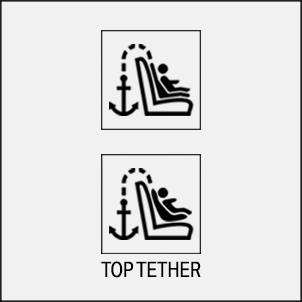
Routing the retaining strap
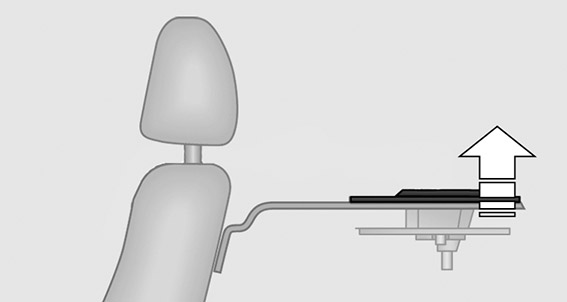
Open the cover.
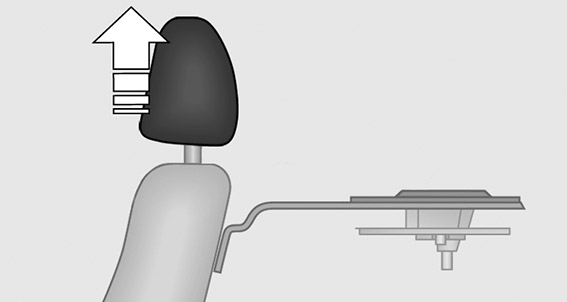
Raise or remove head restraints.
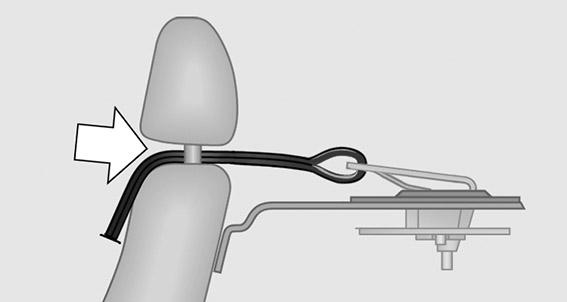
Guide the upper retaining strap between or along both sides of the supports for the head restraint to the attachment point.
For the middle seat, guide it over or along both sides of the head restraint to the attachment point where applicable.
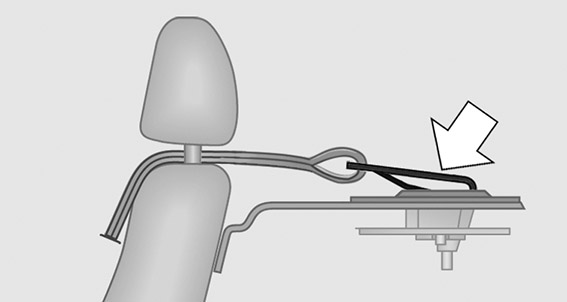
Attach the hook of the retaining strap to the attachment point.
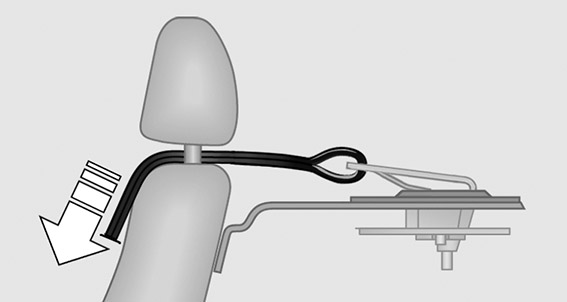
Tighten the retaining strap.
1
Open the cover.
2
Raise or remove head restraints.
3
Guide the upper retaining strap between or along both sides of the supports for the head restraint to the attachment point.
3
For the middle seat, guide it over or along both sides of the head restraint to the attachment point where applicable.
4
Attach the hook of the retaining strap to the attachment point.
5
Tighten the retaining strap.
Locking the doors and windows in the rear
General information
In certain situations it may be advisable to secure the rear doors and windows, for instance when transporting children.
Doors
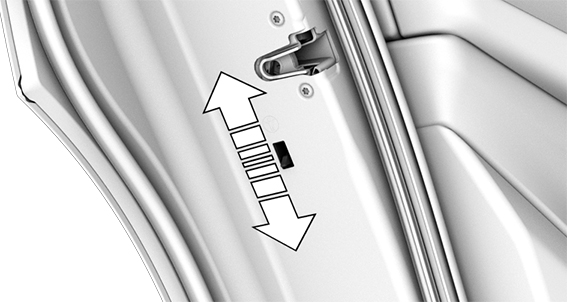
Push the locking lever on the rear doors up.
The door can now be opened from the outside only.
Safety switch for the rear

Press the button on the driver's door.
This disables various functions so that they cannot be operated from the rear.
Additional information:
Safety switch.
Download Manual