Operating materials
Fuel recommendation
General information
Depending on the region, many filling stations sell fuel that has been customized to winter or summer conditions. Fuel that is available in winter, for instance helps make a cold start easier.
Gasoline
General information
For the best fuel efficiency, the gasoline should be sulfur-free or very low in sulfur content.
Fuels that are marked on the gas pump as containing metal must not be used.
Fill up using fuel with a maximum ethanol content of 10 %, e.g., E10.
To achieve nominal values for mileage and consumption, follow the specified fuel quality in the sales literature.
The use of fuels of minimum quality has no influence on the service life of the engine.
Safety information

Observe fuel quality
Caution
The use of poor-quality fuels may result in harmful engine deposits or damage. Additionally, problems relating to drivability, starting and stalling, especially under certain environmental conditions such as high ambient temperature and high altitude, may occur.
If drivability problems are encountered, we recommend switching to a high quality gasoline brand and a higher octane grade — AKI number — for a few tank fills. To avoid harmful engine deposits, it is highly recommended to purchase gasoline from Top Tier retailers.
Failure to comply with these recommendations may result in the need for additional maintenance.
Use suitable fuel only
NOTICE
Even small quantities of the wrong fuel or wrong fuel additives can damage the fuel system and engine. Furthermore, the catalytic converter is permanently damaged. There is a risk of damage to property. Do not refuel or add the following in the case of gasoline engines:
Leaded gasoline.
Metallic additives, for instance manganese or iron.
Do not press the Start/Stop button after refueling with the wrong fuel. Contact an authorized service center or another qualified service center or repair shop.
Do not refuel with gasoline that does not comply with the minimum quality
NOTICE
Fuel that does not comply with the minimum quality can compromise engine function or cause engine damage. There is a risk of damage to property. Do not fill with fuel that does not comply with the minimum quality.
Do not use a refuel with a higher ethanol content
NOTICE
Incorrect fuels can damage the fuel system and the engine. There is a risk of damage to property. Do not use fuels with a higher ethanol content than recommended. Do not refuel with fuels containing methanol, e.g. M5 to M100.
Recommended gas quality
BMW recommends AKI 93.
Minimum fuel grade
BMW recommends AKI 91.
If you use gasoline with this minimum AKI Rating, the engine may produce knocking sounds when starting at high external temperatures. This has no effect on the engine life.
Engine oil
General information
The engine oil consumption is dependent on your driving style and driving conditions.
Therefore, regularly check the engine oil level after refueling by taking a detailed measurement.
The engine oil consumption can increase in the following situations, for instance:
Sporty driving style.
Break-in of the engine.
Idle operation of the engine.
With use of engine oil types that are classified as not suitable.
Different Check Control messages appear on the Control Display depending on the engine oil level.
The vehicle manufacturer recommends having the engine oil changed by an authorized service center or another qualified service center or repair shop.
Safety information
Add engine oil immediately
Do not add too much engine oil
Change engine oil promptly
Electronic oil measurement
General information
The electronic oil measurement has two measuring principles:
Monitoring.
Detailed measurement.
When making frequent short-distance trips or using a sporty driving style, for instance when cornering aggressively, regularly perform a detailed measurement.
Monitoring
Principle
The engine oil level is monitored electronically while driving and can be shown on the Control Display.
If the engine oil level is outside its permissible operating range, a Check Control message is displayed.
Functional requirements
A current measured value is available after approx. 30 minutes of normal driving.
Displaying the engine oil level
"CAR"
"Vehicle status"

"Engine oil level"
The engine oil level is displayed.
System limits
When making frequent short-distance trips or using a sporty driving style, it may not be possible to calculate a measured value. In this case, the measured value for the last, sufficiently long trip is displayed.
Detailed measurement
Principle
The engine oil level is checked when the vehicle is stationary and displayed via a scale.
If the engine oil level is outside its permissible operating range, a Check Control message is displayed.
General information
During the measurement, the idle speed is increased somewhat.
Functional requirements
Vehicle is parked in a horizontal position.
Selector lever in selector lever position N or P and accelerator pedal not depressed.
The drive-ready state is switched on by pressing the Start/Stop button.
The engine is at operating temperature.
Performing a detailed measurement
"CAR"
"Vehicle status"
"Engine oil level"
"Engine oil measurement"
"Start measurement"
The engine oil level is checked and displayed via a scale.
Adding engine oil
General information
Only add engine oil when the message is displayed in the instrument cluster. The top-up quantity is indicated in the message shown on the Control Display.
Only add suitable types of engine oil.
Safely park the vehicle and switch off drive-ready state before adding engine oil.
Take care not to add too much engine oil.
Safety information
Observe when using operating fluids
Add engine oil immediately
Do not add too much engine oil
Overview
The oil filler neck is located in the engine compartment.
Additional information:
For an overview.
1
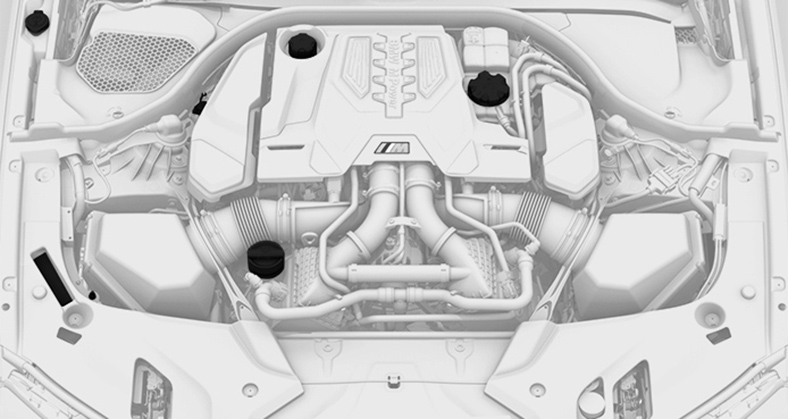
1
Oil filler neck
Adding engine oil
Opening the hood.
Opening.
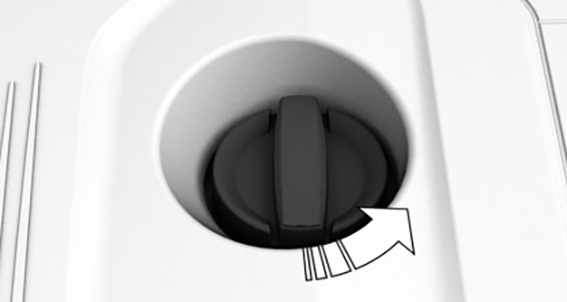
Open the lid counterclockwise.
Add engine oil.
Close the lid.
Engine oil types to add
General information
The engine oil grade is critical for the service life of the engine.
Only add with the types of engine oil which are listed.
Safety information
Do not use oil additives
Observe correct viscosity grade
Suitable engine oil types
Up to 1 US quart/liter of an engine oil with the following oil specification can be topped up:
|
Oil specification |
|---|
|
BMW Longlife-01 FE. |
Alternative engine oil types
If an engine oil suitable for continuous use is not available, up to 1 US quart/liter of an engine oil with the following oil rating can be added:
|
Oil specification |
|---|
|
API SL. |
|
API SM. |
|
API SN. |
Viscosity grades
When selecting an engine oil, make sure that the engine oil has a suitable viscosity grade. The suitable viscosity grade is indicated on a sign in the engine compartment.
|
Viscosity grades |
|---|
|
SAE 0W-30. |
More information about suitable oil specifications and engine oil viscosity grades can be requested from an authorized service center or another qualified service center or repair shop.
Coolant
General information
Coolant consists of water and coolant additive.
Not all commercially available additives are suitable for the vehicle. The vehicle manufacturer recommends using coolant with the BMW LC-18 specification. Do not mix additives of different colors. Observe the water - additive mixture ratio of 50:50. For information on suitable additives, contact an authorized service center or another qualified service center or repair shop.
Safety information
Only open the cooling system with the engine cooled down
Use suitable additives only
Coolant level
General information
Depending on the motorization, there are up to two coolant reservoirs in the engine compartment. Check and add the coolant levels on a regular basis.
The coolant may be overfilled in the coolant reservoir when the vehicle is delivered from the factory. The normal coolant level is achieved by operating the vehicle for a longer period.
The coolant level is indicated using minimum and maximum marks in the filler neck of the coolant reservoir.
Additional information:
For an overview.
Checking the coolant level
Let the engine cool down.
Opening the hood.
Opening.
Turn the lid of the coolant reservoir slightly counterclockwise to allow any excess pressure to dissipate, then open it.
Open the coolant reservoir lid.
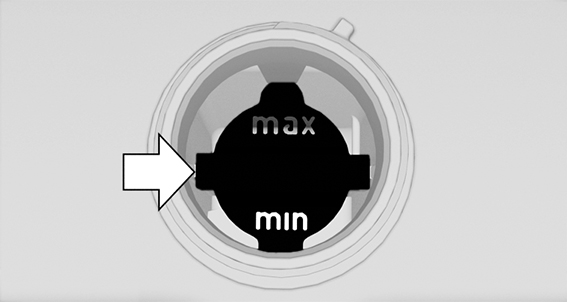
The coolant level is correct if it lies between the minimum and maximum marks in the filler neck.
Close the lid.
Adding coolant
Let the engine cool down.
Opening the hood.
Opening.
Turn the lid of the coolant reservoir slightly counterclockwise to allow any excess pressure to dissipate, then open it.
Open the coolant reservoir lid.
If the coolant is low, slowly add coolant up to the specified fill level; do not overfill.
Close the lid.
Have the cause of the coolant loss eliminated as soon as possible.
Disposal

Comply with the relevant environmental protection regulations when disposing of coolant and coolant additives.
Washer fluid
General information
All windshield washer jets are supplied from one tank.
Use a mixture of tap water and windshield washer concentrate. If desired, a windshield washer concentrate containing antifreeze can be used.
Recommended minimum fill quantity: 0.2 US gal/1 liter.
Safety information
Observe with antifreeze for washer fluid
Observe when filling the washer fluid
Do not use silicon-containing additives
Observe when mixing additives
Overview
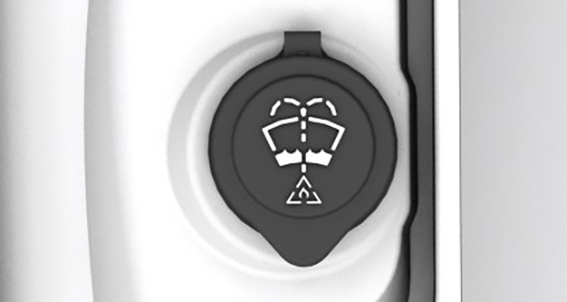
The washer fluid reservoir is located in the engine compartment.
Malfunction
The use of undiluted windshield washer fluid concentrate or alcohol-based antifreeze can lead to incorrect readings at temperatures below +5 ℉/-15 ℃.
Download Manual