Safety
Airbags
Overview
1
2
3
4
5
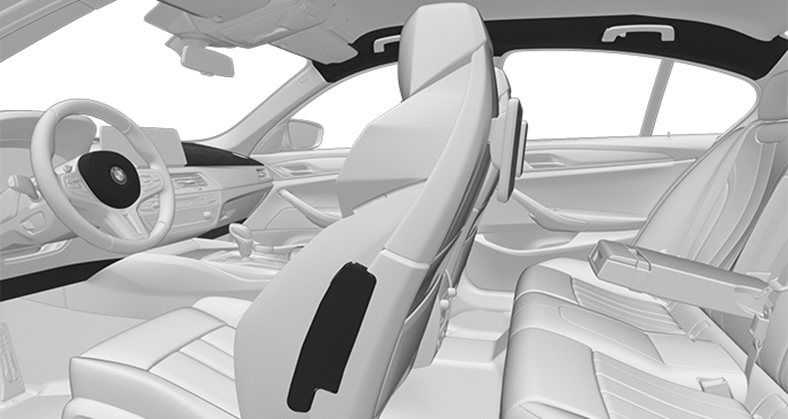
1
Front airbag, driver
2
Front airbag, front passenger
3
Head airbag
4
Side airbag
5
Knee airbag
Front airbags
Front airbags help protect the driver and the front passenger by responding to frontal impacts in which seat belts alone would not provide adequate protection.
Side airbag
In the event of a side collision, the side airbag protects the side of the body in the chest and lap area.
Head airbag
In the event of a side collision, the head airbag protects the head.
Ejection Mitigation
The head airbag system is designed as an ejection mitigation countermeasure to reduce the likelihood of ejections of vehicle occupants through side windows during rollovers or side collision events.
Knee airbag
The knee airbag protects the legs in the event of a frontal impact.
Protective effect
General information
Airbags are not deployed in every impact situation, e.g., in less severe accidents.
Information on optimum protective effect of the airbags

Observe to achieve optimum protective effect of the airbag system
Keep a distance from the airbags.
Always grasp the steering wheel on the steering wheel rim. Hold your hands at the 3 o'clock and 9 o'clock positions to keep the risk of injury to your hands or arms as low as possible when the airbag is deployed.
Adjust seat and steering wheel so that hands can be crossed over the steering wheel. Select the settings so that the shoulder rests against the backrest when crossing the hands and the upper body is as far back as possible while still maintaining a comfortable grip on the steering wheel.
Make sure that the front passenger is sitting correctly, i.e., keeps his or her feet and legs in the footwell and does not support them on the dashboard.
Make sure that occupants keep their heads away from the side airbag.
There should be no additional persons, animals or objects between an airbag and a person.
Dashboard and windshield on the passenger's side must stay clear - do not attach adhesive film or coverings and do not attach brackets or cables, for instance for navigation devices or mobile phones.
Do not bond the airbag cover panels with adhesive, do not cover them or modify them in any way.
Do not use the cover of the front airbag on the passenger's side as a storage area.
Do not attach slip covers, seat cushions or other objects to the front seats that are not specifically suited for seats with integrated side airbags.
Do not hang pieces of clothing, such as jackets, over the backrests.
Never modify either the individual components or the wiring in the airbag system. This also applies to steering wheel covers, the dashboard, and the seats.
Do not disassemble the airbag system.
Even when you follow all instructions very closely, injury from contact with the airbags cannot be fully ruled out in certain situations.
The ignition and inflation noise may lead to short-term and, in most cases, temporary hearing impairment in sensitive occupants.
Vehicle modifications for a person with disabilities may affect the air bag system; contact BMW Customer Relations for further information.
Warnings and information on the airbags are also found on the sun visors.
Operational readiness of the airbag system
Safety information
Observe after deployment of the airbag system
Observe in the event of faults, deactivation or after triggering
Display in the instrument cluster

When drive-ready state is turned on, the warning light in the instrument cluster lights up briefly, thereby indicating the operational readiness of the entire airbag system and the seat belt tensioners.
Malfunction
Warning light does not come on when drive-ready state is turned on.
The warning light lights up continuously.
Have the system checked.
Setting the front seat positions
The power that deploys the driver's/front passenger airbags depends on the position of the driver's/front passenger seat.
To maintain the accuracy of this function, calibrate the electrical front seats as soon as a respective message appears on the control display.
Additional information:
Seats.
Automatic deactivation of the front passenger airbags
Principle
The system reads if the front passenger seat is occupied by measuring the human body's resistance.
Front, knee, and side airbag on the front passenger's side are activated or deactivated.
General information
Before transporting a child on the front passenger seat, refer to the safety information and instructions for children on the front passenger seat, see Children.
Safety information
Leave feet in the footwell
Fault of the automatic deactivation system
When transporting older children and adults, the front passenger airbags may be deactivated in certain seat positions. In this case, the indicator light for the front passenger airbags lights up.
In this case, change the seat position so that the front passenger airbags are activated and the indicator light goes out.
If it is not possible to activate the airbags, have the person sit in the rear seat.
To enable accurate recognition of the occupied seat surface:
Do not attach covers, cushions, ball mats or other items to the front passenger seat unless they are specifically determined to be safe for use on the front passenger seat.
Do not place any electronic devices on the front passenger seat if a child restraint system is to be installed on it.
Do not place objects under the seat that can press against the seat from below.
No moisture in or on the seat.
Indicator light for the front passenger airbags
The indicator light for the front-seat passenger airbag in the headliner indicates the operating state of the front-seat passenger airbag.
The light indicates whether the airbags are either activated or deactivated.
After drive-ready state is switched on, the light shortly lights up and then indicates whether the airbags are either activated or deactivated.
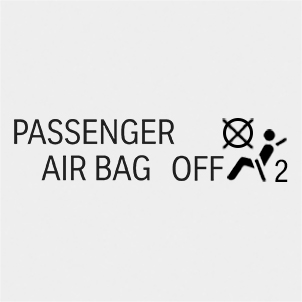
The indicator light lights up when a child is properly seated in a child restraint system or when the seat is empty. The airbags on the passenger's side are not activated.
The indicator light does not light up when, for instance, a correctly seated person of sufficient size is detected on the seat. The airbags on the passenger's side are activated.
Detected child restraint systems
The system generally detects children seated in a child restraint system, particularly in child restraint systems required by NHTSA at the point in time when the vehicle was manufactured. After installing a child restraint system, make sure that the indicator light for the front passenger airbags lights up. This indicates that the child restraint system has been detected and the front passenger airbags are not activated.
Intelligent Safety
Principle
Intelligent Safety enables central operation of the driver assistance systems.
General information
Depending on how the vehicle is equipped, Intelligent Safety consists of one or more systems that can help prevent an imminent collision.
Forward Collision Warning with light braking function.
Evasion Assistant.
Intersection warning with City light braking function.
Pedestrian Warning with City Collision Mitigation.
Lane departure warning.
Active Blind Spot Detection.
Side collision mitigation.
Rear-end collision preparation.
Safety information
Observe surrounding traffic and adapt driving style
Indicators and warnings do not absolve the driver from personal responsibility
Switching off Intelligent Safety systems and Cruise Control
Overview
Button in the vehicle
1
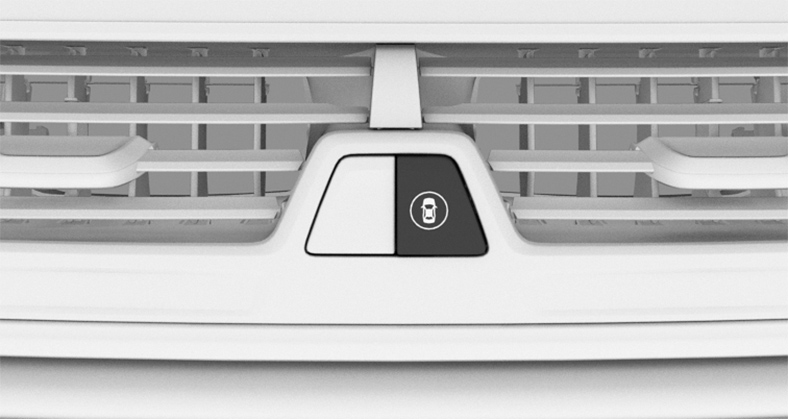
1
Intelligent Safety
Settings
The following settings can be selected for Intelligent Safety systems:
"ALL ON": all Intelligent Safety systems are switched on. Basic settings are activated for the sub-functions, for instance setting for warning time.
"INDIVIDUAL": the Intelligent Safety systems are switched on according to the individual settings.
"Configure INDIVIDUAL": Intelligent Safety systems can be configured individually. The individual settings are activated and stored. As soon as a setting is changed on the menu, all settings of the menu are activated.
"ALL OFF": All Intelligent Safety systems are switched off.
Display
|
Button |
Status |
|---|---|
|
|
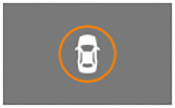
Button lights up green: all Intelligent Safety systems are switched on. |
|
|
Button lights up orange: some Intelligent Safety systems are switched off or currently unavailable. |
|
|
Button does not light up: all Intelligent Safety systems are switched off. |
Switching Intelligent Safety systems on/off
General information
Some Intelligent Safety systems are automatically active after every departure. Some Intelligent Safety systems activate according to the last setting.
M Mode: depending on the selected program, Intelligent Safety systems are turned on or off.
Operation
Press the button.
The menu for the Intelligent Safety system is displayed.
If all Intelligent Safety systems were switched off, all systems are now switched on.
"Configure INDIVIDUAL": Configure Intelligent Safety systems individually if required.
Press the button repeatedly. The following settings are switched between:
"ALL ON"
"INDIVIDUAL"
Some Intelligent Safety systems cannot be individually switched off.
Press and hold this button.
"ALL OFF": The menu is selected. All Intelligent Safety systems are switched off.
Forward Collision Warning with light braking function
Principle
Animation: Forward Collision Warning with light braking function

The Forward Collision Warning warns of a possible risk of collision and may brake independently. In the event of an accident, the system helps by reducing impact speed.
General information
Sensors detect the traffic situation in their detection range.
The system issues a two-phase warning of a possible risk of collision with vehicles at speeds above approx. 3 mph/5 km/h. The timing of warnings may vary with the current driving situation.
The system considers the driver’s vehicle handling when responding. If an active driving style is detected, warnings and brake interventions occur less frequently.
Depending on the vehicle equipment, the Driver Attention Camera in the instrument cluster captures the driver’s field of vision. Additionally, the system checks for visual impairments. Field of vision and visibility also affect the timing of the warnings.
Safety information
Observe surrounding traffic and adapt driving style
Indicators and warnings do not absolve the driver from personal responsibility
Switching off Intelligent Safety systems and Cruise Control
Sensors
The system is controlled by the following sensors:
Cameras behind the windshield.
With radar sensor: front radar sensor.
Additional information:
Sensors of the vehicle.
Switching Forward Collision Warning on/off
Turning on the system automatically
The system is automatically active when the vehicle is turned on.
Turning the system on/off manually
Follow instructions for settings, display, and operation in the Intelligent Safety chapter.
Additional information:
Intelligent Safety.
Setting the warning time
"CAR"
"Settings"
"Driver Assistance"
"Safety and Warnings"
"Forward Collision Mitigation"
Select the desired setting:
"Early"
"Medium"
"Late": only acute warnings are displayed.
Warning with braking function
Display
If a collision with a detected vehicle is imminent, a warning icon appears in the instrument cluster and, if applicable, in the Head-up Display.
|
Icon |
Measure |
|---|---|
|
|
Icon lights up red: prewarning. Brake and increase distance. |
|
|
Icon flashes red and an acoustic signal sounds: acute warning. Brake and make an evasive maneuver, if necessary. |

Prewarning
This prewarning is provided, for instance when there is impending risk of a collision or the distance to the vehicle ahead is too small.
If a prewarning is provided, respond by braking as warranted.
Acute warning with braking function
An acute warning is displayed in case of the imminent risk of a collision when the vehicle approaches another object at a high differential speed.
Actively intervene if an acute warning is given, e.g., apply brakes. Depending on the driving situation and the equipment version, the acute warning may be accompanied by a brief activation of the braking system.
With the warning time setting "Late" the brief activation of the braking system is omitted.
If an acute warning is provided, the system may also provide assistance, such as through automatic brake intervention, when there is risk of collision.
Acute warnings may be provided even when there has been no prewarning.
Brake intervention
The warning prompts the driver to intervene. When the brake pedal is depressed quickly and hard, the maximum braking force of the vehicle is used.
The system may also assist with brake intervention if there is a risk of collision.
When the vehicle is traveling at a low speed, the vehicle may come to a complete stop.
City brake function: the brake intervention occurs to up to approx. 50 mph/80 km/h.
With radar sensor: the brake intervention occurs to up to approx. 155 mph/250 km/h.
At speeds above approx. 130 mph/210 km/h, the brake intervention occurs as a brief activation of the braking system. No automatic delay occurs.
The braking intervention can be interrupted by stepping on the accelerator pedal with sufficient force or by actively moving the steering wheel.
System limits
Safety information
Observe the system limits
Detection range
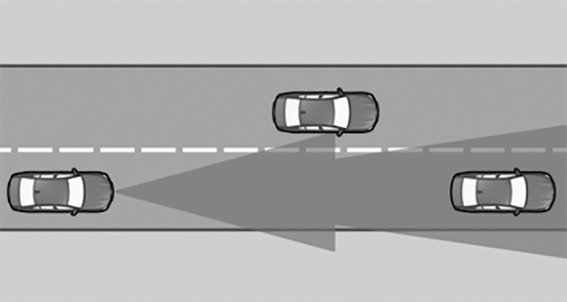
The system's detection capability is limited.
Only objects that are detected by the system are taken into account.
Thus, a system response might not come or might come late.
The following situations may not be detected, for instance:
Vehicle driving slowly in front and being approached at high speed.
Vehicles that suddenly swerve in front of you, or strongly decelerating vehicles.
Vehicles with unusual rear designs.
Two-wheeled vehicles ahead of you.
Upper speed limit
If the vehicle speed exceeds approx. 155 mph/250 km/h, the system is deactivated temporarily. The system is enabled as soon as the speed drops below this value again.
System limits of the sensors
Additional information:
Cameras.
Radar sensors.
Functional limitations
The system may be limited in the following situations:
In tight curves.
If the driving stability control systems are limited or deactivated, for instance DSC OFF.
Up to 10 seconds after the start of the engine via the Start/Stop button.
Warning sensitivity
The more sensitive the warning settings are, for example the warning time, the more warnings are displayed. Therefore, there may also be an excess of unwarranted warnings and responses.
Evasion Assistant
Principle
Animation: Evasion Assistant
The Evasion Assistant supports the driver in making evasive maneuvers in certain situations, such as when obstacles or persons suddenly appear.
General information
The system issues a warning and intervenes to support the driver if a lateral evasive maneuver is possible. Sensors monitor and detect the clearance around the vehicle. If the system identifies space alongside the vehicle, it supports an evasive maneuver made by the driver by safely performing automatic steering movements.
Safety information
Observe surrounding traffic and adapt driving style
Indicators and warnings do not absolve the driver from personal responsibility
Sensors
The system is controlled by the following sensors:
Cameras behind the windshield.
Front radar sensor.
Radar sensors, side, front.
Radar sensors, side, rear.
Additional information:
Sensors of the vehicle.
Functional requirements
Pedestrian Warning with braking function is switched on.
Pedestrian Warning with City Collision Mitigation.
Forward Collision Warning with light braking function is switched on.
Forward Collision Warning with light braking function.
Sensors detect sufficient clearance around the vehicle.
Switching Evasion Assistant on/off
The system is automatically active when the vehicle is turned on.
Warning with evasion support
Display in the instrument cluster
If a collision with a detected vehicle or a person is imminent, a warning icon appears on the instrument cluster and in the Head-up Display.
|
Icon |
Measure |
|---|---|
|
|
Icon lights up red: prewarning. Brake and increase distance. |
|
|
Icon flashes red and an acoustic signal sounds: acute warning for obstacles. Brake and make an evasive maneuver, if necessary. |
|
|
Icon flashes red and an acoustic signal sounds: acute warning for pedestrians. Brake and make an evasive maneuver, if necessary. |

Acute warning with evasion support
If the vehicle approaches another object at a high differential speed, an acute warning is displayed if there is an immediate risk of collision.
Intervene in the case of an acute warning. The system is designed to provide assistance during evasive maneuvers when there is a risk of collision.
Acute warnings may be provided even when there has been no prewarning.
System limits
Safety information
Observe the system limits
Detection range
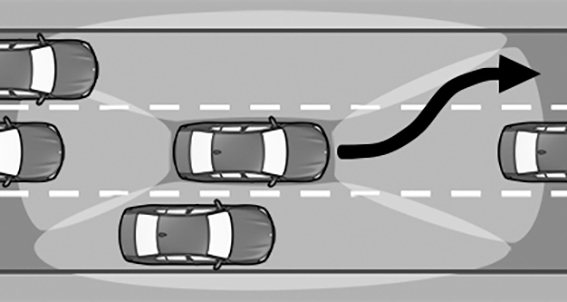
The system's detection capability is limited.
Only objects that are detected by the system are taken into account.
Thus, a system response might not come or might come late.
The following situations may not be detected, for example:
Vehicle driving slowly in front and being approached at high speed.
Vehicles that suddenly swerve in front of you, or strongly decelerating vehicles.
Vehicles with unusual rear designs.
Two-wheeled vehicles ahead of you.
System limits of the sensors
Additional information:
Cameras.
Radar sensors.
Functional limitations
The system may be limited in the following situations:
In tight curves.
If the driving stability control systems are limited or deactivated, for instance DSC OFF.
Up to 10 seconds after the start of the engine via the Start/Stop button.
Intersection warning with City light braking function
Principle
Animation: Intersection Collision Warning
The Intersection Collision Warning can help prevent accidents with cross traffic at intersections and junctions. In the event of an accident, the system helps by reducing impact speed.
At speeds that are common in towns and cities, the system warns the driver of a possible risk of collision and brakes automatically if necessary.
General information
Sensors detect the traffic situation in their detection range.
Vehicles that cross your driving direction can be detected by the system as soon as these vehicles enter into the detection range of the system.
At intersections and junctions, a warning is issued when a risk of collision with crossing traffic is detected.
The system issues a two-phase warning of a possible risk of collision with vehicles at speeds above approx. 6 mph/10 km/h. The timing of warnings may vary with the current driving situation.
The Driver Attention Camera in the instrument cluster captures the driver’s field of vision. Additionally, the system checks for visual impairments. Field of vision and visibility also affect the timing of the warnings.
Safety information
Observe surrounding traffic and adapt driving style
Indicators and warnings do not absolve the driver from personal responsibility
Switching off Intelligent Safety systems and Cruise Control
Sensors
The system is controlled by the following sensors:
Cameras behind the windshield.
Front radar sensor.
Radar sensors, side, front.
Additional information:
Sensors of the vehicle.
Switching Intersection Collision Warning on/off
Turning on the system automatically
The system is automatically active when the vehicle is turned on.
Turning the system on/off manually
Follow instructions for settings, display, and operation in the Intelligent Safety chapter.
Additional information:
Intelligent Safety.
Setting the warning time
"CAR"
"Settings"
"Driver Assistance"
"Safety and Warnings"
"Forward Collision Mitigation"
Select the desired setting:
"Early"
"Medium"
"Late": only acute warnings are displayed.
Warning with braking function
Display
If a collision with a detected vehicle is imminent, a warning icon appears in the instrument cluster and, if applicable, in the Head-up Display.
|
Icon |
Meaning |
|---|---|
|
|
Icon illuminates red: prewarning for risk of collision with a vehicle crossing from the right. Icon illuminates red and a signal sounds: acute warning for immediate risk of collision. |
|
|
Icon illuminates red: prewarning for risk of collision with a vehicle crossing from the left. Icon illuminates red and a signal sounds: acute warning for immediate risk of collision. |
|
|
Icon illuminates red: prewarning for risk of collision with a vehicle from an undetectable direction of travel. Icon illuminates red and a signal sounds: acute warning for immediate risk of collision. |



Prewarning
For example, a prewarning is displayed when a risk of collision with a crossing vehicle is detected.
Intervene if a prewarning is issued, e.g., apply brakes.
Acute warning with braking function
An acute warning is displayed in the event of an immediate risk of collision with a crossing vehicle.
If an acute warning is issued, brake and evade as necessary. If an acute warning is provided, the system may provide assistance, such as through automatic brake intervention, when there is risk of collision.
Acute warnings may be provided even when there has been no prewarning.
Brake intervention
The warning prompts the driver to intervene.
The system may also assist with brake intervention if there is a risk of collision.
The vehicle can be decelerated to a standstill.
The braking intervention can be interrupted by stepping on the accelerator pedal with sufficient force or by actively moving the steering wheel.
The system’s ability to detect objects may be limited in some circumstances. Note the limitations of the detection range and functional limitations.
System limits
Safety information
Observe the system limits
Upper speed limit
The system responds to crossing vehicles when the vehicle speed is below approx. 50 mph/80 km/h.
Detection range
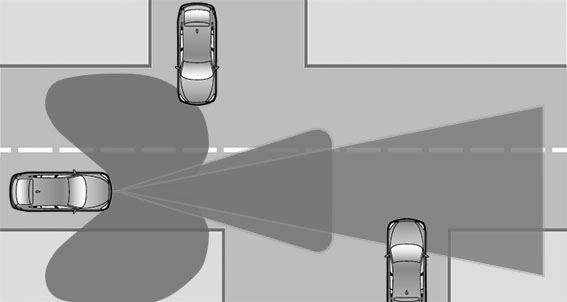
The system's detection capability is limited.
Thus, a system response might not come or might come late.
The following situations may not be detected, for instance:
Crossing vehicles when they are hidden, e.g. by buildings.
Vehicles that suddenly swerve in front of you, or strongly decelerating vehicles.
Crossing two-wheeled vehicles.
Vehicles with an unusual side view.
System limits of the sensors
Additional information:
Cameras.
Radar sensors.
Functional limitations
The system may be limited in the following situations:
In tight curves.
If the driving stability control systems are limited or deactivated, for instance DSC OFF.
Up to 10 seconds after the start of the engine via the Start/Stop button.
Warning sensitivity
The more sensitive the warning settings are, for example the warning time, the more warnings are displayed. Therefore, there may also be an excess of unwarranted warnings and responses.
Pedestrian Warning with City Collision Mitigation
Principle
Animation: Pedestrian Warning
At speeds that are common in towns and cities, the Pedestrian Warning warns the driver of a risk of collision with pedestrians and cyclists, and brakes automatically if necessary. In the event of an accident, the system helps by reducing impact speed.
General information
Sensors detect the traffic situation in their detection range.
The system issues a warning of a possible risk of collision with pedestrians and cyclists at speeds above approx. 3 mph/5 km/h.
Safety information
Observe surrounding traffic and adapt driving style
Indicators and warnings do not absolve the driver from personal responsibility
Switching off Intelligent Safety systems and Cruise Control
Sensors
The system is controlled by the following sensors:
Cameras behind the windshield.
With radar sensor: front radar sensor.
Additional information:
Sensors of the vehicle.
Detection range
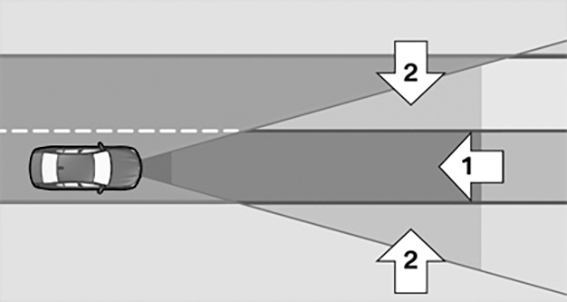
The detection range in front of the vehicle is divided into two areas:
Central area, arrow 1, directly in front of the vehicle.
Extended area, arrows 2, to the right and left of the central area.
A collision is imminent if pedestrians are located within the central area. A warning is issued about pedestrians who are located within the extended area only if they are moving in the direction of the central area.
Switching Pedestrian Warning on/off
Turning on the system automatically
The system is automatically active when the vehicle is turned on.
Turning the system on/off manually
Follow instructions for settings, display, and operation in the Intelligent Safety chapter.
Additional information:
Intelligent Safety.
Warning with braking function
Display
If a collision with a detected person or a cyclist is imminent, a warning icon appears on the instrument cluster and in the Head-up Display.
|
Icon |
Meaning |
|---|---|
|
|
The icon lights up red and an acoustic signal sounds. |
Intervene immediately by braking or make an evasive maneuver.
Brake intervention
The warning prompts the driver to intervene. When the brake pedal is depressed quickly and hard, the maximum braking force of the vehicle is used.
If there is a risk of collision, the system may also assist with brake intervention.
When the vehicle is traveling at a low speed, the vehicle may come to a complete stop.
The braking intervention can be interrupted by stepping on the accelerator pedal with sufficient force or by actively moving the steering wheel.
System limits
Safety information
Observe the system limits
Upper speed limit
The system responds to pedestrians and cyclists when the vehicle speed is below approx. 50 mph/80 km/h.
Detection range
The system's detection capability is limited.
Thus, a warning might not be issued or be issued late.
The following situations may not be detected, for instance:
Partially covered pedestrians.
Pedestrians that are not detected as such because of the viewing angle or contour.
Pedestrians outside of the detection range.
Pedestrians having a body size less than 32 in/80 cm.
System limits of the sensors
Additional information:
Cameras.
Radar sensors.
Functional limitations
The system may be limited or may not be available in the following situations:
If the driving stability control systems are deactivated, for instance DSC OFF.
Up to 10 seconds after the start of the engine via the Start/Stop button.
Lane departure warning
Principle
Animation: lane departure warning
The lane departure warning alerts when the vehicle is about to run off the road or exit the lane.
General information
This camera-based system warns starting at a minimum speed.
The minimum speed is country-specific and is displayed in the menu for the intelligent Safety systems.
Warnings are issued by means of a steering wheel vibration.
The system does not provide a warning if the turn signal is set in the respective direction before exiting the lane.
Depending on the equipment version, if in the speed range up to 130 mph/210 km/h a lane boundary is crossed, the system may intervene with a brief active steering intervention in addition to vibrating. The system thus helps keep the vehicle in the lane.
Safety information
Also observe surrounding traffic and adapt driving style
Indicators and warnings do not absolve the driver from personal responsibility
Sensors
The system is controlled by cameras behind the windshield.
Additional information:
Sensors of the vehicle.
Functional requirement
The camera must detect the lane boundaries for the lane departure warning to be active.
Turning the Lane Departure Warning on/off
Turning on the system automatically
Depending on the national-market version, the system is automatically active after every departure.
Turning the system on/off manually
Follow instructions for settings, display, and operation in the Intelligent Safety chapter.
Additional information:
Intelligent Safety.
Setting Lane Departure Warning
Setting the warning time
"CAR"
"Settings"
"Driver Assistance"
"Safety and Warnings"
"Lane Departure Warning"
Select the desired setting:
"Early"
"Medium"
"Reduced": some warnings are suppressed depending on the situation, for instance when purposely driving over pathway lines in curves or with dynamic passing without blinker.
"Off": no warnings are issued.
Setting the intensity of the steering wheel vibration
"CAR"
"Settings"
"Driver Assistance"
"Steering Wheel Feedback"
"Vibration intensity"
Select the desired setting.
The setting is applied to all Intelligent Safety systems.
Switching steering intervention on/off
The steering intervention can be switched on and off separately for Active Blind Spot Detection and lane departure warning.
"CAR"
"Settings"
"Driver Assistance"
"Safety and Warnings"
"Lane Departure Warning"
"Steering intervention"
Depending on the national-market version, the steering intervention is automatically active after every driving off.
Display in the instrument cluster
Different system statuses are displayed on the instrument cluster, depending on vehicle equipment and national-market version.
|
Icon |
Meaning |
|---|---|
|
|
The icon is illuminated green: the system is turned on. A lane boundary has been detected on at least one side of the vehicle and the system is ready to intervene. Warnings will be issued. |
|
Icon flashes green: the system is performing a steering intervention. |

Depending on the equipment and national-market version, information for the system is displayed in the Assisted Driving View of the instrument cluster.
Additional information:
Assisted Driving View.
Warning function
If you leave the lane
If you leave the lane and if a lane boundary has been detected, the steering wheel vibrates in accordance with the steering wheel vibration setting.
When the turn signal is switched on in the corresponding direction before changing the lane, a warning is not issued.
Steering intervention
Depending on the equipment and national-market version: if, in the speed range up to 130 mph/210 km/h a lane boundary is crossed, the system may intervene with a brief active steering intervention in addition to vibrating. The steering intervention supports the driver in keeping the vehicle within the lane. The steering intervention can be noticed on the steering wheel and can be manually overridden at any time. During an active steering intervention, the display in the instrument cluster will blink.
For instance, the steering intervention will be suppressed in the following situations:
With hard accelerating or braking.
When blinking.
With hazard warning system switched on.
In driving situation with high driving dynamics.
While Dynamic Stability Control regulates driving stability.
Immediately following a steering intervention by the vehicle systems.
When actively merging back to your own lane after passing.
Warning signal
Depending on the equipment version: in the event of multiple active steering interventions by the system within 3 minutes without the driver's intervention at the steering wheel, an acoustic warning will sound. A short warning signal will sound at the second steering intervention. Beginning with the third steering intervention, a continuous warning will sound.
In addition, a Check Control message is displayed.
The warning signal and Check Control message are an encouragement to pay closer attention to the lane.
End of warning
For instance, the warning will be canceled in the following situations:
Automatically after a few seconds.
When returning to your own lane.
With hard accelerating or braking.
With hazard warning system switched on.
When blinking.
While Dynamic Stability Control regulates driving stability.
While Dynamic Stability Control is disabled.
Immediately following a steering intervention by the vehicle systems.
With manual steering intervention.
When another driver assistance system is activated, if applicable.
Lane boundaries are not detected.
When the system limits are reached.
System limits
Safety information
Observe the system limits
System limits of the sensors
Additional information:
Cameras.
Functional limitations
The system may be limited in the following situations:
In the event of missing, worn, poorly visible, merging, diverging, or multiple lane boundaries such as in construction areas.
With lane boundaries that are covered in snow, ice, dirt or water.
In tight corners or on narrow roads.
With lane boundaries that are covered by objects.
When driving very close to the vehicle in front of you.
Up to 10 seconds after the start of the engine via the Start/Stop button.
A Check Control message may be displayed when the system is limited.
Active Blind Spot Detection
Principle
Animation: Active Blind Spot Detection
Active Blind Spot Detection detects vehicles in the blind spot or vehicles approaching from behind in the adjacent lane.
The light in the exterior mirror warns the driver in different steps.
General information
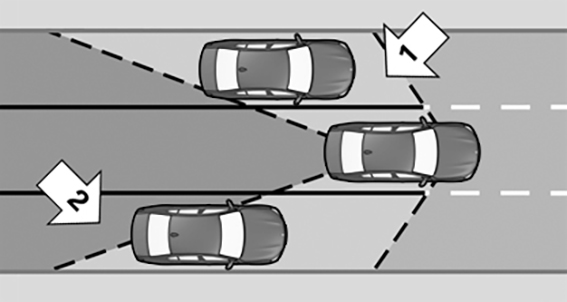
Radar sensors monitor the area behind and next to the vehicle when traveling faster than a minimum speed.
The minimum speed is country-specific and is displayed in the menu for the intelligent Safety systems.
The system indicates whether there are vehicles in your blind spot, arrow 1, or approaching from behind in an adjacent lane, arrow 2. The light in the exterior mirror lights up dimly.
Before you change lanes after setting the turn signal, the system issues a warning in the situations described above. The light in the exterior mirror flashes and the steering wheel vibrates.
Vehicles with Side Collision Warning: At speeds of up to 130 mph/210 km/h, this system can intervene with brief, active steering and help guide the vehicle back into the lane. The steering intervention occurs when a minimum speed is reached. This minimum speed is displayed on the Control Display in the menu for the steering intervention.
Safety information
Observe surrounding traffic and adapt driving style
Indicators and warnings do not absolve the driver from personal responsibility
Sensors
The system is controlled by the following sensors:
Radar sensors, side, rear.
For vehicles with steering intervention: cameras behind the windshield.
Additional information:
Sensors of the vehicle.
Turning Active Blind Spot Detection on/off
Turning the system on/off manually
Follow instructions for settings, display, and operation in the Intelligent Safety chapter.
Additional information:
Intelligent Safety.
Adjusting the Active Blind Spot Detection
Setting the warning time
"CAR"
"Settings"
"Driver Assistance"
"Safety and Warnings"
"Active Blind Spot Detection"
Select the desired setting.
Setting the intensity of the steering wheel vibration
"CAR"
"Settings"
"Driver Assistance"
"Steering Wheel Feedback"
"Vibration intensity"
Select the desired setting.
The setting is applied to all Intelligent Safety systems.
Vehicles with steering intervention: switching steering intervention on/off
The steering intervention can be switched on and off separately for Active Blind Spot Detection and lane departure warning.
"CAR"
"Settings"
"Driver Assistance"
"Safety and Warnings"
"Active Blind Spot Detection"
"Steering intervention"
Displays in the instrument cluster
Depending on the equipment and national-market version, information for the system is displayed in the Assisted Driving View of the instrument cluster.
Additional information:
Assisted Driving View.
Warning function
Light in the exterior mirror
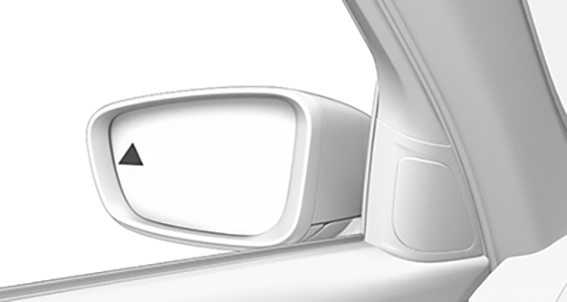
Prewarning
The dimmed light in the exterior mirror indicates when there are vehicles in the blind spot or approaching from behind.
Acute warning
When the turn signal is switched on while a vehicle is in the critical zone, the steering wheel vibrates briefly and the light in the exterior mirror flashes brightly.
The warning stops when the other vehicle has left the critical area or the turn signal has been deactivated.
Vehicles with steering intervention
When there is no response to the vibration of the steering wheel at speeds of up to 130 mph/210 km/h and the lane marking is crossed, the system intervenes with a brief active steering intervention. The steering intervention helps return the vehicle into the lane. The steering intervention can be noticed on the steering wheel and can be manually overridden at any time.
Flashing of the light
A flashing of the light during vehicle unlocking serves as system self-test.
System limits
Safety information
Observe the system limits
Upper speed limit
If the vehicle speed exceeds approx. 155 mph/250 km/h, the system is deactivated temporarily.
If the vehicle speed falls below approx. 155 mph/250 km/h, the system is reactivated.
System limits of the sensors
Additional information:
Radar sensors.
For vehicles with steering intervention: cameras.
Functional limitations
The system may be limited in the following situations:
When a vehicle is approaching at a speed much faster than your own.
In tight corners or on narrow roads.
The bumper is dirty, iced up or covered, for instance by stickers.
For vehicles with steering intervention, this intervention can be limited, for instance in the following situations:
In the event of missing, worn, poorly visible, merging, diverging, or multiple lane boundaries such as in construction areas.
With lane boundaries that are covered in snow, ice, dirt or water.
With lane boundaries that are not white.
With lane boundaries that are covered by objects.
When driving very close to the vehicle in front of you.
If the camera is impaired.
Up to 10 seconds after the start of the engine via the Start/Stop button.
A Check Control message may be displayed when the system is limited.
Displaying warnings
Depending on the selected warning settings, e.g., warning time, more or fewer warnings can be displayed. However, there may also be an excess of unwarranted warnings of critical situations.
Side collision mitigation
Principle
The side-collision warning helps to avoid an impending side collision.
General information
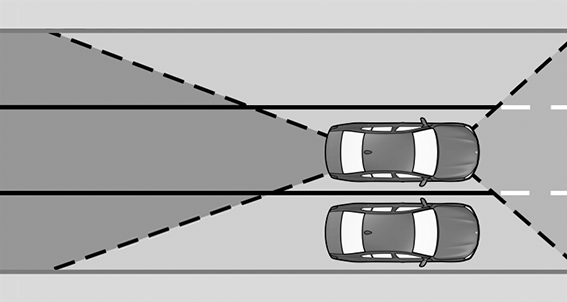
Radar sensors monitor the space next to the vehicle when traveling faster than a minimum speed and up to approx. 130 mph/210 km/h.
The minimum speed is country-specific and is displayed in the menu for the intelligent Safety systems.
If, for instance, another vehicle is detected next to the vehicle and if there is a risk of collision with this vehicle, the system helps avoid the collision. For this purpose, the system issues a warning with a blinking LED in the exterior mirror and a vibrating steering wheel. If necessary, the system will carry out an active steering intervention.
Safety information
Observe surrounding traffic and adapt driving style
Indicators and warnings do not absolve the driver from personal responsibility
Sensors
The system is controlled by the following sensors:
Cameras behind the windshield.
Radar sensors, side, front.
Radar sensors, side, rear.
Additional information:
Sensors of the vehicle.
Functional requirement
The camera behind the windshield determines the lane boundary positions.
The camera must detect the lane markings for the side collision mitigation with steering intervention to be active.
Turning the side collision warning on/off
Turning the system on/off manually
Follow instructions for settings, display, and operation in the Intelligent Safety chapter.
Additional information:
Intelligent Safety.
Setting the Side Collision Warning
Setting the intensity of the steering wheel vibration
"CAR"
"Settings"
"Driver Assistance"
"Steering Wheel Feedback"
"Vibration intensity"
Select the desired setting.
The setting is applied to all Intelligent Safety systems.
Displays in the instrument cluster
Depending on the equipment and national-market version, information for the system is displayed in the Assisted Driving View of the instrument cluster.
Additional information:
Assisted Driving View.
Warning function
Light in the exterior mirror
Acute warning
If there is a risk of collision, the light in the exterior mirror flashes and the steering wheel vibrates.
A Check Control message is displayed at the same time.
If necessary, an active steering intervention is performed to prevent the collision and maintain the vehicle within its own lane.
The steering intervention can be noticed on the steering wheel and can be manually overridden at any time.
System limits
Safety information
Observe the system limits
System limits of the sensors
Additional information:
Cameras.
Radar sensors.
Functional limitations
The system may be limited in the following situations:
When a vehicle is approaching at a speed much faster than your own.
In tight corners or on narrow roads.
In the event of missing, worn, poorly visible, merging, diverging, or multiple lane boundaries such as in construction areas.
With lane boundaries that are covered in snow, ice, dirt or water.
With lane boundaries that are covered by objects.
When driving very close to the vehicle in front of you.
Up to 10 seconds after the start of the engine via the Start/Stop button.
A Check Control message may be displayed when the system is limited.
Rear-end collision preparation
Principle
Depending on the equipment and national-market version, the rear-end collision preparation can react to vehicles approaching from behind.
General information
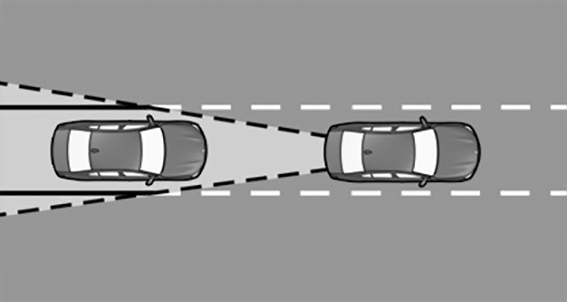
Radar sensors monitor the area behind the vehicle.
When a vehicle approaches from the rear at a certain speed, the system can react as follows:
Where applicable, the hazard warning flashers will be switched on.
Where applicable, the PreCrash functions are triggered.
Safety information
Observe surrounding traffic and adapt driving style
Indicators and warnings do not absolve the driver from personal responsibility
Sensors
The system is controlled by radar sensors on the sides at the rear.
Additional information:
Sensors of the vehicle.
Turning rear-end collision preparation on/off
The system is automatically active when the vehicle is turned on.
The system is deactivated in the following situations:
When driving in reverse.
System limits
System limits of the sensors
Additional information:
Radar sensors.
Functional limitations
The system function may be limited in the following situations:
When a vehicle is approaching at a speed much faster than your own.
The speed of the approaching vehicle is very slow.
If equipped with Equipment Stop Assistant
Principle
Video: Emergency Stop Assistant
If the driver is no longer fit to drive, the Emergency Stop Assistant helps to safely bring the vehicle to a standstill.
General information
The Emergency Stop Assistant is not triggered automatically. The system can only be triggered manually by the occupants.
When the system is triggered, the vehicle is brought to a standstill in its own lane by use of lane guidance.
Depending on the vehicle equipment and national-market version, the system includes a lane change function.
With lane change function: on motorways or motorway-like roads, the system steers the vehicle to the side of the road or shoulder where possible. On other roads or with high traffic volume, the vehicle is brought to a standstill in the current lane.
Overview
1
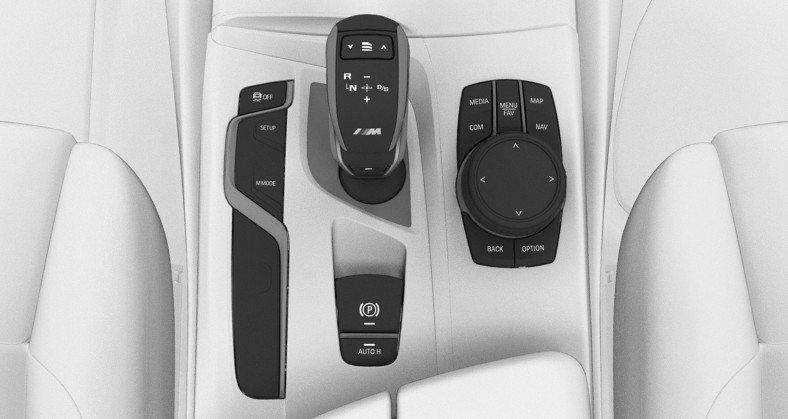
1
Parking brake and Automatic Hold
Functional requirements
The Emergency Stop Assistant can be triggered at speeds of approx. 6 mph/10 km/h up to approx. 155 mph/250 km/h.
With lane change function: lane changes are executed when the traffic situation allows.
Triggering the Emergency Stop Assistant

Briefly pull the parking brake switch to trigger the Emergency Stop Assistant.
With lane change function: releasing the switch may trigger an automatic lane change.
The system will take control of the vehicle for a maximum of 2 minutes.
The hazard warning system is switched on.
An emergency call is triggered.
Canceling Emergency Stop Assistant
The driver can cancel the Emergency Stop Assistant by actively taking control of the vehicle throughout the entire process.
For instance, the system will be canceled in the following situations:
When steering.
When blinking.
When depressing the accelerator pedal.
When switching off the hazard warning system.
When canceling the Emergency Request.
When switching the selector lever position at a standstill.
The parking brake switch is pressed.
At standstill
As soon as the vehicle is stationary, the system will carry out the following settings:
The vehicle is secured against rolling away.
The interior lights are switched on.
The central locking system is unlocked.
Displays in the instrument cluster
|
Icon |
Status |
|---|---|
|
|
The icon lights up red: Emergency Stop Assistant triggered. |
Without lane change function:
|
Icon |
Status |
|---|---|
|
|
Icon illuminates green: when a lane boundary is detected, the system keeps the vehicle in the lane. |
|
|
Icon illuminates gray: lane guidance has been temporarily interrupted. |
|
|
Icon illuminates yellow: the lane boundary has been crossed. When lane markings are detected, the system keeps the vehicle in the lane. |
|
|
Steering wheel icon illuminates yellow: do not grip the steering wheel with your hands. The system is still active. |
|
|
Steering wheel icon illuminates red and a signal sounds: do not grip the steering wheel with your hands. Interruption of lane guidance is imminent. |
|
|
Icon illuminates red and a signal sounds: lane guidance is switched off. |






System limits
Use the system only in the event of a driver failure.
The system cannot replace the driving performance of a driver who is fit to drive.
BMW Drive Recorder
Principle
The BMW Drive Recorder stores brief video recordings of the vehicle surroundings, e.g., to document surrounding traffic.
General information
Video recordings can be saved in different ways:
Automatic storage of the recording.
The function makes it possible to document the accident with the correspondingly set recording type.
Manual storage of the recording.
The function makes it possible to document traffic situations with the correspondingly set recording type.
The system saves recordings up to 20 seconds before and after storage is triggered.
The assistance systems' cameras are used to record, e.g., Panorama View.
Additionally, the following parameters are stored for the trip:
Date.
Time.
Vehicle speed.
Global Positioning System coordinates.
Data protection
The permissibility of recording and using video recordings is contingent upon the statutory regulations of the country in which the system is to be used. The user is responsible for the use of the system and compliance with respective applicable regulations.
The manufacturer of the vehicle recommends confirming there are no statutory or regulatory constraints on use of the system in your state or country prior to the initial use. In addition, the laws regarding use of the system should be verified at regular intervals, especially when frequently crossing borders.
Other drivers of the vehicle must be informed about the system. In addition, information about the system is required when handing off the vehicle.
Functional requirements
Standby state or drive-ready state is switched on.
BMW Drive Recorder is activated.
Privacy Policy was accepted.
Recording type was selected.
Recording time was selected.
Activating/deactivating the BMW Drive Recorder
The BMW Drive Recorder must be activated before the first use of the recording function.
"Apps"
"Drive Recorder"
Accept Privacy Policy.
"Settings"
"Recording allowed"
Select the desired setting.
Recording functions
Automatic recording
Recordings are saved automatically when the vehicle sensors detect an accident.
Manual recording
Using the button
1
1
Panorama View on/off
Via iDrive
"Apps"
"Drive Recorder"
"Start recording"
To stop the recording: "Cancel".
Recording can also be started by selecting the widget on the Control Display.
Recording playback and administration
Stored video recordings can be played back, exported and deleted.
For your own safety, the video recording is only displayed on the Control Display up to approx. 2 mph/3 km/h. In some national-market versions, the video recording is only displayed if the parking brake is engaged or if the selector lever is in the P position.
"Apps"
"Drive Recorder"
"Saved recordings"
Select desired recording.
Select the desired setting.
If a camera change occurred during the recording, different segments of the video can be selected.
Settings
Recording type
"Apps"
"Drive Recorder"
"Settings"
"RECORDING TYPE"
Select the desired setting.
Recording time
"Apps"
"Drive Recorder"
"Settings"
Select the desired setting.
Cameras
"Apps"
"Drive Recorder"
"Settings"
"Camera selection"
Select desired camera.
In case of an accident, the system switches automatically to "All" cameras.
If driver assistance systems are enabled, their camera views are automatically selected.
System limits
In the event of serious accidents, it may not be possible to store recordings if the damage on the vehicle is too great or the power supply was interrupted.
Active Protection
Principle
Animation: active Protection
Active Protection prepares occupants and the vehicle for a possible accident in critical driving or collision situations.
General information
Depending on vehicle equipment and national-market version, Active Protection consists of various PreCrash functions.
The system is used to detect certain critical driving situations that might lead to an accident. This includes the following critical driving situations:
Emergency braking.
Severe understeering.
Severe oversteering.
Certain functions of several systems can, within the system limits, lead to Active Protection triggering:
Forward Collision Warning with light braking function: automatic brake intervention.
Forward Collision Warning with light braking function: brake booster.
Rear-end collision preparation: detection of impending rear-end collisions.
Safety information
Observe surrounding traffic and actively intervene where appropriate
Function
When the seat belt is fastened, the driver's and front passenger's belt straps are automatically tightened once after driving away.
In accident-critical situations, the following individual functions become active as needed:
Automatic pretensioning of the front seat belts.
Automatic closing of the windows. The windows remain open with a small gap.
Depending on the equipment: automatic positioning of the backrest for the front passenger seat.
After a critical driving situation without an accident, the front seat belts are loosened again.
If the belt tension does not loosen automatically, stop the vehicle and unbuckle the seat belt using the red button in the buckle. Fasten the seat belt before continuing to drive.
All other systems can be restored to the desired setting.
PostCrash – iBrake
Principle
In certain accident situations, the PostCrash iBrake can automatically bring the vehicle to a standstill without intervention by the driver.
General information
The PostCrash iBrake can reduce the risk of a further collision and its consequences.
At standstill
After coming to a halt, the brake is released automatically.
Harder vehicle deceleration
In certain situations, it may be necessary to bring the vehicle to a halt more quickly than automatic braking allows.
To do this, quickly apply extra force to the brake. For a brief period, the brake pressure will be higher than the brake pressure that is achieved by the automatic braking function. Automatic braking is interrupted.
Canceling automatic braking
It may be necessary to interrupt automatic braking in certain situations, for instance when making an evasive maneuver.
Cancel automatic braking:
By pressing the brake pedal.
By pressing the accelerator pedal.
Fatigue alert
Principle
The Fatigue Alert can detect decreasing alertness or fatigue of the driver during long, monotonous trips, for instance on highways. The system recommends a break.
Safety information
Always drive well rested and attentively
Function
The system is switched on each time drive-ready state is switched on.
After starting the trip, the system is trained to the driver, so that decreasing alertness or fatigue can be detected.
This procedure takes, for example, the following criteria into account:
Personal driving style, for instance steering behavior.
Driving conditions, for instance time, length of trip.
Depending on the equipment: attention of the driver through the Driver Attention Camera.
The system is active starting at approx. 43 mph/70 km/h and can also display a break recommendation.
Break recommendation
Setting break recommendation
The break recommendation can be switched on or off and adjusted via iDrive.
"CAR"
"Settings"
"General settings"
"Fatigue and Focus Alert"
Select the desired setting.
Display
If the driver becomes less alert or fatigued, a message is displayed in the Control Display with the recommendation to take a break.
During the display, various settings can be selected.
The system is reset approx. 45 minutes after parking the vehicle. A break recommendation can only be displayed again after this time has elapsed.
System limits
System functionality may be limited. If the function is limited, either no warning is issued or an incorrect warning is issued. The system function may be limited in the following situations:
If the time is set incorrectly.
At a predominantly driven speed below approx. 43 mph/70 km/h.
With a sporty driving style, such as during rapid acceleration or when cornering fast.
In active driving situations, such as when changing lanes frequently.
When the road condition is poor.
In the event of strong side winds.
Download Manual