EXTERIOR LIGHTS
Headlight Switch
The headlight switch is located on the left side of the instru-
ment panel, next to the steering wheel. The headlight switch 2
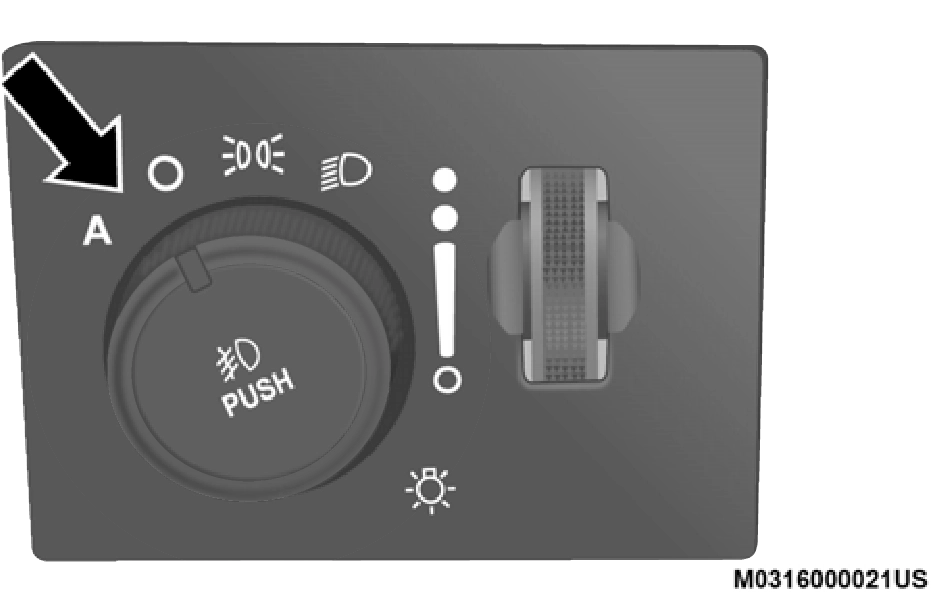 controls the operation of the headlights, parking lights, instrument panel lights, cargo lights, and fog lights (if equipped).
Headlight Switch
To turn on the headlights, rotate the headlight switch clock- wise. When the headlight switch is on, the parking lights, taillights, license plate light and instrument panel lights are also turned on. To turn off the headlights, rotate the head- light switch back to the O (off) position.
NOTE:
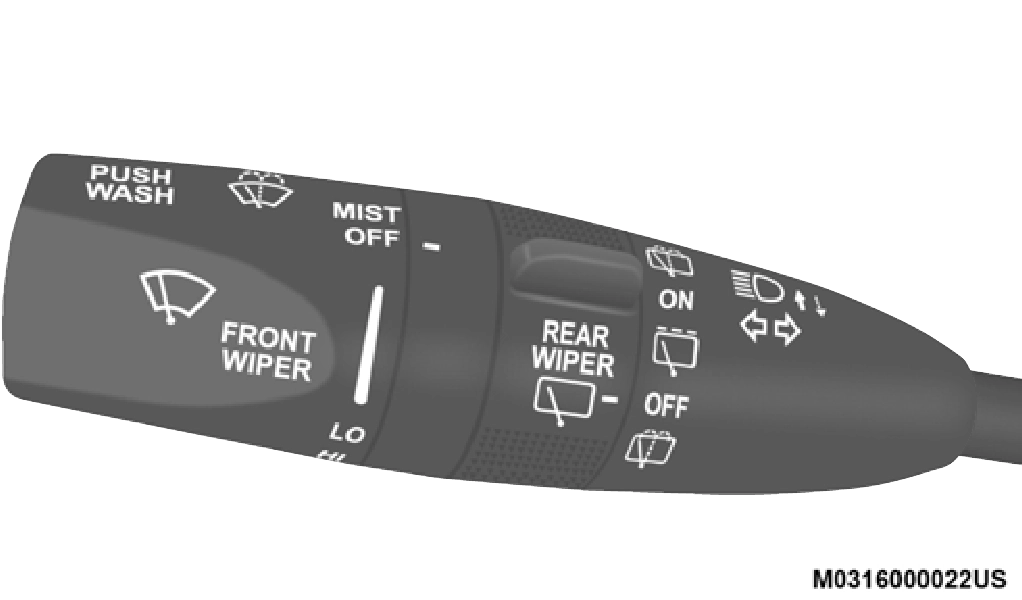
The multifunction lever is located on the left side of the steering column.
Multifunction Lever
Non-SRT Vehicles
The Daytime Running Lights (DRLs) (low intensity) come on whenever the engine is running, and the transmission is not in the PARK position. The lights will remain on until the ignition is placed in the OFF or ACC position, or the parking brake is engaged.
NOTE:
SRT Vehicles
The DRLs (bright intensity) come on whenever the engine is running, and the transmission is not in the PARK position. The lights will remain on until the ignition is placed in the OFF or ACC position or the parking brake is engaged.
The headlight switch must be used for normal nighttime driving.
Push the multifunction lever toward the instrument panel to switch the headlights to high beams. Pulling the multifunc- tion back toward the steering wheel will turn the low beams back on, or shut the high beams off.
The Automatic High Beam Headlamp Control system provides increased forward lighting at night by automating high beam control through the use of a digital camera mounted on the inside rearview mirror. This camera detects vehicle specific light and automatically switches from high beams to low beams until the approaching vehicle is out of view.
NOTE:
If the windshield or Automatic High Beam Headlamp Control mirror is replaced, the mirror must be re-aimed to ensure proper performance. See a local authorized dealer.
You can signal another vehicle with your headlights by lightly pulling the multifunction lever toward you. This will cause the high beam headlights to turn on, and remain on, until the lever is released.
This system automatically turns the headlights on or off according to ambient light levels. To turn the system on, rotate the headlight switch to the A (auto) position.
When the system is on, the Headlight Delay feature is also on. This means the headlights will stay on for up to 90 seconds after you place the ignition switch in the OFF posi- tion. To turn the automatic headlights off, turn the headlight switch out of the A (auto) position.
NOTE:
The engine must be running before the headlights will turn on in the Automatic Mode.
To turn on the parking lights and instrument panel lights, rotate the headlight switch clockwise. To turn off the parking lights, rotate the headlight switch back to the O (off) position.
If your vehicle is equipped with Automatic Headlights, it also has this customer-programmable feature. When your headlights are in the automatic mode and the engine is running, they will automatically turn on when the wiper system is on. This feature is programmable through the Uconnect system screen. Refer to “Uconnect Settings” in “Multimedia” for further information.
If your vehicle is equipped with a “Rain Sensitive Wiper System” and it is activated, the headlights will automatically turn on after the wipers complete five wipe cycles within approximately one minute, and they will turn off approxi- mately four minutes after the wipers completely stop.
Refer to “Windshield Wipers And Washers” in this chapter for further information.
NOTE:
When your headlights come on during the daytime, the instrument panel lights will automatically dim to the lower nighttime intensity.
To aid in your exit, your vehicle is equipped with a headlight delay that will leave the headlights on for approximately up to 90 seconds. This delay is initiated when the ignition is turned OFF while the headlight switch is on, and then the headlight switch is cycled off. Headlight delay can be cancelled by either turning the headlight switch on then off, or by placing the ignition in the ON position.
NOTE:
If the headlights, parking lights, or cargo lights are left on after the ignition is placed in the OFF position, a chime will sound when the driver’s door is opened.
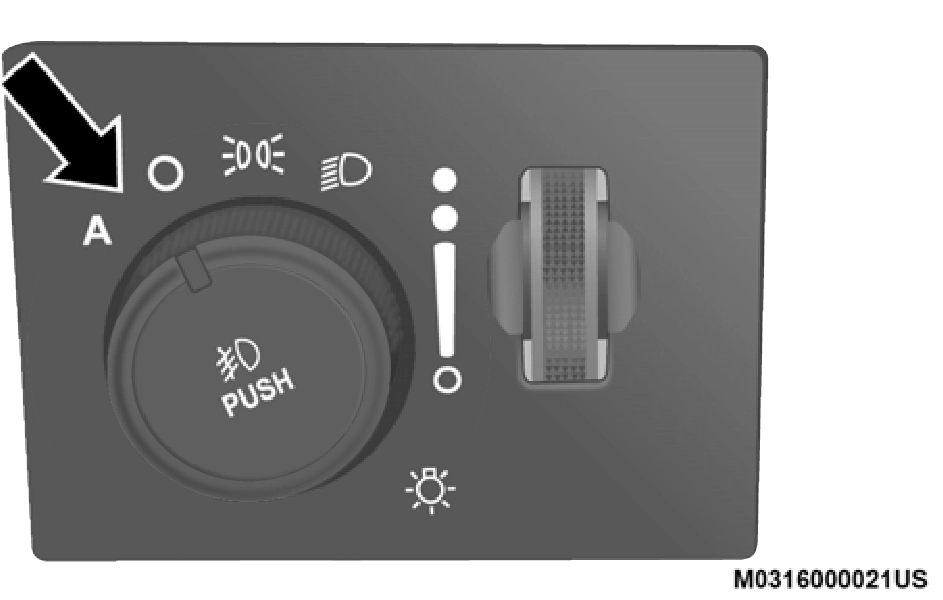
The fog lights are turned on by rotating the headlight switch to the parking light or headlight position and pushing in the
headlight rotary control. 2
Fog Light Operation
The fog lights will operate only when the parking lights are on or when the vehicle headlights are on low beam. An indicator light located in the instrument cluster will illuminate when the fog lights are on. The fog lights will turn
off when the switch is pushed a second time, when the headlight switch is rotated to the off position, or the high beam is selected.
Move the multifunction lever up or down and the arrows on each side of the instrument cluster flash to show proper oper- ation of the front and rear turn signal lights.
NOTE:
If either light remains on and does not flash, or there is a very fast flash rate, check for a defective outside light bulb. If an indicator fails to light when the lever is moved, it would suggest that the indicator bulb is defective.
Tap the multifunction lever up or down once, without moving beyond the detent, and the turn signal (right or left) will flash three times then automatically turn off.
To protect the life of your vehicle’s battery, load shedding is provided for both the interior and exterior lights.
If the ignition is OFF and any door is left ajar for 10 minutes or the dimmer control is rotated all the way up to the dome on position for 10 minutes, the interior lights will automati- cally turn off.
NOTE:
Battery saver mode is canceled if the ignition is ON.
If the headlights remain on while the ignition is placed in the OFF position, the exterior lights will automatically turn off after eight minutes. If the headlights are turned on and left on for eight minutes while the ignition is OFF, the exterior lights will automatically turn off.
Download Manual