JACKING AND TIRE CHANGING
Jack Location
The scissor-type jack and tire changing tools are located in the rear cargo area, below the load floor.
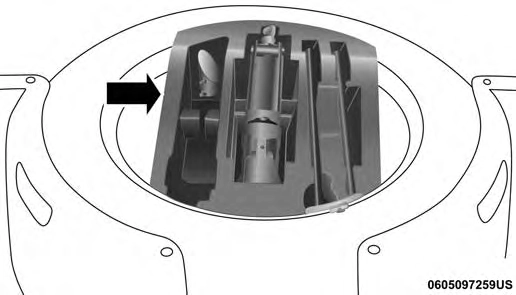
Jack Storage Location
NOTE: The funnel for the Cap-Less Fuel System is located on top of the spare tire. If your vehicle is out of fuel and an auxiliary fuel can is needed, insert the funnel into the filler neck and proceed to fill the vehicle. For vehicles not equipped with a spare tire, the fuel filler funnel is stored in the left storage bin under the load floor. For more informa- tion on the Cap-Less Fuel System, refer to “Refueling The Vehicle” in “Starting And Operating”.
Spare Tire Stowage
The spare tire is stowed under the load floor in the rear cargo area and is secured to the body with a special wing nut.
Preparations For Jacking
- Park the vehicle on a firm, level surface. Avoid ice or slippery surfaces.
- Turn on the Hazard Warning flasher.
- Apply the parking brake.
- Place the gear selector into PARK.
- Turn the ignition OFF.
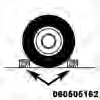 Block both the front and rear of the wheel diagonally opposite of the jacking position. For ex- ample, if changing the right front tire, block the left rear wheel.
- For vehicles equipped with Quadra-Lift, refer to “Quadra-Lift — If Equipped” in “Starting And Operating” for further information on disabling automatic leveling.
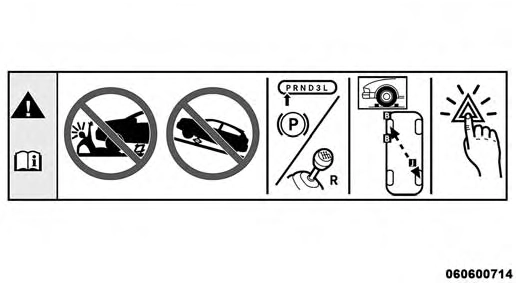
Jack Warning Label
- Remove the spare tire, jack, and tools from storage.
- Loosen (but do not remove) the wheel lug nuts by turning them to the left, one turn, while the wheel is still on the ground.
- Assemble the jack and jacking tools.
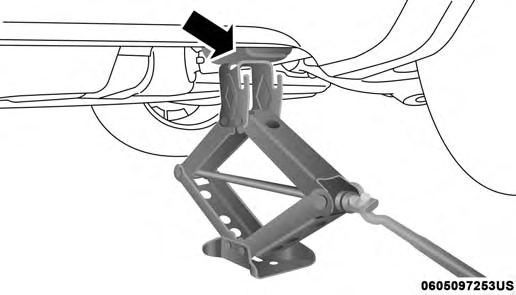
- For the front axle, place the jack on the body flange just behind the front tire as indicated by the triangular lift point symbol on the sill molding. Do not raise the vehicle until you are sure the jack is fully engaged.
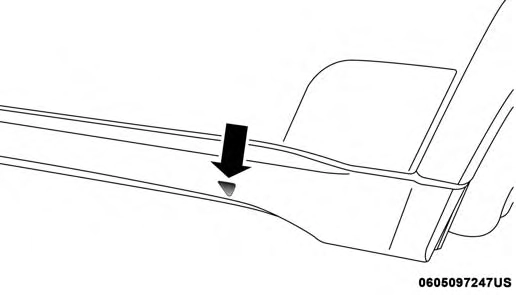
- For a rear tire, place the jack in the slot on the rear tie-down bracket, just forward of the rear tire (as indicated by the triangular lift point symbol on the sill molding). Do not raise the vehicle until you are sure the jack is fully engaged.
- Raise the vehicle by turning the jack screw clockwise. Raise the vehicle only until the tire just clears the surface and enough clearance is obtained to install the spare tire. Minimum tire lift provides maximum stability.
- Remove the lug nuts and wheel.
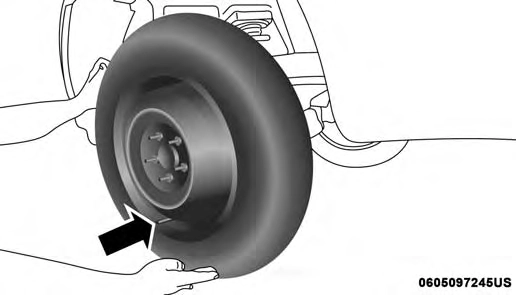
- Position the spare wheel/tire on the vehicle and install the lug nuts with the cone-shaped end toward the wheel. Lightly tighten the nuts.
- Lower the vehicle by turning the jack screw counterclockwise, and remove the jack and wheel blocks.
- Finish tightening the lug nuts. Push down on the wrench while at the end of the handle for increased leverage. Tighten the lug nuts in a star pattern until each nut has been tightened twice. For correct lug nut torque, refer to “Torque Specifications” in “Technical Specifications”. If in doubt about the correct tightness, have them checked with a torque wrench by an authorized dealer or at a service station.
- Lower the jack to the fully closed position and return it and the tools to the proper positions in the foam tray
- Remove the small center cap and securely store the road wheel in the cargo area.
- Have the aluminum road wheel and tire repaired as soon as possible, properly secure the spare tire with the special wing nut torqued to 3.7 ft-lbs (5 N·m), reinstall the jack and tool kit foam tray, and latch the rear load floor cover.
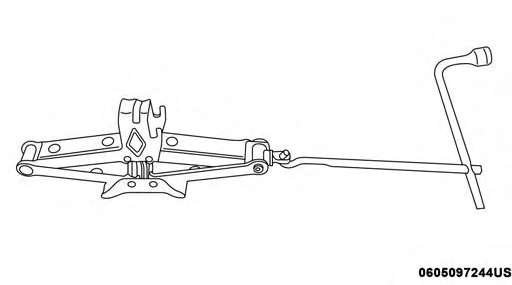
Jack And Tool Assembly
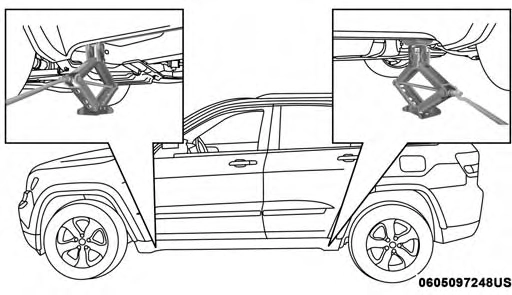
Jacking Locations
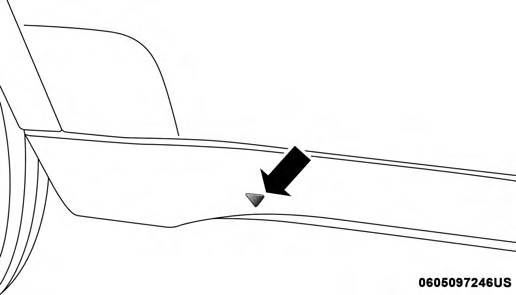
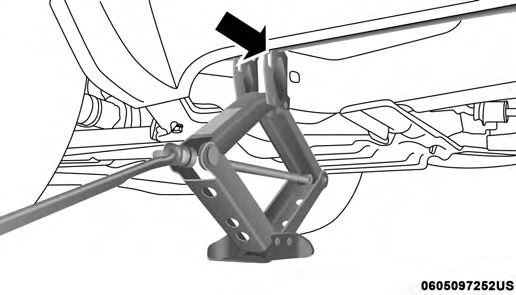
Front Jacking Location
Mounting Spare Tire
Rear Jacking Location
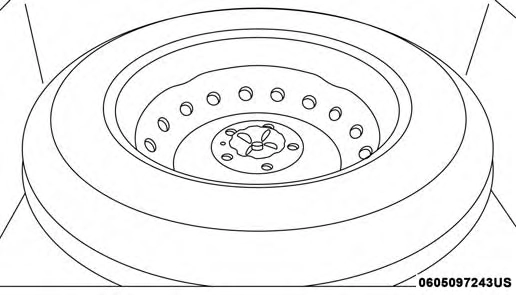
Stowed Spare
NOTE: Do not drive with the spare tire installed for more than 50 miles (80 km) at a max speed of 50 mph (80 km/h).
Download Manual