Airbags
Your vehicle is equipped with four types of airbags: front airbags, side airbags, side curtain airbags, and a driver's knee airbag.
Front Airbags (SRS)
The front SRS airbags inflate in a moderate-to-severe frontal collision to help protect the head and chest of the driver and/or passenger. They are housed in the center of the steering wheel for the driver, and in the dashboard for the passenger. Both airbags are marked SRS AIRBAG.
SRS (Supplemental Restraint System) indicates that the airbags are designed to supplement seat belts, not replace them. Seat belts are the occupant's primary restraint system.
Advanced Airbags
The airbags have advanced features to help reduce the likelihood of airbag-related injuries to smaller occupants.
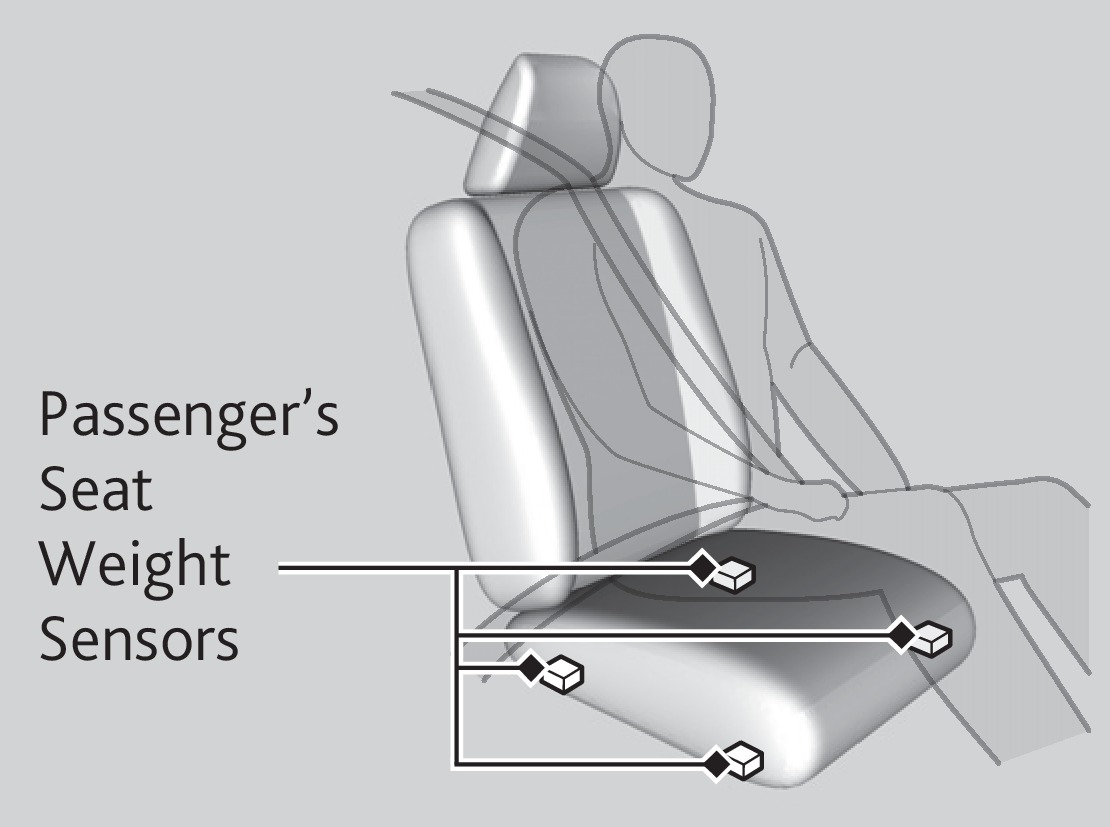
The passenger's advanced front airbag system has weight sensors. We advise against allowing a child age 12 or under to ride in the passenger's seat. However, if you do allow a child age 12 or under to ride in the passenger's seat, note that the system will automatically turn off the passenger's airbag if the sensors detect that the child is approximately 65 lbs. (29 kg) or less.
For passenger's advanced airbag to work properly:
- Do not spill any liquid on or under the seats.
- Do not put any object under the passenger's seat.
- Make sure any objects are positioned properly on the floor. Improperly positioned objects can interfere with the advanced airbag sensors.
- All occupants should sit upright and wear their seat belts properly.
- Do not place any cover over any part of the passenger side dashboard.
Side Airbags
The side airbags help protect the upper torso and pelvis of the driver and/or a passenger during a moderate-to-severe side impact. They are housed in the outside edge of the driver's and passenger's seat-backs. Both are marked SIDE AIRBAG.
Side Curtain Airbags
The side curtain airbags help protect the heads of the driver and any passengers during a moderate-to-severe side impact. The side curtain airbags equipped in this vehicle are also designed to help reduce the likelihood of partial and complete ejection of vehicle occupants through side windows in crashes, particularly rollover crashes.
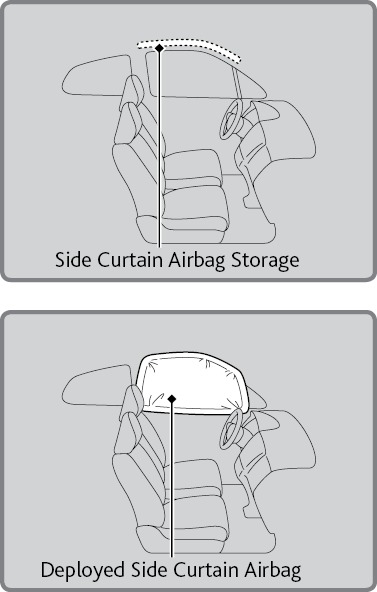
The side curtain airbags are located in the ceiling above the side windows on both sides of the vehicle.
The side curtain airbags are designed to deploy in a rollover or a moderate-to-severe side impact. If the SRS control unit senses that your vehicle is about to roll over, it immediately deploys both side curtain airbags and activates both front seat belt tensioners. If the impact is on the passenger's side, the passenger's side curtain airbag deploys even if there is no occupant in the passenger seat.
To get the best protection from the side curtain airbags, occupants should wear their seat belts properly and sit upright and well back in their seats.
Do not attach any objects to the side windows or roof pillars, as they can interfere with the proper operation of the side curtain airbags.
Driver's Knee Airbag
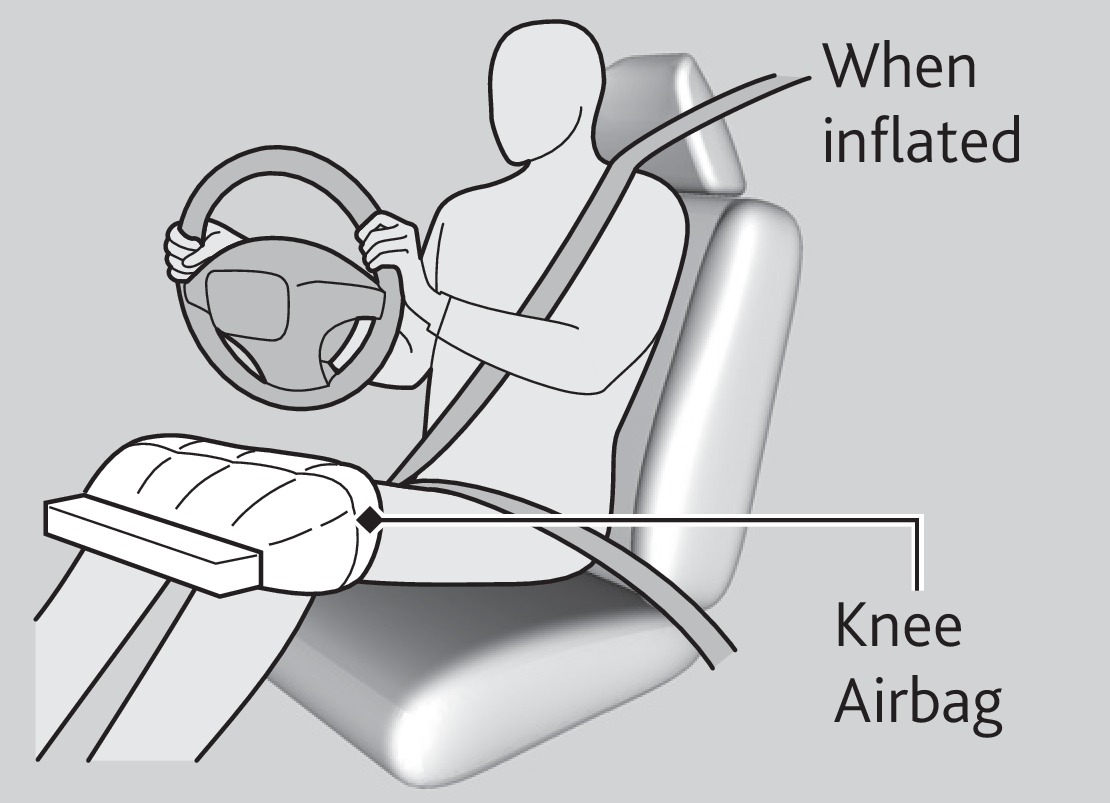
The driver's knee SRS airbag inflates in a moderate to severe frontal collision to help keep the driver in the proper position and to help to maximize the benefit provided by the vehicle's other safety features.
Important Facts About Your Airbags
Always wear your seat belt properly, and sit upright and as far back from the steering wheel as possible while allowing full control of the vehicle. A passenger should move their seat as far back from the dashboard as possible.
Do not place hard or sharp objects between yourself and a front airbag. Carrying hard or sharp objects on your lap, or driving with a pipe or other sharp object in your mouth, can result in injuries if your front airbag inflates.
Do not attach or place objects on the front airbag covers. Objects on the covers marked SRS AIRBAG could interfere with the proper operation of the airbags or be propelled inside the vehicle and hurt someone if the airbags inflate.
Do not attach accessories on or near the side airbags. They can interfere with the proper operation of the airbags, or hurt someone if an airbag inflates.
Do not attach any objects to the side windows or roof pillars. They can interfere with the proper operation of the side curtain airbags.
Do not cover or replace the seat-back covers. This can prevent your side airbags from properly deploying during a side impact.
An open glove box can cause serious injury to your passenger in a crash, even if the passenger is wearing the seat belt.
Always keep the glove box closed while driving.
Airbag System Indicators
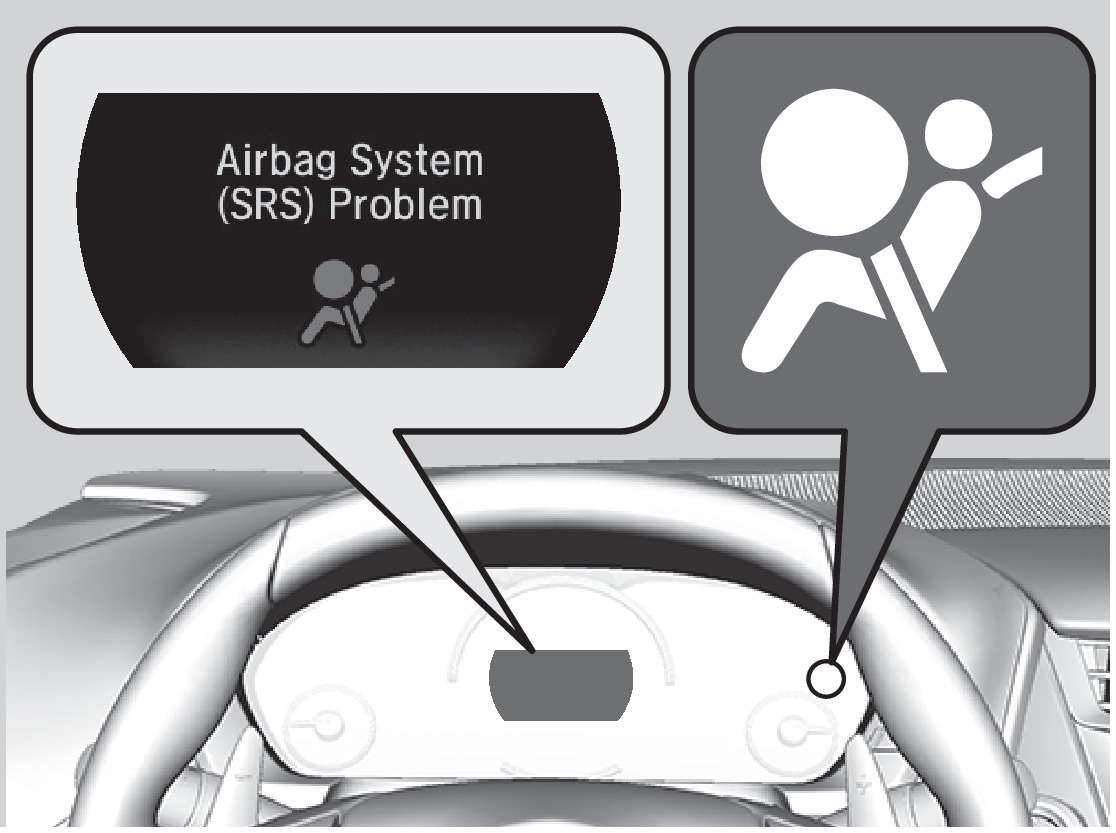
If a problem occurs in the airbag system, the SRS indicator will come on and a message appears on the driver information interface.
SRS (Supplemental Restraint System) Indicator
If the indicator comes on at any other time besides vehicle start-up, or does not come on at all, have the system checked by an authorized Acura NSX dealer as soon as possible. If you don't, your airbags and seat belt tensioners may not work properly when they are needed.
Ignoring the SRS indicator can result in serious injury or death if the airbag systems or tensioners do not work properly.
Have your vehicle checked by an authorized Acura NSX dealer as soon as possible if the SRS indicator alerts you to a possible problem.
Passenger Airbag Off Indicator
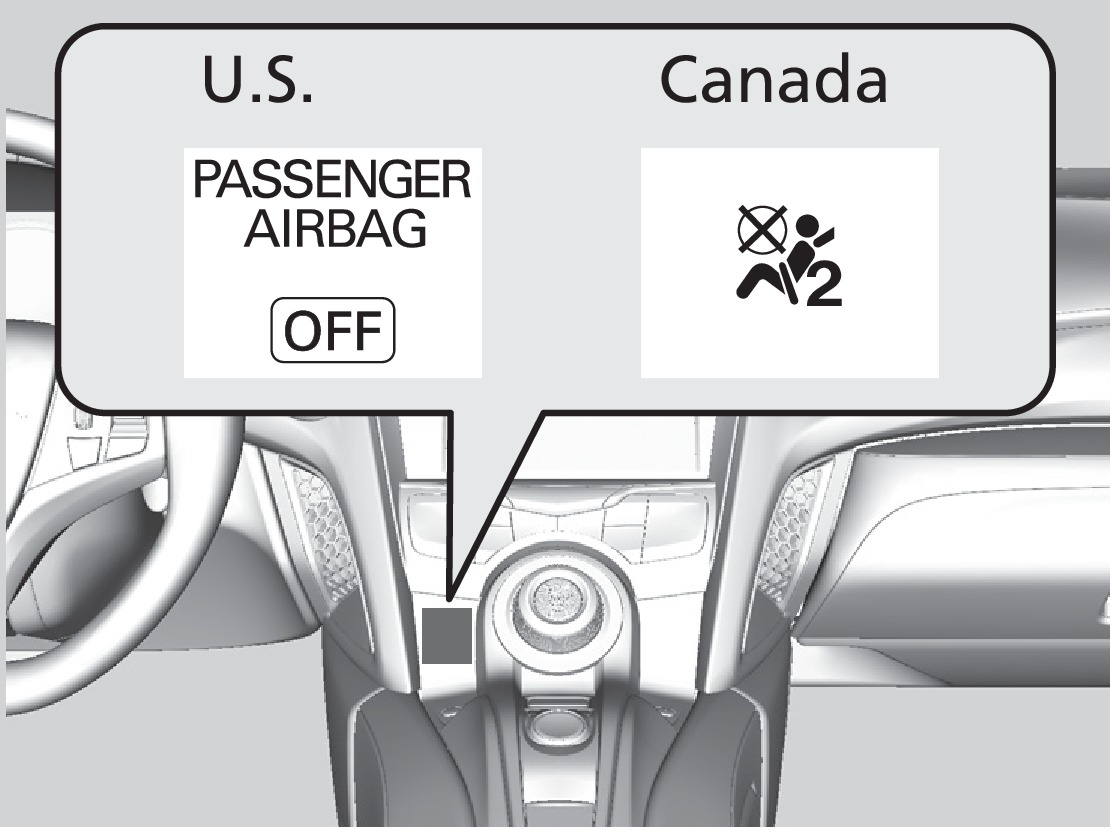
The indicator comes on to alert you that the passenger's front airbag has been turned off. This occurs when the passenger seat weight sensors detect 65 lbs (29 kg) or less, the weight of an infant or small child, on the seat.
Your vehicle is not recommended for child passengers. Never put a rear-facing child seat in this vehicle. If you decide to disregard our recommendations and transport a small child, they should be properly restrained.
Objects placed on the seat can also cause the indicator to come on. If you decided to disregard our recommendations and transport a small child, they should be properly restrained.
If the passenger's seat is empty, the passenger's front airbag will not deploy and the indicator will not come on.
If the indicator comes on with no occupant or objects in the passenger's seat, something may be interfering with the weight sensors, such as:
- An object(s) hanging on the seat.
- An object(s) pressing against the rear of the seat-back.
- The seat or seat-back is forced back against the rear wall of the vehicle.
- An object(s) placed under or beside the passenger's seat.
- An occupant is leaning against the door or center console.
- An occupant's feet are not placed on the floor in front of them.
- And occupant is not sitting in an upright position or has the seat-back excessively reclined.
If none of these conditions exist, have your vehicle checked by an authorized Acura NSX dealer as soon as possible.
The passenger airbag off indicator may go on and off repeatedly if the total weight on the seat is near the airbag cutoff threshold.
Do not allow an adult passenger to ride in the seat when the indicator is on.
Airbag System Components
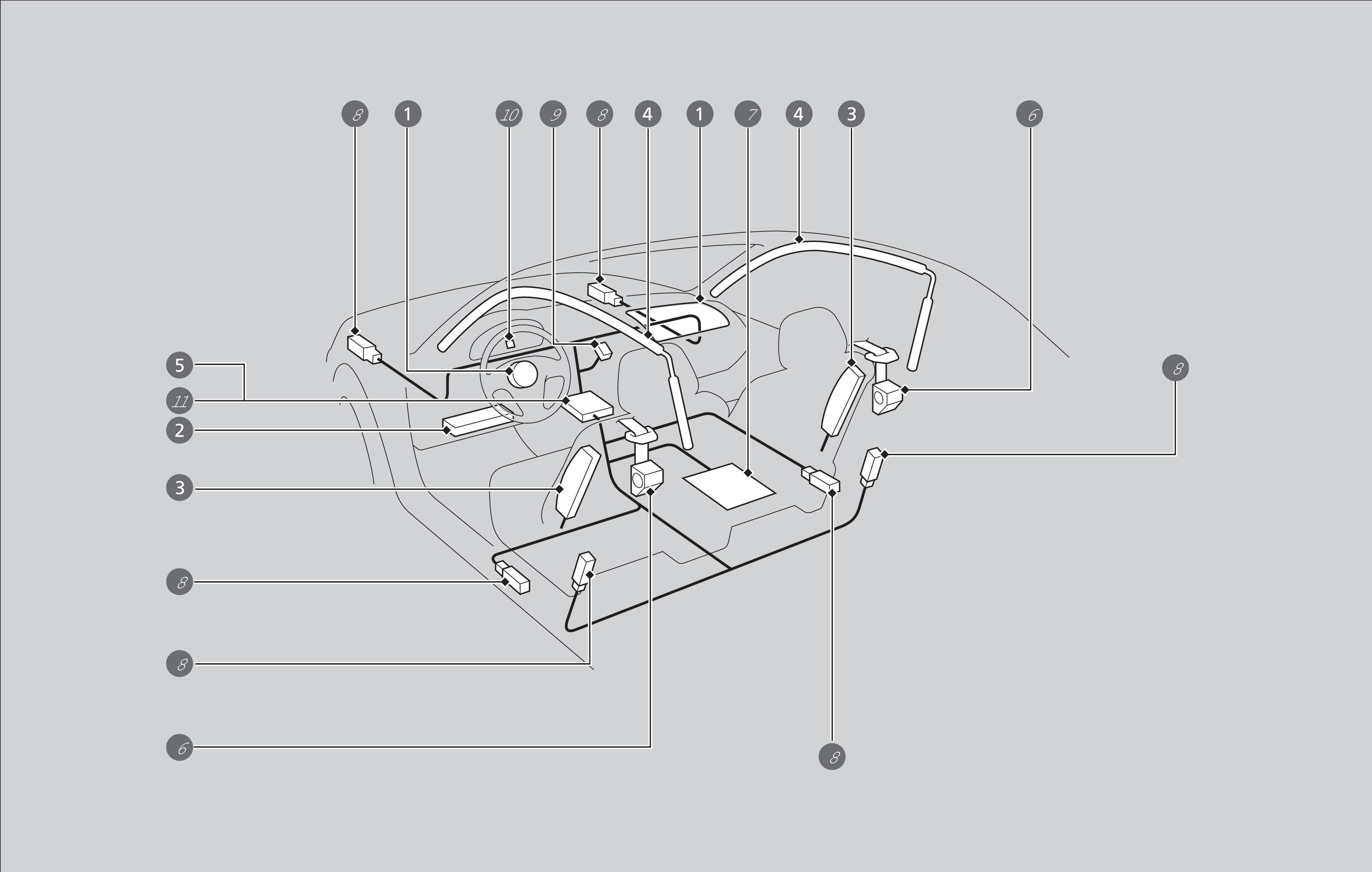
The front, driver's knee, side, and side curtain airbags are deployed according to the direction and severity of impact. Both side curtain airbags are deployed in a rollover. The airbag system includes:
 |
Two SRS (Supplemental Restraint System) front airbags. The driver's airbag is stored in the center of the steering wheel; the front passenger's airbag is stored in the dashboard. Both are marked SRS AIRBAG. |
 |
Driver's knee airbag. The knee airbag is stored under the steering column. It is marked SRS AIRBAG. |
 |
Two side airbags, one for the driver and one for a passenger. The airbags are stored in the outer edges of the seatbacks. Both are marked SIDE AIRBAG. |
 |
Two side curtain airbags, one for each side of the vehicle. The airbags are stored in the ceiling, above the side windows. The front and rear pillars are marked SIDE CURTAIN AIRBAG. |
 |
An electronic control unit that, when the power system is on, continually monitors information about the various impact sensors, seat and buckle sensors, rollover sensor, airbag activators, seat belt tensioners, and other vehicle information. During a crash event the unit records such information. |
 |
Automatic seat belt tensioners. In addition, the driver's and passenger's seat belt buckles incorporate sensors that detect whether or not the belts are fastened. |
 |
Weight sensors in the passenger's seat. The passenger's airbag will be turned off if the weight on the seat is 65 lbs (29 kg) or less (the weight of an infant or small child). |
 |
Impact sensors that can detect a moderate-to-severe front or side impact. |
 |
An indicator on the dashboard that alerts you that the passenger's front airbag has been turned off. |
 |
An indicator on the instrument panel that alerts you to a possible problem with your airbag system or seat belt tensioners. |
 |
A rollover sensor that can detect if your vehicle is about to roll over and signal the control unit to deploy both side curtain airbags. |
Airbag Care
You do not need to, and should not, perform any maintenance on or replace any airbag system components yourself. However, you should have your vehicle inspected by an authorized Acura NSX dealer in the following situations:
When the airbags have deployed
If an airbag has inflated, the control unit and other related parts must be replaced. Similarly, once an automatic seat belt tensioner has been activated, it must be replaced.
When the vehicle has been in a moderate-to-severe collision
Even if the airbags did not inflate, have your authorized Acura NSX dealer inspect the following: weight sensors in the passenger's seat, seat belt tensioners, and each seat belt that was worn during the crash.
Do not remove or modify a seat without first consulting a dealer
- Seat Belts
- Important Safety Information
- Child Safety
- Reporting Safety Defects
Download Manual