In the engine compartment
Safety precautions for working in the engine compartment
The engine compartment is a potentially dangerous area in the vehicle. Only perform work in the engine compartment if you are familiar with the necessary procedures and the general safety precautions, and if the correct equipment, fluids, and suitable tools are available. Work performed incorrectly can result in serious injuries . Have all work performed by suitably qualified professionals if necessary. Volkswagen recommends contacting an authorized Volkswagen dealer or authorized Volkswagen Service Facility.
Always make sure the vehicle is parked on a solid and level surface before performing any work in the engine compartment.
 WARNING
Unintentional vehicle movement while working on the vehicle can cause serious injuries.
-
Never work underneath the vehicle when it is not secured to prevent it from rolling. If working under the vehicle with the wheels touching the floor, the vehicle must be on a level surface and the wheels must be secured.
-
If you must work underneath the vehicle, additionally support the vehicle securely with suitable stands. The vehicle jack is not sufficient for this because it could collapse, resulting in serious injuries.
-
The start-stop system must be manually deactivated.
WARNING
The engine compartment in any motor vehicle is a potentially dangerous area that can cause serious personal injury.
-
Always work as cautiously and carefully as possible and follow the general safety instructions when working on the vehicle.
-
Never perform work in the engine compartment if you are not familiar with the required procedures. If you are not sure what to do, have the work performed by an authorized Volkswagen dealer or authorized Volkswagen Service Facility qualified in this respect. Serious injuries can result if work is not performed correctly. Volkswagen recommends contacting an authorized Volkswagen dealer or authorized Volkswagen Service Facility.
-
Never open or close the hood if steam or engine coolant is escaping. Steam or hot engine coolant can cause serious burns. Always wait until you can no longer see or hear steam or engine coolant escaping from the engine compartment.
-
Always allow the engine to cool down before opening the hood.
-
Hot engine or exhaust system components can cause burns if touched.
-
Before opening the hood, take note of the following:
-
Activate the electronic parking brake and move the selector lever into the P position or move the gearshift lever into the neutral position.
-
Switch the ignition off and keep the vehicle key stored safely far enough from the vehicle (especially in vehicles with Keyless Access) so the ignition cannot be inadvertently switched on and the engine started.
-
Always keep children away from the engine compartment and never leave them unattended.
-
-
The engine cooling system is under pressure when the engine is hot. Never open the cap on the coolant expansion tank when the engine is hot. Engine coolant could spray out and cause serious burns or other injuries.
-
Slowly and very carefully turn the cap on the coolant expansion tank counterclockwise while pressing down lightly on the cap.
-
Always protect your face, hands, and arms from hot engine coolant or steam with a large, thick cloth.
-
-
Do not spill any fluids on engine components or the exhaust system when adding fluids. Spilled fluids could cause a fire.
WARNING
The high voltage in the electrical system can cause electric shocks, burns, serious injuries, and death.
-
Never short-circuit the electrical system. The 12 V vehicle battery could explode.
-
To reduce the risk of an electric shock and serious injuries, never touch the electrical wires for the ignition system while the engine is running or being started.
-
Never touch the electrical wires and connections of the gas discharge lamps.
WARNING
The engine compartment contains moving components that can cause serious injuries.
-
Never reach into the radiator fan or into the area near the radiator fan. Touching the fan blades could cause serious injuries. The ventilator is temperature-controlled and may switch on by itself even if the ignition is switched off.
-
If work must be performed while starting the vehicle or when the engine is running, moving components such as the ribbed belt, alternator, and radiator fan, or the high-voltage system could cause potentially fatal injuries. Always be extremely careful.
-
Always make sure that no parts of the body, jewelry, ties, loose clothing, and long hair can be caught in moving engine components. To reduce the risk of anything becoming caught in engine components, always remove any jewelry and/or ties, tie back long hair, and avoid wearing loose-fitting clothing when performing work.
-
Always press the accelerator pedal extremely carefully and never press it without paying close attention. The vehicle could begin moving, even if the electronic parking brake is set.
-
-
Do not leave any items, such as cleaning cloths or tools, in the engine compartment. Objects left behind can cause malfunctions, engine damage, and fires.
WARNING
Additional insulation, such as covers in the engine compartment, can cause engine malfunctions or fires and result in serious injuries.
-
Never cover the engine with blankets or other insulating materials.
WARNING
Fluids and some materials in the engine compartment are very flammable and can cause fires and serious injuries.
-
Never smoke near the engine compartment.
-
Never work near open flames or sparks.
-
Never pour or spill fluids on the engine. Fluids could ignite on hot engine components and cause injuries.
-
If work must be performed on the fuel system or electrical system, note the following:
-
Always disconnect the 12 V vehicle battery.
Make sure that the vehicle is unlocked when the 12 V vehicle battery is disconnected. Otherwise, the anti-theft alarm system will be activated.
-
Never perform work near sources of heat, boilers, or other open flames.
-
-
Always have a fully-functioning, checked fire extinguisher nearby.
 NOTICE
Using incorrect fluids can result in malfunctions and engine damage.
-
When filling or changing fluids, make sure the correct fluids are added to the correct reservoirs.

Fluids leaking from the vehicle can cause environmental damage. Always check the ground under the vehicle for leaking fluids. If you see spots of fluid on the ground under the vehicle, have the vehicle checked by an authorized Volkswagen dealer or authorized Volkswagen Service Facility. Dispose of leaking fluids correctly. Volkswagen recommends contacting an authorized Volkswagen dealer or authorized Volkswagen Service Facility.
Preparing the vehicle for work in the engine compartment
Always perform the following preparations in the specified sequence before all work in the engine compartment :
-
Park the vehicle safely on level and stable ground.
-
Press and hold the brake pedal until the engine has stopped.
-
Set the electronic parking brake .
-
Move the selector lever into the
 position.
 -
Stop the engine.
-
If necessary, remove the vehicle key from the vehicle and store it outside of the vehicle so that the vehicle does not start accidentally.
-
Let the engine cool down sufficiently.
-
Always keep other people away from the engine compartment.
-
Secure the vehicle against rolling away.
WARNING
Failing to follow these instructions, which are provided for your own safety, can cause accidents and serious injuries.
-
Always follow the steps in the instructions and the general safety precautions.
Opening and closing the hood

Fig. 183 In the driver's side footwell: Release lever for the hood (general example).
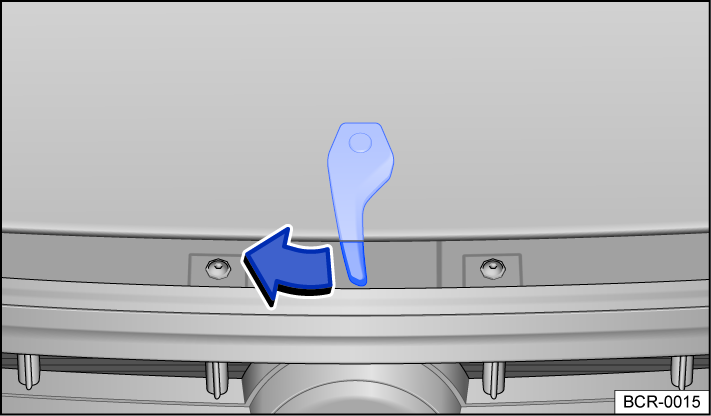
Fig. 184 Above the radiator grille: Opening lever for the hood.
Opening the hood
-
Open the driver door and pull the release lever in the direction of the arrow .
The hood will pop open from the locking mechanism in the lock carrier .
-
Lift the hood, press the opening lever, and open the hood all the way .
The hood is held open by the gas-pressure strut.
Closing the hood
-
Push the hood down until you override the force of the gas-pressure strut .
-
Let the hood fall into the lock carrier catch from a height of approximately 8 inches (20 cm); do not press it down.
When the hood is closed correctly, it will be flush with the surrounding sections of the vehicle body .
If the hood does not close correctly, lift the hood up and try to close it again.
The hood will no longer be highlighted in the instrument cluster display or the indicator light will turn off .
WARNING
If the hood is not closed correctly, it could open suddenly while driving and block the view through the windshield. This can cause accidents and serious injuries.
-
After closing the hood, make sure the catch is engaged correctly in the lock carrier.
-
If you realize while driving that the hood is not closed correctly, switch on the emergency flashers, carefully apply the brakes, decelerate carefully, stop immediately and close the hood.
-
Do not open or close the hood if any persons are in the closing range of the hood.
NOTICE
Opening and closing the hood incorrectly can cause damage to the hood and wiper arms.
-
Only open the hood when wiper mode is switched off and with the windshield wipers folded in.
-
Always fold the wiper arms against the windshield before driving.
Display
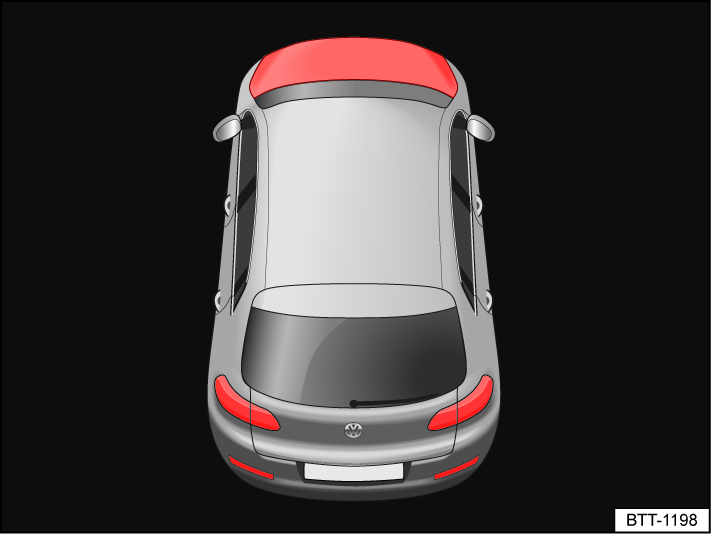
Fig. 185 In the instrument cluster display: the hood is open or not closed correctly (general example).
An image in the instrument cluster display indicates if the hood is open or has not closed correctly .
-
 Do not continue driving!
If necessary, lift the hood and close it again.
The image is also displayed when the ignition is switched off, and it disappears several seconds after the doors are closed and the vehicle is locked.
WARNING
Disregarding warning notifications could lead to breakdowns while driving, accidents, and serious injuries.
-
Never ignore warning notifications.
-
Stop the vehicle as soon as it is safe to do so.
 The image may vary depending on the version of the instrument cluster.
Download Manual