Information about wheels and tires
 Introduction
Tires are the part of the vehicle that are under the most demand yet are the most underestimated. Tires are extremely important, because the small running surface on the tires is the only point of contact that the vehicle has with the road.
The service life of the tire depends on the tire pressure, the driving style, the way the tires are handled, and correct mounting of the tire.
 WARNING
New tires or tires that are old, worn, or damaged cannot provide the maximum vehicle control and braking effect.
-
Handling wheels and tires incorrectly can reduce driving safety and cause accidents and serious injuries.
-
For all four wheels, use only radial tires of the same design, size (rolling circumference), and tread pattern.
-
You must break in new tires because they have reduced traction and braking efficiency when they are new. To reduce the risk of accidents and serious injuries, drive carefully during the first 370 miles (600 km).
-
Regularly check the tire pressure when the tires are cold and always maintain the specified pressure. If the tire pressure is too low, the tire can heat up so much while driving that the tread separates or the tire ruptures.
-
Check the tires regularly for damage and wear.
-
Never drive with tires that are damaged (punctured, cut, cracked, or bulging) or worn. Driving with tires in this condition can cause tire blowouts, accidents, and serious injuries. Replace worn or damaged tires immediately.
-
Never exceed the maximum permissible speed and tire load specified for the tires fitted to your vehicle.
-
The effectiveness of the driver assistance systems and the braking assistance systems depends on tire traction.
-
If there are unusual vibrations or if the vehicle pulls to one side while driving, stop immediately and check the wheels and tires for damage.
-
To reduce the risk of loss of vehicle control, accidents, and serious injuries, never loosen the bolts on rims with a bolted rim ring.
-
Do not use any wheels or tires if you do not know how they have been used in the past. Used wheels and tires may be damaged, even if this damage is not visible, and could lead to tire damage, tire failure or loss of vehicle control.
-
Old tires can lose pressure suddenly at high speeds or fail and cause accidents and serious injuries. This is true even if the tires have not been used yet. Only use tires that are more than six years old if absolutely necessary and drive with extreme caution if doing so.
WARNING
If the wheel bolts are not tightened correctly or are missing, the wheels could become loose and lead to loss of vehicle control, accidents, and serious injuries.
-
Never drive with missing or loose wheel bolts.
-
Always use wheel bolts that are correct for the rim and the vehicle model.
-
Always tighten the wheel bolts to the correct tightening torque. If you do not have a torque wrench, tighten the wheel bolts with the lug wrench and then have the tightening torque checked as soon as possible by an authorized Volkswagen dealer or authorized Volkswagen Service Facility. Volkswagen recommends contacting an authorized Volkswagen dealer or authorized Volkswagen Service Facility.
WARNING
Improper installation of the tires on the rim can cause tires to suddenly lose air or go flat while driving and damage the rim. This can cause accidents and fatal injuries.
-
Always have tires installed on the rim by an authorized Volkswagen dealer or authorized Volkswagen Service Facility. Volkswagen recommends contacting an authorized Volkswagen dealer or authorized Volkswagen Service Facility.
Handling wheels and tires
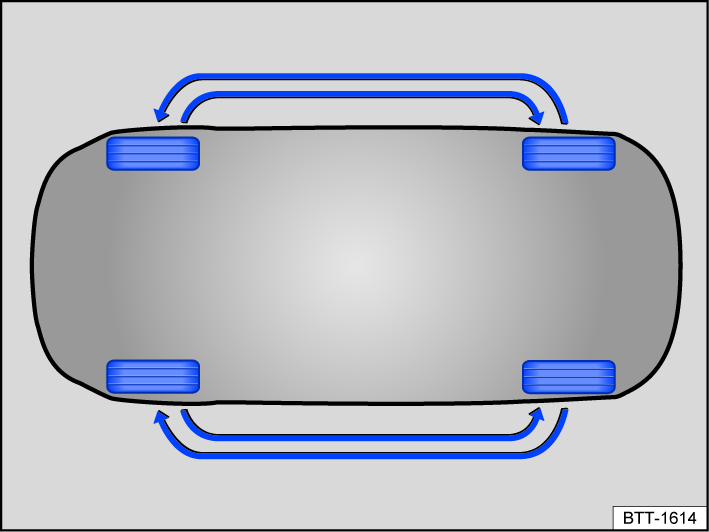
Fig. 194 General example: Diagram for rotating the wheels.
The tire and rim combinations approved by Volkswagen are specifically designed for each other.
Replacing tires
To ensure that the tires wear evenly, rotating the tires regularly according to the diagram is recommended . This will allow the tires to have approximately the same length of service life.
Volkswagen recommends having the wheel replacement carried out by an authorized Volkswagen dealer or authorized Volkswagen Service Facility. Volkswagen recommends contacting an authorized Volkswagen dealer or authorized Volkswagen Service Facility.
Preventing damage to the rims and tires
-
Always drive over curbs and other low obstacles slowly and at a right-angle so that both front wheels come into contact with the obstacle at the same time.
-
Check the tire pressure regularly.
-
Check the tires regularly for damage, e.g. holes, cuts, punctures or blisters.
-
Never exceed the load index and maximum speed of the tire .
-
Have damaged or worn rims replaced immediately .
-
Protect tires from coming into contact with corrosive materials such as grease, oil, gasoline, and brake fluid .
-
Replace missing dust caps on the valves immediately.
-
Remove any objects provided they have not punctured the inside of the tire .
-
Pay attention to all warnings issued by the Tire Pressure Monitoring System .
Tires that are more than six years old
Tires age due to physical and chemical processes that affect their function. Tires that have been stored and unused for long periods of time age more quickly than tires that are used continuously.
Volkswagen recommends replacing tires that are more than six years old with new tires. This even applies to tires that may appear to be usable and whose tread depth is still greater than the minimum requirement .
Winter and all season tires lose their characteristics to a large extent due to aging, regardless of the remaining tread depth.
The age of the tire can be determined based on the production date .
Storing tires
-
Only store tires in a cool, dry location that is as dark as possible.
-
Do not stand tires that are mounted on rims up vertically.
-
Protect tires that are not mounted on rims from dirt with suitable covers and store them standing on the tread surface.
New tires
-
Drive particularly carefully during the first 370 mi (600 km) with new tires because they must be broken in. Tires that have not been broken in yet have reduced gripping abilities and braking efficiency .
-
Only use tires with the same design and as close to the same construction, size, and tread pattern as possible on all four wheels.
Replacing tires
-
At the factory, the vehicle can be equipped with reduced rolling resistance tires. The specified fuel consumption values can only be achieved using these tires. When purchasing new tires, always make sure the tires are optimized for rolling resistance .
-
Before buying new reduced rolling resistance tires, seek advice from an authorized Volkswagen dealer or authorized Volkswagen Service Facility. Volkswagen recommends contacting an authorized Volkswagen dealer or authorized Volkswagen Service Facility.
-
At a minimum, replace both tires on a single axle.
-
Only replace old tires with tires that have been approved by Volkswagen for your vehicle model.
-
Never use tires whose size exceeds the measurement of tires that are approved by Volkswagen .
Recalibrating the Tire Pressure Monitoring System
The Tire Pressure Monitoring System must be recalibrated each time one or more wheels is replaced. This also applies if the tires are rotated, for example from front to back .
WARNING
Corrosive fluids and materials can cause visible and invisible damage to the tires, which can cause the tires to fail.
-
Always keep chemicals, oils, grease, fuel, brake fluid, and other corrosive materials away from the tires.
WARNING
Old tires can lose pressure suddenly at high speeds or fail and cause accidents and serious injuries. This is true even if the tires have not been used yet.
-
Only use tires that are more than six years old if absolutely necessary and drive with extreme caution if doing so.
WARNING
New tires must be broken in because they have reduced traction and braking efficiency when they are new.
-
To reduce the risk of accidents and serious injuries, drive carefully during the first 370 miles (600 km).
WARNING
Tires must have enough clearance from vehicle components. If there is not enough clearance, tires could rub against components of the suspension, the body, and the brake lines, which can cause the brake system to fail, the tread to separate, and the tire to fail.
-
The actual dimensions of the tires must not exceed the dimensions of the tire manufacturers approved by Volkswagen, and the tires must not rub against other components of the vehicle.
 NOTICE
Avoid strong impacts and drive around obstacles where possible. The risk of tire damage is especially great if driving over potholes and curbs. Damage to the tires and rims can result.
NOTICE
Do not damage the valves when replacing tires. Never drive without caps on the valves. The valves could be damaged.

Always dispose of old tires correctly and according to regulations.
 If the spare wheel is different from the regular vehicle wheels, e.g. in the case of winter tires or a temporary spare wheel, only use the spare wheel temporarily and in the event of a breakdown, and drive especially carefully. Replace the compact spare wheel with a regular wheel as soon as possible.
Using tires approved by Volkswagen ensures that the dimensions will fit correctly on your vehicle. If other tires are used, the seller must provide a certificate from the tire manufacturer stating that the tires are suitable for the vehicle. Keep the certificate stored safely in the vehicle.
Rims and wheel bolts
Please read the introductory information and heed the Warnings and Notice .
Rims, tires, and wheel bolts are determined based on the vehicle model. Whenever another rim is installed, the wheel bolts to be used must have the correct length and bolt head shape. This ensures that the brakes can work correctly and that the vehicle drives smoothly and safely.
For technical reasons, standard rims from other vehicles cannot be used. Under certain circumstances, this may even apply to rims for the same vehicle model.
Wheel bolts
The correct wheel bolts must always be used for each vehicle model, and these bolts must always be tightened to the correct torque .
The wheel bolt tightening torque must be checked regularly with a functional torque wrench .
Two-piece wheel bolts
Two-piece wheel bolts must be used. Two-piece wheel bolts have the bolt connected loosely to the head.
Rims with bolted rim ring or accent elements
Rims with a bolted rim ring or accent element consist of multiple pieces. These pieces are connected together with special bolts. Damaged rims must be replaced and may only be repaired by an authorized Volkswagen dealer or authorized Volkswagen Service Facility. Volkswagen recommends contacting an authorized Volkswagen dealer or authorized Volkswagen Service Facility.
Rim identification
In some countries, new rims must include information about certain properties. The following information may be on the rim:
-
Seal of conformity
-
Rim size
-
Manufacturer or brand name
-
Production date (month/year)
-
Country of origin
-
Serial number
-
Raw material batch number
-
Commodity code
WARNING
Using unsuitable or damaged rims can impair driving safety and cause accidents and serious injuries.
-
Only use rims permitted for the vehicle.
-
Check the rims regularly for damage and replace them if necessary.
WARNING
Loosening and tightening bolts incorrectly on rims with bolted rim rings can cause accidents and serious injuries.
-
Never loosen the bolts on rims with a bolted rim ring.
-
Have all procedures on rims with bolted rim rings performed by an authorized Volkswagen dealer or authorized Volkswagen Service Facility. Volkswagen recommends contacting an authorized Volkswagen dealer or authorized Volkswagen Service Facility.
Tire pressure
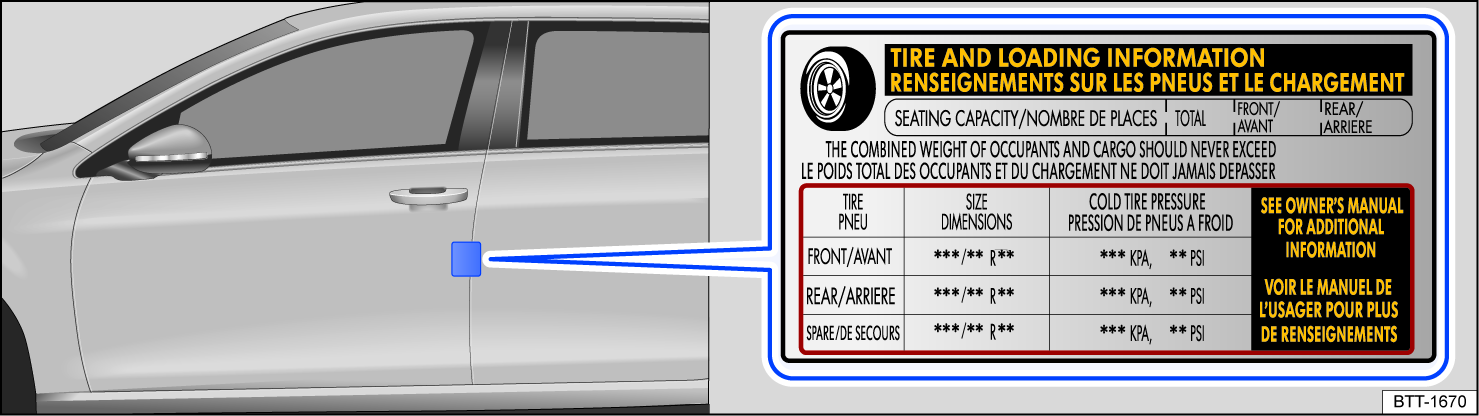
Fig. 195 On the driver door pillar: tire pressure sticker
The correct tire pressure for the tires fitted at the factory can be found on a label on the B-pillar of the driver door . The factory-installed tires can be winter, summer or all-season tires.
An incorrect tire pressure can cause increased tire wear, negatively affect driving behavior and damage tires. Compliance with the correct tire pressure is very important, particularly when driving at high speeds.
The specified tire pressure is given for a cold tire. For warm tires, the pressure is higher.
-
Never reduce the pressure of a warm tire in order to reach the specified value.
This will cause the actual pressure when the tire is cold to be too low.
Checking the tire pressure
-
Check the tire pressure at least once a month.
-
Check the tire pressure only when tires are cold. The specified tire pressure only applies to a cold tire. The tire pressure on warm tires is higher than on cold tires. Therefore, never release air from a warm tire to adjust the tire pressure.
-
Always adjust the tire pressures to the vehicle load .
-
After adjusting tire pressures, always screw the caps on the valves and note the information about the Tire Pressure Monitoring System (TPMS).
-
Always use the tire pressures specified on the label. Never exceed the maximum tire pressure specified on the side of the tire.
WARNING
Incorrect tire pressures can cause tires to suddenly lose air or go flat while driving. This can cause accidents and fatal injuries.
-
If the tire pressure is too low, the tire can heat up so much while driving that the tread separates or the tire ruptures.
-
Excessive speeds and vehicle loads can cause overheating, sudden tire damage (including tire blow-outs), and separation of the tread, which can then result in loss of vehicle control.
-
An incorrect tire pressure shortens the service life of the tire and negatively affects driving behavior.
-
Check the tire pressures regularly, at least once a month and also before driving long distances.
-
All tires must always be inflated to the correct pressure based on the load.
-
Never reduce the tire pressure when tires are warm.
NOTICE
-
When positioning the tire pressure gage, make sure it is not tilted at the valve stem. If it is, it could damage the tire valve.
-
Always make sure all valve caps are fully tightened when driving.
Tire pressures that are too low increase fuel consumption.
Tire inflation pressure for cold tires
Please read the introductory information and heed the Warnings and Notice .
|
Engine |
Size designation |
Tire pressure |
|---|---|---|
|
PSI/kPa |
||
|
2.0 l/238 hp (175 kW) |
245/60 R 18 |
36 / 250 |
|
255/50 R 20 |
36 / 250 |
|
|
265/45 R 21 |
36 / 250 |
|
|
3.6 l/280 hp (206 kW) |
245/60 R 18 |
36 / 250 |
|
255/50 R 20 |
36 / 250 |
|
|
265/45 R 21 |
36 / 250 |
|
|
Spare wheel |
T165/80 R 17 |
60 / 420 |
Details of the correct tire pressure are located on the tire pressure label on the driver's door pillar. If the details on the tire pressure label differ from the details in the Manual, the details on the tire pressure label apply.
Tread depth and wear indicator

Fig. 196 Tire tread: tread wear indicator.
Tread depth
Most driving situations require a tire tread that is as deep as possible. All tires, or at least tires on the same axle, must have an even tread depth . This applies in particular to wet or wintry road conditions.
In most countries, the legal minimum tread depth is 1/16 of an inch (1.6 mm). This is measured in the tread grooves next to the wear indicators. Observe any other legal regulations in force in the country in which you are driving.
Note the legal requirements in the applicable country for minimum tread depths on winter tires and all-season tires.
Tread wear indicator in tires
The tread wear indicator indicates if a tire is worn out. At the latest, the tire must be replaced if the tread depth is worn down to the tread wear indicator.
The tread wear indicator is 1.6 mm (1/16 in) above the base of the tread . Markings on the sides of the tire indicate the location of the tread wear indicator .
WARNING
Worn tires are a safety risk and can cause the driver to lose control of the vehicle and lead to serious injuries.
-
You must replace tires with new tires at the latest when the tires are worn down to the wear indicator.
-
Worn tires have significantly less grip, especially on wet roads, and the vehicle is more likely to “hydroplane”.
-
Worn tires reduce the driver’s ability to control the vehicle well in normal and difficult driving situations, and they increase the braking distance as well as the risk of skidding.
Tire damage
Please read the introductory information and heed the Warnings and Notice .
Damage to tires and rims can often occur where it is not visible .
-
If you suspect that a wheel is damaged, slow down and stop as soon as traffic allows and it is safe to do so.
-
Check the tires and rims for damage.
-
Do not continue driving if there is tire damage.
-
Replace the damaged wheel . If necessary, contact an authorized Volkswagen dealer or authorized Volkswagen Service Facility for assistance.
-
If no exterior damage is visible, drive slowly and carefully to the nearest authorized Volkswagen dealer or authorized Volkswagen Service Facility to have the vehicle checked. Volkswagen recommends contacting an authorized Volkswagen dealer or authorized Volkswagen Service Facility.
Objects embedded in tires
-
If an object has punctured through to the inside of a tire, leave the object in place. Objects stuck between the tire tread segments can be removed.
-
Replace the damaged wheel . If necessary, contact an authorized Volkswagen dealer or authorized Volkswagen Service Facility for assistance.
-
Check and adjust the tire pressure.
-
Contact an authorized Volkswagen dealer or authorized Volkswagen Service Facility. Volkswagen recommends contacting an authorized Volkswagen dealer or authorized Volkswagen Service Facility.
-
On vehicles with run-flat tires (AirStop® tires): leave the object in the tire and contact an authorized Volkswagen dealer or authorized Volkswagen Service Facility. Volkswagen recommends contacting an authorized Volkswagen dealer or authorized Volkswagen Service Facility. Sealant that has been applied to the inside of the tire running surface will surround the object and seal the tire temporarily.
Tire wear
Tire wear depends on various factors:
-
Driving style.
-
Wheel balancing.
-
Running gear alignment.
Driving quickly around curves, rapid acceleration, and heavy braking increase tire wear.
An imbalance can occur while driving, which can be noticed by uneven steering. Tire imbalances also affect tire wear. In these situations, have the wheels balanced again.
Incorrect wheel alignment impairs driving safety and increases tire wear. If there is high degree of tire wear, have the wheel alignment checked by an authorized Volkswagen dealer or authorized Volkswagen Service Facility. Volkswagen recommends contacting an authorized Volkswagen dealer or authorized Volkswagen Service Facility.
WARNING
Unusual vibrations or the vehicle pulling to one side while driving may indicate tire damage.
-
Slow down immediately and stop the vehicle as soon as the traffic situation allows and it is safe to do so.
-
Check the tires and rims for damage.
-
Never continue driving with damaged tires or rims. Instead, seek professional assistance.
-
If no exterior damage is visible, drive slowly and carefully to the nearest authorized Volkswagen dealer or authorized Volkswagen Service Facility to have the vehicle checked. Volkswagen recommends contacting an authorized Volkswagen dealer or authorized Volkswagen Service Facility.
New tires and replacement tires
Please read the introductory information and heed the Warnings and Notice .
New tires
-
Drive particularly carefully during the first 370 miles (600 km) with new tires because they must be broken in. Tires that have not been broken in yet have reduced grip and braking efficiency .
-
Only use tires with the same design and as close to the same construction, size, and tread pattern as possible on all four wheels.
-
The tread depth of new tires may vary between tire models and manufacturers due to different design features and tread designs.
Replacing tires
-
At the factory, the vehicle is equipped with tires designed to reduce the rolling resistance as much as possible. The specified fuel economy and range can only be achieved using these tires. When purchasing new tires, always make sure the tires are optimized for rolling resistance .
-
Before buying new reduced rolling resistance tires, seek advice from an authorized Volkswagen dealer or authorized Volkswagen Service Facility. Volkswagen recommends contacting an authorized Volkswagen dealer or authorized Volkswagen Service Facility.
-
At a minimum, replace both tires on a single axle .
-
Only replace old tires with tires that have been approved by Volkswagen for your vehicle model.
-
Only replace old tires with tires that have the same specifications – including width, diameter, bearing capacity and maximum speed – such as the tires approved for your vehicle and model by Volkswagen.
-
Never use tires whose size exceeds the measurement of tires that are approved by Volkswagen.
Recalibrating the Tire Pressure Monitoring System
The Tire Pressure Monitoring System must be recalibrated each time one or more wheels is replaced. This also applies if the tires are rotated, for example from front to back .
WARNING
Corrosive fluids and materials can cause visible and invisible damage to the tires, which can cause the tires to fail.
-
Always keep chemicals, oils, grease, fuel, brake fluid, and other corrosive materials away from the tires.
WARNING
New tires must be broken in because they have reduced traction and braking efficiency when they are new.
-
To reduce the risk of accidents and serious injuries, drive carefully during the first 370 miles (600 km).
WARNING
Tires must have enough clearance from vehicle components. If there is not enough clearance, tires could rub against components of the suspension, the body, and the brake lines, which can cause the brake system to fail, the tread to separate, and the tire to fail.
-
The actual dimensions of the tires must not exceed the dimensions of the tire manufacturers approved by Volkswagen, and the tires must not rub against other components of the vehicle.
NOTICE
Do not damage the valves when replacing tires. Never drive without caps on the valves. The valves could be damaged.
Always dispose of old tires correctly and according to regulations.
If the spare wheel is different from the regular vehicle wheels, e.g. in the case of winter tires or a compact spare wheel, only use the spare wheel temporarily in the event of a breakdown, and drive especially carefully. Replace the compact spare wheel with a regular wheel as soon as possible.
The size specifications for new tires may vary significantly from the actual tire dimensions for different tire brands.
Tire labeling and tire classifications

Fig. 197 International tire labeling.
|
Tire labeling (example), meaning |
||
|---|---|---|
|
|
Product name |
Individual manufacturer tire designation. |
|
|
DOT |
The tire conforms to the legal requirements of the Department of Transportation in the USA, which is responsible for tire safety standards. |
|
|
JHCO CHWS 2213 |
Tire identification number (TIN – may only be on the inner side of the tire) and production date: |
|
JHCO CHWS |
Code for the factory that produced the tire and specifications from the tire manufacturer for the tire size and tire characteristics. |
|
|
2213 |
Production date: 22nd week in the year 2013. |
|
|
Information for the end consumer about comparative values for specified base tires (standardized test procedures) : |
||
|
|
TREADWEAR 280 |
Relative service life expectancy for the tire, based on a US-specific standard test. A tire with the specification 280 will wear 2.8 times more slowly than a standard tire with a tread wear value of 100. The tire performance depends on the usage conditions and may differ significantly from the standard values depending on the driving behavior, maintenance, different road conditions, and climate conditions. |
|
|
TRACTION AA |
Wet braking capability of the tire (AA, A, B or C). The wet braking capability is measured under controlled conditions on certified test courses. Tires marked with C have low traction performance. The traction value assigned to tires is based on straight-line traction test and includes neither acceleration and cornering, nor hydroplaning and traction under maximum load. |
|
|
TEMPERATURE A |
Temperature stability of the tire at high speeds on the test stand A, B or C). Tires marked with A and B exceed the legal requirements. The temperature rating is based on the tires being inflated to the correct pressure and not overinflated. Excess speed, incorrect tire pressure, and overinflation either alone or in combination can cause heat to build up and cause tire damage. |
|
|
88 H |
Load index and speed rating . |
|
|
Rotation and arrow |
Tire running direction code . |
|
Or: Outside |
Code on the outside of the tire . |
|
|
|
MAX INFLATION 350 KPA (51 psi/3.51 bar) |
US limit for the maximum inflation pressure. |
|
|
M+S or M/S or |
Code for tires that can be used in the winter (mud and snow tires) . Studded tires are marked with an E after the S. |
|
|
TWI |
Indicates the location of the tread wear indicator . |
|
|
Brand name, logo |
Manufacturer. |
|
|
Made in Germany |
Country of manufacture. |
|
|
|
Country-dependent code for China (China Compulsory Certification). |
|
|
|
Country-dependent code for Brazil. |
|
|
E4 e4 0200477-b |
Identification according to international regulations with the number of the country that issued the approval. Approved tires in accordance with ECE regulations are marked with an E. Tires in accordance with EU regulations are marked with an e. The multi-digit approval number follows that. |
|
|
RADIAL TUBELESS |
Tubeless radial tires. |
|
|
P 195 / 65 R 15 XL |
Size designation: |
|
P |
Code for passenger vehicles. |
|
|
195 |
Tire width from one sidewall to the other in mm. |
|
|
65 |
Height and width ratio in %. |
|
|
R |
Belt construction code for radial. |
|
|
15 |
Rim diameter in inches. |
|
|
XL |
Reinforced tires (“Extra Load”). |
|
|
|
MAX LOAD 615 KG (1235 LBS) |
US load capacity for the maximum load per tire. |
|
|
SIDEWALL 1 PLY RAYON |
Specification for the components of the tire body. |
|
1 layer rayon. |
||
|
TREAD 4 PLIES |
Specification for the components of the running surface. |
|
|
1 RAYON + 2 STEEL + 1 NYLON |
In the example, there are the following 4 layers under the running surface: 1 rayon layer, 2 steel belts, and 1 nylon layer. |







 023
023


The labeling is on both sides of the tire. In some cases, certain codes may only be on one side of the tire, such as the tire ID number and the production date.
Other digits that may be present are part of the internal labeling from the tire manufacturer or country-specific labeling.
Low-profile tires
Compared to other tire-rim combinations, low-profile tires offer a wider tread surface and a larger rim diameter with shorter tire sidewalls . Low-profile tires improve handling performance and precision. However, they may reduce the level of comfort when driving on roads in poor condition.
Unidirectional tires
The sidewalls on unidirectional tires are marked with arrows. The specified running direction must be followed. This ensures the optimum running characteristics.
If a tire is mounted opposite from the specified running direction, drive more carefully because the tire is not being used the way it was designed to be used. The tire must be replaced or mounted in the correct running direction as soon as possible.
Asymmetrical tires
Asymmetrical tires factor in the behavior of the inner and outer areas of the tread pattern. The sidewalls on asymmetrical tires are marked as the inner and outer side. Maintain the correct position of the tire on the rim.
Tire load
The tire load index indicates the maximum load of an individual tires in kilograms.
Some examples:
- 78
- 425 kg (936 lbs)
- 81
- 462 kg (1018 lbs)
- 83
- 487 kg (1073 lbs)
- 85
- 515 kg (1135 lbs)
- 87
- 545 kg (1201 lbs)
- 88
- 560 kg (1234 lbs)
- 91
- 615 kg (1355 lbs)
- 92
- 630 kg (1388 lbs)
- 93
- 650 kg (1433 lbs)
- 95
- 690 kg (1521 lbs)
- 97
- 730 kg (1609 lbs)
- 99
- 775 kg (1708 lbs)
- 100
- 800 kg (1763 lbs)
- 101
- 825 kg (1818 lbs)
- 102
- 850 kg (1873 lbs)
- 103
- 875 kg (1929 lbs)
- 104
- 900 kg (1984 lbs)
Speed rating
The speed rating indicates the maximum speed that may be driven with the tire.
- P
- max. 93 mph (150 km/h)
- Q
- max. 99 mph (160 km/h)
- R
- max. 106 mph (170 km/h)
- S
- max. 112 mph (180 km/h)
- T
- max. 118 mph (190 km/h)
- U
- max. 125 mph (200 km/h)
- H
- max. 130 mph (210 km/h)
- V
- max. 149 mph (240 km/h)
- W
- max. 168 mph (270 km/h)
- Y
- max. 186 mph (300 km/h)
- Z
- above 149 mph (240 km/h)
Some tire manufacturers use the letter combination “ZR” for tires with a maximum permissible speed above 149 mph (240 km/h).
2) The TIN is the tire serial number.
Glossary of tire and load terminology
Please read the introductory information and heed the Warnings and Notice .
Accessory weight:The combined weight (in excess of those standard items which may be replaced) of automatic transmission, electro-mechanical power steering, power brakes, power windows, power seats, radio, and heater, to the extent that these items are available as factory-installed equipment (whether installed or not).
Aspect ratio:The ratio of sidewall height to tire width, expressed as a percentage. A number of 50 (0.5:1 or 50%) means that the cross-sectional height is 50% of the tread width. A shorter sidewall can improve steering response and provide better overall handling, for example, on dry pavement.
Bead:The part of a tire made of steel wires, wrapped or reinforced by ply cords, with the shape and structure to ensure proper fit to the wheel rim.
Bead separation:A breakdown of the bond between components in the bead.
Carcass:The tire structure, except tread and sidewall rubber which, when inflated, bears the load.
Chunking:he breaking away of pieces of the tread or sidewall.
Cord:The strands of material forming the plies in the tire.
Cord separation:The parting of cords from adjacent rubber compounds.
Cracking:Any parting within the tread, sidewall, or inner liner of the tire extending to cord material.
Cold tire inflation pressure:The tire pressure recommended by the vehicle manufacturer for a tire of a specified size that has not been driven for more than a couple of miles (kilometers) at low speeds in the 3 hour period before the tire pressure is measured or adjusted.
Curb weight:The weight of a motor vehicle with standard equipment including the maximum capacity of fuel, oil, and coolant, air conditioner, and additional weight of optional equipment.
Extra load tire:A tire designed to operate at higher loads and at higher inflation pressures than the corresponding standard tire.
Gross Axle Weight Rating (GAWR):The load-carrying capacity of a single axle system, measured where the tire contacts the ground.
Gross Vehicle Weight Rating (GVWR):The maximum loaded weight of the vehicle.
Groove: The space between 2 adjacent tread ribs.
Load rating code: The maximum load that a tire is rated to carry for a given inflation pressure. You may not find this information on all tires because it is not required by law.
Maximum loaded vehicle weight: The total of:
-
Curb weight.
-
Accessory weight.
-
Vehicle capacity weight.
-
Production options weight.
Maximum (permissible) inflation pressure: The maximum cold inflation pressure to which a tire may be inflated. Also called “maximum inflation pressure.”
Normal occupant weight: Means 150 lbs (68 kilograms) times the number of occupants seated in the vehicle up to the total seating capacity of your vehicle.
Occupant distribution: The placement of passengers in a vehicle.
Outer diameter: The diameter of a new, properly inflated tire.
Overall width: Total width measured at the exterior sidewalls of an inflated tire, including the additional width of labeling, decorations, or protective bands or ribs.
Passenger car tire: A tire intended for use on passenger cars, multipurpose passenger vehicles, and trucks, that have a gross vehicle weight rating (GVWR) of 10,000 pounds or less.
Ply: A layer of rubber-coated parallel cords.
Ply separation: A parting of rubber compound between adjacent plies.
Pneumatic tire:A mechanical device made of rubber, chemicals, fabric, and steel or other materials, that, when mounted on an automotive wheel, provides the traction and contains the gas or fluid that sustains the load.
Production options weight: The combined weight of installed regular production options weighing over 5 lbs (2.3 kg) more than the standard items they replace, and not previously considered as curb weight or accessory weight. These include, for example, heavy-duty brakes, ride levelers, roof rack, heavy-duty battery, and special trim.
Radial ply tires: A pneumatic tire in which the ply cords that extend to the beads are laid at substantially 90 degrees to the centerline of the tread.
Recommended inflation pressure: The tire pressure recommended by the vehicle manufacturer for a tire of a specified size that has not been driven for more than a couple of miles (kilometers) at low speeds in the 3 hour period before the tire pressure is measured or adjusted.
Reinforced tire: A tire designed to operate at higher loads and at higher inflation pressures than the corresponding standard tire.
Rim: The outer edge of a wheel upon which the tire beads are seated.
Rim diameter: The nominal diameter of the wheel's tire bead seating surface. If you change your wheel size, to wheels of a different diameter, you will have to purchase new tires to match the new wheels.
Rim size: Designation means rim diameter and width.
Rim type designation: The industry or manufacturer's designation for a rim by style or code.
Rim width: The nominal distance between wheel rim flanges.
Section width: The linear distance between the exteriors of the sidewalls of an inflated tire, excluding elevations due to labeling decoration, or protective bands.
Sidewall: The portion of a tire between the bead and the tread.
Sidewall separation: The parting of the rubber compound from the cord material in the sidewall.
Speed rating (letter code):A standardized letter code indicating the maximum speed at which a tire is designed to be driven for extended periods of time. The ratings range from 93 mph (150 km/h) “P” to 186 mph (300 km/h) “Y”. The speed rating letter code, where applicable, is molded on the tire sidewall. You may not find this information on all tires because it is not required by law.
Tire Pressure Monitoring System: A system that detects when at least one of a vehicle's tires is underinflated and illuminates a low tire-pressure warning light.
Tread: The portion of a tire that normally touches the road.
Tread rib: A tread section running circumferentially around a tire.
Tread separation: Tire failure caused by the tread pulling away from the tire carcass.
Tread wear indicators (TWI): Raised areas within the main tread grooves that show, visually, when tires are worn and near the end of their useful life.
Uniform Tire Quality Grading (UTQG): A tire information system developed by the U.S. National Highway Traffic Safety Administration (NHTSA) that is designed to help buyers compare tires. UTQG is not a safety rating, nor is it a guarantee that a tire will last for a certain number of miles or perform a certain way. It gives tire buyers more information to compare with factors such as price, brand loyalty and dealer recommendations. Under UTQG, tires are graded by the tire manufacturers in 3 areas: tread wear, traction and temperature resistance. UTQG information is molded into the tire sidewalls.
U.S. DOT Tire Identification Number (TIN): A tire's serial number. It begins with the letters “DOT” (“Department of Transportation”) and indicates that the tire meets all federal standards. The next 2 numbers or letters indicate the plant where the tire was manufactured. The last 4 numbers represent the week and year of manufacture. For example, the numbers 1709 mean that the tire was produced in the 17th week of 2009. Any other numbers are marketing codes used by the tire manufacturer. This information is used to help identify affected consumers if a tire defect requires a recall.
Vehicle capacity weight: The total rated cargo, luggage and passenger load. Passenger load is 150 lbs (68 kilograms) times the vehicle's total seating capacity (as listed on the label inside the driver door).
Vehicle maximum load on the tire: The load on an individual tire that is determined by taking each axle's share of the maximum loaded vehicle weight (GAWR) and dividing by 2.
Vehicle normal load on the tire: The load on an individual tire that is determined by taking each axle's share of the curb weight, accessory weight, and normal occupant weight (distributed according to the table below) and dividing by 2.
Wheel size designation: Wheel rim diameter and width.
Occupant loading and distribution for vehicle normal load for various designated seating capacities:
|
Designated seating capacity, number of occupants |
Vehicle normal load, number of occupants |
Occupant distribution in a normally loaded vehicle |
|---|---|---|
|
2, 3, or 4 |
2 |
2 in front |
|
5, 6, or 7 |
3 |
2 in front, 1 in back |
UTQG tire classification
Please read the introductory information and heed the Warnings and Notice .
Uniform Tire Quality Grading (UTQG): Quality grades can be found where applicable on the tire sidewall between the tread shoulder and maximum section width. Example:
-
Treadwear (number)
-
Traction: AA, A, B or C
-
Temperature: A, B or C
For example: Treadwear 200, Traction AA, Temperature A.
All passenger car tires must conform to Federal Safety Requirements in addition to these grades.
Treadwear
The treadwear grade is a comparative rating based on the wear rate of the tire when tested under controlled conditions on a specified government test course.
For example, a tire graded 150 (Treadwear-value 150) would wear one-and-one-half (1 1/2) times as well on the government course as a tire graded 100.
The relative performance of tires depends upon the actual conditions of their use, however, and may depart significantly from the norm due to variations in driving habits, service practices and differences in road characteristics and climate.
Traction
The traction grades, from highest to lowest, are AA, A, B, and C. Those grades represent the tire's ability to stop on wet pavement as measured under controlled conditions on specified government test surfaces of asphalt and concrete. A tire marked C may have poor traction performance.
Temperature
The temperature grades are A (the highest), B, and C representing the tire's resistance to the generation of heat, and its ability to dissipate heat when tested under controlled conditions on a specified indoor laboratory test wheel.
Sustained high temperature can cause the material of the tire to degenerate and reduce tire life, and excessive temperature can lead to sudden tire failure.
The grade C corresponds to a level of performance which all passenger car tires must meet under the Federal Motor Vehicle Safety Standard No. 109. Grades B and A represent higher levels of performance on the laboratory test wheel than the minimum required by law.
WARNING
The traction class assigned to this tire is based on traction tests when braking straight ahead and does not take account of the properties when accelerating, driving around curves, hydroplaning or at maximum traction.
WARNING
The temperature class for this tire is based on a tire being inflated to the correct pressure and not being overinflated. Excess speeds, insufficient tire pressure, and overinflation either alone or in combination can cause heat to build up and cause potential tire failure.
Tire load and vehicle load, determining the correct load
Please read the introductory information and heed the Warnings and Notice .
Vehicles and tires have a limited load capacity. An overloaded vehicle is difficult to steer and brakes less effectively. Overloading your vehicle can also cause damage to the vehicle and tires, such as tire blowouts and sudden pressure losses.
To ensure your safety and the safety of your passengers, never exceed the maximum vehicle weight. This is specified as the Gross Vehicle Weight Rating (GVWR).
The GVWR includes the weight of your vehicle including all additional equipment, a full fuel tank, all fluids and its maximum load. The maximum load includes the number of people that can travel in the vehicle (number of seats) with an average weight of 150 lbs (68 kg) per person, and also luggage. In trailer mode, the weight of the trailer and the trailer tongue weight rating must be included in calculations.
The Gross Axle Weight Rating (GAWR) is the maximum axle load per axle. The GVWR and GAWR are listed on the safety certificate on the B-pillar on the driver's side.
Your vehicle has either 4 (2 front, 2 rear), 5 (2 front, 3 rear), 6 (2 front, 2 center, 2 rear) or 7 (2 front, 3 center, 2 rear) seats, depending on the type of vehicle. Each seat has a safety belt. As there is an upper limit to the GVWR, the maximum load also has an upper limit. Traveling with a full vehicle or with passengers heavier than 150 lbs (68 kg) per person will reduce the remaining possible load.
The tire inflation pressure label for your vehicle also specifies the maximum weight.
Determining the correct tire load
Never overload tires. The followingexample illustrates how to determinethe combined weight of all vehicleoccupants and luggage or othervehicle payloads. Never overload thevehicle!
|
Steps for Determining Correct Load Limit: |
|
|---|---|
|
1. |
Locate the statement “The combined weight of occupants and cargo should never exceed XXX kg or XXX lbs.” on your vehicle's placard. |
|
2. |
Determine the combined weight of the driver and passengers that will be riding in your vehicle. |
|
3. |
Subtract the combined weight of the driver and passengers from XXX kg or XXX lbs. |
|
4. |
The resulting figure equals the available amount of cargo and luggage load capacity. For example, if the “XXX” amount equals 1400 lbs. and there will be five 150 lb passengers in your vehicle, the amount of available cargo and luggage load capacity is 650 lbs. (1400–750 (5 × 150) = 650 lbs.) |
|
5. |
Determine the combined weight of luggage and cargo being loaded on the vehicle. That weight may not safely exceed the available cargo and luggage load capacity calculated in Step 4. |
|
6. |
If your vehicle will be towing a trailer, load from your trailer will be transferred to your vehicle. Consult this manual to determine how this reduces the available cargo and luggage load capacity of your vehicle. |
|
Check the tire sidewall to determine the load index specified for thetire. |
WARNING
Exceeding the maximum vehicle weight can cause you to lose control of the vehicle and cause accidents resulting in severe and/or fatal injuries.
-
Never exceed the maximum load or the maximum vehicle weight as per the GVWR.
Winter tires
Please read the introductory information and heed the Warnings and Notice .
Summer tires offer very little holding force on icy or snowy roads. Winter or all-season tires improve vehicle handling and braking performance in winter road conditions. Volkswagen recommends using winter tires on the vehicle at temperatures below +45 °F (+7 °C) or in winter road conditions.
The effectiveness of winter or all-season tires is greatly reduced when the tire tread is worn down to a depth of 3/16 in (4 mm).
The following applies when using winter tires:
-
Follow all applicable laws in the country of operation.
-
Use winter tires on all four wheels at the same time.
-
Only use in winter road conditions.
-
Only use the tire sizes permitted for the vehicle.
-
Only use winter tires that have the same belt construction, size, and tread pattern.
-
Follow the speed restriction based on the speed rating .
Speed restriction
Winter tires have a speed restriction based on their speed rating .
A speed warning can be set in the Vehicle settings menu in the Infotainment System under the Tires menu.
On V winter tires, the speed restriction and required tire pressure depend on the engine. Always ask an authorized Volkswagen dealer or authorized Volkswagen Service Facility about the permitted speed and required tire pressure. Volkswagen recommends contacting an authorized Volkswagen dealer or authorized Volkswagen Service Facility.
All wheel drive (4MOTION)
With all wheel drive, the vehicle has good forward motion with standard tires in winter conditions. However, Volkswagen recommends using winter or all season tires on all four wheels in the winter, because this will also improve the braking performance.
Note the information about snow chains .
WARNING
Do not be tempted into taking safety risks due to the improved vehicle handling that the winter tires provide in winter conditions.
Exceeding the speed limit for the winter tires may lead to sudden tire failure and loss of vehicle control.
-
Never ignore the speed limit for the winter tires fitted to your vehicle, even if the permissible maximum speed for the vehicle is higher.
-
Never exceed the maximum load for the winter tires fitted to your vehicle.
-
Adapt your speed and driving style to the visibility, weather, road and traffic conditions.
When temperatures are above +45 °F (+7 °C), summer tires provide better vehicle handling. There is less road noise, the tires wear more slowly, and economy is better.
For vehicles with a tire pressure monitoring indicator, the system must be reprogrammed after wheel(s) are changed .
You can contact an authorized Volkswagen dealer or authorized Volkswagen Service Facility for permitted winter tire sizes. Volkswagen recommends contacting an authorized Volkswagen dealer or authorized Volkswagen Service Facility.
Snow chains
Please read the introductory information and heed the Warnings and Notice .
Note the legal requirements and the permitted maximum speed when driving with snow chains.
Snow chains improve driving and braking handling when on roads covered with ice or snow.
Snow chains may only be mounted on the front wheels and only on the following tire/rim combinations:
|
Tire size |
Rim |
|---|---|
|
245/65 R 17 |
7 1/2 J x 17 offset 31 |
If possible, use fine-mesh snow chains that include a chain lock no larger than 13.5 mm.
Volkswagen recommends contacting an authorized Volkswagen dealer or authorized Volkswagen Service Facility for more information about wheel, tire, and snow chain sizes. Volkswagen recommends contacting an authorized Volkswagen dealer or authorized Volkswagen Service Facility.
Snow chains may only be used on tire and rim combinations that are approved for snow chain operation.
If using snow chains, remove the wheel covers and rim accent rings before mounting the snow chains. However, the wheel bolts must be covered with caps for safety reasons. Caps can be obtained from an authorized Volkswagen dealer or authorized Volkswagen Service Facility. Volkswagen recommends contacting an authorized Volkswagen dealer or authorized Volkswagen Service Facility.
Using snow chains on the compact spare tire or collapsible spare tire
Using snow chains on the compact spare tire or collapsible spare tire is not permitted for technical reasons.
-
If a front tire is flat, mount the compact spare tire or collapsible spare tire on the rear axle.
-
Replace the damaged front wheel with the removed rear wheel. Pay attention to the running direction when doing this.
Volkswagen recommends attaching the snow chains before mounting the wheel.
WARNING
Using unsuitable snow chains or installing snow chains incorrectly can cause accidents and serious injuries.
-
Always use the correct snow chains.
-
Follow the installation instructions provided by the snow chain manufacturer.
-
Never drive faster than permitted when snow chains are mounted.
NOTICE
-
Remove snow chains when driving on roads without snow. Otherwise, snow chains can impair handling and damage the tires, and the chains will quickly be destroyed.
-
Snow chains that come into contact with the rim directly can scratch or damage the rim. Volkswagen recommends using snow chains with integrated rim protection.
On vehicles with a Tire Pressure Monitoring System, the system must be reprogrammed after snow chains are mounted .
Download Manual