Airbag system
 Introduction
The vehicle is equipped with a front airbag for the driver and one for the front passenger. The front airbags can offer additional protection for the chest and head of the driver and front passenger as long as the seat, the safety belt, the head restraint, and the steering wheel are adjusted and used correctly. Airbags are only designed to offer supplementary protection. Airbags are not a replacement for safety belts. Safety belts must always be worn, even if the front seats are fitted with front airbags.
 WARNING
Never rely only on the airbag system for protection.
-
Even when an airbag deploys, it only offers supplementary protection.
-
The airbag system provides optimum protection when the safety belt is worn correctly and it reduces the risk of injury .
-
Before every trip, everyone in the vehicle must seat themselves correctly, fasten the safety belt that belongs to the seat they are using, and keep it fastened while the vehicle is in motion. This applies to all passengers and at all times, including during city driving.
WARNING
Sitting too close to the steering wheel or the instrument panel reduces the effectiveness of the airbags and increases the risk of injury in the event of a collision.
-
Adjust the driver seat so that there is a distance of at least 10 inches (25 cm) between your chest and the center of the steering wheel.
-
Adjust the front passenger seat so that there is the greatest possible distance between the front passenger and the instrument panel.
-
If body characteristics mean that this is not possible, see an authorized Volkswagen dealer or authorized Volkswagen Service Facility to have special modifications made. Volkswagen recommends contacting an authorized Volkswagen dealer or authorized Volkswagen Service Facility.
-
If you have not fastened your safety belt correctly, if you lean forwards, sit sideways or are in any way seated outside the intended sitting position, the risk of you being injured is far higher.
-
Make sure that your safety belt is fastened correctly to reduce the risk of injury if an airbag deploys.
-
When using a rear-facing child restraint on the front passenger’s seat, the risk of life-threatening or fatal injuries in the event of a collision increases for the child. Never use rear-facing child restraints on the front passenger’s seat.
-
Make sure that children under 12 years of age always sit on a rear seat. Children that are not correctly strapped in can suffer serious or even fatal injuries if the airbag deploys.
-
Secure children in the vehicle with a child restraint that is appropriate for their weight and height and with the safety belt used correctly.
-
Adjust the front seats correctly.
-
Never drive with the backrest angled too far back or forward.
-
Position the seat backrest in an upright position, so that your back rests completely on the seat backrest.
-
Always keep feet in the footwell while driving. For example, never rest feet on the seat or on the instrument panel and never hold feet out of the window. Otherwise, if the airbag and the safety belt deploy, they could increase the risk of injury in the event of an accident instead of providing protection.
WARNING
The risk of injury if the airbag deploys increases if there are objects located between vehicle occupants and the airbag deployment zone. These objects could change the deployment zone of the airbag or could strike the vehicle occupants.
-
Never hold objects in your hands or on your lap while driving.
-
Never transport objects on the front passenger's seat. During sudden braking or driving maneuvers, the objects could move into the airbag deployment zone and then be thrown through the vehicle interior if the airbag deploys.
-
There should be no people, animals, or objects between the occupants of the front seats or outer rear seats and the airbag deployment zone. Make sure that child and adult passengers also follow these instructions.
WARNING
The airbag system only provides protection for one deployment. If the airbags deploy, the system must be replaced.
-
Have deployed airbags and affected system components replaced immediately with new parts approved by Volkswagen for the vehicle.
-
Only have suitably qualified professionals make repairs or modifications to a vehicle. Authorized Volkswagen dealers and authorized Volkswagen Service Facilities have the required tools, diagnostic devices, repair information, and qualified personnel. Volkswagen recommends contacting an authorized Volkswagen dealer or authorized Volkswagen Service Facility.
-
Never install airbag components removed from scrap vehicles or from recycling.
-
Never modify any components of the airbag system.
WARNING
Fine dust and water vapor can develop when the airbags deploy. This is normal and does not indicate a fire in the vehicle.
-
The fine dust can irritate the skin and mucous membranes in the eyes and can cause breathing problems, particularly for individuals who have asthma or other respiratory conditions. To reduce the risk of breathing problems, exit the vehicle or open the windows or doors for fresh air.
-
If you come into contact with the dust, wash your hands and face with mild soap and water before eating anything.
-
Do not allow the dust to come into contact with your eyes or any open wounds.
-
Flush your eyes with water if dust enters them.
WARNING
Cleaners that contain solvents can make the surface of the airbag module porous. Plastic pieces that come loose could cause serious injuries in the event of a collision with airbag deployment.
-
Never treat the instrument panel and the surface of the airbag modules with cleaners that contain solvents.
Advanced Airbag System
Please read the introductory information and heed the Warnings and Notice .
Read and follow the introductory information and safety precautions .
An active passenger’s front airbag presents serious dangers for a child . For this reason, all children under the age of twelve must be secured in the rear seats while the vehicle is in motion.
The Advanced Airbag System, together with the side and Side Curtain Protection® airbags, is checked every time the ignition is switched on. The yellow airbag indicator light  comes on briefly and turns off after several seconds.
Features of the Advanced Airbag System:
-
Front passenger's front airbag in the instrument panel
-
Yellow indicator light
in the instrument cluster display. -
Yellow PASSENGER AIR BAG indicator light
 .
.
If the status of the indicator light is one of the following, the Advanced Airbag System must be checked by an authorized Volkswagen dealer or authorized Volkswagen Service Facility:
-
The indicator light does not come on for several seconds when the ignition is switched on.
-
The indicator light stays on after the ignition is switched on.
-
The indicator light comes on or flashes again after it is turned off.
-
The indicator light comes on while driving.
Advanced Airbag System, small children, child restraints and children on the front passenger seat
The Advanced Airbag System in your vehicle has been certified and complies with the regulations of the United States Federal Motor Vehicle Safety Standard (FMVSS) 213 and the Canada Motor Vehicle Safety Standard (CMVSS) 213 at the time of vehicle manufacture. In accordance with the requirements, the system on the passenger's side has been designed to “inhibit” deployment for small children of up to 12 months of age and “low-risk deployment” for children of between three and six years of age.
The airbag on the passenger's side is a potential danger for children when it is deployed. The front passenger seat is not the safest seat for a child in a forward-facing child restraint and is a very dangerous seat for a child or small child in a backward-facing child restraint.
The Advanced Airbag System has a capacitive detection system in the seat cushion of the front passenger seat which detects whether a baby, small child or child is in a child restraint on the front passenger seat.
The capacitive detective detection system measures the electrical capacity of a child, the child restraint and a child's blanket on the front passenger seat.
The electrical capacity of a child restraint depends on the child restraint type. Together with the average capacity values of small children and one-year-old children, the capacity values of all child restraints specified in accordance with FMVSS 213 and CMVSS 213 are stored in the Advanced Airbag System control module. These are compared with the values detected. Only use child restraints that are specified according to these standards and have been approved by the child restraint manufacturer for use with airbag systems. The U.S. National Highway Traffic Safety Administration (NHTSA) has published a list of certified child restraint models for use with the Advanced Airbag System in accordance with FMVSS 208.
Only install child restraints on the front passenger seat under exceptional circumstances. Carefully read all of the information about child restraints and the Advanced Airbag System beforehand and follow all instructions and warnings. Make sure that the system has correctly detected the child restraint on the front passenger seat and the front passenger's front air bag has been switched off. The yellow PASSENGER AIR BAG indicator light will come on.
 DANGER
The front passenger seat of a vehicle is a potential danger to children (even for advanced airbags). In the event that front passenger seat air bags are deployed, children who are completely unsecured in an unsecured child restraint or in a rear-facing child restraint on the front passenger seat may suffer serious or fatal injuries.
-
Even if your vehicle is equipped with an Advanced Airbag System, make sure that children (particularly children younger than 12 years of age) are always transported in such a way that they are secured to the rear seats according to their age and size.
Indicator light for front passenger’s front airbag
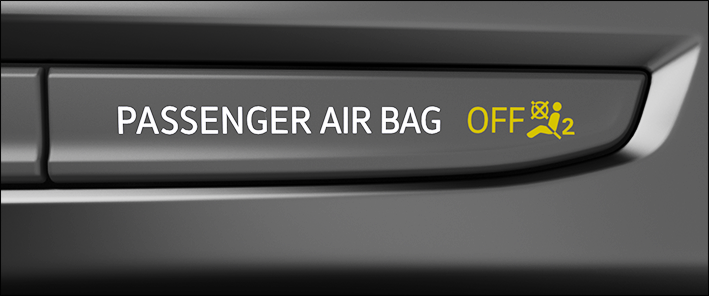
Fig. 27 In the center console: indicator light for the deactivated passenger front airbag.
The yellow PASSENGER AIR BAG indicator light comes on as soon as the Advanced Airbag System has deactivated the front passenger airbag.
If the yellow PASSENGER AIR BAG indicator light can no longer be used to display the status of the front passenger's front airbag. Immediately visit an authorized Volkswagen dealer or authorized Volkswagen Service Facility to have the system checked. Volkswagen recommends contacting an authorized Volkswagen dealer or authorized Volkswagen Service Facility.
The yellow PASSENGER AIR BAG indicator light blinks for around five seconds in the following situations:
-
The capacitive passenger detection system detects a change in the load on the front passenger seat.
After the yellow PASSENGER AIR BAG indicator light stops blinking, ensure that the status of the airbag (on or off) is shown correctly according to whether the seat is occupied. The indicator light remains on if the front passenger seat is unoccupied or the system has detected a child restraint that corresponds to FMVSS 208 or CMVSS 208 . The indicator light switches off if the seat is occupied by an adult.
The yellow PASSENGER AIR BAG indicator light must come on when the ignition is switched on and an infant carrier or child restraint is installed on the front passenger seat and the measured capacity is less than or equal to the capacity of an average one-year old child in a child restraint system as per FMVSS 208.
If the front passenger seat is not occupied, the front passenger's front airbag is also deactivated and the indicator light remains on.
Never install a rear-facing child restraint on the front passenger seat. The safest place for a child restraint is on the rear seat.
Under these conditions, the yellow PASSENGER AIR BAG indicator light must come on permanently whenever the ignition is on. If this is not the case, stop the vehicle as soon as it is safe to do so and follow these instructions:
-
Switch the ignition off for at least four seconds and then switch it on again.
-
Remove the child restraint from the front passenger seat and install it again according to the manufacturer's instructions. When doing so, ensure that the child restraint is installed correctly.
-
Ensure that the safety belt has been guided around the child restraint correctly and that it is secure.
-
Ensure that there are no electronic devices on the front passenger seat.
-
Ensure that the safety belt and belt buckle are working correctly and not blocked.
-
Ensure that no seat heating or similar systems have been retrofitted.
-
Ensure that there are no damp objects on the front passenger seat.
If the yellow PASSENGER AIR BAG indicator light still does not come on, remove the child restraint immediately and install it on the rear seat. Visit an authorized Volkswagen dealer or authorized Volkswagen Service Facility as soon as possible to have the airbag system checked. Volkswagen recommends contacting an authorized Volkswagen dealer or authorized Volkswagen Service Facility.
The yellow PASSENGER AIR BAG indicator light must not come on if the front passenger seat is occupied by an adult. However, if this is the case, stop the vehicle as soon as it is safe to do so and ensure the following:
-
Ensure that the passenger is sitting in the middle of the seat and that the backrest is upright.
-
Ensure that the belt is correctly positioned and tight.
-
Ensure that there are no other objects on the seat cushion, such as blankets or booster seats, that could affect the system's ability to detect a passenger.
If the yellow PASSENGER AIR BAG indicator light still does not turn off, the passenger must move to the rear seat. Visit an authorized Volkswagen dealer or authorized Volkswagen Service Facility as soon as possible to have the airbag system checked. Volkswagen recommends contacting an authorized Volkswagen dealer or authorized Volkswagen Service Facility.
If the status of the Advanced Airbag System changes while driving, the yellow PASSENGER AIR BAG indicator light blinks for around five seconds. Stop the vehicle as soon as it is safe to do so and follow the instructions specified here.
If the system recognizes that the front passenger seat is unoccupied, the front passenger's front airbag remains deactivated and the yellow PASSENGER AIR BAG indicator light comes on.
If the front passenger seat is unoccupied and the passenger's safety belt is fastened, the yellow PASSENGER AIR BAG indicator light will come on permanently.
Troubleshooting
Please read the introductory information and heed the Warnings and Notice .
 Airbag system or safety belt pretensioners malfunction
The yellow indicator light stays on. There may also be a message in the instrument cluster display.
A malfunction has been detected in at least one of the airbags or safety belt pretensioners.
-
Visit an authorized Volkswagen dealer or authorized Volkswagen Service Facility and have the airbag system and safety belt pretensioners checked. Volkswagen recommends contacting an authorized Volkswagen dealer or authorized Volkswagen Service Facility.
Airbag system or safety belt pretensioners deactivated with diagnostic equipment
After the ignition is switched on, the yellow indicator light turns on for about four seconds and then blinks for about twelve seconds. There may also be a message in the instrument cluster display.
At least one airbag or safety belt pretensioner has been deactivated by a diagnostic device.
-
Have an authorized Volkswagen dealer or authorized Volkswagen Service Facility check whether the airbag system or safety belt pretensioners need to remain deactivated. Volkswagen recommends contacting an authorized Volkswagen dealer or authorized Volkswagen Service Facility.
 Front passenger's front airbag disabled
The yellow indicator light stays on.
The front passenger's front airbag has been deactivated.
-
Check whether the front passenger's front airbag has to be deactivated.
-
If the front passenger's front airbag is incorrectly deactivated, there may be a malfunction in the airbag system. Contact an authorized Volkswagen dealer or authorized Volkswagen Service Facility. Volkswagen recommends contacting an authorized Volkswagen dealer or authorized Volkswagen Service Facility.
Airbag description and function
Please read the introductory information and heed the Warnings and Notice .
The airbag can protect vehicle occupants in a collision by reducing the movement of vehicle occupants in the direction of the impact during frontal and side collisions.
The airbag is filled by a gas generator when it deploys. When this occurs, the airbag covers open and the airbags unfold with great force into their deployment zones within a fraction of a second. When vehicle occupants who are wearing safety belts sink into the airbags, the gas contained in the airbags is released in order to cushion the individuals and slow their movement. This can reduce the risk of serious and fatal injuries. The airbag cannot always prevent other injuries, such as swelling, bruises, burns, and abrasions. Heat from friction can develop when the airbag deploys.
Airbags do not provide any protection for arms and the lower part of the body.
The most important factors for triggering airbag deployment are the type of collision, the angle of impact, the vehicle speed, and the characteristics of the object with which the vehicle is colliding. Therefore, the airbags will not deploy in all situations where there is visible vehicle damage.
The deployment of the airbag system depends on the vehicle deceleration rate resulting from the impact, which is detected by an electronic control module. If the deceleration rate is below the minimum value programmed into the control module, then the airbags will not be deployed even though there may be significant vehicle damage. The extent of vehicle damage, the repair costs, or even the absence of vehicle damage in a collision are not indicators of whether the airbag should have deployed or not. Because situations can vary greatly among different collisions, it is not possible to define a range of vehicle speeds and reference values. Therefore, it is not possible to cover every conceivable type of impact and impact angle that could trigger airbag deployment. Among other things, important factors for airbag deployment include the characteristics of the object with which the vehicle collides (hard or soft), the angle of impact, and the vehicle speed.
Airbags are only a supplement to the three-point safety belts in some collisions when the deceleration of the vehicle is great enough to trigger airbag deployment. Airbags can only deploy once, and only under certain conditions. The safety belts are always there to provide protection in situations where the airbags do not deploy or if they have already deployed — for example, this may be the case if the vehicle collides with another vehicle or is hit by another vehicle after the initial impact.
The airbag system is part of the entire passive vehicle safety concept. The airbag system can only provide the best possible protection when it works in conjunction with safety belts that are fastened correctly and a correct seating position  , .
, .
Components of the vehicle safety concept
The vehicle safety concept is comprised of the following safety features in the vehicle that reduces the risk of serious and fatal injuries. Depending on vehicle equipment, some equipment may not be installed in the vehicle or may not be available in some markets.
-
Optimized safety belts in all seating positions.
-
Safety belt pretensioners for the driver and front passenger.
-
Safety belt load limiters for the driver and front passenger.
-
Belt height adjusters for the front seats.
-
Red warning light
 .
. -
Front airbags for the driver and front passenger.
-
Advanced Airbag System for the driver and front passenger.
-
Capacitive passenger detection system for the front passenger's airbag.
-
Side airbags for the driver and front passenger.
-
Side Curtain Protection® for outer seats.
-
Yellow airbag indicator light
. -
Yellow PASSENGER AIR BAG indicator light
in the center console. -
Control modules and sensors.
-
Safety-optimized and height-adjustable head restraints.
-
Adjustable steering column.
-
Anchorage points for child restraints on the rear seats.
-
Anchorage points for the top tether strap for child restraints.
How the components of the Advanced Airbag System work together:
On the front passenger side, regardless of whether the safety belt is being used or not, the front passenger’s front airbag is deactivated if the electrical capacity measured on the front passenger seat by the capacitive passenger detection system is smaller than the value saved in the control unit. The front passenger’s front airbag is also deactivated if the measured capacity corresponds to the value for an infant of around one year old in a child restraint certified by the Federal Motor Vehicle Safety Standard 208.
The indicator light for the front passenger's front airbag lights up continuously to tell you that the Advanced Airbag System on the front passenger side has been deactivated.
Situations where front airbags, side airbags or Side Curtain Protection® airbags do not deploy:
-
If the ignition is switched off in a collision.
-
Deceleration measured at the vehicle front end during the collision is too low for the control module.
-
In minor side collisions.
-
The speed of rotation measured by the control module during a rollover is too low.
-
In rear collisions.
-
If the collision speed is lower than the required reference value in the control module.
Components of the Advanced Airbag System
Please read the introductory information and heed the Warnings and Notice .
The following components are essential parts of the Advanced Airbag System:
-
The capacitive passenger detection system in the front passenger seat.
-
Optimized safety belts with safety belt pretensioners and safety belt load limiters.
-
Front airbags for the driver and front passenger.
-
Airbag indicator light
. -
PASSENGER AIR BAG
indicator light -
Control modules and sensors.
WARNING
Airbags and safety belt pretensioners that do not function properly can cause serious or fatal injuries in the event of an accident.
-
If the airbag indicator light turns on, have the system inspected by an authorized Volkswagen dealer or authorized Volkswagen Service Facility as soon as possible. Volkswagen recommends contacting an authorized Volkswagen dealer or authorized Volkswagen Service Facility.
-
Only use original Volkswagen replacement parts and have the installation performed by authorized specialists only.
-
Never use used or recycled airbags or parts in the Advanced Airbag System. Only use new parts.
WARNING
Damage to the front passenger seat may affect the function of the Advanced Airbag System and cause severe or fatal injuries.
-
Have damaged components in the front passenger seat and the capacitive detection system replaced by authorized specialists as soon as possible.
-
Never remove the front passenger seat or components of the front passenger seat, such as seat surfaces, wires, lines or seat covers.
-
Never damage the seat covers or the seat surface of the front passenger seat.
-
Never use protective covers or seat surfaces on the front passenger seat as these affect the capacitive detection system.
-
Never transport electronic or electrical objects on or under the front passenger seat as these affect the capacitive detection system.
-
Never use protective covers, cushions or similar items on the front passenger seat as these affect the capacitive detection system.
-
Never install seat heating on the front passenger seat.
-
Never replace the seat cover on the front passenger seat.
WARNING
If the front passenger seat becomes wet or damp, this can cause the Advanced Airbag System to malfunction.
-
Allow the seat to dry as soon as possible and check it for damage.
Front airbags
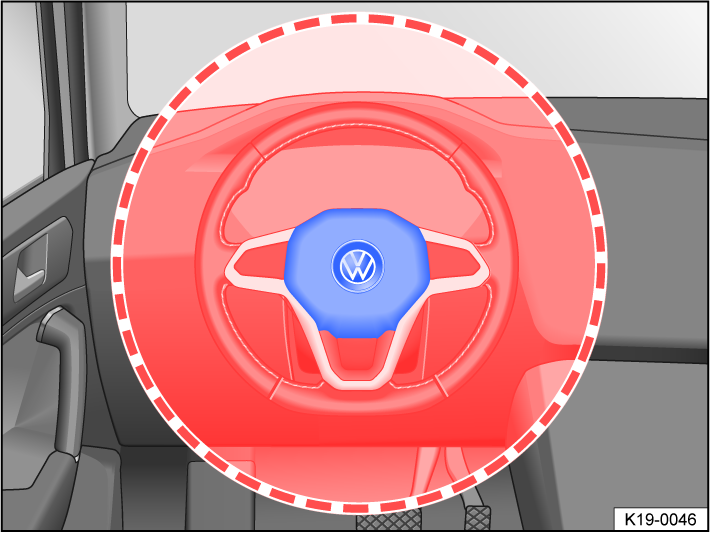
Fig. 28 Installation location and deployment zone of the driver’s front airbag.
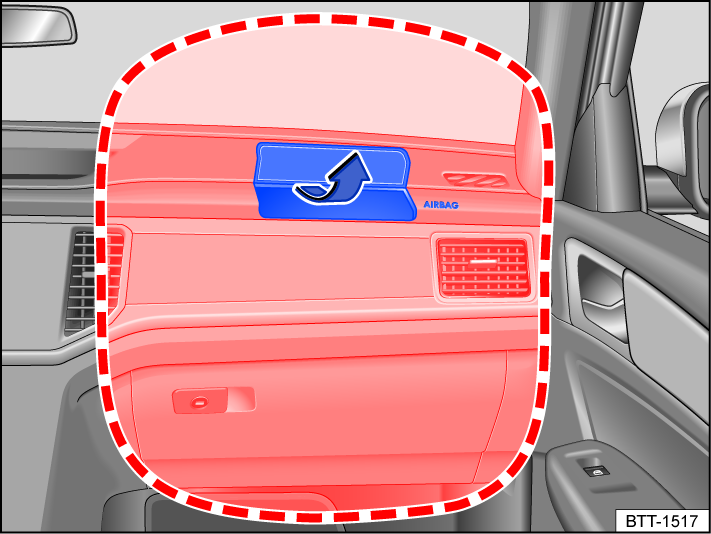
Fig. 29 Installation location and deployment zone of the front passenger’s front airbag.
As a supplement to the safety belts, the front airbag system offers additional protection for the head and chest regions of the driver and front passenger during frontal collisions with higher impact severity. In certain head-on collisions, the Side Curtain Protection® airbags will also deploy on both sides.
Always maintain as much distance as possible to the front airbag . This allows the front airbags to expand completely during collisions and thus provide maximum protection.
The front airbag for the driver is located in the steering wheel and the front airbag for the front passenger is located in the instrument panel . The airbag installation locations are indicated by the word “AIRBAG”.
The area outlined in red defines where the front airbags will deploy (deployment zone). Therefore, never place or attach objects in these areas . The attachments mounted at the factory will not be affected by the deployed driver’s and front passenger’s front airbag.
The front airbags do not deploy in the following situations:
-
In case of crashes when the ignition is switched off.
-
In side-on collisions.
-
In case of a rear-end collision.
-
If the vehicle rolls over.
-
If the impact speed is too low.
The front passenger’s front airbags do not deploy in the following situations:
-
If the front passenger seat is not occupied.
-
If the passenger seat recognition system recognizes that the front passenger seat is unoccupied and the PASSENGER AIR BAG
indicator light comes on.
DANGER
An airbag deploys within a fraction of a second and at a very high speed.
-
Always keep the deployment zones of the front airbags clear.
-
Never attach objects to the covers or in the deployment zone of the airbag module, such as cup holders or phone holders.
-
There should be no people, animals, or objects between the occupants of the front seats and the airbag deployment zone. Make sure that children and passengers also follow this guideline.
-
Do not attach any objects, such as mobile navigation systems, to the windshield above the front airbag on the passenger's side.
-
Do not tape over or cover the steering wheel airbag module or the surface of the instrument panel in the deployment zone of the front passenger's front airbag, or modify them in any other way.
WARNING
The front airbags expand in front of the steering wheel and the instrument panel .
-
Always hold the steering wheel with both hands on the sides of the outer edge, in the nine o'clock and three o'clock position.
-
Adjust the driver seat so that there is a distance of at least 10 inches (25 cm) between your chest and the center of the steering wheel. If body characteristics mean that this is not possible, you must contact an authorized Volkswagen dealer or authorized Volkswagen Service Facility. Volkswagen recommends contacting an authorized Volkswagen dealer or authorized Volkswagen Service Facility.
-
Adjust the front passenger seat so that there is the greatest possible distance between the front passenger and the instrument panel.
Side airbags
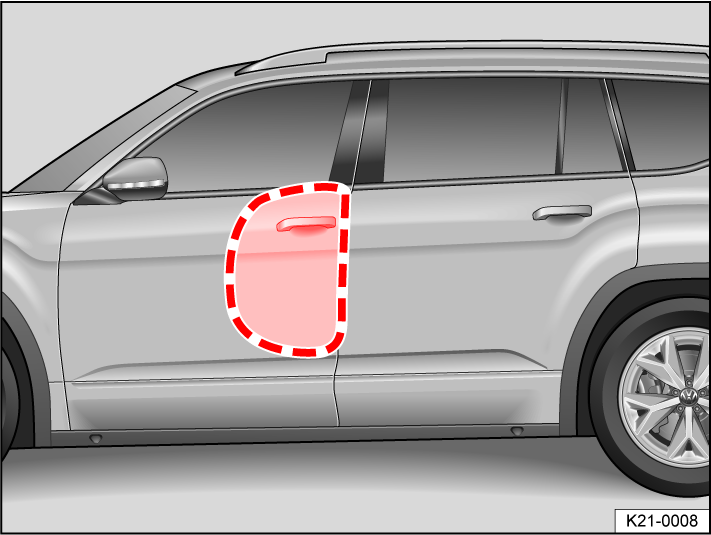
Fig. 30 Inside the vehicle on the left-hand side: Side airbag deployment zone (general example).
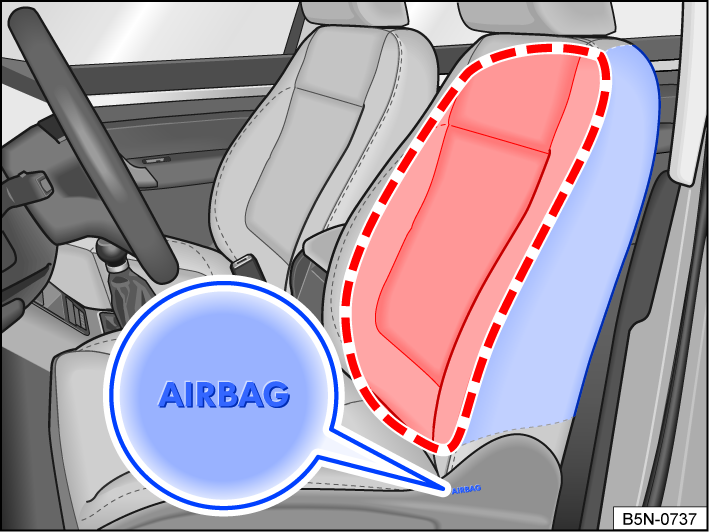
Fig. 31 On the side of the front seat: Side airbag installation location and deployment zone
The installation locations of the side airbags are marked with the word “AIRBAG”.
The area outlined in red defines where the side airbags will deploy (deployment zones) , . Therefore, never place or attach objects in these areas .
In the event of a side impact collision, the side airbags reduce the risk of injury to the vehicle occupants on the side of impact. The Side Curtain Protection® airbags will deploy on both sides.
WARNING
An airbag deploys within a fraction of a second and at a very high speed.
-
Always keep the deployment zones of side airbags clear.
-
Only hang lightweight clothing from the garment hooks in the vehicle. Never store heavy or sharp-edged objects in pockets.
-
Do not attach any accessories to the doors.
-
Only use seat covers or protective covers that are specifically approved for use in your vehicle. Otherwise, the side airbag may not expand when deployed.
WARNING
Incorrect handling and use of the driver’s and front passenger’s seat can inhibit the side airbags from functioning correctly and cause serious injuries.
-
Never remove the front seats from the vehicle or modify parts of them.
-
If too much force is applied to the seat backrest bolsters, the side airbags may not deploy correctly, deploy unexpectedly, or not deploy at all.
-
Have any damage to the seat covers or the seam in the side airbag module areas repaired immediately by an authorized Volkswagen dealer or authorized Volkswagen Service Facility. Volkswagen recommends contacting an authorized Volkswagen dealer or authorized Volkswagen Service Facility.
Side Curtain Protection
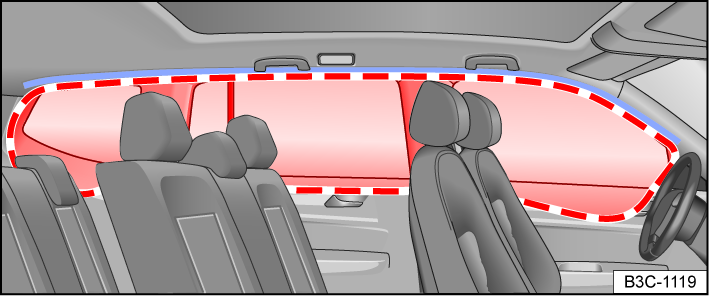
Fig. 32 On the left side of the vehicle: installation location and deployment zone of the Side Curtain Protection®.
Side Curtain Protection® airbags are located on the driver and passenger side inside the vehicle above the doors .
The installation locations of the Side Curtain Protection® are marked with the word “AIRBAG”.
The area outlined in red defines where the Side Curtain Protection® airbags will deploy (deployment zone) . Therefore, never place or attach objects in this area .
In side collisions and certain head-on collisions, the Side Curtain Protection® airbags will trigger on both sides.
Side Curtain Protection® airbags offer the “ejection mitigation” function, which protects the vehicle occupants and body parts from being completely or partially ejected from the vehicle in the event of a side impact collision or if the vehicle rolls over.
The Side Curtain Protection® airbags reduce the risk of injury to vehicle occupants in the front and outer rear seats during a side collision and certain head-on collisions.
Side Curtain Protection® airbags are composed of the following components:
-
Control module and sensors.
-
Side Curtain Protection airbags.
-
Airbag indicator light .
The Side Curtain Protection® airbags do not deploy in the following situations:
-
In case of crashes when the ignition is switched off.
-
In certain side collisions with a low force that does not trigger the sensor.
-
In case of a rear-end collision.
-
In the case of certain head-on collisions.
-
In certain rollovers with a low momentum that do not trigger the sensor.
-
If the impact speed is too low.
WARNING
An airbag deploys within a fraction of a second and at a very high speed.
-
Always keep the Side Curtain Protection® airbag deployment zones clear.
-
Never attach objects to the cover or within the Side Curtain Protection® airbag deployment zone.
-
There should be no people, animals, or objects between the occupants of the front seats or outer rear seats and the airbag deployment zone. Make sure that children and passengers also follow this guideline.
-
Only hang lightweight clothing from the garment hooks in the vehicle. Never store heavy or sharp-edged objects in pockets.
-
Do not attach any accessories to the doors.
-
Do not attach any sunshades to the side windows that are not specifically approved for use in the vehicle.
-
Only pivot sunshades toward the side windows if no objects such as pens or garage door openers are attached to the visor.
Download Manual