Towing
 Introduction to the subject
In this chapter you will find information on the following subjects:
Observe legal requirements when towing.
For technical reasons:
- A vehicle with a dead battery must never be towed. Jump-start the vehicle instead.
- It is not possible to tow-start or push-start your vehicle . Jump-start the vehicle instead.
Vehicles with Keyless Access may only be towed with the ignition on.
Towing the vehicle when the engine is turned off and the ignition is turned on drains the vehicle battery. Depending on the charge level of the vehicle battery, it is possible that even after just a few minutes, electrical devices such as the emergency flashers may not have the power necessary to work. The steering wheel might lock in vehicles with Keyless Access .
 WARNING
Never tow a vehicle without any electrical power.
- Never remove the key from the ignition switch or turn off the ignition with the starter button while the vehicle is moving or rolling to a stop. The electronic steering column could suddenly lock, you would not be able to steer, and you could lose control of the vehicle, crash, and seriously injure yourself and others.
- If the vehicle loses power while it is being towed, stop towing the vehicle immediately and contact your authorized Volkswagen dealer or authorized Volkswagen Service Facility for assistance.
WARNING
Never tow the vehicle if the convertible top is not completely closed, completely open, or securely latched! The driving wind could cause the convertible top to open, causing injuries and vehicle damage (Beetle Convertible models only).
WARNING
Towing a vehicle changes the way it handles and brakes. To help reduce the risk of an accident and serious personal injury, note the following:
- The driver of the vehicle that is being towed:
- Since the brake booster also does not work when the engine is stopped, you will need to press harder on the brake pedal to slow down or stop. Always be alert so as not to rear-end the towing vehicle.
- Will have to use considerably more force to turn the steering wheel because the power steering is not working.
- The driver of the vehicle that is doing the towing:
- Must accelerate gradually and gently and avoid jerking movements.
- Must not brake hard or steer sharply.
- Must brake earlier and more gently than in normal driving.
 NOTE
NOTE
Be careful not to damage the paint when installing and removing the towing eye and the cover for the threaded hole in the bumper.
NOTE
Never tow-start or push-start your vehicle; if you do, unburned fuel can get into the catalytic converter during towing and damage it. Jump-start the vehicle instead.
Towing on a commercial tow truck
Read and follow the introductory information and safety information first
To help avoid damaging the vehicle, have it towed only by a professional towing company. Read and heed the following information:
General information
Never let the vehicle be towed at speeds above 30 mph (50 km/h).
Never let the vehicle be towed for more than 30 miles (50 km).
Towing automatic transmission vehicles
- Release the parking brake.
- Shift the transmission to Neutral (N).
- Tow the vehicle only with its front wheels off the ground .
When not to tow your vehicle
If there is little or no oil in the transmission because of damage to your vehicle, it must be moved with the drive wheels off the ground. The vehicle can only be towed if its ignition is switched on and its electrical system is operating.
In the following situations, the vehicle cannot be towed at all and must be transported on a flatbed truck or trailer:
- If the front and rear wheels cannot turn.
- If the vehicle battery is dead (because the electronic steering column lock cannot be released, if engaged).
- If you have to tow an automatic transmission vehicle more than 30 miles (50 km).
- If the steering or the wheel clearance might be impaired, for example, after an accident.
WARNING
It is not safe for children or anyone else to ride in a vehicle that is being towed.
- Never let children or anyone else remain in the vehicle while it is being towed.
NOTE
The drive axle turns while the vehicle is being towed with its rear wheels off the ground. This can damage the automatic transmission.
- Never tow an automatic transmission vehicle with the rear wheels off the ground.
Tips on towing
Read and follow the introductory information and safety information first
Towing eye, tow rope, or tow bar
A towing eye is included in your vehicle's tool kit. This can be inserted in a threaded hole in the front bumper and used when your vehicle is being towed by another vehicle. On most vehicles, there is another threaded hole in the rear bumper, so you can use the towing eye to tow other vehicles as well. Towing a vehicle with a tow bar is safer and easier on both vehicles than using a tow rope. A tow rope should be used only if a tow bar is not available.
The tow rope should be flexible enough to help protect both vehicles from damage. Use a synthetic fiber rope or similar rope.
Attach the tow rope or tow bar only to the towing eye included in the vehicle tool kit for this purpose.
Towing automatic transmission vehicles
Check whether your vehicle can be towed at all; see below .
If yes, note the following for the towed vehicle:
- Shift the transmission to Neutral (N).
- Do not tow faster than 30 mph (50 km/h).
- Do not tow more than 30 miles (50 km).
- When a commercial tow truck is being used, the vehicle must only be towed with the front wheels lifted off the ground.
When not to tow your vehicle
In the following situations, the vehicle cannot be towed and must be transported on a flatbed truck or trailer:
- If transmission fluid has leaked out of the transmission.
- If there is little or no oil in the transmission because of damage to your vehicle, it must be moved with the drive wheels off the ground.
- If the front and rear wheels cannot turn.
- When the vehicle battery is dead, because the steering may remain disabled and it may not be possible to release the electronic steering column lock.
- If you have to tow an automatic transmission vehicle more than 30 miles (50 km).
- If the steering or the wheel clearance might be impaired, for example, after an accident.
Towing other vehicles
- Obey all legal requirements.
- Read and heed all towing information in the owner's manual for the other vehicle.

A vehicle can be towed only if the electronic steering column lock is released. In case of a power loss or malfunctions of the electrical system, the engine may have to be jump-started in order to release the electronic steering column lock.
Installing the front towing eye
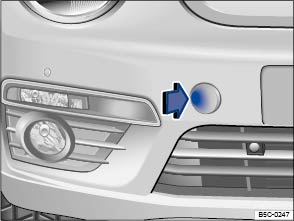
Fig. 150 In the front bumper on the right side: Removing the cover.
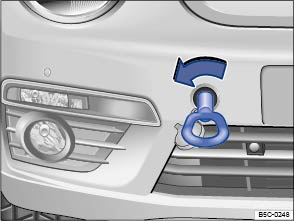
Fig. 151 In the front bumper on the right side: Installing the towing eye.
Read and follow the introductory information and safety information first
There is a threaded hole for the towing eye in the right front bumper behind a cover .
Always keep the towing eye in the vehicle and stow it securely.
Read and follow the notes about towing .
Installing the front towing eye
- Take the towing eye, the lug wrench, and the screwdriver out of the vehicle tool kit in the luggage compartment .
- Push on the left side of the cover (arrow) so that it pops out.
- Remove the cover and let it hang from the bumper.
- Screw the towing eye counterclockwise into the threaded hole as far as it will go . Use the lug wrench to turn and tighten the towing eye.
- When towing is complete, unscrew the towing eye clockwise to remove it.
- Position the left side of the cover in the opening in the bumper and carefully push the right side over the edge of the opening.
- Push on the cover until it locks into place.
NOTE
Always make sure the towing eye is screwed all the way into threaded hole so that it is secure. If not, it could be pulled out while your vehicle is being towed.
Installing the rear towing eye
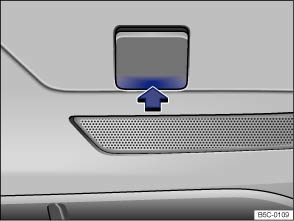
Fig. 152 In the right rear bumper: Removing the cover.
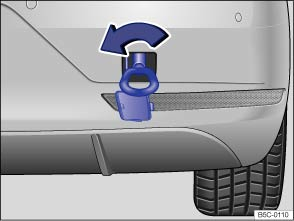
Fig. 153 In the right rear bumper: Installing the towing eye.
Read and follow the introductory information and safety information first
There is a threaded hole for the towing eye in the right rear bumper behind a cover , .
Always keep the towing eye in the vehicle and stow it securely.
Read and follow the notes about towing .
Installing the rear towing eye
- Take the towing eye, the lug wrench, and the screwdriver out of the vehicle tool kit in the luggage compartment .
- Push on the cover at the lower area (arrow) so that it pops out.
- Remove the cover and let it hang from the bumper.
- Screw the towing eye counterclockwise into the threaded hole as far as it will go (arrow) . Use the lug wrench to turn and tighten the towing eye completely and securely.
- When towing is complete, unscrew the towing eye clockwise to remove it.
- Position the bottom of the cover in the opening in the bumper and carefully push the top of the cover over the edge of the opening.
- Push on the cover until it locks into place.
NOTE
Always make sure the towing eye is screwed all the way into threaded hole so that it is secure. If not, it could be pulled out while your vehicle is being towed.
Driving tips while towing
Read and follow the introductory information and safety information first
Towing requires some experience, especially when using a tow rope. Both drivers must be familiar with the techniques required for towing. Inexperienced drivers should not try to tow a vehicle or to drive a vehicle that is being towed.
Do not pull too hard with the towing vehicle, and avoid jerking the tow rope. When towing on an unpaved road, there is always a risk of overloading and damaging the attachment points.
If your vehicle is being towed, it can still signal turns even if the emergency flashers are activated, as long as the ignition is switched on. Use the turn signal in the normal way. The emergency flashers go off as long as the turn signal is blinking. As soon as the turn signal lever returns to its neutral position, the emergency flashers are automatically activated again.
As the driver of the vehicle being towed:
- If your vehicle is the one being towed, the ignition must be switched on to keep the steering wheel from locking. Also make sure that the turn signals, horn, windshield wipers, and windshield washers work properly.
- Since power steering does not work when the engine is switched off, more effort is needed to steer the vehicle.
- Since the brake booster also does not work when the engine is stopped, you will need to press harder on the brake pedal to slow down or stop. Do not hit the towing vehicle.
- Read and heed the information and WARNINGS in the towing vehicle's owner's manual.
As the driver of the towing vehicle:
- Drive especially carefully and accelerate gently. Avoid sudden driving maneuvers.
- Brake earlier and more gently than usual and with light pedal pressure.
- Read and heed the information and WARNINGS in the owner's manual of the vehicle being towed.
Download Manual