Engine coolant
 Introduction to the subject
In this chapter you will find information on the following subjects:
Never do any work on the coolant system unless you
- know exactly how to carry out the job,
- have the correct technical information and the proper tools, supplies, and operating fluids, and
- are familiar with the necessary safety precautions !
If you are uncertain in any way, have the work done by an authorized Volkswagen dealer or an authorized Volkswagen Service Facility.
Serious personal injury may result from improperly performed work.
 WARNING
Engine coolant is poisonous!
- Always keep the coolant in its original container stored in a safe place.
- To reduce the risk of poisoning, never store engine coolant in empty food or beverage containers or in any other containers that might mislead someone into drinking from them.
- Always keep engine coolant out of reach of children.
- Always make sure there is enough of the correct coolant additive to provide proper antifreeze protection at the coldest temperatures that can be expected where the vehicle will be used.
- At extremely cold temperatures, the coolant could freeze, causing the vehicle to break down. The heater would also not work, and vehicle occupants could be without protection at subfreezing temperatures.

Coolant and coolant additives can pollute the environment. Collect leaking operating fluids and dispose of them properly in accordance with applicable environmental laws and regulations.
Warning light and engine coolant temperature gauge
Read and follow the introductory information and safety information first
For more information, please see .
Engine coolant specifications
Read and follow the introductory information and safety information first
The engine cooling system is filled at the factory with a mixture of specially conditioned water and at least 40 percent of Volkswagen engine coolant additive G 13 (TL-VW 774 J). This engine coolant additive is pink.
This mixture provides antifreeze protection down to -13 °F (-25 °C). It also helps to protect the light alloy parts in the engine cooling system against corrosion. In addition, the mixture helps prevent calcium deposits and increases the boiling point of the engine coolant.
To protect the engine, the mixture must always contain at least 40% coolant additive even in warm weather or climates where antifreeze protection is not needed.
If more antifreeze protection is needed for climate conditions, the percentage of coolant additive can be increased. However, the coolant additive percentage must never be more than 60%; otherwise, antifreeze protection is reduced and the ability of the mixture to cool the engine is also reduced.
When adding engine coolant, use a mixture of distilled water and at least 40% coolant additive - G 13 - or - G 12 plus-plus - (TL-VW 774 G) for optimum corrosion protection .
Do not mix - G 13 - with - G 12 plus - or - G 11 -. Mixing these coolant additives together significantly reduces corrosion protection and can lead to engine damage that is not covered by any Volkswagen Limited Warranty.
WARNING
Too little antifreeze protection in the engine cooling system can cause engine failure and severe injuries.
- Always make sure there is enough of the correct coolant additive to provide proper antifreeze protection at the coldest temperatures that can be expected where the vehicle will be used.
- At extremely cold temperatures, the coolant could freeze, causing the vehicle to break down. The heater would also not work, and vehicle occupants could be without protection at subfreezing temperatures.
 NOTE
NOTE
Never mix original Volkswagen engine coolant additives with other additives not approved by Volkswagen. Mixing Volkswagen coolant additives with coolant additives made by other manufacturers can seriously damage the engine and the engine cooling system.
- If the fluid in the engine coolant reservoir is any color but pink, then - G 13 - was mixed with a different engine coolant. If this is the case, the engine coolant must be replaced immediately. Otherwise serious malfunctions or engine damage can occur!
Engine coolant and engine coolant additives can pollute the environment. Collect leaking operating fluids and dispose of them properly in accordance with applicable environmental laws and regulations.
Checking engine coolant level and topping off
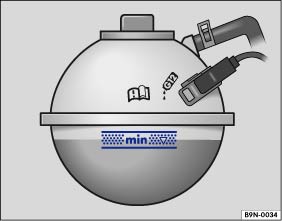
Fig. 159 Coolant expansion tank in the engine compartment.
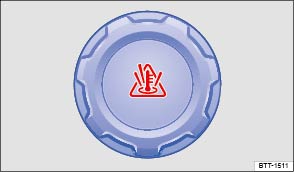
Fig. 160 Coolant expansion tank cap in the engine compartment.
Read and follow the introductory information and safety information first
If the coolant level drops too low, the engine coolant level/temperature warning light comes on.
Preparations
- Park the vehicle on level ground.
- Always let the engine cool down .
- Open the engine hood
.
- There is a
symbol on the cap of the engine coolant expansion tank .
Checking engine coolant level
- When the engine is cold, check the engine coolant level relative to the marking on the side of the expansion tank .
- If the coolant level in the tank is below the minimum mark (min), add coolant. When the engine is warm, the engine coolant level may be slightly above the upper edge of the marked range.
Adding engine coolant
- Always protect face, hands, and arms from hot escaping coolant or steam by covering the cap with a large, thick rag.
- Carefully unscrew the cap .
- Add only new engine coolant according to Volkswagen specifications ( ) .
- Only refill coolant if there is coolant in the expansion tank. If there is no coolant visible in the expansion tank, the engine could be damaged. If you cannot see any coolant in the expansion tank, do not drive the vehicle. Seek professional assistance.
- If you can see coolant in the expansion tank, refill coolant until the level remains stable.
- The engine coolant level must be inside the marks on the side of the expansion tank . Do not fill above the top edge of the filling range!
- Screw the lid tightly.
- Even in an emergency, do not use any other kind of coolant additive if engine coolant that meets Volkswagen specifications ( ) is not available! Instead, add distilled water only . As soon as possible, have the correct coolant ratio restored using engine coolant that meets Volkswagen specifications .
WARNING
Hot steam and hot engine coolant can cause serious burns.
- Never open the hood if you see steam or coolant escaping from the engine compartment. Always wait until you no longer see or hear steam or coolant escaping from the engine.
- Always let the engine cool down completely before carefully opening the hood. Hot components will burn skin on contact.
- When the engine has cooled down and you are ready to open the hood:
- Firmly apply the parking brake and shift the transmission to Park (P).
- Take the vehicle key out of the ignition.
- On vehicles with Keyless Access, make sure that the remote control vehicle key is out of range of the vehicle and that the vehicle cannot be started by depressing the starter button .
- Always keep children and others away from the engine compartment and never leave them unsupervised.
- The engine coolant system is under pressure when the engine is hot. Never unscrew the coolant expansion tank cap when the engine is hot. Hot coolant can spray out and cause severe burns and other serious injuries.
- Turn the cap slowly and very carefully in a counterclockwise direction while applying light downward pressure on the top of the cap.
- Always protect your face, hands, and arms from hot escaping coolant or steam by covering the cap with a large, thick rag.
- Never spill fluids on the engine or exhaust system when refilling. Spilling fluids onto hot parts of the engine or exhaust system can cause a fire. Under some conditions, the ethylene glycol in engine coolant can catch fire.
NOTE
- Use distilled water only when adding coolant! All other types of water contain chemical compounds that can cause extensive corrosion damage to the engine. This can even lead to engine failure. If you have added non-distilled water, take the vehicle immediately to an authorized Volkswagen dealer or an authorized Volkswagen Service Facility to have the coolant system drained, flushed, and refilled completely with the proper coolant.
- Refill engine coolant only up to the top edge of the marked fill range . Excess engine coolant may be forced out of the engine cooling system when it gets hot and cause damage.
- In the case of significant engine coolant loss, refill engine coolant only when the engine is completely cooled down. Significant engine coolant loss is a sign of leaks in the cooling system. Have the engine cooling system checked immediately by an authorized Volkswagen dealer or an authorized Volkswagen Service Facility. Otherwise the engine may be damaged!
- Do not refill engine coolant if there is no coolant in the expansion tank. Air could enter the cooling system. Do not drive the vehicle! Seek expert assistance. Failure to do so can result in engine damage.
- When changing or topping off operating fluids, make sure that you pour the fluids into the correct reservoirs. Serious malfunctions and engine damage can result if you pour operating fluids into the wrong reservoir.
Brake fluid
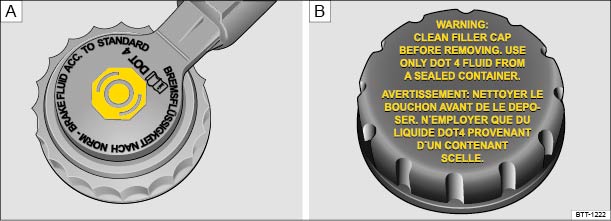
Fig. 161 In the engine compartment: Brake fluid reservoir cap (cap design may vary depending on vehicle equipment).
Brake fluid absorbs water from the air over time. Too much water in the brake fluid will damage the brake system. Water also lowers the boiling point of the brake fluid. Too much water in the brake fluid can cause vapor lock during heavy brake use or hard braking. Vapor lock reduces braking performance, increases stopping distances and can even cause total brake failure. Your safety and the safety of others depends on brakes that are working properly at all times .
Brake fluid specifications
Volkswagen has developed a special brake fluid that is optimized for the brake system in your Volkswagen. Volkswagen recommends that you use brake fluid that expressly conforms to quality standard VW Standard 501 14 for optimum performance of the brake system. Check the information on the container for the brake fluid you want to use to make sure it meets the requirements for your vehicle.
Brake fluid that complies with VW Standard 501 14 can be purchased from your authorized Volkswagen dealer or authorized Volkswagen Service Facility.
If this special brake fluid is not available you may – under these circumstances – use another high quality brake fluid that complies with U.S. Federal Motor Vehicle Safety Standard (FMVSS) 116 DOT 4 Class 6 .
Please note, however, that not all brake fluids that comply with U.S. Federal Motor Vehicle Safety Standard (FMVSS) 116 DOT 4 Class 6 have the same chemical composition. Some of these brake fluids can contain chemicals that could, over time, degrade or damage internal parts of the vehicle’s brake system.
Volkswagen therefore recommends that you use brake fluid that expressly complies with VW Standard 501 14 for optimum brake system performance over the long term.
Brake fluid level
The fluid level in the transparent brake fluid reservoir must always be between the MIN and MAX marking .
On some vehicles, engine components may partially block the view of the brake fluid reservoir and make it impossible to see the brake fluid level. If you cannot clearly see the brake fluid level in the brake fluid reservoir, please see an authorized Volkswagen dealer or authorized Volkswagen Service Facility.
The brake fluid level drops slightly when the vehicle is being used as the brake pads wear and the brakes are automatically adjusted.
Changing brake fluid
Brake fluid must be changed according to the service schedule in your ⇒BookletWarranty and Maintenance,. Have the brake fluid checked by an authorized Volkswagen dealer or an authorized Volkswagen Service Facility. Refill only with new brake fluid that meets the standards listed above.
WARNING
Brake failure and reduced brake performance can be caused by not having enough brake fluid in the reservoir or by old or incorrect brake fluid.
- Have the brake system and brake fluid level checked regularly.
- Have the brake fluid changed according to the service schedule in your ⇒BookletWarranty and Maintenance,.
- Hard braking with old brake fluid may cause vapor lock. Vapor lock reduces braking performance, increases stopping distances and can even cause total brake failure.
- Only use brake fluid that expressly conforms to VW Standard 501 14.
- If a brake fluid that conforms to VW Standard 501 14 is not available, only use a high-quality brake fluid that conforms to U.S. Standard FMVSS 116 DOT 4 Class 6 requirements.
- Brake fluid in an opened container can quickly become unusable. Refill your brake fluid reservoir only with new brake fluid from an unopened container.
WARNING
Brake fluid is poisonous.
- To reduce the risk of poisoning, never use food, beverage, or other non-original containers to store brake fluid. Someone might be misled by the original label on the container, or by the shape of the container, and drink the brake fluid. This could occur even if you relabel the container as brake fluid.
- Store brake fluid out of the reach of children.
NOTE
Brake fluid will damage vehicle paint, plastic parts, and tires. Wipe any brake fluid off vehicle paint and other vehicle parts immediately.
Brake fluid can pollute the environment. Brake fluid that has leaked out must be collected and disposed of properly, following all applicable environmental regulations.
Download Manual