Airbag system
 Introduction to the subject
In this chapter you will find information on the following subjects:
Your vehicle is equipped with a front airbag for the driver and front seat passenger. The front airbags can provide additional protection for the chest and head of the driver and the front seat passenger when seats, safety belts, head restraints and, for the driver, the steering wheel, are properly used and have been properly adjusted. Airbags are only supplemental restraints. They are not a substitute for safety belts that must be worn even though the front seating positions are equipped with front airbags.
 WARNING
Never rely on airbags alone for protection.
- Even when they deploy, airbags provide only supplemental protection.
- Airbags work most effectively when used with properly worn safety belts .
- The driver must always make sure that every person in the vehicle is properly seated on a seat of his or her own, properly fastens the safety belts belonging to that seat before the vehicle starts to move, and keeps the belts properly fastened while riding in the vehicle. This applies even when just driving around town. Therefore, always wear your safety belts and make sure that everybody in your vehicle is properly restrained.
WARNING
Sitting too close to the steering wheel or instrument panel will decrease the effectiveness of the airbags and will increase the risk of personal injury in a collision.
- Never sit closer than 10 inches (25 cm) to the steering wheel or instrument panel.
- If you cannot sit upright more than 10 inches (25 cm) from the steering wheel and with your back against the backrest, investigate whether adaptive equipment may be available to help you reach the pedals and increase your seating distance from the steering wheel.
- If you are unrestrained, leaning forward, sitting sideways or out of position in any way, your risk of injury is much higher.
- You will also receive serious injuries and could even be killed if you are up against the airbag or too close to it when it inflates.
- To reduce the risk of injury when an airbag inflates, always wear safety belts properly. See .
- An infant in a rearward-facing child restraint installed on the front passenger seat will be seriously injured and can be killed if the front airbag inflates.
- Always make certain that children age 12 or younger always ride in the rear seat. If children are not properly restrained, they may be severely injured or killed when an airbag inflates.
- Never let children ride unrestrained or improperly restrained in the vehicle.
- Never put your feet on the instrument panel or on the seat. Always keep both feet on the floor in front of the seat to help prevent serious injuries to the head, legs and hips if the airbag inflates.
WARNING
Objects between you and the airbag will increase the risk of injury in a crash by interfering with the way the airbag unfolds or by being pushed into you as the airbag inflates.
- Never hold things in your hands or on your lap when the vehicle is in use.
- Never transport items on or in the area of the front passenger seat. Objects could move into the area of the front airbags during braking or other sudden maneuvers and fly dangerously through the passenger compartment when an airbag inflates.
- Always make sure that the airbag deployment zones are clear at all times. Never let any thing or object, a pet, or a person, including an infant or small child, be in the space between any vehicle occupant and any airbag at any time.
WARNING
An airbag works only once. Airbags that have deployed in a crash must be replaced.
- Deployed airbags and the related system parts must be replaced immediately with new parts approved by Volkswagen for the vehicle model and model year.
- Have repairs and vehicle modifications performed by an authorized Volkswagen dealer or authorized Volkswagen Service Facility. Authorized Volkswagen dealers and authorized Volkswagen Service Facilities have the required tools, diagnostic equipment, repair information, and trained personnel to properly replace any airbag in your vehicle and assure system effectiveness in a crash.
- Never permit salvaged or recycled airbags to be installed in your vehicle.
- Never modify any components of the airbag system.
WARNING
Fine dust released when airbags deploy can irritate the skin, eyes, and mucous membranes as well as cause breathing problems for people who suffer from asthma or other respiratory conditions.
- To reduce the risk of breathing problems, those with asthma or other respiratory conditions should get fresh air right away by getting out of the vehicle or opening windows or doors.
- If you are in a collision in which airbags deploy, wash your hands and face with mild soap and water before eating.
- Be careful not to get the dust into your eyes or into any cuts, scratches, or open wounds.
- If the residue should get into your eyes, flush them with water.
WARNING
Using solvents or other improper cleaning products on surfaces where airbags are located can change the way airbags deploy in a crash.
- Products containing solvents will change the properties of the plastics and may cause plastic parts to break and fly around when the airbag deploys in a crash, causing injury.
- Never use solvents or cleaners on the steering wheel horn pad or on the instrument panel because they can damage the airbag cover or change the stiffness or strength of the material so that the airbag cannot deploy and protect properly.
- When cleaning the horn pad and instrument panel, use only a soft, dry cloth or a cloth moistened with plain water.
Advanced Airbag System, infants, child restraints, and children on the front seat
Read and follow the introductory information and safety information first
Be sure to read the important information and the WARNINGS for important details about children and Advanced Airbags .
The Advanced Airbag System in your vehicle has been certified to comply with the requirements of the United States Federal Motor Vehicle Safety Standard (FMVSS) 208, as well as Canada Motor Vehicle Safety Standard (CMVSS) 208 as applicable at the time your vehicle was manufactured. According to requirements, the front Advanced Airbag System on the passenger side has been certified for suppression for infants of about 12 months old and younger and for low risk deployment for children aged 3 to 6 years old (as defined in the standard).
Even though your vehicle is equipped with an Advanced Airbag System, make certain that all children, especially 12 years and younger, always ride on the back seat properly restrained for their age and size. The airbag on the front passenger side makes the front seat a potentially dangerous place for a child to ride. The front seat is not the safest place for a child in a forward-facing child restraint. It is a very dangerous place for an infant or a child in a rearward-facing seat.
 DANGER!
The front seat of any vehicle can be a dangerous place for a child - even with an Advanced Airbag System.
- If the front airbag inflates, a child or infant who
- is unrestrained on the front seat,
- is in an improperly installed forward-facing child restraint on the front seat, or
- is in any rearward-facing child restraint on the front seat will be seriously injured and can be killed.
- Even though your vehicle is equipped with an Advanced Airbag System, make certain that all children, especially 12 years and younger, always ride on the back seat properly restrained for their age and size.
- Always properly install rearward-facing child restraints or infant carriers and forward-facing child restraints on the rear seat - even with an Advanced Airbag System.
Monitoring the Advanced Airbag System
Read and follow the introductory information and safety information first
The Advanced Airbag System as well as the side airbags, and for Beetle Coupe models only, the Side Curtain Protection® airbags with ejection mitigation features, (including the electronic control unit, sensors and system wiring) are monitored continuously to make sure that they are functioning properly whenever the ignition is on. Every time you turn on the ignition, the airbag system indicator light will come on for a few seconds (function check).
The airbag system must be inspected if the airbag indicator light 
- does not light up when the ignition is switched on,
- does not go out a few seconds after you have switched on the ignition,
- goes out and then lights up again or blinks after the ignition is switched on,
- or if it lights up or blinks while driving.
If an airbag system malfunction is detected, the airbag indicator light comes on and stays on to alert the driver to the problem. It also reminds you to have the airbag system checked immediately by an authorized Volkswagen dealer or an authorized Volkswagen Service Facility. If a malfunction occurs that turns the front airbag on the passenger side off, the PASSENGER AIR BAG
light will come on and stay on whenever the ignition is on.
WARNING
An airbag system and safety belt pretensioner that are not working properly cannot provide supplemental protection in a frontal crash.
- If the airbag indicator light comes on, it means that there may be something wrong with the Advanced Airbag System. It is possible that the airbag will inflate when it is not supposed to, or will not inflate when it should.
- Have the airbag system inspected immediately by your authorized Volkswagen dealer or authorized Volkswagen Service Facility.
PASSENGER AIR BAG 

 light
light
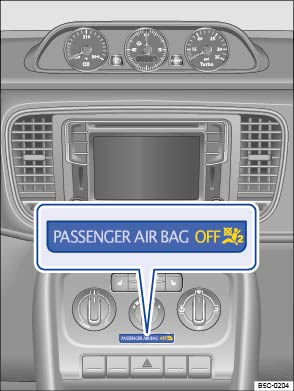
Fig. 27 In the instrument panel: PASSENGER AIR BAG light.
Read and follow the introductory information and safety information first
| On | Location | Possible cause | Solution |
|---|---|---|---|
| Instrument cluster | Airbag and safety belt pretensioner system malfunction. | See your authorized Volkswagen dealer or authorized Volkswagen Service Facility immediately to have the system checked. | |
| Automatic Rollover Support System malfunction (Beetle Convertible models only). | |||
| Instrument panel | Airbag system malfunction. | See your authorized Volkswagen dealer or authorized Volkswagen Service Facility immediately to have the system checked. | |
| Front passenger airbag turned off by Advanced Airbag System. | Check if the airbag must stay turned off. |
The PASSENGER AIR BAG
light will come on and stay on to tell you when the front Advanced Airbag System on the passenger side has been turned off by the electronic control unit.
If the PASSENGER AIR BAG
light burns out, the airbag indicator light
will come on and signal a malfunction in the Advanced Airbag System. Although the burned-out light will not change the way the front airbag on the passenger side works, it will no longer be possible to use the PASSENGER AIR BAG
light to make sure that the airbag on/off status is correct for the occupant on the front passenger seat. Have the airbag system inspected immediately by your authorized Volkswagen dealer or authorized Volkswagen Service Facility.
The PASSENGER AIR BAG
light will blink for about 5 seconds when:
- the ignition is switched on and
- the capacitive passenger detection system, which switches the front seat passenger's front Advanced Airbag on and off, detects a change in the status of the front passenger seat.
After the PASSENGER AIR BAG
light stops blinking, always make sure that the airbag status (on or off) as shown by the PASSENGER AIR BAG
light is proper for the size, age, and weight (electrical capacitance) of the occupant on the front passenger seat. Always make sure that the safety belt for the front passenger seat is properly fastened.
The PASSENGER AIR BAG
light will show the status of the front seat passenger's front Advanced Airbag System a few seconds after the ignition has been switched on and the airbag monitoring light goes off. The PASSENGER AIR BAG
light:
- will stay on if the front passenger seat is not occupied;
- will stay on if the electrical capacitance measured by the capacitive passenger detection system for the front passenger seat equals the combined capacitance of an infant up to about 1 year of age and one of the rearward-facing or forward-facing child restraints listed in Federal Motor Vehicle Safety Standard 208 with which the Advanced Airbag System in your vehicle was certified. For a listing of the child restraints that were used to certify your vehicle's compliance with the U.S. Safety Standard ;
- will go out if the front passenger seat is occupied by an adult as registered by the capacitive passenger detection system.
The PASSENGER AIR BAG light must come on and stay on if the ignition is on and…
- a car bed has been installed on the front passenger seat, or
- a rearward-facing child restraint has been installed on the front passenger seat, or
- a forward-facing child restraint has been installed on the front passenger seat,
- and if the electrical capacitance registered on the front passenger seat is equal to or less than the combined capacitance of a typical 1 year-old infant and one of the rearward-facing or forward-facing child restraints listed in Federal Motor Vehicle Safety Standard 208 with which the Advanced Airbag System in your vehicle was certified.
If the front passenger seat is not occupied, the front passenger airbag will not deploy, and the PASSENGER AIR BAG
light will stay on.
Never install a rearward-facing child restraint on the front passenger seat. The safest place for a child in any kind of child restraint is on the rear seat , and .
If the PASSENGER AIR BAG light comes on…
If the PASSENGER AIR BAG
light comes on when one of the conditions listed above is met, be sure to check the light regularly to make certain that the PASSENGER AIR BAG
light stays on continuously whenever the ignition is on. If the PASSENGER AIR BAG
light does not come on and stay on all the time, stop as soon as it is safe to do so AND
- reactivate the airbag system by turning the ignition off for more than 4 seconds and then turning it on again;
- remove and reinstall the child restraint. Make sure that the child restraint is properly installed and that the safety belt for the front passenger seat has been correctly routed around or through the child restraint as described in the child restraint manufacturer's instructions;
- make sure that the switchable locking feature on the safety belt for the front passenger seat has been activated and that the safety belt has been pulled tight;
- make sure that no electrical device (such as a laptop, CD player, or electronic games device) is placed or used on the front passenger seat if the device is connected to the 12 Volt socket ;
- make sure that no seat heater has been retrofitted or otherwise added to the front passenger seat;
- make sure that nothing can interfere with the safety belt buckles and that they are not obstructed;
- make sure that there are no wet objects (such as a wet towel) and no water or other liquids on the front passenger seat cushion.
If the PASSENGER AIR BAG light still does not come on…
If the PASSENGER AIR BAG
light still does not come on and does not stay on continuously (when the ignition is switched on), take the child restraint off the front passenger seat and install it properly at one of the rear seat positions. Have the airbag system inspected immediately by your authorized Volkswagen dealer or authorized Volkswagen Service Facility.
The PASSENGER AIR BAG light should NOT come on…
The PASSENGER AIR BAG
light should NOT come on when the ignition is on and an adult is sitting in a proper seating position on the front passenger seat. If the PASSENGER AIR BAG
light comes on and stays on under these circumstances, make sure that:
- the adult on the front passenger seat is properly seated on the center of the seat cushion with his or her back up against the backrest and the backrest is not reclined;
- the safety belt is being properly worn and that there is not a lot of slack in the safety belt webbing;
- there are no aftermarket seat covers or cushions or other things (such as blankets) on the front passenger seat that might cause the capacitive passenger detection system to miscalculate electrical capacitance.
WARNING
If the status of the Advanced Airbag System has changed while the vehicle is moving, the PASSENGER AIR BAG
light blinks for about 5 seconds to catch the driver's attention. If this happens, always stop as soon as it is safe to do so and check the steps described above.
WARNING
If the PASSENGER AIR BAG
light does not go off when an adult who is not very small is sitting on the front passenger seat after taking the steps described above, make sure the adult is properly seated and restrained at one of the rear seating positions.
- Have the airbag system inspected by your authorized Volkswagen dealer or authorized Volkswagen Service Facility before transporting anyone on the front passenger seat.

If the capacitive passenger detection system determines that the front passenger seat is empty, the front airbag on the passenger side will be turned off, and the PASSENGER AIR BAG
light will stay on.
Airbags and how they work
Read and follow the introductory information and safety information first
Front airbags and how they work
Airbags are only supplemental restraints. They are not a substitute for safety belts that must be worn even though the front seating positions are equipped with front airbags. The front airbags can provide additional protection for the chest and head of the driver and the front seat passenger when seats, safety belts, head restraints and, for the driver, the steering wheel, are properly used and have been properly adjusted.
When the airbag system deploys in a collision, a gas generator fills the airbags that break open the padded covers on the steering wheel and the instrument panel. The front airbags inflate between the steering wheel and the driver and between the instrument panel and the front passenger.
Front airbags in combination with properly worn safety belts slow down and limit the occupant's forward movement. Together they help to prevent the driver and front seat passenger from hitting parts of the vehicle interior, thereby reducing the forces acting on the occupants during a crash. In this way, they help to reduce the risk of injury to the head and upper body during a crash. Airbags do not provide protection for the arms and lower body parts. It is important to remember that the supplemental airbag system is designed to reduce the likelihood of serious injuries. However, it is possible that a deployed airbag may cause other injuries such as swelling, bruising, friction burns, and abrasions.
Airbags inflate in the blink of an eye, so fast that many people don't even realize that the airbags have deployed. The airbags will deflate immediately after deployment so that the front occupants can see through the windshield again without interruption.
Airbags inflate with a great deal of force. Airbags can cause serious injuries when they inflate and hit those who are sitting too close, are out of position, or are not properly restrained. By keeping room between your body and the steering wheel and the front of the passenger compartment, the airbag can inflate fully and completely and provide supplemental protection during certain frontal collisions .
Make sure that nothing is in the way of the airbags when they deploy. For example, things on your lap or on the seat could be pushed into your body or fly dangerously through the passenger compartment when the airbag inflates and cause serious personal injury.
The areas outlined in red (dotted lines) and indicate the airbag deployment zone. Never place or attach accessories or other objects (such as cup holders, telephone brackets, note pads, large, heavy or bulky objects) on the doors, on the windshield, over or near the area marked in red (dotted lines).
Physical impairments and airbags
If you have a physical impairment or condition that prevents you from sitting properly on the driver seat with the safety belt properly fastened and reaching the pedals, special modifications to your vehicle may be necessary. The safety belt and airbag can only provide optimum protection if you are seated correctly and can reach the pedals.
Contact your authorized Volkswagen dealer or authorized Volkswagen Service Facility or call the Volkswagen Customer CARE Center at 1-800-822-8987 for information about possible modifications to your vehicle.
When airbags deploy
Deployment of the front airbags and the activation of the safety belt pretensioners depend on the deceleration measured by the crash sensors and registered by the electronic control unit. Crash severity depends on speed and deceleration as well as the mass and stiffness of the vehicle or object involved in the crash.
The front airbags will not inflate in side or rear collisions, in rollovers or if the ignition is switched off. The front airbags will not inflate in all frontal collisions. The triggering of the airbag system depends on the vehicle deceleration rate caused by the collision and registered by the electronic control unit. If this rate is below the reference value programmed into the control unit, the airbags will not be triggered, even though the vehicle may be badly damaged as a result of the collision. Vehicle damage, repair costs or even the lack of vehicle damage is not necessarily an indication of whether an airbag should inflate or not. It is not possible to define a range of vehicle speeds that will cover every possible kind and angle of impact that will always trigger the airbags, since the circumstances will vary considerably between one collision and another. Important factors include, for example, the nature (hard or soft) of the object that the vehicle hits, the angle of impact, vehicle speed, etc.
When an airbag deploys, fine dust is released. This is normal and is not caused by a fire in the vehicle. This dust is made up mostly of a powder used to lubricate the airbags as they deploy. This dust could irritate skin and eyes and cause breathing problems for people with asthma or other respiratory conditions.
Always remember: Front airbags only supplement the 3 point safety belts in some frontal collisions only when the vehicle deceleration is high enough to deploy the airbags. Airbags only deploy once, and only in certain kinds of collisions. The safety belts are always there to offer protection in situations in which airbags should not deploy or when they have already deployed, for example, when your vehicle strikes or is struck by another vehicle after an initial collision.
This is just one of the reasons why an airbag is a supplementary restraint and is not a substitute for a safety belt. The airbag system works most effectively when used with the safety belts. Therefore, always buckle up properly and wear your safety belts.
The airbags are part of the overall passive vehicle safety system. The airbag system works most efficiently when used with properly worn safety belts and a proper seating position .
Safety equipment
Your safety and the safety of your passengers shouldn't be left to chance. Advances in technology have made a number of features available to help reduce the risk of injury in a collision. The following are just a few of the safety features for your Volkswagen:
- Sophisticated safety belts for all seating positions.
- Safety belt pretensioners for the driver and front passenger.
- Safety belt load limiters for the front seats.
- Safety belt warning light.
- Advanced front airbag system for the driver and front passenger.
- Sensors for the capacitive front seat passenger detection system.
- Beetle Convertible only: Combined head and side airbags for the driver and front passenger.
- Beetle Coupe only: Side airbags for the driver and front passenger.
- Beetle Coupe only: Side Curtain Protection® airbags with ejection mitigation features.
- Automatic Rollover Support System behind the rear head restraints (Beetle Convertible models only).
- Airbag indicator light
- PASSENGER AIR BAG
- Electronic control unit and associated sensors.
- Head restraints with height adjustment optimized for rear-end collisions.
- Adjustable steering column.
- LATCH/UCRA lower universal and top tether anchorages for child safety seats at the rear seating positions.
These individual safety features can work together as a system to help protect you and your passengers in a wide range of collisions. These features can't work as a system if they are not always correctly adjusted and properly used!
How the Advanced Airbag System components work together…
On the passenger side, regardless of safety belt use, the front passenger front airbag will be turned off if the electrical capacitance measured by the capacitive passenger detection system on the front passenger seat is less than the amount programmed in the electronic control unit. The front airbag on the passenger side will also be turned off if the capacitance measured by the system for the front passenger seat equals that of an infant of about 1 year of age in one of the child restraints that was used to certify the Advanced Airbag System under Federal Motor Vehicle Safety Standard 208. The PASSENGER AIR BAG
light comes on and stays on to tell you when the front Advanced Airbag System on the passenger side has been turned off .
WARNING
Never rely on airbags alone for protection.
- Even when they deploy, airbags provide only supplemental protection.
- Airbags work most effectively when used with properly worn safety belts .
- The driver must always make sure that every person in the vehicle is properly seated on a seat of his or her own, properly fastens the safety belts belonging to that seat before the vehicle starts to move, and keeps the belts properly fastened while riding in the vehicle. This applies even when just driving around town. Therefore, always wear your safety belts and make sure that everybody in your vehicle is properly restrained.
WARNING
Sitting too close to the steering wheel or instrument panel will decrease the effectiveness of the airbags and will increase the risk of personal injury in a collision.
- Never sit less than 10 inches (25 cm) from the steering wheel or instrument panel.
- If you cannot sit upright more than 10 inches (25 cm) from the steering wheel, investigate whether adaptive equipment may be available to help you reach the pedals and increase your seating distance from the steering wheel.
- If you are unrestrained, leaning forward, sitting sideways, or out of position in any way, your risk of injury is much higher.
- You can also be seriously injured and even be killed if you are sitting too close to the airbag when it inflates.
- To reduce the risk of injury when an airbag inflates, always wear safety belts properly.
- An infant in a rearward-facing child restraint installed on the front passenger seat will be seriously injured and can be killed if the front airbag inflates – even with an Advanced Airbag System.
- Always make certain that children age 12 or younger always ride in the rear seat. If children are not properly restrained, they may be severely injured or killed when the airbag inflates.
- Never let children ride unrestrained or improperly restrained in the vehicle.
- Adjust the front seats properly.
- Never ride with the backrest reclined.
- Always sit as far as possible from the steering wheel or the instrument panel.
- Always sit upright with your back against the backrest of your seat.
- Never put your feet on the instrument panel or on the seat.
- Always keep both feet on the floor in front of the seat to help prevent serious injuries to the head, legs and hips if the airbag inflates.
WARNING
Objects between you and the airbag will increase the risk of injury in a crash by interfering with the way the airbag unfolds and/or by being pushed into you as the airbag inflates.
- Never hold things in your hands or on your lap when the vehicle is in use.
- Never place accessories or other objects (such as cup holders, telephone brackets, or things that are large, heavy, or bulky) on the doors or attach them to the doors; never place them over or near the area marked AIRBAG on the steering wheel, instrument panel, or seat backrests or between those areas and someone in the vehicle. These objects could cause injury in a crash, especially if an airbag inflates.
- Never recline the front passenger seat to transport objects. Items can also move into the deployment area of the side airbags or the front airbag during braking or in a sudden maneuver. Objects near the airbags can fly dangerously through the passenger compartment and cause injury, particularly when the seat is reclined and the airbags inflate.
- Never place or transport objects on the front passenger seat. Always make sure that there is nothing on the front passenger seat that will cause the capacitive sensor in the seat to signal to the airbag system that the seat is occupied by a person when it in fact is not, or that the person on the seat is heavier than he or she actually is. The change in electric capacitance because of such objects can cause the passenger front airbag to be turned on when it should be off, or can cause the airbag to work in a way that is different from the way it would have worked without objects on the seat.
- Always make sure that the status signaled by the PASSENGER AIR BAG
WARNING
The fine dust created when airbags deploy can cause breathing problems for people with asthma or other breathing conditions.
- To reduce the risk of breathing problems, those with asthma or other respiratory conditions should get fresh air right away by getting out of the vehicle or opening windows or doors.
- If you are in a collision in which airbags deploy, wash your hands and face with mild soap and water before eating.
- Be careful not to get the dust into your eyes, or into any cuts, scratches, or open wounds.
- If the residue should get into your eyes, flush them with water.
WARNING
To reduce the risk of serious injury, make sure that the PASSENGER AIR BAG
light is on and stays on whenever a child restraint is installed on the front passenger seat and the ignition is switched on.
- If the PASSENGER AIR BAG
- Always make sure that the child restraint is correctly registered by the capacitive passenger detection system.
- Have the airbag system inspected immediately by your authorized Volkswagen dealer or authorized Volkswagen Service Facility if the PASSENGER AIR BAG
WARNING
Airbags that have deployed in a crash must be replaced.
- Use only original equipment airbags approved by Volkswagen and installed by a trained technician who has the necessary tools and diagnostic equipment to properly replace any airbag on your vehicle and assure system effectiveness in a crash.
- Never permit salvaged or recycled airbags to be installed in your vehicle.
The dangers of using child restraints on the front seat
Read and follow the introductory information and safety information first
The airbag on the front passenger side makes the front seat a potentially dangerous place for a child to ride, even if the vehicle is equipped with an Advanced Airbag System. The front seat is a very dangerous place for an infant or small child in a rearward facing child restraint. The front seat is also not the safest place for a child in a forward-facing child restraint. All children, especially 12 years and younger, must always ride on the back seat and be properly restrained for their age and size.
During a frontal collision, a child restraint or infant carrier on the front seat could be hit and knocked out of position by the inflating front passenger airbag. The airbag could significantly reduce the effectiveness of the child restraint and even seriously injure a child while deploying.
Because of this danger, and because children are generally better protected on the rear seat when properly restrained for their age and size, we strongly urge you to always make sure that children ride on the rear seat , and .
DANGER!
A front seat passenger, especially an infant or small child, will be seriously injured and can even be killed if too close to the airbag when it deploys – even an Advanced Airbag.
- All vehicle occupants and especially children must be restrained properly whenever riding in a vehicle. An unrestrained or improperly restrained child could be injured by striking the interior or by being ejected from the vehicle during a sudden maneuver or impact. An unrestrained or improperly restrained child is also at greater risk of injury or death through contact with an inflating airbag.
- Accident statistics show that children are safer on the rear seat than on the front seat.
- A suitable child restraint properly installed and used at one of the rear seating positions provides the highest degree of protection for infants and small children in most accident situations.
- Although the Advanced Airbag System has been designed to switch off when an infant or small child is on the front passenger seat in a child restraint that was used during the certification process for the Advanced Airbag System, no one can guarantee with absolute certainty that the airbag will never deploy under these particular conditions in all conceivable situations for the duration of your vehicle's use.
- The Advanced Airbag System can deploy in accordance with the low risk option for 3 to 6 year-old children under the U.S. Federal Standard if a child with electrical capacitance greater than the combined capacitance of a typical 1 year-old infant restrained in one of the forward facing or rearward-facing child restraints with which your vehicle was certified is on the front passenger seat and the other conditions for airbag deployment are met.
- For their own safety, all children, especially 12 years and younger, must always ride on the back seat properly restrained for their age and size.
- When installing a child restraint, always carefully follow the manufacturer's instructions.
DANGER!
Children on the front seat of any vehicle, even one with Advanced Airbags, can be seriously injured or even killed when an airbag inflates.
- A child in a rearward-facing child restraint installed on the front passenger seat will be seriously injured and can be killed if the front airbag inflates.
- The inflating airbag will hit the child restraint or infant carrier with great force and will smash the child restraint and the child against the seat backrest, center armrest, door, or roof.
- Always install rearward-facing child restraints on the rear seat.
- Although the Advanced Airbag System in your vehicle is designed to turn off the front airbag when a rearward-facing child restraint has been installed on the front passenger seat, nobody can absolutely guarantee that deployment is impossible in all conceivable situations that may happen during the useful life of your vehicle.
- If you have, in exceptional circumstances, nevertheless decided to install a rearward-facing child restraint on the front passenger seat and the PASSENGER AIR BAG
WARNING
Forward-facing child restraints installed on the front passenger seat may interfere with the deployment of the airbag and cause serious personal injury to the child.
- If exceptional circumstances require the use of a forward-facing child restraint on the front passenger seat, the following special precautions must be taken for the safety and well-being of the child:
- Always make sure that the forward-facing child restraint has been designed and certified for use on a front passenger seat with a front airbag and a side airbag.
- Always carefully follow the manufacturer's instructions provided for the child restraint or infant carrier.
- Never install a child restraint without a properly attached top tether strap if the child restraint manufacturer's instructions require the top tether strap for proper installation, or if required by law. For example, the use of a top tether strap for forward-facing child restraints is required by law in Canada.
- Never put the forward-facing child restraint up against or very near the instrument panel.
- Always move the front passenger seat to the highest position in the up and down adjustment range and move it back to the rearmost position in the seat's fore and aft adjustment range, as far away from the airbag as possible, before installing the forward-facing child restraint.
- Always make sure that the safety belt upper anchorage is behind the child restraint and not next to or in front of the child restraint so that the safety belt will be properly positioned.
- Always make sure that nothing is in the way that prevents the front passenger seat from being moved all the way back to the rearmost position in its fore and aft adjustment range.
- Always make sure that the backrest is in the upright position.
- Never place additional items on the seat that can influence the electrical capacitance measured by the capacitive passenger detection system.
- Always make sure that the PASSENGER AIR BAG
- If the PASSENGER AIR BAG
- Always buckle the child restraint firmly in place even when no child is sitting in it. A loose child restraint can fly around the vehicle during a sudden stop or in a collision.
- Always read and heed all WARNINGS whenever using a child restraint in the vehicle: , , and .
Front airbags
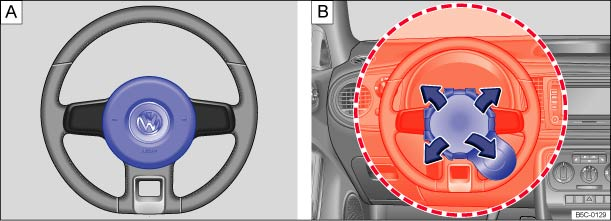
Fig. 28 Location and deployment zone of the driver front airbag.
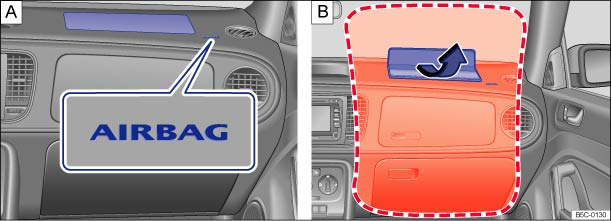
Fig. 29 Location and deployment zone of the front passenger front airbag.
Read and follow the introductory information and safety information first
The vehicle is equipped with an Advanced Airbag System in compliance with the United States Federal Motor Vehicle Safety Standard (FMVSS) 208 or the Canada Motor Vehicle Safety Standard (CMVSS) 208 applicable at the time your vehicle was manufactured. The airbag for the driver is in the steering wheel hub and the airbag for the front passenger is in the instrument panel
. The general location of the airbags is marked AIRBAG.
The safety belts for the front seating positions have safety belt pretensioners which help take up slack in the belts. The airbag control unit also activates the belt pretensioners .
The safety belts for the front seating positions also have belt load limiters to reduce the forces acting on a body during an accident.
The areas marked in red (dotted lines) and
indicate the airbag deployment zone. Never place or attach accessories or other objects (such as cup holders, telephone brackets, note pads, navigation systems, large, heavy or bulky objects) on the doors, on the windshield, over or near the area marked in red (dotted lines).
Front airbags will not deploy:
- if the ignition is switched off when a crash occurs,
- in side collisions,
- in rear-end collisions,
- in rollovers,
- when the crash deceleration measured by the airbag system is less than the minimum threshold needed for airbag deployment as registered by the electronic control unit.
The front passenger front airbag will also not deploy:
- when the front passenger seat is not occupied,
- when the electrical capacitance measured by the capacitive passenger detection system for the front passenger seat indicates that the passenger side front airbag must be switched off by the electronic control unit (the PASSENGER AIR BAG
DANGER!
Children on the front seat of any vehicle, even one with Advanced Airbags, can be seriously injured or even killed when an airbag inflates.
- A child in a rearward-facing child restraint installed on the front passenger seat will be seriously injured and can be killed if the front airbag inflates.
- The inflating airbag will hit the child restraint or infant carrier with great force and will smash the child restraint and the child against the seat backrest, center armrest, door, or roof.
- Always install rearward-facing child restraints on the rear seat.
- Although the Advanced Airbag System in your vehicle is designed to turn off the front airbag when a rearward-facing child restraint has been installed on the front passenger seat, nobody can absolutely guarantee that deployment is impossible in all conceivable situations that may happen during the useful life of your vehicle.
- If you have, in exceptional circumstances, nevertheless decided to install a rearward-facing child restraint on the front passenger seat and the PASSENGER AIR BAG
DANGER!
A front seat passenger, especially an infant or small child, will be seriously injured and can even be killed if too close to the airbag when it deploys – even an Advanced Airbag.
- All vehicle occupants and especially children must be restrained properly whenever riding in a vehicle. An unrestrained or improperly restrained child could be injured by striking the interior or by being ejected from the vehicle during a sudden maneuver or impact. An unrestrained or improperly restrained child is also at greater risk of injury or death through contact with an inflating airbag.
- Accident statistics show that children are safer on the rear seat than on the front seat.
- A suitable child restraint properly installed and used at one of the rear seating positions provides the highest degree of protection for infants and small children in most accident situations.
- An Advanced Airbag System can deploy with the low risk option for 3 to 6 year-old children when a child who is heavier than the combined capacitance of a typical 1 year-old child plus child restraint is secured on the passenger seat in a forward-facing or rear-facing child restraint that was used to certify your vehicle, and when the other conditions for airbag deployment are met.
- For their own safety, all children, especially those 12 years and younger, must always sit on the back seat, properly restrained for their age and size.
- When installing a child restraint, always carefully follow the manufacturer's instructions.
- If the airbag indicator light goes on while driving, have the system inspected immediately by your authorized Volkswagen dealer or authorized Volkswagen Service Facility. A lit indicator light means the airbags may not work properly if activated in a crash.
- Always make sure that the status signaled by the PASSENGER AIR BAG
WARNING
Objects between you and the airbag will increase the risk of injury in a crash by interfering with the way the airbag unfolds and/or by being pushed into you as the airbag inflates.
- Never hold things in your hands or on your lap when the vehicle is in use.
- Never place accessories or other objects (such as cup holders, telephone brackets, notepads, navigation systems, or things that are large, heavy, or bulky) on the doors or attach them to the doors; never place them over or near the area marked AIRBAG on the steering wheel, instrument panel, or seat backrests, or between those areas and someone in the vehicle and . Such objects could cause serious injury in a collision, especially if an airbag inflates.
- Never attach accessories to the windshield above the passenger front airbag, such as GPS navigation units or music players. Such objects could cause serious injury in a collision, especially if an airbag inflates.
- Never recline the front passenger seat to transport objects. Items can also move into the deployment area of the side airbags or the front airbag during braking or in a sudden maneuver. Objects near the airbags can fly dangerously through the passenger compartment and cause injury, particularly when the seat is reclined and the airbags inflate.
- Always make sure that there is nothing on the front passenger seat that will cause the capacitive passenger detection system in the seat to signal to the Airbag System that the seat is occupied by a person when it is not, or to signal that it is occupied by someone who is heavier than the person actually sitting on the seat. The presence of an object could cause the passenger front airbag to be turned on when it should be off, or could cause the airbag to work in a way that is different from the way it would have worked without the object on the seat.
- Always make sure that nothing is on the front passenger seat when the backrest is folded forward.
- Always make sure that the status signaled by the PASSENGER AIR BAG
WARNING
Holding the steering wheel the wrong way can cause serious injuries to the hands, arms, and head if the driver's airbag inflates.
- Always hold the steering wheel with both hands on the outside of the steering wheel rim at the 9 o'clock and 3 o'clock positions to help reduce the risk of personal injury if the driver's airbag inflates.
- Never hold the steering wheel at the 12 o'clock position or with your hands anywhere inside the steering wheel or on the steering wheel hub. Holding the steering wheel the wrong way increases the risk of severe injury to the arms, hands, and head if the driver airbag deploys.
WARNING
The fine dust created when airbags deploy can cause breathing problems for people with asthma or other breathing conditions.
- To reduce the risk of breathing problems, those with asthma or other respiratory conditions should get fresh air right away by getting out of the vehicle or opening windows or doors.
- If you are in a collision in which airbags deploy, wash your hands and face with mild soap and water before eating.
- Be careful not to get the dust into your eyes, or into any cuts, scratches, or open wounds.
- If the residue should get into your eyes, flush them with water.
WARNING
Airbags that have deployed in a crash must be replaced.
- Use only original equipment airbags approved by Volkswagen and installed by a trained technician who has the necessary tools and diagnostic equipment to properly replace any airbag on your vehicle and assure system effectiveness in a crash.
- Never permit salvaged or recycled airbags to be installed in your vehicle.

Undeployed airbag modules and safety belt pretensioners are classified as Perchlorate Material. Special handling may apply – see http://www.dtsc.ca.gov/hazardouswaste/perchlorate. Obey all applicable legal requirements regarding handling and disposal of the vehicle or parts of its restraint system, including airbag modules and safety belts with pretensioners. Authorized Volkswagen dealers and authorized Volkswagen Service Facilities are familiar with the requirements, and we recommend that you have them perform this service for you.
Advanced Airbag System components
Read and follow the introductory information and safety information first
The front passenger seat in your vehicle has a lot of very important parts of the Advanced Airbag System in it . These parts include the capacitive passenger detection system, wiring, brackets, and more. The control unit monitors the system in the front passenger seat when the ignition is switched on and turns the airbag indicator light on when a malfunction in the one of the system components is detected . Because the front passenger seat contains important parts of the Advanced Airbag System, you must take care to prevent it from being damaged. Damage to the seat may prevent the Advanced Airbag System for the front passenger seat from doing its job in a crash.
The front Advanced Airbag System also includes:
- Crash sensors in the front of the vehicle that measure vehicle acceleration/deceleration to provide information to the Advanced Airbag System about the severity of the crash.
- An electronic control unit, with integrated crash sensors for front and side impacts. The control unit decides whether to fire just the front airbags based on the information received from the crash sensors. The control unit also decides whether the safety belt pretensioners should be activated.
- An Advanced Airbag with gas generator for the driver inside the steering wheel hub.
- An Advanced Airbag with gas generator inside the instrument panel for the front passenger.
- A capacitive passenger detection system underneath the front passenger seat cover. This system measures the electrical capacitance of the person in the seat. The information registered is sent continuously to the electronic control unit to regulate deployment of the front Advanced Airbag on the passenger side.
- An airbag system indicator light in the instrument cluster .
- The PASSENGER AIR BAG
- A switch in the safety belt buckle for the driver and for the front seat passenger that senses whether that safety belt is latched or not and transmits this information to the electronic control unit.
WARNING
An airbag system and safety belt pretensioner that are not working properly cannot provide supplemental protection in a frontal crash.
- If the airbag indicator light comes on, it means that there may be something wrong with the airbag system. It is possible that the airbag will inflate when it is not supposed to, or will not inflate when it should.
- Have the airbag system inspected immediately by your authorized Volkswagen dealer or authorized Volkswagen Service Facility.
- Use only original equipment airbags approved by Volkswagen. Have them installed by a trained technician who has the necessary tools and diagnostic equipment to properly replace any airbag in your vehicle and assure system effectiveness in a crash.
- Never permit salvaged or recycled airbags to be installed in your vehicle.
WARNING
Damage to the front passenger seat can prevent the front airbag from working properly.
- Improper repair or disassembly of the front passenger and driver seat can prevent the Advanced Airbag System from working properly.
- Repairs to the front passenger seat should be performed by an authorized Volkswagen dealer or an authorized Volkswagen Service Facility.
- Never remove the front passenger seat or driver seat from the vehicle.
- Never remove the upholstery from the front passenger seat.
- Never disassemble or take parts off the seat or disconnect wires from it.
- Never carry sharp objects in your pockets or put them on the seat. If the capacitive passenger detection system in the front passenger seat is punctured it cannot work properly.
- Never carry things on your lap or carry objects on the front passenger seat. Such objects can influence the capacitance registered by the capacitive passenger detection system, so that incorrect information is provided to the airbag control unit. These things can also cause serious personal injury if the airbag inflates.
- Never store items under the front seats. Parts of the Advanced Airbag System under the front seats could be damaged, preventing them and the airbag system from working properly.
- Never put seat covers or replacement upholstery on the front seats that have not been approved by Volkswagen for your specific vehicle.
- Seat covers can prevent the Advanced Airbag System from recognizing child restraints or occupants on the passenger seat and prevent the side airbag in the seat backrest from deploying properly.
- Never use cushions, pillows, blankets, or similar items on the front passenger seat. The additional layers prevent the capacitive passenger detection system from accurately measuring the capacitance of the child safety seat and/or the person on the seat and thus keep the Advanced Airbag System from working properly.
- Never place or use any electrical device (such as a laptop, CD player, or electronic games device) on the front passenger seat if the device is connected to the 12 Volt socket. Such devices can influence the capacitance registered by the capacitive passenger detection system, so that incorrect information is provided to the airbag control unit.
- If a seat heater has been retrofitted or otherwise added to the front passenger seat, never install any child restraint system on this seat.
- If you must use a child restraint on the front passenger seat and the child restraint manufacturer's instructions require the use of a towel, foam cushion or something similar to properly position the child restraint, make certain that the PASSENGER AIR BAG
- If the PASSENGER AIR BAG
WARNING
If the front passenger seat gets wet, dry it immediately.
- If liquid soaks into the front passenger seat, this can keep the airbag system from working properly and may, for instance, deactivate the passenger front airbag. If this happens, the PASSENGER AIR BAG
- If liquid is pooled on the seat, but has not soaked in, this may also keep the airbag system from working properly and cause the front passenger front airbag to be enabled (turned on), even though there is a properly installed child restraint system on the seat. Wet towels or other wet things on the seat cushion can have the same effect. The PASSENGER AIR BAG
 NOTE
NOTE
- To help prevent damage to electrical and other parts in the seat, do not kneel on the front seats or apply concentrated pressure to a small area of the seat or backrest.
- Never install leather upholstery on a vehicle that originally had cloth upholstery. Never install cloth upholstery on a vehicle that originally had leather upholstery. The capacitive passenger detection system for the Advanced Airbag system will not work properly if different upholstery is installed on the passenger seat than the upholstery originally installed on the vehicle when it was originally manufactured.
How to tell if the front passenger front airbag is on or off
Read and follow the introductory information and safety information first
Passenger front airbag
Regardless of safety belt use, the airbag in front of the front passenger seat will be switched off if the electrical capacitance measured on this seat is less than the value programmed in the electronic control unit.
The front airbag on the passenger side of the front seat will also be turned off if the electrical capacitance measured on the seat (by the capacitive passenger detection system) is less than or equal to the combined capacitance of:
- a typical 1 year-old infant and
- any of the child restraints listed in Federal Motor Vehicle Safety Standard 208 for which the Advanced Airbag System in your vehicle is certified.
For a listing of the child restraints that were used to certify your vehicle's compliance with U.S. Safety Standard 208, see . The PASSENGER AIR BAG
light comes on and stays on to tell you when the front Advanced Airbag on the passenger side has been turned off.
Passenger front airbag active
- Switch on the ignition.
- The capacitive passenger detection system measures the electrical capacitance of the front passenger seat. If that capacitance is above the reference value, the passenger front airbag will be switched on by the Advanced Airbag control unit.
- If the ignition is on, and the PASSENGER AIR BAG
Using child restraints on the front passenger seat
The airbag on the front passenger side makes the front seat a potentially dangerous place for a child to ride. Because of this danger, and because children are generally better protected on the rear seat when properly restrained for their age and size, we strongly advise that you always place children on the rear seat . For a list of the child restraints used to certify compliance of the Advanced Airbag System in your vehicle with the suppression requirements of FMVSS 208, see .
For more information, see ; note below!
How do I know when the passenger front airbag has been turned off by the control unit?
The PASSENGER AIR BAG
light in the instrument panel will come on and stay on to tell you when the front Advanced Airbag on the passenger side has been turned off by the electronic control unit. Unless the yellow
light comes on and stays on, the passenger front airbag is still active .
For safety reasons, you must never use a child restraint system on the front passenger seat unless the PASSENGER AIR BAG
light comes on and stays on, perhaps in combination with the
indicator light in the instrument cluster. If the passenger front airbag deployed in an accident, it would severely injure and possibly kill the child in the restraint system. If the PASSENGER AIR BAG
light burns out, the airbag indicator light will come on and signal a malfunction of the Advanced Airbag System. Although the burned-out light will not change the way the front airbag on the passenger side works, it will no longer be possible to use the PASSENGER AIR BAG
light to make sure that the airbag on/off status is correct for the occupant on the front passenger seat. Have the airbag system inspected immediately by your authorized Volkswagen dealer or authorized Volkswagen Service Facility.
DANGER!
A front seat passenger, especially an infant or small child, will be seriously injured and can even be killed if sitting too close to the airbag when it deploys.
- All vehicle occupants and especially children must be restrained properly whenever riding in a vehicle. An unrestrained or improperly restrained child could be injured by striking the interior or by being ejected from the vehicle during a sudden maneuver or impact. An unrestrained or improperly restrained child is also at greater risk of injury or death through contact with an inflating airbag.
- A child in a rearward-facing child restraint installed on the front passenger seat will be seriously injured and can be killed if the front airbag inflates.
- The inflating airbag will hit the child restraint or infant carrier with great force and will smash the child restraint and the child against the seat backrest, center armrest, door, or roof.
- Accident statistics show that children are safer on the rear seat than on the front seat.
- A suitable child restraint properly installed and used at one of the rear seating positions provides the highest degree of protection for infants and small children in most accident situations.
- For their own safety, all children, especially 12 years and younger, must always ride on the back seat properly restrained for their age and size.
- When installing a child restraint, always carefully follow the manufacturer's instructions.
WARNING
To reduce the risk of serious injury, make sure that the PASSENGER AIR BAG
light comes on and stays on whenever a child restraint is installed on the front passenger seat and the ignition is switched on. Take the child restraint off the front passenger seat and install it properly at one of the seating positions on the rear seat if the PASSENGER AIR BAG
light does not stay on. Have the airbag system inspected immediately by an authorized Volkswagen dealer or an authorized Volkswagen Service Facility.
- If you must use a child restraint on the front passenger seat and the child restraint manufacturer's instructions require the use of a towel, foam cushion or something similar to properly position the child restraint, make certain that the PASSENGER AIR BAG
- Otherwise, install the child restraint system on the rear seat!
WARNING
Changes in the electrical capacitance of the passenger seat while driving can switch the passenger front airbag on or off so that it does not deploy when it should or deploys when it should not, resulting in an increased risk of serious personal injury.
- Do not carry anything on your lap or transport things on the passenger seat. Things on the passenger seat can influence the capacitance registered by the capacitive passenger detection system, sending the wrong information to the airbag control unit. These objects can also cause serious personal injury if the airbag inflates.
- Always make sure that a child restraint has been correctly registered by the capacitive passenger detection system. If the status of the Advanced Airbag System changes while the vehicle is moving, the PASSENGER AIR BAG
Side airbags (Beetle Coupe)
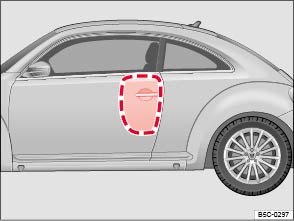
Fig. 30 Deployment zone of the side airbag.
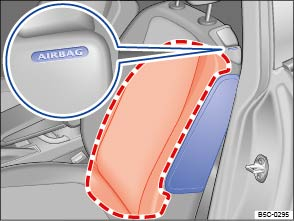
Fig. 31 In the padding on the outboard side of the front seat backrests (Beetle Coupe): Location and deployment zone of the side airbags.
Read and follow the introductory information and safety information first
For Beetle Coupe models, the side airbags are in the backrest padding of the driver and front passenger seats . The general location is shown by the word AIRBAG. The area marked in red (dotted lines) indicates the deployment zone of the side airbags.
In a side collision, the side airbag in the seat backrest can deploy and help reduce the risk of injury to the driver or the front seat passenger.
The side airbags installed for the front seating positions have been designed and certified to help reduce the risk of injury that can be caused by airbags when they inflate, particularly when the occupant sitting next to it is not seated properly.
The side airbag for the front passenger seat can be used with properly installed child restraints. Always read and heed all important information and WARNINGS whenever using a child restraint in the vehicle: , , , and .
The side airbag system includes:
- An electronic control module and side impact sensors.
- Side airbags in the front seat backrests.
- An airbag system indicator light in the instrument cluster .
When a side airbag deploys in a collision, a gas generator fills the side airbag between the vehicle occupant and the door. The side airbag system supplements the safety belts and can help to reduce the risk of injury to the occupant's upper torso.
In order to help provide this additional protection, the side airbag must inflate within the blink of an eye at very high speed and with great force. The supplemental side airbag could injure you if your seating position is not proper or upright or if items are in the area where the supplemental side airbag inflates. This applies especially to children .
The airbag system is monitored electronically to make sure it is working properly at all times. Every time you turn on the ignition, the airbag system indicator light will come on for a few seconds (function check).
The airbag system is not a substitute for your safety belt. Rather, it is part of the overall occupant restraint system in your vehicle , .
It is important to remember that the side airbag system is designed to help reduce the likelihood of serious injury. However, it is also important to remember that a deploying airbag may also cause other injuries, such as swelling, bruising, friction burns, and abrasions. Also remember that side airbags will deploy only once and only in certain kinds of accidents. After the side airbag inflates, the system must be replaced. Your safety belts are always there to offer protection in those accidents in which side airbags are not supposed to deploy or when they have already deployed.
The side airbag system will not inflate:
- if the ignition is switched off when a crash occurs,
- in side collisions when the acceleration measured by the sensor is too low,
- in front-end collisions,
- in rear-end collisions,
- in rollovers, unless the deployment threshold for deployment stored in the control unit is met.
In some types of accidents, the front airbags, Side Curtain Protection® airbags, and side airbags may be triggered together.
WARNING
An inflating side airbag can cause serious or even fatal injury. Improperly wearing safety belts and improper seating positions increase the risk of serious personal injury and death whenever a vehicle is being used.
- To help reduce the risk of injury when the supplemental side airbag inflates,
- Always sit in an upright position and do not lean against the area where the side airbag is located.
- Never let a child or anyone else rest their head against the side trim panel in the area where the side airbag inflates.
- Always make sure that safety belts are worn correctly.
- Never let anyone sitting in the front seat put their hand out of the window.
- Objects between you and the airbag can increase the risk of injury in a collision by interfering with the way the airbag unfolds or by being pushed into you as the airbag inflates.
- Never place or attach accessories or other objects (such as cup holders, telephone brackets, or even large, bulky objects) on the doors or over or near the area marked AIRBAG on the seat backrests .
- Accessories or other objects can fly dangerously through the passenger compartment and cause serious injury if the supplemental side airbag inflates.
- Never position or hold any objects or pets in the area where an airbag inflates or allow any children or other passengers to ride in that space.
- Never use the built-in coat hooks for anything but lightweight clothing. Never leave any heavy or sharp-edged objects in the pockets. Such objects may interfere with side airbag deployment and cause serious personal injury in a collision.
WARNING
Improper use, repair, or disassembly of the driver and front passenger seats can prevent side airbags from working properly and result in severe injuries.
- Always make sure that the side airbag can inflate without interference:
- Never install seat covers or replacement upholstery over the front seat backrests that have not been specifically approved by Volkswagen. Otherwise, the side airbag may not be able to deploy properly.
- Never put seat cushions, blankets, or other coverings over the areas where the side airbags inflate.
- Damage to the original seat covers or to the seam in the area of the side airbag module must always be repaired immediately by an authorized Volkswagen dealer or authorized Volkswagen Service Facility.
- Always prevent the side airbags from being damaged by heavy objects hitting the sides of the seat backrests or force being put on the seat backs, especially in the area where the side airbag module is located.
- The airbag system can only be triggered once. If the airbag has been triggered, the system must be replaced.
- Always have work involving the side airbag system, including removal, replacement, and installation of airbag components, or other repairs performed by an authorized Volkswagen dealer or authorized Volkswagen Service Facility. Otherwise, the airbag system may not work correctly.
- Never remove the front seats from the vehicle or modify parts of the front seats.
- Never attempt to modify any components of the airbag system in any way.
- If too much force is exerted on the seat backrest bolsters, the side airbags may deploy improperly, not at all, or when they should not.
Side airbags (Beetle Convertible)
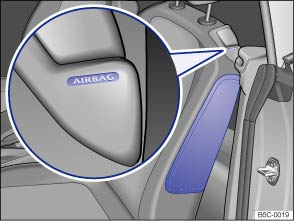
Fig. 32 In the padding on the outboard side of the front seat backrests (Beetle Convertible): Location of the side airbags.
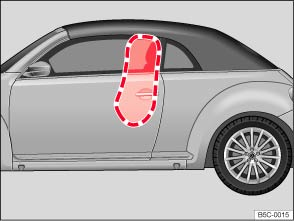
Fig. 33 Deployment zone of the side airbags.
Read and follow the introductory information and safety information first
The side airbags are in the backrest padding of the driver and front passenger seats . The general location is shown by the word AIRBAG. The area marked in red (dotted lines) indicates the deployment zone of the side airbags.
In a side collision, the side airbag in the seat backrest can deploy and help reduce the risk of injury to the driver or the front seat passenger.
The side airbags installed for the front seating positions have been designed and certified to help reduce the risk of injury that can be caused by airbags when they inflate, particularly when the occupant sitting next to it is not seated properly.
The side airbag for the front passenger seat can be used with properly installed child restraints. Always read and heed all important information and WARNINGS whenever using a child restraint in the vehicle: , , , and .
The side airbag system includes:
- An electronic control module and side impact sensors.
- Side airbags in the front seat backrests.
- An airbag system indicator light in the instrument cluster .
When a side airbag deploys in a collision, a gas generator fills the side airbag between the vehicle occupant and the door. The side airbag system supplements the safety belts and can help to reduce the risk of injury to the occupant's head and upper torso.
In order to help provide this additional protection, the side airbag must inflate within the blink of an eye at very high speed and with great force. The supplemental side airbag could injure you if your seating position is not proper or upright or if items are in the area where the supplemental side airbag inflates. This applies especially to children .
The airbag system is monitored electronically to make sure it is working properly at all times. Every time you turn on the ignition, the airbag system indicator light will come on for a few seconds (function check).
The airbag system is not a substitute for your safety belt. Rather, it is part of the overall occupant restraint system in your vehicle , .
It is important to remember that the side airbag system is designed to help reduce the likelihood of serious injury. However, it is important to remember that a deploying airbag may also cause other injuries, such as swelling, bruising, friction burns, and abrasions. Also remember that side airbags will deploy only once and only in certain kinds of accidents. After the side airbag inflates, the system must be replaced. Your safety belts are always there to offer protection in those accidents in which side airbags are not supposed to deploy or when they have already deployed.
The side airbag system will not inflate:
- if the ignition is switched off when a crash occurs,
- in side collisions when the acceleration measured by the sensor is too low,
- in front-end collisions,
- in rear-end collisions,
- in rollovers, unless the deployment threshold for deployment stored in the control unit is met.
In some types of accidents, the front airbags and side airbags may be triggered together.
WARNING
An inflating side airbag can cause serious or even fatal injury. Improperly wearing safety belts and improper seating positions increase the risk of serious personal injury and death whenever a vehicle is being used.
- To help reduce the risk of injury when the supplemental side airbag inflates,
- Always sit in an upright position and do not lean against the area where the side airbag is located.
- Never let a child or anyone else rest their head against the side trim panel in the area where the side airbag inflates.
- Always make sure that safety belts are worn correctly.
- Never let anyone sitting in the front seat put their hand out of the window.
- Objects between you and the airbag can increase the risk of injury in a collision by interfering with the way the airbag unfolds or by being pushed into you as the airbag inflates.
- Never place or attach accessories or other objects (such as cup holders, telephone brackets, or even large, bulky objects) on the doors or over or near the area marked AIRBAG on the seat backrests .
- Accessories or other objects can fly dangerously through the passenger compartment and cause serious injury if the supplemental side airbag inflates.
- Never position or hold any objects or pets in the area where an airbag inflates or allow any children or other passengers to ride in that space.
- Never use the built-in coat hooks for anything but lightweight clothing. Never leave any heavy or sharp-edged objects in the pockets. Such objects may interfere with side airbag deployment and cause serious personal injury in a collision.
WARNING
Improper use, repair, or disassembly of the driver and front passenger seats can prevent side airbags from working properly and result in severe injuries.
- Always make sure that the side airbag can inflate without interference:
- Never install seat covers or replacement upholstery over the front seat backrests that have not been specifically approved by Volkswagen. Otherwise, the side airbag may not be able to deploy properly.
- Never put seat cushions, blankets, or other coverings over the areas where the side airbags inflate.
- Damage to the original seat covers or to the seam in the area of the side airbag module must always be repaired immediately by an authorized Volkswagen dealer or authorized Volkswagen Service Facility.
- Always prevent the side airbags from being damaged by heavy objects hitting the sides of the seat backrests or force being put on the seat backs, especially in the area where the side airbag module is located.
- The airbag system can only be triggered once. If the airbag has been triggered, the system must be replaced.
- Always have work involving the side airbag system, including removal, replacement, and installation of airbag components, or other repairs performed by an authorized Volkswagen dealer or authorized Volkswagen Service Facility. Otherwise, the airbag system may not work correctly.
- Never remove the front seats from the vehicle or modify parts of the front seats.
- Never attempt to modify any components of the airbag system in any way.
- If too much force is exerted on the seat backrest bolsters, the side airbags may deploy improperly, not at all, or when they should not.
Side Curtain Protection® airbags (Beetle Coupe)
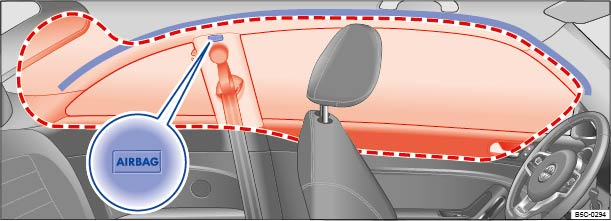
Fig. 34 On the left vehicle side: Installation location and deployment zone of the Side Curtain Protection airbag (Beetle Coupe only).
Read and follow the introductory information and safety information first
In Beetle Coupe models only, the Side Curtain Protection® airbags are in the header area on both sides of the vehicle . The general location is identified by the word AIRBAG. The red lines show the deployment zone of the Side Curtain Protection® airbags. The Side Curtain Protection® airbags contain features that provide ejection mitigation to help prevent vehicle occupants or parts of their bodies from being completely or partially ejected from the vehicle interior in certain side impacts and vehicle rollovers.
The Side Curtain Protection® airbag system includes:
- An electronic control module and side impact sensors.
- The Side Curtain Protection® airbags above the front and rear side windows.
- An airbag system indicator light in the instrument cluster .
The Side Curtain Protection® airbags inflate downwards between the occupant and the side window on that side of the vehicle that is struck in certain side collisions . The Side Curtain Protection® airbag system supplements the safety belts and can help to reduce the risk of injury for occupants' heads and upper torsos on the side of the vehicle that is struck in a side collision. The Side Curtain Protection® airbags also contain features to help prevent vehicle occupants or parts of their bodies from being completely or partially ejected from the vehicle interior in certain vehicle rollovers.
In order to help provide this additional protection, the Side Curtain Protection® airbag must inflate within the blink of an eye at very high speed and with great force. The Side Curtain Protection® airbag could injure you if your seating position is not proper or upright or if items are located in the area where the supplemental Side Curtain Protection® airbag inflates. This applies especially to children .
The airbag system is monitored electronically to make sure it is working properly at all times. Every time you turn on the ignition, the airbag system indicator light will come on for a few seconds (function check).
The airbag system is not a substitute for your safety belt. Rather, it is part of the overall occupant restraint system in your vehicle , .
It is important to remember that the Side Curtain Protection® airbag system is designed to help reduce the likelihood of serious injury. However, it is possible that a deployed Side Curtain Protection® airbag may cause other injuries such as swelling, bruising, friction burns, and abrasions. Remember too, Side Curtain Protection® airbags will deploy only once and only in certain kinds of accidents. Side Curtain Protection® airbags that have deployed in a crash must be replaced. Your safety belts are always there to offer protection in those accidents in which Side Curtain Protection® airbags are not supposed to deploy or when they have already deployed.
The Side Curtain Protection® airbag will not inflate:
- if the ignition is switched off when a crash occurs,
- in side collisions when the acceleration measured by the sensor is too low,
- in front-end collisions,
- in rear-end collisions,
- in rollovers, unless the deployment threshold for deployment stored in the control unit is met.
In some types of accidents, the front, Side Curtain Protection® and side airbags may be triggered together.
WARNING
An inflating Side Curtain Protection® airbag can cause serious or even fatal injury. Improperly wearing safety belts and improper seating positions increase the risk of serious personal injury and death whenever a vehicle is being used.
- A deploying airbag inflates within a fraction of a second with a lot of force and at very high speed.
- Always make sure that the Side Curtain Protection® airbag can inflate without interference.
- Always sit in proper seating position and wear safety belts while traveling so that the Side Curtain Protection® airbags can help provide protection.
- Never let occupants place any parts of their bodies in the area where the Side Curtain Protection® airbag inflates.
- Always keep the area where the Side Curtain Protection® airbag inflates clear. Never carry any objects or pets in the area between them and where the airbags inflate and never let children or other passengers ride in this area.
- Never use hangers to hang clothes on the hooks.
- Never use the built-in coat hooks for anything but lightweight clothing. Never leave any heavy or sharp-edged objects in the pockets that may interfere with airbag deployment and can cause personal injury in a collision.
- Only use factory-installed sunshades or, if shades installed after the vehicle leaves the factory, use only genuine Volkswagen sunshades.
- Never swing the sun visors over to the side windows if things such as pens, garage door openers, hands-free speakers, etc. are attached to the sun visors. They could come loose and cause serious injury if the Side Curtain Protection® airbag inflates.
WARNING
The airbag system can only be triggered once.
- If the airbag has been triggered, the system must be replaced by an authorized Volkswagen dealer or authorized Volkswagen Service Facility.
- Always have work involving the curtain airbag system, removal and installation of the airbag components, or other repairs performed by your authorized Volkswagen dealer or authorized Volkswagen Service Facility. Otherwise the airbag system may not work correctly.
- Never attempt to modify any components of the airbag system in any way.
- Never attach objects to the cover or in the deployment zone of a Side Curtain Protection® airbag.
- Always make sure that the airbag deployment zones are clear at all times. Never let anything or object, a pet, or a person, including an infant or small child, be in the space between any vehicle occupant and any airbag.
- Do not attach any accessories to the doors.
Download Manual