Stowing luggage
Always stow all luggage securely in the vehicle
- Distribute the load in the vehicle and, if applicable, on the roof, as evenly as possible.
- Always put luggage and heavy items in the luggage compartment.
- Put heavy objects as far forward as possible in the luggage compartment and securely latch the rear seat backrest in the upright position.
- Never exceed the Gross Axle Weight Rating or the Gross Vehicle Weight Rating .
- Secure luggage in the luggage compartment.
- Securely stow small objects as well.
- Adjust the headlight range, if necessary .
- Check the pressure in all 4 tires when the tires are still cold. Never reduce air pressure in warm tires to match cold tire inflation pressure. Heed the information on the tire pressure label .
- Pay especially close attention to your vehicle's Tire Pressure Monitoring System when driving with a heavy load .
 WARNING
Unsecured or incorrectly stowed items can fly through the vehicle, causing serious personal injury during hard braking or sharp steering or in an accident. Loose items can also be struck and thrown through the passenger compartment by the front airbags if they inflate. To help reduce the risk of serious personal injury:
- Always stow all objects securely in the vehicle. Always put luggage and heavy items in the luggage compartment.
- Always keep storage compartments closed while driving.
- Do not stow hard, heavy, or sharp objects in the vehicle's open storage compartments, on the luggage compartment cover, or on top of the instrument panel.
- Remove hard, heavy, and sharp objects from clothing and bags in the vehicle interior and stow securely. Always put heavy items in the luggage compartment.
- Always secure objects in the passenger compartment properly with suitable straps so that they cannot move into the deployment area of a side or front airbag during braking, in a sudden maneuver, or in a collision.
- Always make sure that there is nothing on the front passenger seat when the backrest is folded forward.
- Passengers must never ride in an incorrect seating position because objects are being transported in the vehicle.
- Never let anybody sit in a seat that is blocked by objects being carried in the vehicle.
- Never let anyone ride in the luggage compartment.
WARNING
Heavy loads will influence the way your vehicle handles and increase stopping distances. Heavy loads that are not properly stowed or secured can cause loss of control and serious injury.
- Secure the load properly to keep it from shifting.
- Always remember when transporting heavy objects that a change in the center of gravity also changes the way your vehicle handles:
- Always distribute the load as evenly as possible.
- Secure heavy objects properly as far forward in the luggage compartment as possible.
- Always tie down heavy items securely with suitable straps.
- Securely latch the rear seat backrest in the upright position.
- Never exceed the Gross Axle Weight Rating or the Gross Vehicle Weight Rating on the safety compliance sticker on the left door jamb. Exceeding permissible weight can cause the vehicle to skid and handle differently.
- Always adapt your speed and driving to the heavier load and the weight distribution in the vehicle. Take road, weather, traffic, and visibility conditions into account as well.
- Always accelerate gently and avoid sudden braking and driving maneuvers.
- Always brake earlier than you would if you were not driving a loaded vehicle.
 NOTE
NOTE
Wires in the rear windows such as for heating or for an antenna can be damaged by objects that rub against them.

Please review the information on loading a roof rack .
Luggage compartment cover (Beetle Coupe)
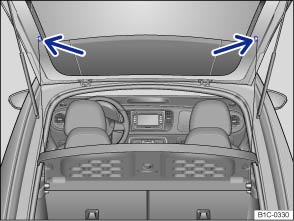
Fig. 133 On the trunk lid: Installing and removing the supporting cords.
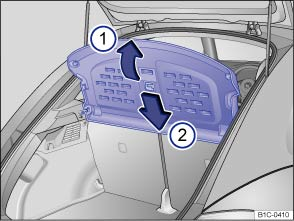
Fig. 134 In the luggage compartment: Installing and removing the luggage compartment cover.
When you open or close the trunk lid, the supporting cords, when attached, will automatically raise or lower the luggage compartment cover.
You can put light articles of clothing on the luggage compartment cover. But remember that your view through the rear window must not be obstructed.
Removing the luggage compartment cover
- Unhook the supporting cords from each side of the trunk lid (arrows).
- Fold the luggage compartment cover upward (arrow ①), until the luggage compartment cover releases from the side brackets.
Storing the luggage compartment cover
- Slide the luggage compartment cover between the rear seat backrest and the side support panels (arrow ②).
Installing the luggage compartment cover
- Position the luggage compartment cover on the side brackets.
- Push the luggage compartment cover down into the side brackets.
- Hook the supporting cords onto the trunk lid (arrows).
WARNING
In a sudden braking or other maneuver, or in a collision, unsecured or improperly secured objects or animals on the luggage compartment cover can cause serious personal injury.
- Never leave hard, heavy or sharp objects in bags or loose on the luggage compartment cover.
- Never let animals ride on the luggage compartment cover.
WARNING
Clothes or other items on the luggage compartment cover behind the rear seat backrest may limit visibility and cause accidents and severe personal injuries.
- Always hang clothes so that they do not limit visibility.
NOTE
To help prevent damage to the luggage compartment cover, the luggage compartment may only be loaded to a height at which the luggage compartment cover will not press on the cargo when the trunk lid is closed.
NOTE
Things on the luggage compartment cover can damage it.
- The defroster heating wires or antenna in the rear window can be damaged by objects that rub against them.
The ventilation slots in the luggage compartment must not be blocked so that stale air can escape from the vehicle (Beetle Coupe models only).
Download Manual