Towing a disabled vehicle
This section describes procedures for towing a disabled vehicle using a commercial towing service.
|
Towing Condition |
Wheel OFF The Ground |
FWD MODELS |
|
Flat Tow |
NONE |
IF transmission is operable:
|
|
Wheel Lift Or Dolly Tow |
Rear |
|
|
Front |
OK |
|
|
Flatbed |
ALL |
BEST METHOD |
Proper towing or lifting equipment is required to prevent damage to your vehicle. Use only tow bars and other equipment designed for this purpose, following equipment manufacturer’s instructions. Use of safety chains is mandatory. Attach a tow bar or other towing device to main structural members of the vehicle, not to bumpers or associated brackets. State and local laws regarding vehicles under tow must be observed.
If you must use the accessories (wipers, defrosters, etc.) while being towed, the ignition must be in the ON/RUN mode, not the ACC mode.
If the key fob is unavailable, or the vehicle's battery is discharged, refer to “Gear Selector Override” in this section for instructions on shifting the transmission out of PARK for towing.
CAUTION:
-
Do not use sling type equipment when towing. Vehicle damage may occur.
-
When securing the vehicle to a flatbed truck, do not attach to front or rear suspension components. Damage to your vehicle may result from improper towing.
-
Do not push or tow this vehicle with another vehicle as damage to the bumper fascia and transmission may result.
FRONT-WHEEL DRIVE (FWD) MODELS
The manufacturer recommends towing your vehicle with all four wheels OFF the ground using a flatbed.
If flatbed equipment is not available, and the transmission is operable, the vehicle may be flat towed (with all four wheels on the ground) under the following conditions:
-
The transmission must be in NEUTRAL.
-
The towing distance must not exceed 15 miles (24 km).
-
The towing speed must not exceed 25 mph (40 km/h).
If the transmission is not operable, or the vehicle must be towed faster than 25 mph (40 km/h) or farther than 15 miles (24 km), it must be towed with the front wheels OFF the ground (using a flatbed truck, towing dolly, or wheel lift equipment with the front wheels raised).
CAUTION:
Towing faster than 25 mph (40 km/h) or farther than 15 miles (24 km) with front wheels on the ground can cause severe transmission damage. Damage from improper towing is not covered by the New Vehicle Limited Warranty.
TOW EYE USAGE — IF EQUIPPED
Your vehicle is equipped with a tow eye that can be used to move a disabled vehicle.
When using a tow eye be sure to follow the “Tow Eye Usage Precautions” and the “Towing A Disabled Vehicle” instructions in this section.
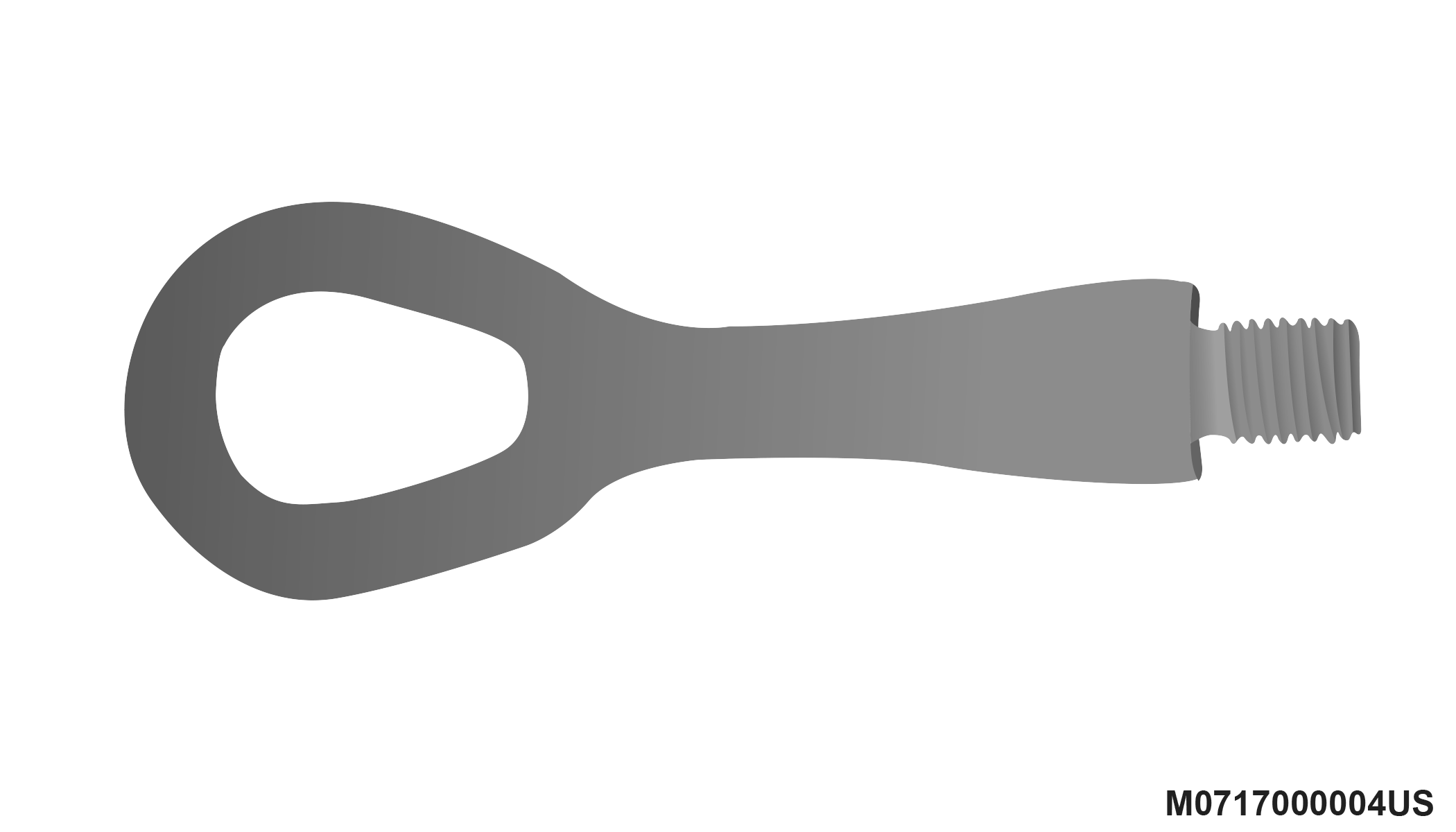
Tow Eye
Tow Eye Usage Precautions
CAUTION:
-
The tow eye must only be used for roadside emergencies. Use with an appropriate device in accordance with highway code (a rigid bar or rope) to maneuver the vehicle in preparation for transport via a tow truck.
-
The tow eye must not be used to move the vehicle off the road or where there are obstacles.
-
Do not use the tow eyes for tow truck hookup or highway towing.
-
Do not use the tow eye to free a stuck vehicle. Refer to the “Freeing A Stuck Vehicle” section for further information.
-
Please refer to the “Towing A Disabled Vehicle” section for detailed instructions. Damage to your vehicle may occur if these guidelines are not followed.
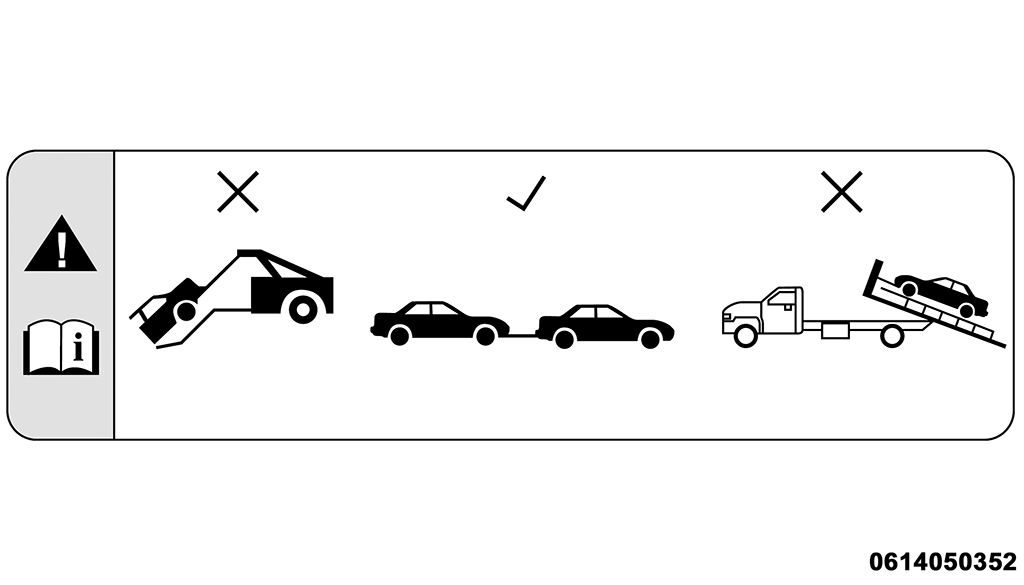
Tow Eye Warning Label
WARNING:
Stand clear of vehicles when pulling with tow eyes.
-
Do not use a chain with a tow eye. Chains may break, causing serious injury or death.
-
Do not use a tow strap with a tow eye. Tow straps may break or become disengaged, causing serious injury or death.
-
Failure to follow proper tow eye usage may cause components to break resulting in serious injury or death.
FRONT TOW EYE INSTALLATION
The front tow eye receptacle is located behind a door, located on the right front bumper fascia. To install the tow eye, open the door using the vehicle key or a small screwdriver, and thread the tow eye into the receptacle.
Insert the flat end of the jack handle through the eye and tighten, refer to “Jacking And Tire Changing” in this chapter for further information. The tow eye must be fully seated to the attaching bracket through the lower front fascia as shown. If the tow eye is not fully seated to the attaching bracket, the vehicle should not be towed.
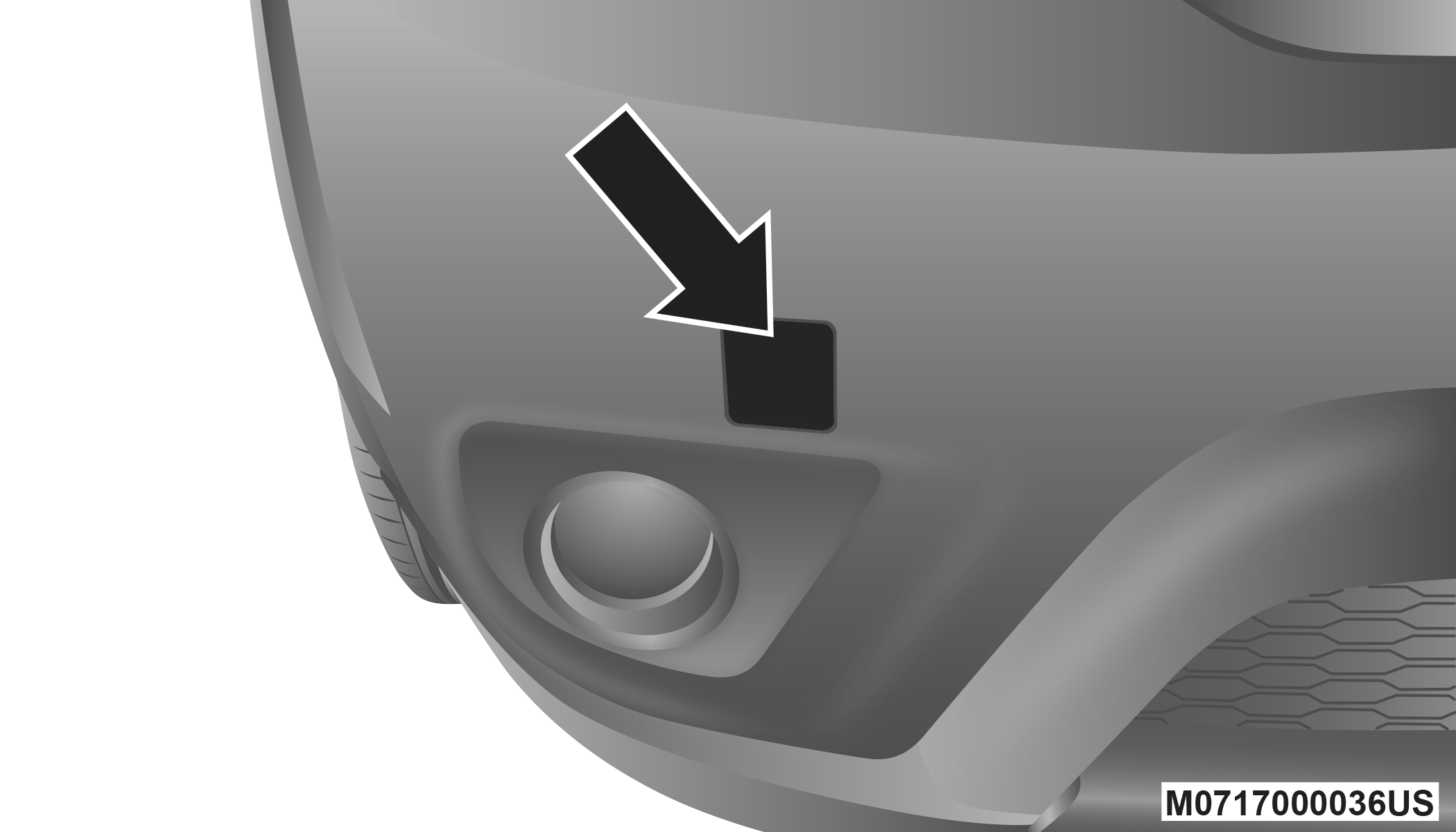
Front Tow Eye Installed
REAR TOW EYE INSTALLATION
The rear tow eye receptacle is located behind a door, located on the left rear bumper fascia.
To install the tow eye, open the door using the vehicle key or a small screwdriver, and thread the tow eye into the receptacle.
Insert the flat end of the jack handle through the eye and tighten, refer to “Jacking And Tire Changing” in this section for further information. The tow hook must be fully seated to the attaching bracket through the lower front fascia as shown. If the tow hook is not fully seated to the attaching bracket, the vehicle should not be towed.
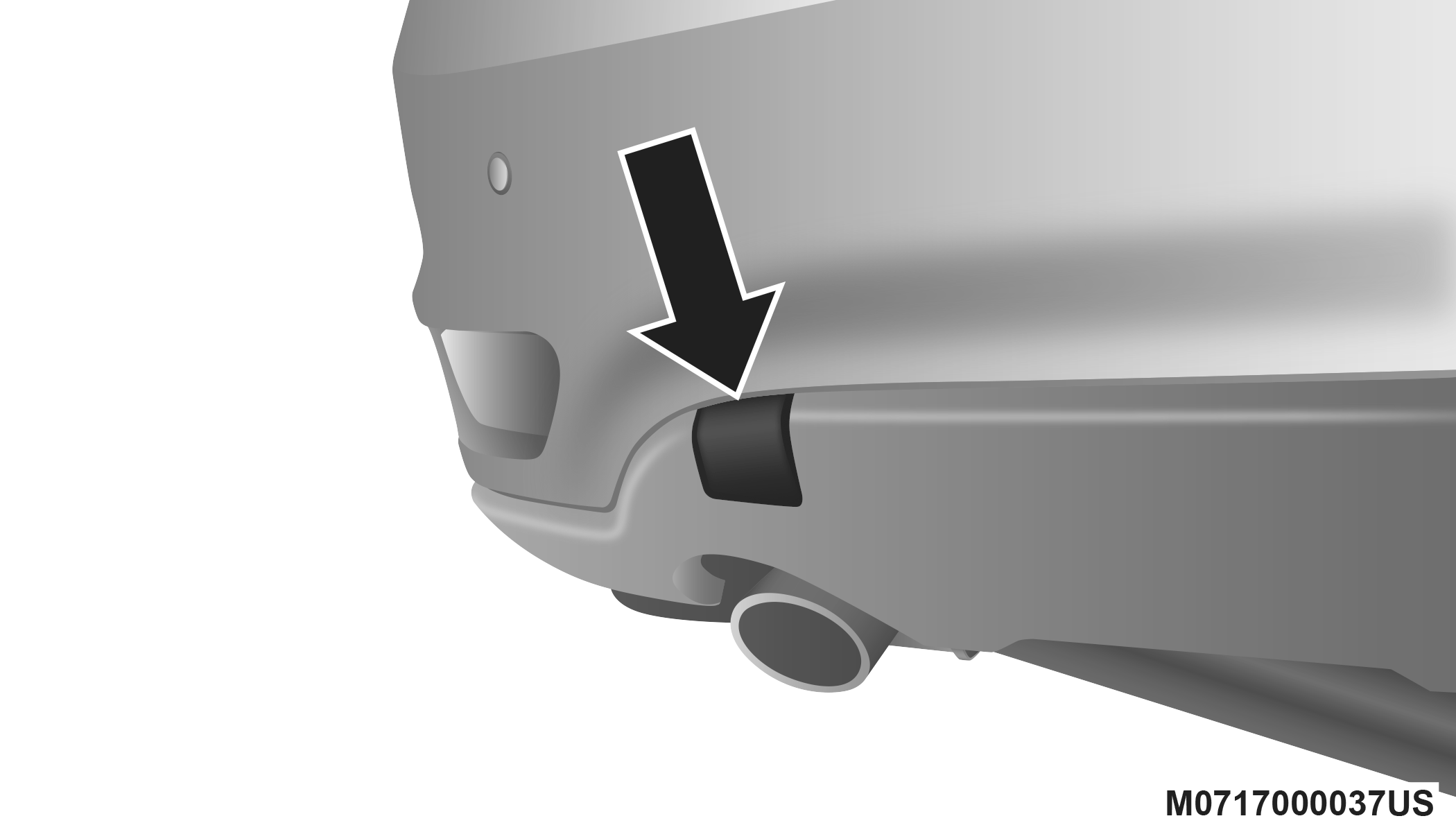
Rear Tow Eye Installed
ENHANCED ACCIDENT RESPONSE SYSTEM (EARS)
This vehicle is equipped with an Enhanced Accident Response System.
Please refer to “Occupant Restraint Systems” in “Safety” for further information on the Enhanced Accident Response System (EARS) function.
This vehicle is equipped with an Enhanced Accident Response System.
Please refer to “Occupant Restraint Systems” in “Safety” for further information on the Enhanced Accident Response System (EARS) function.
This vehicle is equipped with an event data recorder (EDR). The main purpose of an EDR is to record data that will assist in understanding how a vehicle’s systems performed under certain crash or near crash-like situations, such as an air bag deployment or hitting a road obstacle.
Please refer to “Occupant Restraint Systems” in “Safety” for further information on the Event Data Recorder (EDR).
Download Manual