Liftgate
The liftgate can be unlocked or locked pushing the unlock or lock button on the Remote Keyless Entry key fob, the Keyless Enter-N-Go (Passive Entry) lock/unlock button underneath the left side of the accent bar, which is located on the liftgate below the glass, or by activating the power door lock switch located on either front door trim panel.
Refer to “Keyless Enter-N-Go — Passive Entry” in “Doors” in this chapter for further information on Keyless Enter-N-Go (Passive Entry).
Note:
The liftgate cannot be unlocked or locked with the manual door locks on the door trim panels or the door lock cylinder on the driver's door.
To open the unlocked liftgate, squeeze the handle and pull the liftgate toward you. Gas props will raise and support the liftgate in the open position.
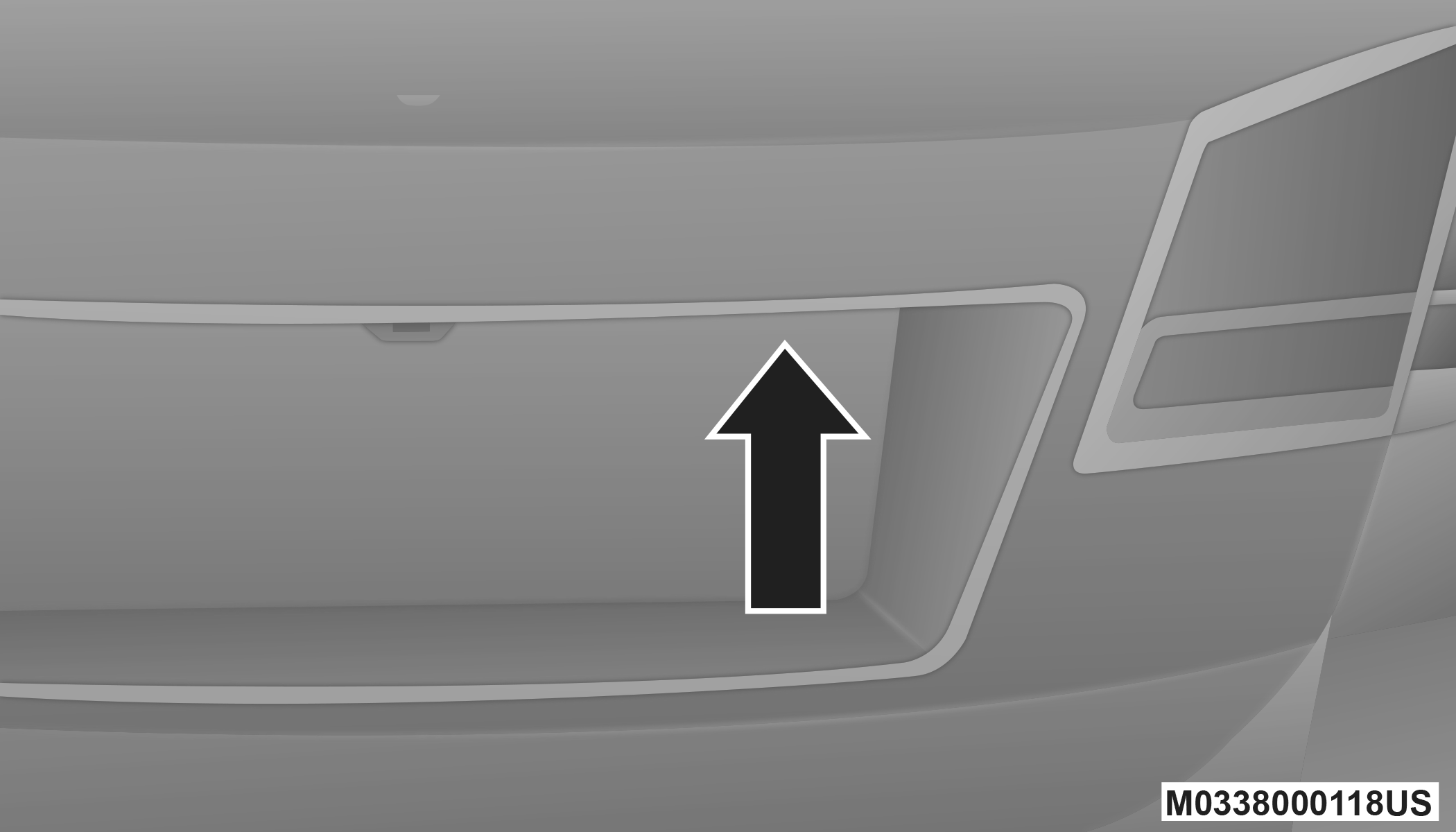
Liftgate Release
Note:
Because the gas pressure drops with temperature, it may be necessary to assist the props when opening the liftgate in cold weather.
WARNING:
-
Driving with the liftgate open can allow poisonous exhaust gases into your vehicle. You and your passengers could be injured by these fumes. Keep the liftgate closed when you are operating the vehicle.
-
If you are required to drive with the liftgate open, make sure that all windows are closed, and the climate control blower switch is set at high speed. Do not use the recirculation mode.
CARGO AREA FEATURES
CARGO MANAGEMENT SYSTEM
Five Passenger System Features
-
A raised load floor that sits on top of a large built-in storage bin.
-
A tri-fold door built into the load floor that allows easy access to items in the built-in storage bin.
-
60/40 split second-row passenger seats with fold flat feature, which allows for extended cargo space. Refer to “Seats” in this chapter for further information.
-
An optional front passenger seat with fold flat feature, which extends cargo space even further. Refer to “Seats” in this chapter for further information.
-
Cargo tie-downs.
-
A retractable cargo area cover (if equipped).
Seven Passenger System Features
-
A large built-in storage bin with a hinged hardcover located in the floor behind the third-row passenger seats.
-
60/40 split second-row passenger seats with fold flat feature, which allows for extended cargo space. Refer to “Seats” in this chapter for further information.
-
50/50 split third-row passenger seats with fold flat feature, which allows for extended cargo space. Refer to “Seats” in this chapter for further information.
-
An optional front passenger seat with fold flat feature, which extends cargo space even further. Refer to “Seats” in this chapter for further information.
-
Cargo tie-downs.
RETRACTABLE CARGO AREA COVER (FIVE PASSENGER MODELS) — IF EQUIPPED
Note:
The purpose of this cover is for privacy, not to secure loads. It will not prevent cargo from shifting or protect passengers from loose cargo.
The removable retractable cargo area cover mounts in the cargo area behind the top of the rear seats.
The cover, when extended, covers the cargo area to keep items out of sight. Notches in the trim panels near the liftgate opening secure the extended cover in place.
The cover rolls away neatly inside its housing when not in use. You can also remove the cover from the vehicle to make more room in the cargo area.
To Install The Cover:
-
Position the cover in the vehicle so that the flat side of the housing faces upward.
-
Insert either the left or the right spring-loaded post (located on the ends of the cover housing) into the left attachment point or the right attachment point (shown).
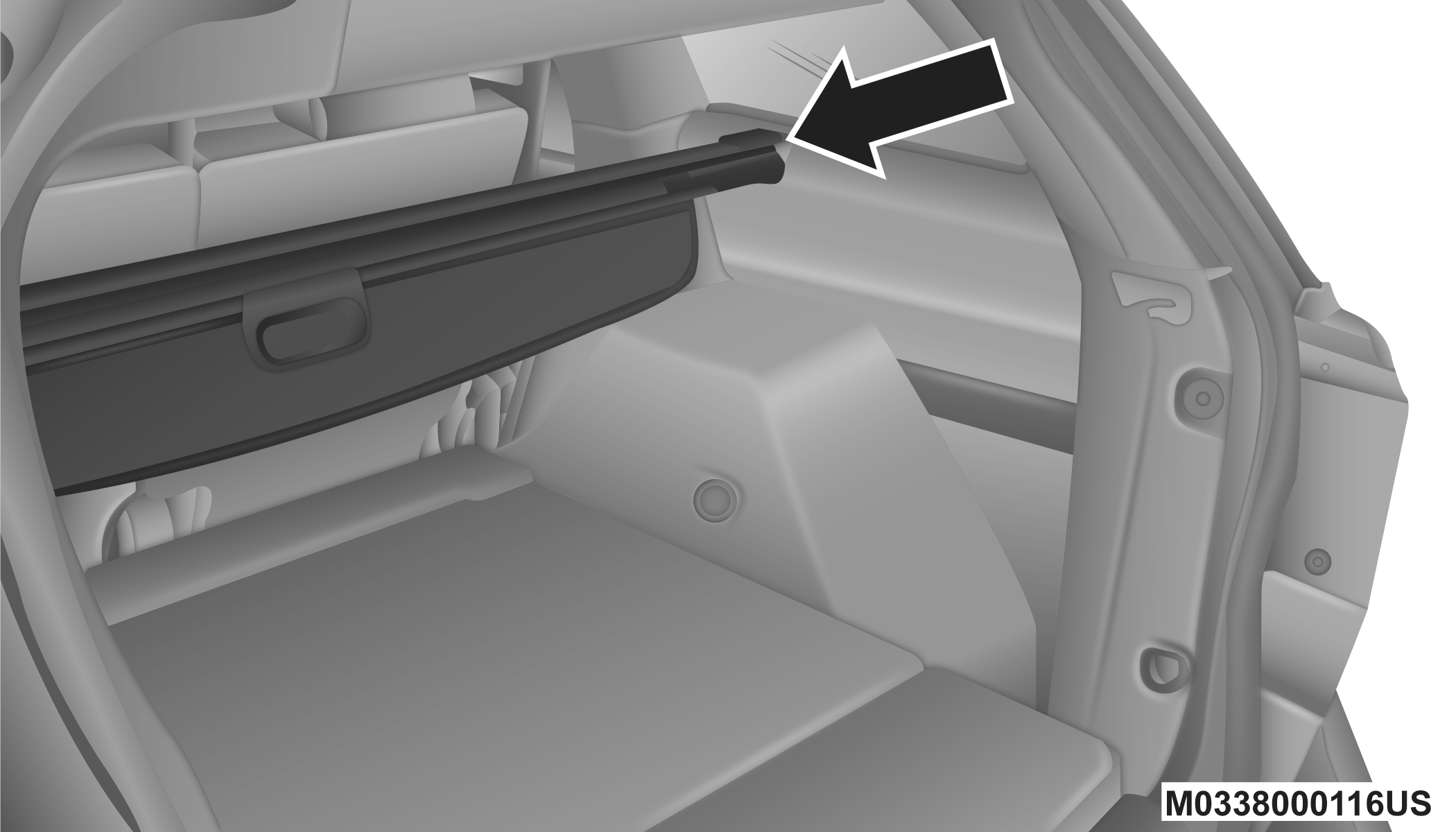
Installing Retractable Cargo Area Cover
-
Insert the spring-loaded post on the opposite end of the cover housing into the attachment point on the opposite side of the vehicle.
-
Grab the cover handle and pull it toward you. As the cover nears the liftgate opening, guide the rear attachment posts (on both ends of the cover) into the notches in the trim panels. Lower the cover to position the posts into the bottom of the notches and release the handle.
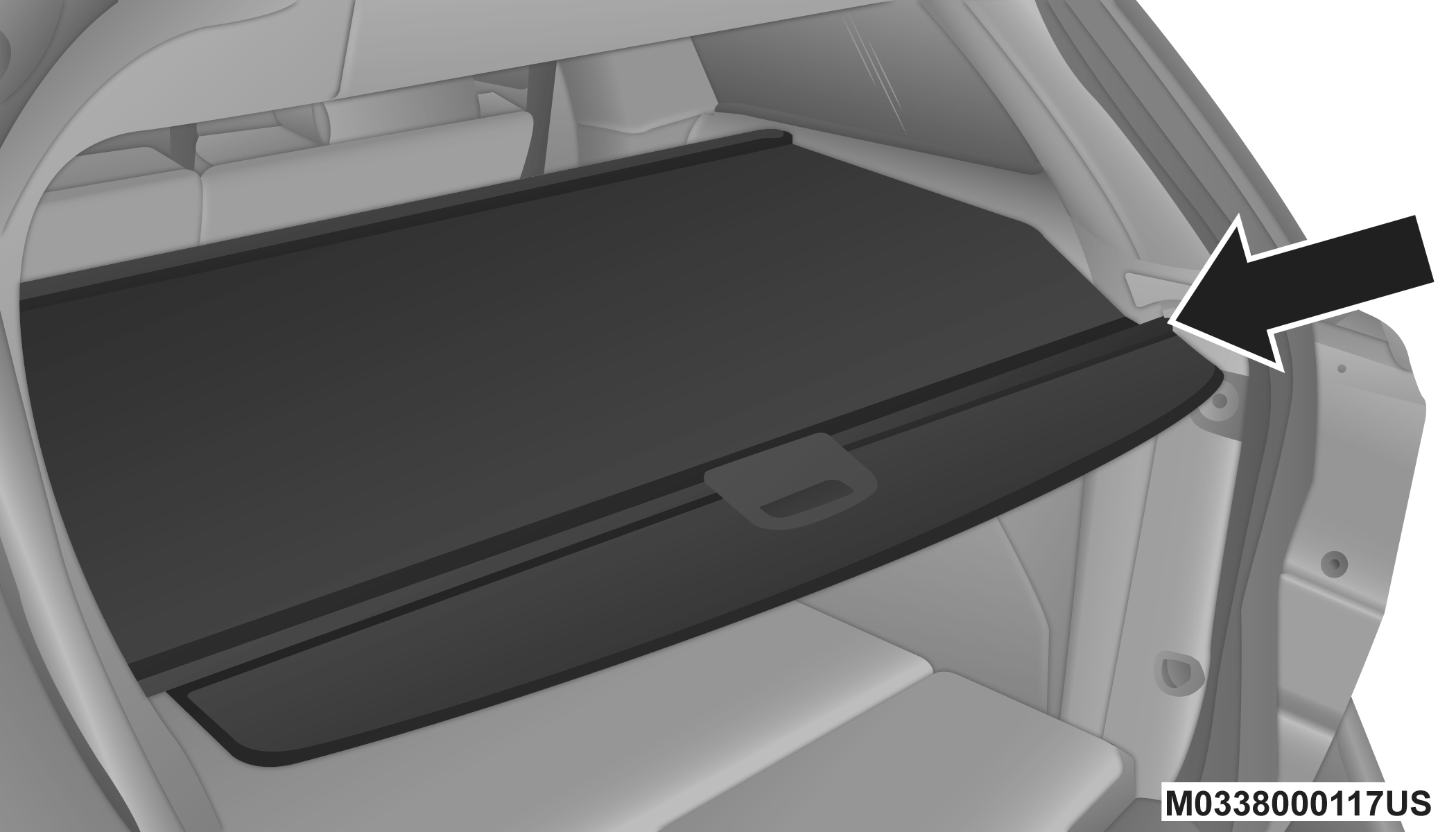
Positioning Retractable Cargo Area Cover
WARNING:
In a collision, a loose cargo cover in the vehicle could cause injury. It could fly around in a sudden stop and strike someone in the vehicle. Do not store the cargo cover on the cargo floor or in the passenger compartment. Remove the cover from the vehicle when taken from its mounting. Do not store it in the vehicle.
CARGO TIE-DOWNS
WARNING:
Cargo tie-downs are not safe anchors for a child seat tether strap. In a sudden stop or collision, a tie-down could pull loose and allow the child seat to come loose. A child could be badly injured. Use only the anchors provided for child seat tethers.
Cargo tie-downs are located on both rear trim panels. These tie-downs should be used to secure loads safely when the vehicle is moving.
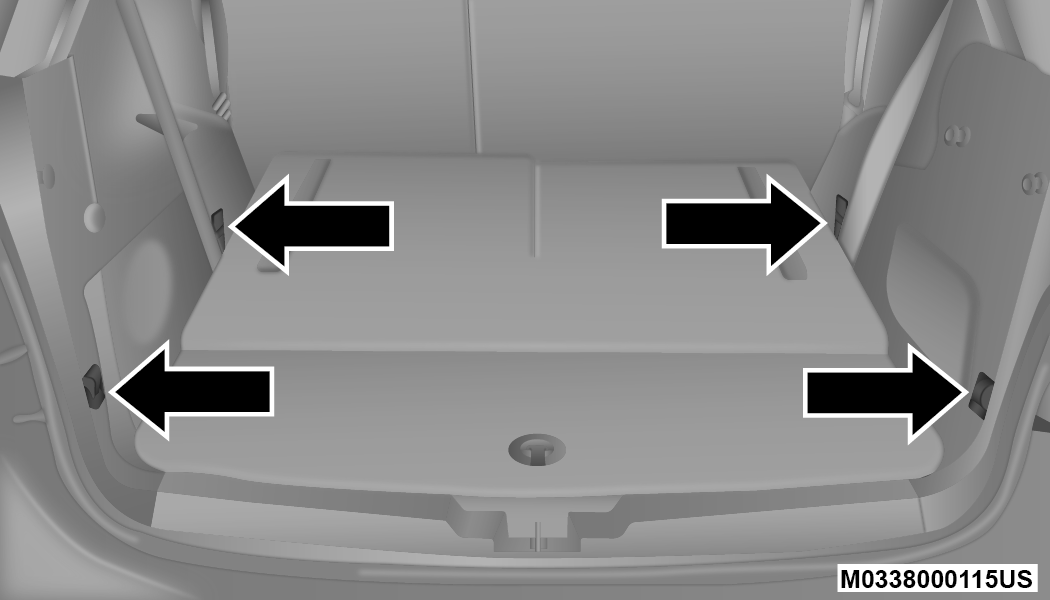
Cargo Tie-Downs
WARNING:
The weight and position of cargo and passengers can change the vehicle center of gravity and vehicle handling. To avoid loss of control resulting in personal injury, follow these guidelines for loading your vehicle:
-
Do not carry loads that exceed the load limits described on the label attached to the left door or left door center pillar.
-
Always place cargo evenly on the cargo floor. Put heavier objects as low and as far forward as possible.
-
Place as much cargo as possible in front of the rear axle. Too much weight or improperly placed weight over or behind the rear axle can cause the vehicle to sway.
-
Do not pile luggage or cargo higher than the top of the seatback. This could impair visibility or become a dangerous projectile in a sudden stop or collision.
-
To help protect against personal injury, passengers should not be seated in the rear cargo area. The rear cargo space is intended for load carrying purposes only, not for passengers, who should sit in seats and use seat belts.
Download Manual