Starting and stopping the engine
 Introduction to the subject
In this chapter you will find information on the following subjects:
Explanatory notes in this section regarding automatic transmissions also apply to the DSG® automated transmission.
Immobilizer display
If an unauthorized vehicle key is used or the system malfunctions, a message may appear on the instrument cluster display. The engine cannot be started.
Push-starting and tow-starting
For technical reasons, never try to push-start or tow-start the vehicle. Jump-start the vehicle instead while following proper and safe procedures.
More information:
- Vehicle key set
- Shifting
- Steering
- Braking and parking
- Starting assistance systems
- Refueling
- Fuel
- Emergency closing and opening
- Jump-starting
- Towing
 WARNING
Switching off the engine while the vehicle is moving can make the vehicle harder to stop and result in loss of vehicle control, leading to collisions and severe personal injuries.
- Brake and steering assistance systems, the airbag system, safety belt pretensioners, and other vehicle safety features only work when the engine is running.
- Switch off the engine only when the vehicle is not moving.
WARNING
To reduce the risk of serious personal injury when starting and running the vehicle's engine:
- Never start the engine or let it run in a confined or enclosed area. Engine exhaust contains carbon monoxide, a poisonous, colorless, and odorless gas. Carbon monoxide can cause unconsciousness and death.
- Never start the engine or let it run if oil, fuel, or other flammable substances are under, around, or have leaked from the vehicle, for example, due to vehicle damage.
- Never leave the vehicle unattended with the engine running, especially when it is in gear. The vehicle could move suddenly or some other unexpected event could occur, resulting in property damage, fire, or personal injury.
- Never use starting assist fluids. Starting fluids can explode and can cause a run-away vehicle condition.
WARNING
The vehicle exhaust system and the catalytic converter get very hot and can cause fires and serious personal injury.
- Never park the vehicle where the hot exhaust system or catalytic converter could ignite flammable materials, such as brush, leaves, dry grass, spilled fuel, etc.
- Never apply additional undercoating or rust proofing on or near the exhaust manifold, exhaust pipes, catalytic converter, or heat shields.
Indicator lights
Read and follow the introductory information and safety information first
| Lights up | Possible cause | Proper response |
|---|---|---|
| Brake pedal not depressed. | Apply the brake pedal to start the engine . |
| Flashes | Possible cause | Proper response |
|---|---|---|
| The release button in the selector lever did not engage. Vehicle movement is prevented. | Engage the selector lever release button . |
When the ignition is switched on, several warning and indicator lights come on briefly for a function check. They go out after a few seconds.
WARNING
Failure to heed warning lights and instrument cluster text messages can cause the vehicle to break down in traffic and result in a collision and serious personal injury.
- Never ignore warning lights or text WARNINGS.
- Always stop the vehicle as soon as it is safe to do so.
- Whenever stalled or stopped for repair, move the vehicle a safe distance off the road, turn on the emergency flashers, stop the engine, and use other warning devices to warn approaching traffic.
 NOTE
NOTE
Failure to heed warning lights or text WARNINGS can result in vehicle damage.
Vehicle key positions in the ignition switch
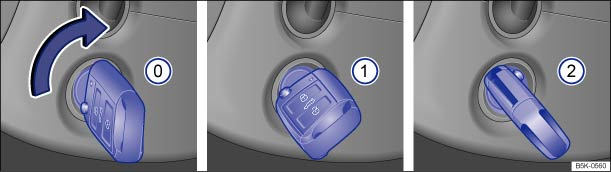
Fig. 121 In the ignition switch: Vehicle key positions.
Read and follow the introductory information and safety information first
If there is no vehicle key in the ignition, the steering column is locked.
Vehicle key position
 Ignition switched off. Steering column lock engaged. The vehicle key can be removed.
 Ignition is switched on. Steering column lock can be released.
 Engine is started. When the engine starts, release the vehicle key. When released, the vehicle key returns to position ①.
If you use the wrong key
If an unauthorized vehicle key has been inserted into the ignition switch, it can be removed as follows:
- Automatic transmission: Press the release button on the transmission selector lever and release. The vehicle key can now be removed.
- Manual transmission: Pull out the vehicle key.
WARNING
Improper use of vehicle keys can result in serious personal injury.
- Always take the key with you when you leave the vehicle. The engine can be started and vehicle systems such as the power windows can be operated, leading to serious personal injury.
- Never leave children, disabled persons, or anyone who cannot help themselves in the vehicle. The doors can be locked with the remote control vehicle key. This could result in people being trapped in the vehicle in an emergency. For example, depending on the time of year, people trapped in the vehicle can be exposed to very high or very low temperatures.
- Heat buildup in the passenger and luggage compartment of a parked vehicle can result in temperatures in the vehicle that are much higher than the outside temperatures, particularly in summer. Temperatures can quickly reach levels that can cause unconsciousness and death, particularly to small children.
- Never remove the key from the ignition switch while the vehicle is moving or rolling to a stop. The steering wheel will lock and you will not be able to steer or control the vehicle.

Leaving the key in the ignition for a long time when the engine is not running will drain the vehicle battery.
Leaving the selector lever for a long period of time in any position other than Park (P) when the ignition is switched off can drain the vehicle battery.
On automatic transmission vehicles, the vehicle key can be removed from the ignition switch only when the transmission is in Park (P). You may have to press the release button on the transmission selector lever to put the lever into Park (P).
Starter button
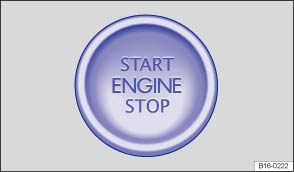
Fig. 122 In the lower center console: Starter button for the Keyless Access system.
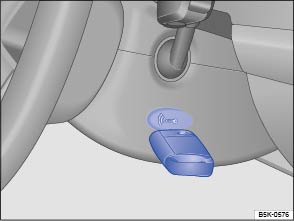
Fig. 123 Hold the remote control vehicle key to the right of the steering column: Emergency starting feature on vehicles with Keyless Access.
Read and follow the introductory information and safety information first
For vehicles with Keyless Access with push-button start, , the vehicle can be started and stopped with the starter button in the lower center console .
The starter button can only be used when an authorized vehicle key is in the vehicle.
When leaving the vehicle, the electronic steering column lock is activated when the ignition is switched off and the driver door is opened .
Switching the ignition on and off
- Briefly press the starter button once without operating the brake or clutch pedals .
Emergency start feature
If an authorized remote control vehicle key is in the passenger compartment but the instrument cluster displays Key not in Range when you push the starter button, the remote control vehicle key battery is weak or dead. You can still start the engine using the Emergency start feature.
- Make sure the selector lever is in the Park (P) position.
- Hold the remote control vehicle key to the right of the steering column trim immediately after pressing the starter button .
- The ignition automatically switches on and the engine starts.
Emergency shut-off
If the engine does not switch off by briefly pressing the starter button, emergency shut-off is necessary:
- Press the starter button twice within 3 seconds or press and hold the button longer than 1 second .
- The engine switches off automatically.
Engine restart feature
If no authorized remote control vehicle key is identified in the passenger compartment after the engine has been switched off, the engine can be restarted within about 5 seconds. A related message is shown in the instrument cluster display.
After the 5 seconds have passed, the engine can no longer be started without an authorized vehicle key in the passenger compartment.
WARNING
Unintended vehicle movement can cause serious personal injury.
- Do not depress the brake or clutch pedals when switching on the ignition, as the engine could otherwise start immediately.
WARNING
Improper use of vehicle keys can result in serious personal injury.
- Always take the key with you when you leave the vehicle. Children or unauthorized persons may use it to lock the vehicle, start the engine, and operate vehicle systems such as the power windows, leading to serious personal injury.
- Never leave children, disabled persons, or anyone who cannot help themselves in the vehicle. The doors can be locked using the remote control vehicle key. This could result in people being trapped in the vehicle in an emergency. For example, depending on the time of year, people trapped in the vehicle can be exposed to very high or very low temperatures.
- Heat buildup in the passenger and luggage compartment of a parked vehicle can result in temperatures in the vehicle that are much higher than the outside temperatures, particularly in summer. Temperatures can quickly reach levels that can cause unconsciousness and death, particularly to small children.
If the ignition is switched on or the engine is running and the driver door is opened, a chime sounds. The chime is also a reminder to switch off the engine and turn off the ignition before leaving and locking the vehicle from the outside.
Starting the engine
Read and follow the introductory information and safety information first
| Please perform these steps only in the order listed. | ||
|---|---|---|
| Step | Vehicles without Keyless Access | Vehicles with Keyless Access |
| 1. | Automatic transmission: Depress the brake pedal and hold it down until step 5 is completed. | |
| 1 a. | Manual transmission: Depress clutch pedal fully and hold until the engine has started. | |
| 2. | Shift the transmission into Neutral (N) or Park (P) (automatic), or into Neutral (manual only). | |
| 3. | Turn the vehicle key to position – do not depress the accelerator pedal. | Briefly press the starter button – do not depress the accelerator pedal. An authorized vehicle key must be inside the vehicle in order to start the engine. |
| 4. | When the engine starts, release the vehicle key. | |
| 5. | If the engine does not start, switch off the ignition and start again after about 1 minute. | If the engine does not start, switch off the ignition and start again after about 1 minute. Use the emergency start feature if necessary . |
| 6. | Release the parking brake when you are ready to start driving . | |
WARNING
Never leave the vehicle unattended with the engine running, especially when it is in gear. The vehicle could move suddenly or some other unexpected event could occur, resulting in property damage, fire, or personal injury.
WARNING
Starting fluids can explode and can cause a run-away vehicle condition.
- Never use starting assist fluids.
NOTE
- You can damage the starter or the engine if you try to start the engine when the vehicle is still moving, or if you try to restart the engine right after switching it off.
- Avoid high engine speeds, full throttle acceleration, and heavy engine loads when the engine is cold.
- Do not try to start the engine by pushing or towing the vehicle. Unburned fuel can get into the catalytic converter and damage it. The steering column may also be locked.

Do not let your vehicle warm up while standing; instead, start driving right away after making sure that you have good visibility through all windows. This will help the engine reach operating temperature faster and keep down emissions.
Major consumers of electricity are temporarily switched off when the engine is being started.
After starting a cold engine, there may be increased operating noises for a few seconds. This is normal and harmless.
Stopping the engine
Read and follow the introductory information and safety information first
| Please perform these steps only in the order listed. | ||
|---|---|---|
| Step | Vehicles without Keyless Access | Vehicles with Keyless Access |
| 1. | Bring the vehicle to a complete stop . | |
| 2. | Depress and hold down the brake pedal until step 4 is completed. | |
| 3. | Automatic transmission: Shift the transmission into Park (P). | |
| 4. | Apply the parking brake to help prevent the vehicle from moving . | |
| 5. | Turn the vehicle key to position in the ignition switch. | Briefly press the starter button . If the engine will not switch off, carry out the emergency shut-off procedure . |
| 6. | Manual transmission: Shift into 1st gear (vehicle on flat surface or pointing uphill) or reverse (vehicle pointing downhill). | |
| 7. | Removing the vehicle key from the ignition switches off electrical equipment and activates the steering column lock. | Opening the doors switches off electrical equipment and activates the steering column lock. |
WARNING
Never stop the engine before the vehicle has come to a complete stop. You can lose control of the vehicle, crash, and be seriously injured.
- The airbags and safety belt pretensioners will not work when the ignition is switched off.
- The brake booster does not work when the engine is not running. More brake pedal pressure will be needed to stop the vehicle.
- The power steering system does not work when the engine is not running, and you will need more force to steer the vehicle.
- When the key is removed from the ignition switch, the steering will lock and you will not be able to steer the vehicle.
NOTE
If the vehicle has been driven hard for a long time, the engine could overheat when it is stopped. To reduce the risk of engine damage, let the engine idle in Neutral for about 2 minutes before you switch off the ignition.
If the ignition is switched on or the engine is running and the driver door is opened, a chime sounds. The chime is also a reminder to switch off the engine and turn off the ignition before leaving and locking the vehicle from the outside.
On vehicles with automatic transmissions, the vehicle key can only be removed from the ignition when the transmission is in Park (P).
After the engine has been switched off, the radiator fan in the engine compartment may keep running for several minutes, or may start running after the vehicle has been parked for a while, even if the ignition is switched off and the vehicle key has been removed. The radiator fan shuts off automatically when the engine has cooled down enough.
Electronic immobilizer
Read and follow the introductory information and safety information first
The immobilizer helps to prevent the engine from being started and driven with an unauthorized vehicle key.
There is a microchip inside the vehicle key. The chip deactivates the immobilizer automatically when an authorized vehicle key is inserted into the ignition switch.
The electronic immobilizer is automatically activated when the remote control vehicle key is pulled out of the ignition switch. On vehicles with Keyless Access, the vehicle key must be outside the vehicle .
The engine can therefore only be started with an authorized and correctly coded genuine Volkswagen vehicle key. Coded vehicle keys are available from authorized Volkswagen dealers, authorized Volkswagen Service Facilities, and from certain independent repair facilities and locksmiths who are qualified to make these vehicle keys .
If an unauthorized vehicle key is used, a message appears in the instrument cluster display. The vehicle cannot be operated with this key.
A Declaration of Compliance with the United States FCC and Industry Canada regulations is on .
Using genuine Volkswagen keys helps minimize the risk of malfunctions.
Download Manual