Refueling
 Introduction to the subject
In this chapter you will find information on the following subjects:
The fuel filler flap is located on the rear right side of the vehicle.
More information:
- Exterior views
- Fuel
- Working in the engine compartment
 WARNING
Improper refueling or handling of fuel is dangerous and can cause fire, explosion, and severe burns.
- Always make sure that the fuel filler cap is screwed on all the way. This helps keep fuel from spilling out or evaporating.
- Fuel is highly flammable and explosive; it can cause severe burns and other severe injuries.
- Failure to shut the engine off while refueling and/or to insert the pump nozzle all the way into the fuel filler neck can cause fuel to overflow and to spray out. Fuel spray and overflowing fuel are dangerous because they can cause fire and serious personal injury.
- During refueling, the engine and the ignition must be switched off for safety reasons.
- Never use a mobile telephone, CB radio, or other radio equipment while refueling. The electromagnetic radiation can cause sparks that can ignite fuel vapors and cause a fire.
- Never get back into your vehicle while refueling. If in exceptional circumstances you must get back in your vehicle while refueling, make certain that you close the door and touch metal to discharge static electricity before touching the filler nozzle again. This helps avoid the buildup of static electricity, which can cause sparks that can ignite fuel vapors released during refueling.
- Never smoke or have an open flame (or sparks, cigarettes, or other smoldering objects) anywhere in or near your vehicle when refueling or filling a portable fuel container.
- Follow all safety instructions and procedures that apply at the service station where you refuel.
- Never spill fuel in the vehicle or the luggage compartment.
WARNING
Even if empty, portable fuel containers can leak and cause a fire and serious personal injuries, especially in a crash.
- For your safety, we strongly recommend that you do not travel with a portable fuel container in your vehicle.
- If, under exceptional circumstances, you must transport a portable fuel container, please observe the following:
- Never fill a portable fuel container while it is anywhere in or on the vehicle (for example, in the luggage compartment). Static electricity can build up while filling and can ignite fuel vapors, causing a fire.
- Always place a portable fuel container on the ground before filling. Never spill fuel inside the vehicle or luggage compartment. Fuel vapors are highly flammable.
- Always keep the filler nozzle completely inside the portable container before and during filling.
- If filling a portable container made of metal, the filler nozzle must always be in contact with the container. This will help prevent static electricity from discharging and causing a fire.
- Always observe local and state or provincial laws about the use, storage, and transportation of portable fuel containers.
- Make certain that the portable fuel container meets industry standards, such as ANSI/ASTM F852-86.
 NOTE
NOTE
- Remove fuel spills from the vehicle immediately to help prevent damage to the paint, tires, and wheel housings.
- Refueling with gasoline when your vehicle has a diesel engine or refueling with diesel fuel when your vehicle has a gasoline engine can cause very serious and expensive engine and fuel system damage that is not covered by any Volkswagen Limited Warranty.
- If you put any amount of incorrect fuel in the fuel tank, do not start the engine under any circumstances. Immediately contact the nearest authorized Volkswagen dealer or authorized Volkswagen Service Facility for assistance. These fuels contain substances that can severely damage the fuel system and the engine if the engine is started.

Fuels can pollute the environment. Spilled fuel must be collected and disposed of properly, following all applicable environmental regulations.

There is no emergency release for the fuel filler flap. Contact an authorized Volkswagen dealer or an authorized Volkswagen Service Facility for assistance.
Indicator lights and fuel gauge
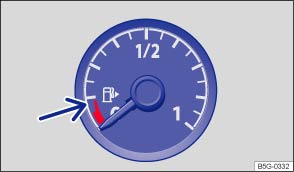
Fig. 149 In the instrument cluster: Fuel gauge.
Read and follow the introductory information and safety information first
| Lights up | Gauge position |
Possible cause or meaning | Proper response |
|---|---|---|---|
| Red range (arrow) | Fuel tank almost empty. Running on reserve . |
Time to refuel . | |
| – | Fuel filler cap not properly closed. | Stop and close the fuel filler cap properly. |
When the ignition is switched on, several warning and indicator lights come on briefly for a function check. They go out after a few seconds.
Fuel filler cap not properly closed 
If the indicator light comes on or you see a text message in the instrument cluster display indicating that the fuel filler cap is not properly closed, stop the vehicle in a safe place and switch off the engine and the ignition.
Open the fuel filler flap and take the fuel filler cap off the filler neck. Then put the fuel filler cap back on the filler neck and screw it on clockwise until you clearly hear a clicking sound. Close the fuel filler flap.
After switching on the ignition, the indicator light may stay on or the text message may still appear in the instrument cluster display, even if the fuel filler cap is now properly closed. This is normal and no reason to take your vehicle in for service.
If, however, the malfunction indicator light also comes on, drive to your nearest authorized Volkswagen dealer or authorized Volkswagen Service Facility and have the fuel system and the engine checked.
WARNING
Driving with a fuel tank that is almost empty can lead to stalling in traffic, a collision, and serious personal injuries.
- When the fuel tank is almost empty, fuel supply to the engine can be interrupted, especially when driving over bumps, across slopes, and up and down hills.
- Steering and braking assistance as well as ESC and related systems will not work if the engine sputters or stalls due to lack of fuel.
- Always refuel when the tank is 1/4 full to reduce the risk of running out of fuel and stalling in traffic.
NOTE
- Failure to heed warning lights or text WARNINGS can result in vehicle damage.
- Never drive until the fuel tank is completely empty. The irregular fuel supply can cause the engine to misfire. This allows unburned fuel to get into the exhaust system and damage the catalytic converter.
The small arrow next to the gas pump symbol in the fuel gauge shows the side of the vehicle with the fuel filler flap.
Refueling
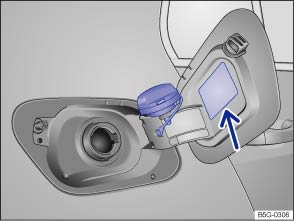
Fig. 150 Right rear side of vehicle: Fuel cap placed on the open fuel filler flap.
Read and follow the introductory information and safety information first
Before refueling, always switch off the engine, the ignition, and all mobile phones, and leave them switched off until refueling is complete.
Opening the fuel filler cap
- Unlock the vehicle from the outside with the vehicle key or press the central locking button in driver door
to unlock the vehicle from the inside .
- The fuel filler flap is located at the right rear of the vehicle.
- Press on the back part of the fuel filler flap and fold open.
- Unscrew the fuel cap counterclockwise and remove. Use the slot on the fuel filler flap hinge to hold the cap while refueling.
Refueling
The correct fuel grade for your vehicle is listed on a sticker on the inside of the fuel filler flap (arrow).
- The fuel tank is full when the automatic filler nozzle pump switches off the first time .
- Do not try to add fuel after the pump stops! Topping off the tank in this way may fill the expansion space that the tank needs and cause fuel to overflow, for example, if it gets warmer outside.
Closing the fuel filler cap
- Screw the fuel cap clockwise onto the fuel filler neck until you hear it click into place.
- Close the fuel filler flap until you hear it latch shut. The fuel filler flap must be flush with the vehicle body.
WARNING
Spilled fuel can cause fires, explosions, burns, and other severe injuries.
- Always stop refueling once the pump nozzle switches off so that the tank does not overflow.
NOTE
Remove fuel spills from all vehicle surfaces immediately to help prevent damage to the paint, tires, and wheel housings.
Fuel spills may pollute the environment.
Fuel capacities
Read and follow the introductory information and safety information first
| Engine | Fuel tank capacity |
|---|---|
| Gasoline engines | About 13.2 gallons (50.0 liters), including about 1.3 gallons (5.0 liters) reserve. |
Refueling checklist
Read and follow the introductory information and safety information first
The engine compartment of any motor vehicle is a hazardous area. Never do any work on the engine or in the engine compartment unless you
- know exactly how to carry out the job,
- have the correct technical information and the proper tools and supplies, and
- are familiar with the necessary safety precautions .
Checklist
If you are uncertain in any way, have the work done by an authorized Volkswagen dealer or authorized Volkswagen Service Facility. Serious personal injury may result from improperly performed work. Make sure that you check the following items regularly. The best thing is to check them every time you refuel:

Windshield washer fluid level Windshield wipers and washer
-
Engine oil level Engine oil
-
Engine coolant level Engine coolant
-
Brake fluid level Braking and parking
-
Tire pressure Tires and wheels
- Vehicle lighting necessary for driving safety:
- Turn signals
- Low beams and high beams
- Taillights
- Brake lights
- License plate lights
- Vehicle lighting necessary for driving safety:
For more information about the vehicle lighting, see .
WARNING
Disregarding the safety-related checklist may lead to accidents and injuries.
- Please note and follow the points listed in the checklist.
Download Manual