Luggage compartment
 Introduction to the subject
In this chapter you will find information on the following subjects:
Always stow heavy objects in the luggage compartment and make sure that the rear seat backrests are securely latched in their upright position. Always secure objects to the tie-downs with suitable straps. Never overload the vehicle. Remember that the vehicle load, as well as how it is distributed, can affect vehicle handling and braking .
More information:
- Safety belts
- Airbag system
- Lights
- Transporting
- Trailer towing
- Tires and wheels
 WARNING
An open or unlocked luggage compartment poses special risks for children.
- Close and lock the rear hatch and all doors when the vehicle is not in use. First, make certain that no one is left inside.
- Never leave your vehicle unattended or let children play around the vehicle, especially with the rear hatch left open. A child could crawl into the vehicle and pull the hatch shut, becoming trapped and unable to get out. This could cause severe or fatal injuries.
- A closed vehicle can become very hot or very cold, depending on the season. Temperatures can quickly reach levels that can cause unconsciousness or death, particularly to small children.
- Never let children play in or around the vehicle.
- Never let anyone ride in the luggage compartment.
WARNING
Unsecured or incorrectly stowed items can fly through the vehicle, causing serious personal injury during hard braking or sharp steering or in an accident. Loose items can also be struck and thrown through the passenger compartment by the front airbags if they inflate. To help reduce the risk of serious personal injury:
- Always stow all objects securely in the vehicle. Always put luggage and heavy items in the luggage compartment.
- Always secure objects in the passenger compartment properly with suitable straps so that they cannot move into the deployment zone of a side or front airbag during sudden braking, in a sudden maneuver, or in a collision.
- Always keep storage compartments closed while driving.
- Never stow hard, heavy, or sharp objects in the vehicle's open storage compartments, on the luggage compartment cover, or on the top of the instrument panel.
- Always remove hard, heavy, or sharp objects from clothing and bags in the vehicle interior and stow them securely in the luggage compartment.
WARNING
Transporting heavy objects causes the handling characteristics of the vehicle to change and increases braking distances. Heavy loads which are not properly stowed or secured in the vehicle can lead to a loss of vehicle control and cause serious personal injury.
- Transporting heavy items causes the handling characteristics of the vehicle to change by shifting the vehicle's center of gravity.
- Always distribute luggage evenly and as low as possible within the vehicle. The vehicle capacity weight figures apply when the load is distributed evenly in the vehicle (passengers and luggage).
- Always stow luggage and heavy items in the luggage compartment as far forward of the rear axle as possible and secure them with appropriate straps to the tie-downs provided.
- Never exceed the vehicle's Gross Vehicle Weight Rating or Gross Axle Weight Ratings, which are printed on the Safety Compliance Certification Label located on the door jamb of the driver door. Exceeding the permissible weight can cause the vehicle to skid and behave differently.
- Always adapt your speed and driving style to accommodate your payload and its weight distribution within your vehicle.
- Be especially cautious and gentle when stepping on the accelerator pedal and avoid sudden braking and other maneuvers.
- Brake earlier than you would if you were not driving a loaded vehicle.
 NOTE
NOTE
The defroster heating wires or antenna in the rear window can be damaged by objects that rub against them.
Folding the rear seat backrest forward and back into place
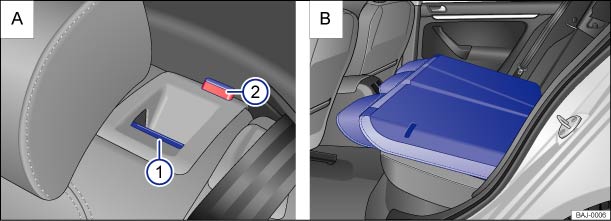
Fig. 88 A: Rear seat bench: release button ①, red mark ②. B: Seat backrest folded forward.
Read and follow the introductory information and safety information first
The rear seat backrest is divided into 2 sections. Each section of the rear seat backrest can be folded down individually to increase luggage space.
Folding the rear seat backrest forward
- Push the head restraint all the way down .
- Pull the release button forward while folding the rear seat backrest forward.
- The rear seat backrest is unlocked if the red area can be seen on the button.
- The rear seat backrest is released and can be folded forward.
- If the rear seat backrest is folded down, no one, including children, may ride on the rear seat.
Folding the rear seat backrest back into place
- Fold the rear seat backrest back until it engages securely .
- The red mark on the release button should no longer be visible.
- The rear seat backrest must be securely latched into place for the safety belts on the rear seats to provide optimal protection.
WARNING
Improper folding and improper latching of the rear seat backrest can cause serious personal injury.
- Always make sure there are no people or animals in the area around the rear seat backrest when folding it forward.
- Never fold the rear seat backrest forward or back while the vehicle is moving.
- When folding the rear seat backrest back up, make sure that the safety belt does not get caught or damaged.
- Keep hands, fingers, feet and other body parts out of the way when folding the rear seat backrest forward or back.
- Each rear seat backrest must be securely latched in the upright position so that the safety belts on the rear seats can provide protection. This is particularly the case for the middle seat on the rear seat bench.
- If a seat is used with an unsecured backrest, the passenger will move forward together with the rear seat backrest during sudden braking, driving maneuvers, or in a collision.
- If the red marking on the button is visible, this indicates that the backrest is not latched into place. Always check to make sure that the red marking is not visible whenever the rear seat backrest is in the upright position.
- No one, including children, may ride on the rear seats if the rear seat backrest is folded down or not correctly latched.
NOTE
Before folding the rear seat backrest forward, adjust the front seats so that the rear seat's head restraint or backrest cushion will not touch the front seats.
Luggage compartment cover
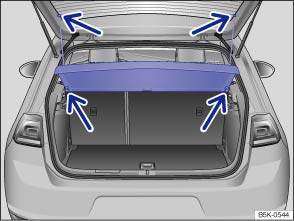
Fig. 89 In the luggage compartment: Installing and removing the luggage compartment cover.
Read and follow the introductory information and safety information first
When you open or close the rear hatch, the supporting cords, when attached, will automatically raise or lower the luggage compartment cover.
You can put light articles of clothing on the luggage compartment cover. But remember that your view through the rear window must not be obstructed.
Removing the luggage compartment cover
- Unhook the supporting cords from each side of the rear hatch (top arrows).
- Pull the luggage compartment cover upward (bottom arrows) until it releases from the side brackets.
- If necessary, stow the luggage compartment cover under the variable luggage compartment floor .
Installing the luggage compartment cover
- Press the luggage compartment cover into the side brackets from above (bottom arrows).
- Hook the supporting cords onto the rear hatch (top arrows).
WARNING
In a sudden braking or other maneuver, or in a collision, unsecured or improperly secured objects or animals on the luggage compartment cover can cause serious personal injury.
- Never leave hard, heavy or sharp objects in bags or loose on the luggage compartment cover.
- Never let animals ride on the luggage compartment cover.
NOTE
To help prevent damage to the luggage compartment cover, the luggage compartment may only be loaded to a height at which the luggage compartment cover will not press on the cargo when the rear hatch is closed.
NOTE
Things on the luggage compartment cover can damage it.
- The defroster heating wires or antenna in the rear window can be damaged by objects that rub against them.
Luggage compartment pass-through
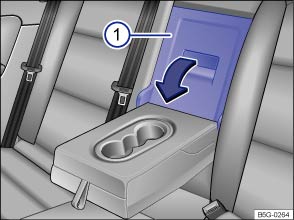
Fig. 90 In the rear seat backrest: Opening the luggage compartment pass-through.
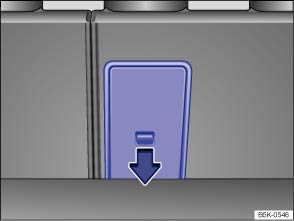
Fig. 91 In the luggage compartment: Opening the pass-through.
Read and follow the introductory information and safety information first
There is a pass-through for transporting things like skis in the rear seat backrest behind the center armrest.
To help prevent soiling the vehicle interior, cover dirty items before sliding them into the pass-through.
If the center armrest is folded down, no one can sit on the middle seat of the rear bench.
Opening the pass-through
- Fold down the rear center armrest .
- Pull the release lever in the direction of the arrow and fold the pass-through cover all the way forward.
- Open the rear hatch.
- Slide long objects from the luggage compartment through the pass-through.
- Secure objects with the safety belt.
- Close the rear hatch.
Closing the pass-through
- Fold the pass-through cover back until it engages securely. The red marking on the luggage compartment side should not be visible.
- Close the rear hatch.
- If necessary, fold the center armrest up.

The pass-through can also be opened from the luggage compartment. Press the release lever in the direction of the arrow and push the cover forward.
Tie-downs
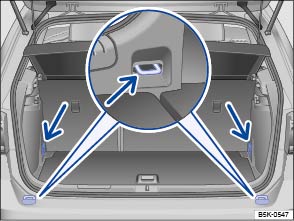
Fig. 92 In the luggage compartment: Tie-downs.
Read and follow the introductory information and safety information first
There are tie-downs in the front and rear of the luggage compartment, which you can use to secure luggage or other items (arrows).
Some tie-downs may have to be folded open for use.
Elastic straps can snap back toward you if they are not properly attached .
If you use elastic straps to secure items in the luggage compartment, be sure to fist securely attach them to the tie-downs just behind the rear seat backrest first and then to the tie-downs at the loading edge of the luggage compartment.
Remove the hooks from the tie-downs in the reverse order described above, first from the tie-downs at the loading edge and then from the tie-downs behind the rear seat backrest so that if the hooks come loose suddenly, they will move away from you.
WARNING
Unsuitable, worn, or damaged tie-down straps (elastic or non-elastic) can snap or come loose during braking or other maneuvers or in a collision. Objects secured with these straps can then come loose and fly through the passenger compartment, causing severe personal injuries or death.
- To help prevent baggage or other items from coming loose and flying around, always use suitable undamaged tie-down straps.
- Securely fasten the tie-down straps to the tie-downs.
- Loose or improperly secured objects in the luggage compartment can slide about suddenly and change the vehicle's handling.
- Secure even small and light objects. Loose objects in the luggage or passenger compartment can fly about during sudden braking maneuvers or in the event of an accident and injure occupants.
- Never exceed the maximum allowable load on the tie-downs when securing objects.
- Never secure a child restraint to the tie-downs.
WARNING
Elastic straps have to be stretched when being attached to the tie-downs in the luggage compartment. Hooks on these straps can cause serious personal injury if not handled properly and attached securely.
- Always protect eyes and face from injury from the hooks when attaching them to the tie-downs in the luggage compartment.
- Always hold the hooks on elastic straps firmly when attaching to the vehicle and do not let them snap back and hit you.
- First attach the hooks on the straps to the tie-downs at the rear seat backrest in the luggage compartment and then to the tie-downs near the loading edge of the luggage compartment. This way, if one of the hooks on the elastic straps snaps back, it will move away from you, decreasing the risk of personal injury.
The maximum load for the tie-downs is about 380 lbs. (172 kg).
For suitable straps and luggage stowage systems, please see an authorized Volkswagen dealer or authorized Volkswagen Service Facility.
Shopping bag hooks
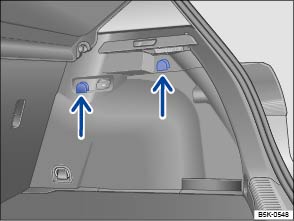
Fig. 93 In the luggage compartment: Shopping bag hooks.
Read and follow the introductory information and safety information first
Shopping bag hooks may be located on the upper left and right of the luggage compartment (arrows).
WARNING
Never use the shopping bag hooks as tie-downs. The hooks could break off during sudden braking maneuvers or in a collision.
NOTE
The maximum load for each shopping bag hook is 5 lbs. (2.5 kg).
Variable luggage compartment floor
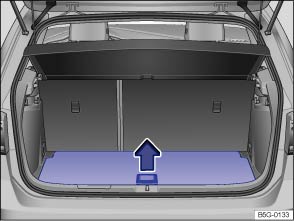
Fig. 94 In the luggage compartment: Opening the variable luggage compartment floor.
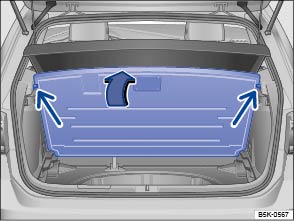
Fig. 95 In the luggage compartment: Variable luggage compartment floor folded up.
Read and follow the introductory information and safety information first
The variable luggage compartment floor is height-adjustable .
Opening and closing the luggage compartment floor
- To open the luggage compartment floor, lift the recessed handle and guide the floor upward until it is held in position by the brackets on either side of the luggage compartment (arrows).
- To close, guide the luggage compartment cover out of the brackets and downward into position.
Adjusting the height of the luggage compartment floor
- Lift the luggage compartment floor and pull it rearward out of the guides on the sides of the luggage compartment.
- Insert the luggage compartment floor into the guides at the required height and push it forward as far as it will go.
WARNING
During hard braking or an accident, loose objects can fly through the passenger compartment and cause serious or even fatal injuries.
- Even if the luggage compartment floor panel is properly raised, it is still necessary to secure all objects.
- The maximum weight rating of the variable luggage compartment floor is 330 lbs (150 kg) in the upper position
NOTE
Do not let the luggage compartment floor fall freely when closing it. Always guide it down into place. The trim or the luggage compartment floor could be damaged.
If you store the luggage compartment cover under the variable luggage compartment floor, insert the luggage compartment floor into the upper guides.
Download Manual