*SRS airbag (Supplemental Restraint System airbag)
*SRS: This stands for supplemental re- straint system. This name is used because the airbag system supplements the vehi- cle’s seatbelts.
Your vehicle is equipped with a supple- mental restraint system in addition to a lap/ shoulder belt at each front seating position and each rear window-side seating posi- tions. The supplemental restraint system (SRS) consists of seven airbags.
The configurations are as follows.
The system also controls seatbelt preten- sioners. For operation instructions and precautions concerning the seatbelt pre-
tensioner, refer to “Seatbelt pretensioners”
P57.
 General precautions regard- ing SRS airbag system
 NOTE
NOTE
 . If the SRS airbag deploys, fuel supply will be cut off to reduce the risk of fire caused by leaking fuel. For details about restarting of the engine, refer to “If your vehicle is involved in an accident” P438.
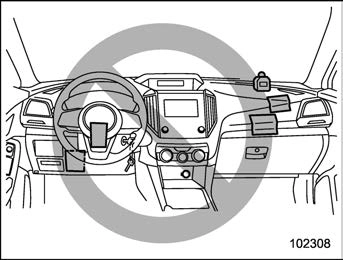
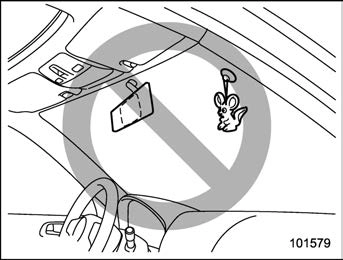 General precautions regard- ing SRS airbag system for accessories and any objects
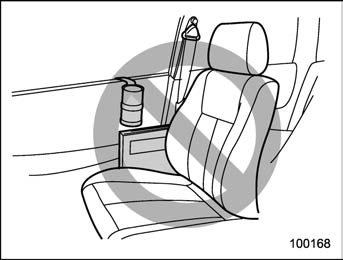
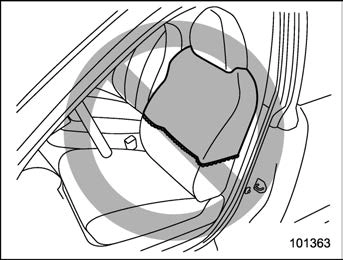
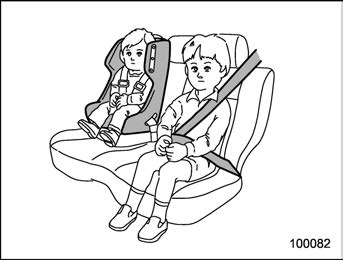
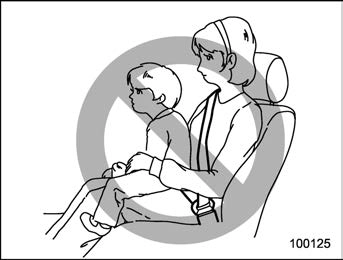
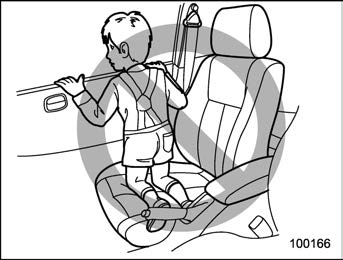
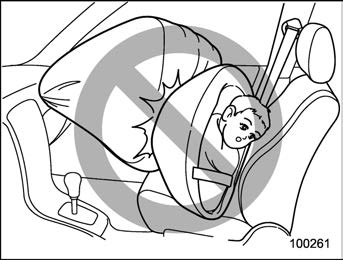 & General precautions regard- ing SRS airbag system and children
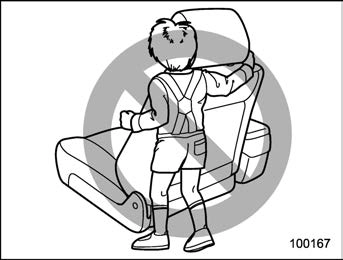
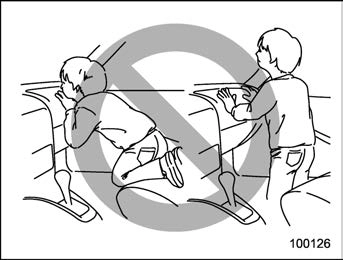
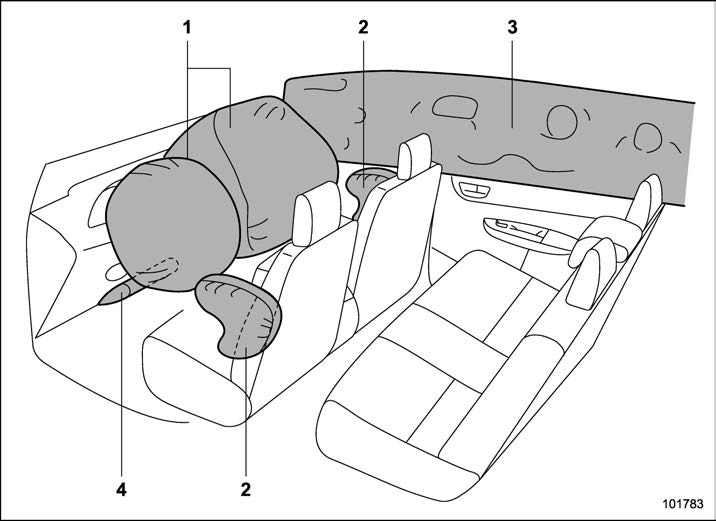
The SRS airbags are stowed in the following locations.
Driver’s SRS frontal airbag: in the center portion of the steering wheel
A “SRS AIRBAG” mark is located at the pad of the airbag.
Front passenger’s SRS frontal airbag: near the top of the dashboard under the “SRS AIRBAG” mark
SRS side airbag: in the door side of each front seat seatback which bears an “SRS AIRBAG” label
SRS curtain airbag: in the roof side (between the front pillar and a point behind the rear quarter glass)
“SRS AIRBAG” marks are located at the top of each center pillar.
SRS knee airbag: under the steering column
A “SRS AIRBAG” mark is located at the door of the airbag.
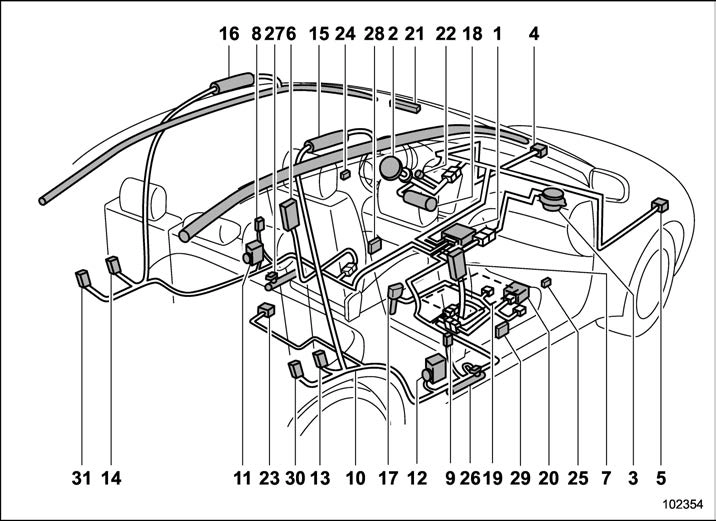 Airbag control module (including impact sensor and rollover sensor)
Your vehicle is equipped with a SUBARU advanced frontal airbag system that com- plies with the new advanced frontal airbag requirements in the amended Federal Motor Vehicle Safety Standard (FMVSS) No. 208.
The SUBARU advanced frontal airbag system automatically determines the de- ployment force of the driver’s SRS frontal airbag at the time of deployment as well as whether or not to activate the front passenger’s SRS frontal airbag and, if activated, the deployment force of the SRS frontal airbag at the time of deployment.
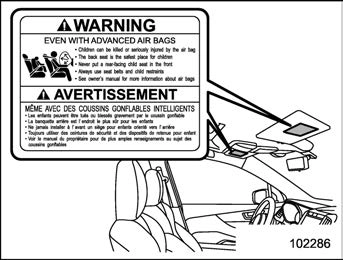
Your vehicle has warning labels on the driver’s and front passenger’s sun visors beginning with the phrase “EVEN WITH
ADVANCED AIR BAGS” and a tag at- tached to the glove box lid beginning with the phrase “Even with Advanced Air Bags”. Make sure that you carefully read the instructions on the warning labels and tag.
Always wear your seatbelt. The SUBARU advanced frontal airbag system is a supplemental restraint system and must be used in combination with a seatbelt. All occupants should wear a seatbelt or be seated in an appropriate child restraint system.
For the locations of the SRS airbags, refer to “Components” P83.
In a moderate to severe frontal collision, the following components deploy.
*1: When an offset frontal collision that is severe enough to deploy the front airbag occurs.
These components supplement the seat- belts by reducing the impact to the occupant’s head, chest and knees.
The driver’s SRS frontal airbag uses a dual stage inflator. The inflator operates in different ways depending on the severity of impact.
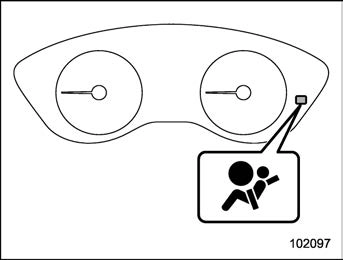
SRS airbag system warning light
Have the system inspected by your SUBARU dealer immediately if the SRS airbag system warning light illuminates.
! Front passenger’s SRS frontal air- bag
The front passenger’s SRS frontal airbag uses a dual stage inflator. The inflator operates in different ways depending on the severity of impact.
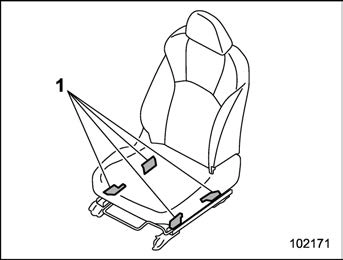
The occupant detection system sensors are installed between the seat and seat rails, and monitor the physique and pos- ture of the front passenger. Using this information, the occupant detection sys- tem determines whether the front passen- ger’s SRS frontal airbag should be de- ployed or not.
The occupant detection system may not inflate the front passenger’s SRS frontal airbag even when the driver’s SRS frontal
airbag deploys. This is normal. In this case, although the front passenger’s SRS frontal airbag does not operate, the front passenger’s seatbelt pretensioner oper- ates with the driver’s seatbelt preten- sioner. For details about the seatbelt pretensioner, refer to “Seatbelt preten- sioners” P57.
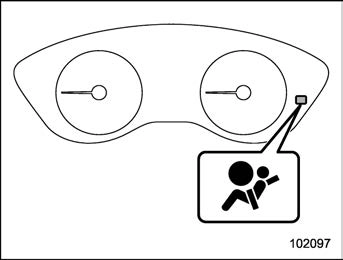
SRS airbag system warning light
If the seatbelt buckle switch and/or front passenger’s occupant detection system have failed, the SRS airbag system warn- ing light will illuminate. Have the system inspected by your SUBARU dealer imme- diately if the SRS airbag system warning light illuminates.
If your vehicle has sustained impact, this may affect the proper function of the SUBARU advanced frontal airbag system. Have your vehicle inspected at your SUBARU dealer. Do not use the front passenger’s seat while driving the vehicle to your SUBARU dealer.
! Passenger’s frontal airbag ON and OFF indicators
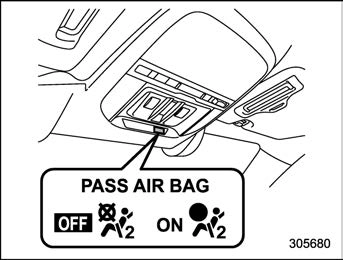
 : Front passenger’s frontal airbag ON indicator
 : Front passenger’s frontal airbag OFF indicator
Refer to “Front passenger’s frontal airbag ON and OFF indicators” P169.
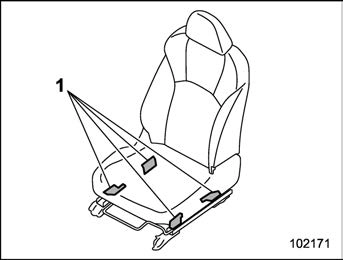
The occupant detection system sensors are installed between the seat and seat rails, and monitor the physique and pos- ture of the front passenger. Using this information, the occupant detection sys- tem determines whether the front passen- ger’s SRS frontal airbag should be de- ployed or not.
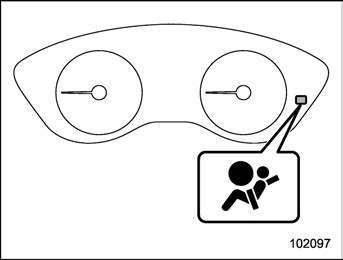
SRS airbag system warning light
If the front passenger’s seat cushion is wet, this may adversely affect the ability of the system to determine deployment. Wipe off liquid from the seat, let the seat dry naturally and then check the SRS airbag system warning light.
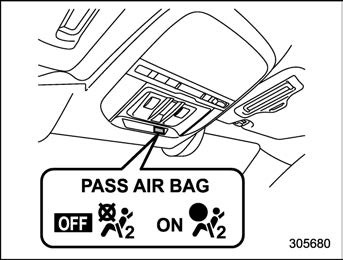
 : Front passenger’s frontal airbag ON indicator
 : Front passenger’s frontal airbag OFF indicator
If the front passenger’s frontal airbag ON and OFF indicators do not work properly even when the front passenger’s seat is dry, do not allow anyone to sit on the front passenger’s seat and have the occupant detection system checked by your SUBARU dealer.
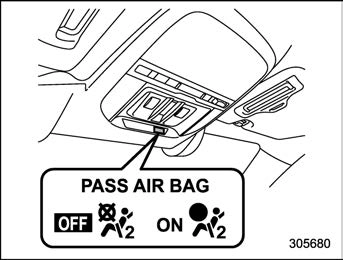
 : Front passenger’s frontal airbag ON indicator
 : Front passenger’s frontal airbag OFF indicator
Also, if luggage or electronic devices are placed on the front passenger’s seat, this may adversely affect the ability of the system to determine deployment. This may prevent the front passenger’s frontal airbag ON and OFF indicators from work- ing properly. Check that the indicators work properly.
When the OFF indicator turns off and the ON indicator illuminates, the front passen- ger’s frontal airbag may deploy during a collision. Remove luggage and electronic devices from the front passenger’s seat.
The front passenger’s SRS frontal airbag will not be activated when any of the following conditions are met regarding the front passenger’s seat:
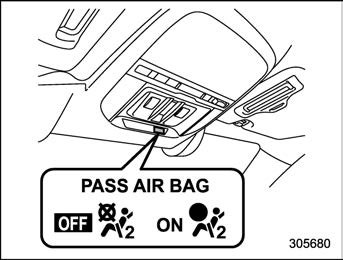
 : Front passenger’s frontal airbag ON indicator
 : Front passenger’s frontal airbag OFF indicator
P61, correctly install the child restraint
system.
If the ON indicator still remains illuminated while the OFF indicator turns off, take the following actions.
If the ON indicator still remains illuminated while the OFF indicator turns off after taking the relevant corrective actions described above, relocate the child re- straint system to the rear seat and im- mediately contact your SUBARU dealer for an inspection.
depending on the occupant’s seating posture. Children should always wear a seatbelt when sitting in the seat irre- spective of whether the airbag is deac- tivated or activated. If the front passen- ger’s SRS frontal airbag is activated (the ON indicator remains illuminated while the OFF indicator turns off), take the following action.
. Ensure that no article is placed on the seat other than the occupant.
If the ON indicator still remains illumi- nated while the OFF indicator turns off despite the fact that the actions noted above have been taken, seat the child/ small adult in the rear seat and imme- diately contact your SUBARU dealer for an inspection. Even if the system has passed the dealer inspection, it is recommended that on subsequent trips the child/small adult always take the rear seat.
Children who have outgrown a child restraint system should always wear the seatbelt irrespective of whether the airbag is deactivated or activated.
The front passenger’s SRS frontal airbag will be activated for deployment upon impact when any of the following condi- tions are met regarding the front passen- ger’s seat.
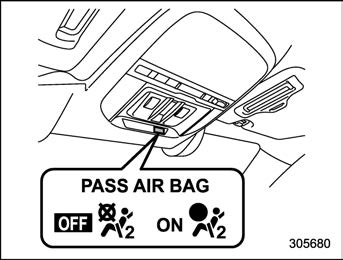
 : Front passenger’s frontal airbag ON indicator
 : Front passenger’s frontal airbag OFF indicator
This can be caused by the adult incorrectly sitting in the front passenger’s seat.
If the OFF indicator remains illuminated while the ON indicator remains off, take the following actions.
If the OFF indicator still remains illumi- nated while the ON indicator remains off, ask the occupant to move to the rear seat and immediately contact your SUBARU dealer for an inspection.
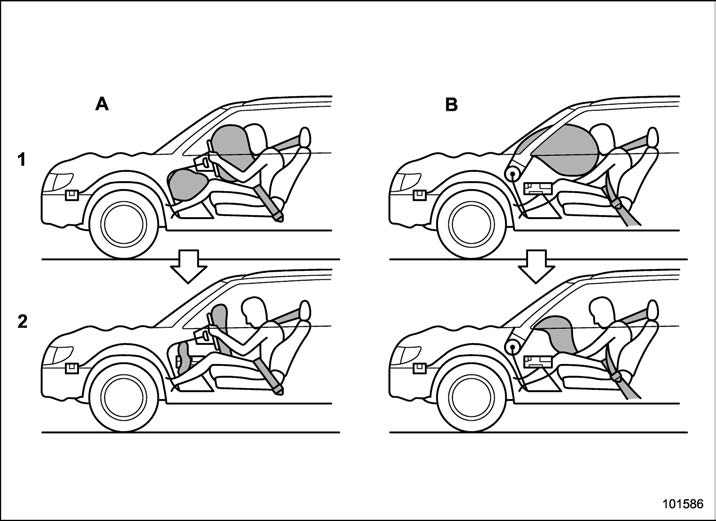
The SRS airbags can function only when the ignition switch is in the “ON” position.
The SUBARU advanced frontal airbag system is designed to determine the activation or deactivation condition of the front passenger’s SRS frontal airbag de- pending on the characteristic of item(s) or person on the front passenger’s seat monitored by the front passenger’s occu- pant detection system sensor. For this reason, only the driver’s SRS frontal airbag may deploy in the event of a collision, but this does not mean failure of the system.
If the following sensors detect a predeter- mined amount of force during a frontal collision, the control module sends signals to the airbag module(s) (only driver’s module or both driver’s and front passen- ger’s modules) instructing the module(s) to inflate the SRS frontal airbag(s).
On the driver’s side, the SRS knee airbag also inflates with the SRS frontal airbag.
The driver’s and front passenger’s SRS frontal airbags use dual stage inflators. The two inflators of each airbag are triggered either sequentially or simulta- neously, depending on the severity of impact, in the case of the driver’s SRS frontal airbag and depending on the severity of impact and the characteristic of item(s) or person on the seat in the case of the front passenger’s SRS frontal air- bag.
After deployment, the SRS airbag imme- diately starts to deflate so that the driver’s vision is not obstructed and the driver’s ability to maintain control of the vehicle is not impaired. The time required from detecting impact to the deflation of the SRS airbag after deployment is shorter than the blink of an eye.
Both when only the driver’s SRS frontal airbag deploys and the driver’s and front passenger’s SRS frontal airbags deploy, the driver’s and front passenger’s seatbelt pretensioners operate at the same time.
When the SRS airbag deploys, a sudden, fairly loud inflation noise will be heard and some smoke will be released. These occurrences are a normal result of the deployment. This smoke does not indicate a fire in the vehicle.
The driver’s SRS frontal airbag and front passenger’s SRS frontal airbag are de- signed as follows.
The driver’s SRS frontal airbag and front passenger’s SRS frontal airbag are not designed as follows.
*1: Because the necessary protection can be achieved by the seatbelt alone.
*2: Because deployment of only the driver’s SRS frontal airbag or both the driver’s and
front passenger’s SRS frontal airbags would not protect the occupant in those situations.
SRS airbag deployment depends on the level of force experienced in the passen- ger compartment during a collision. That level differs from one type of collision to another, and it may have no bearing on the visible damage done to the vehicle itself.
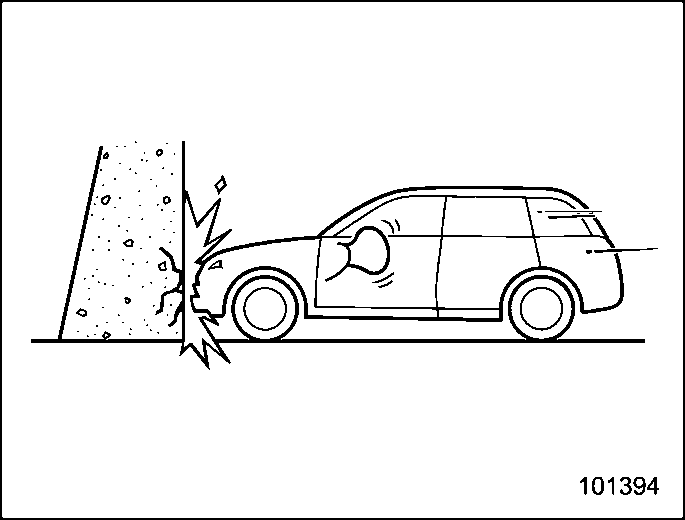
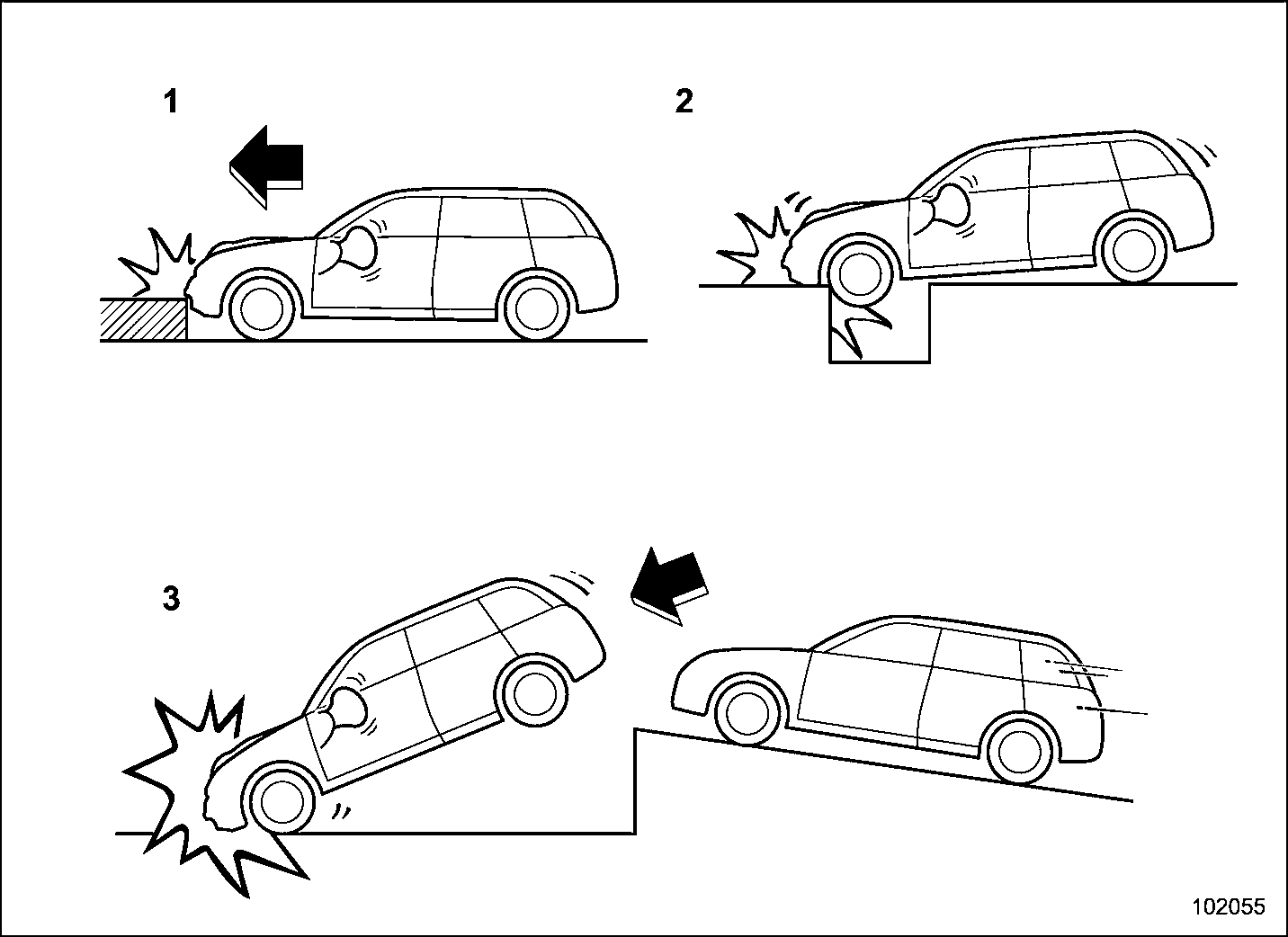
A head-on collision against a thick con- crete wall at a vehicle speed of 12 to 19 mph (20 to 30 km/h) or higher activates only the driver’s SRS frontal airbag or both driver’s and front passenger’s SRS frontal
 airbags. The airbag(s) will also be acti- vated when the vehicle is exposed to a frontal impact similar in fashion and magnitude to the collision described above.
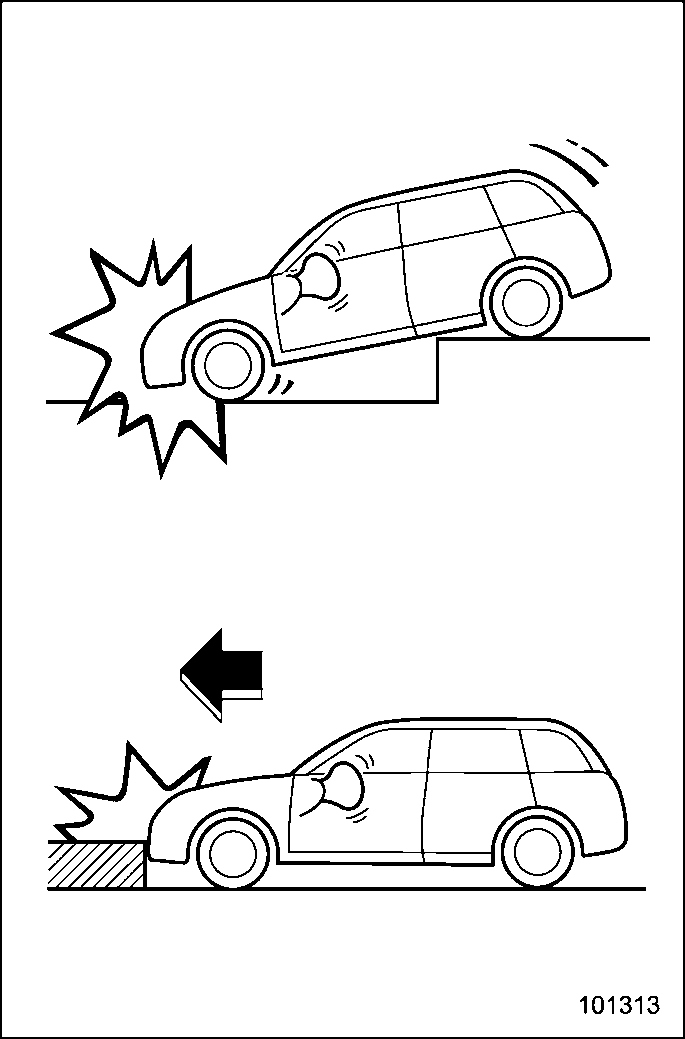
Only the driver’s SRS frontal airbag or both driver’s and front passenger’s SRS frontal airbags may be activated when the vehicle sustains a hard impact in the undercar- riage area from the road surface (such as when the vehicle plunges into a deep ditch, is severely impacted or knocked hard against an obstacle on the road such as a curb).
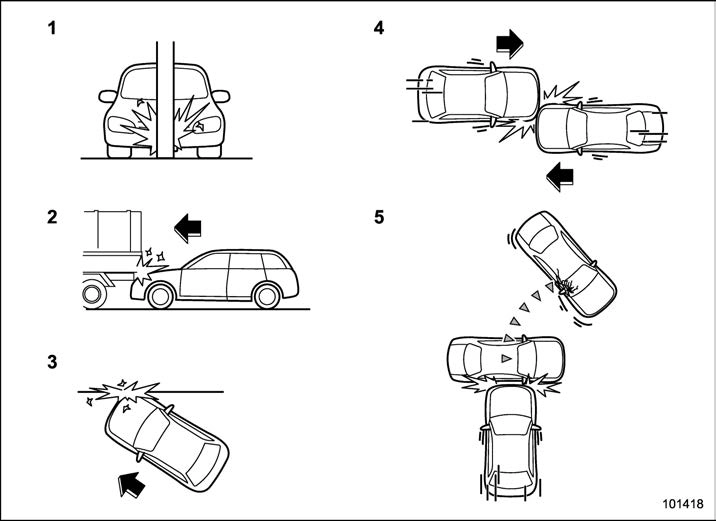 The vehicle strikes an object, such as a telephone pole or sign pole.
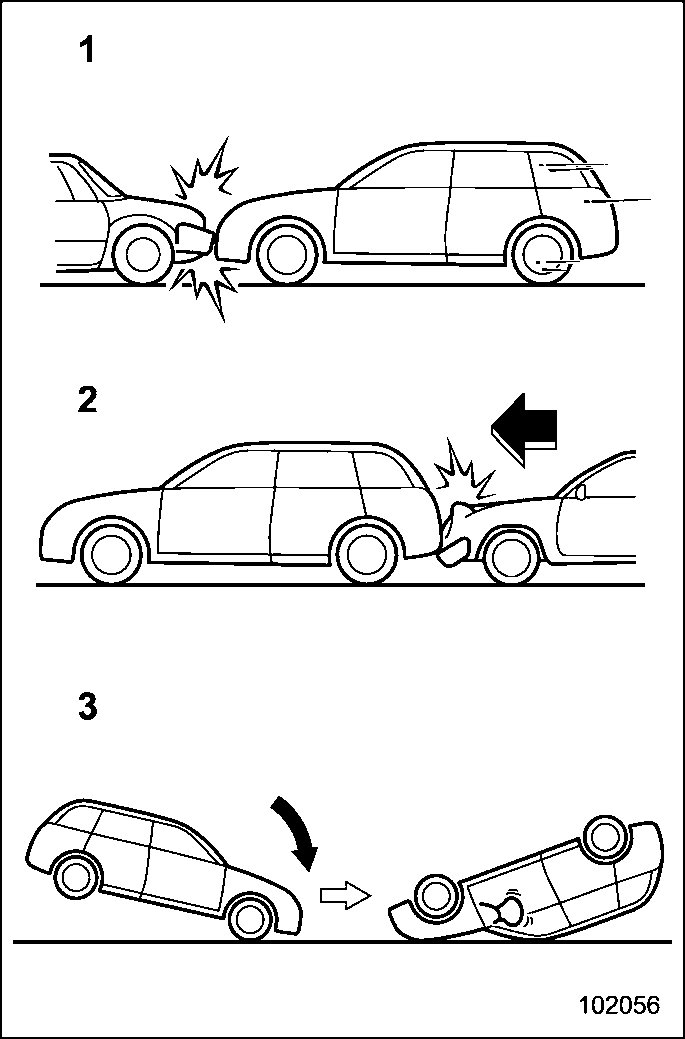
There are many types of collisions which might not necessarily require deployment of driver’s/driver’s and front passenger’s SRS frontal airbag(s). In the event of accidents like those illustrated, the dri- ver’s/driver’s and front passenger’s SRS frontal airbag(s) may not deploy depend- ing on the level of accident forces involved.
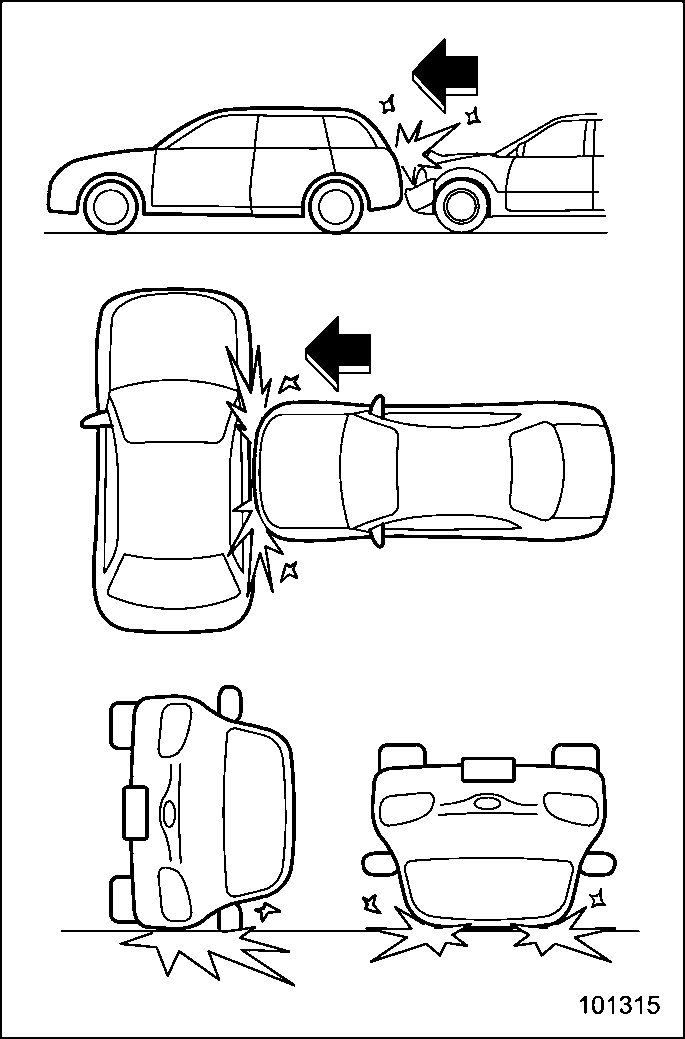
The driver’s and front passenger’s SRS
frontal airbags are not designed to deploy in most of the following cases.
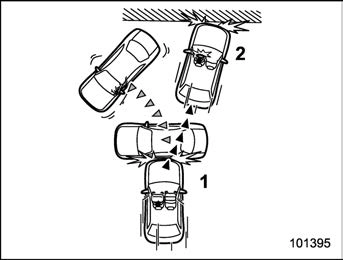
In an accident where the vehicle is impacted more than once, the driver’s and/or front passenger’s SRS frontal airbag(s) will deploy only once on the first impact.
Example: In the case of a double collision, first with another vehicle, then against a concrete wall in immediate succession,
once either or both of the driver’s and front passenger’s SRS frontal airbags is/are activated on the first impact, it/they will not be activated on the second impact.
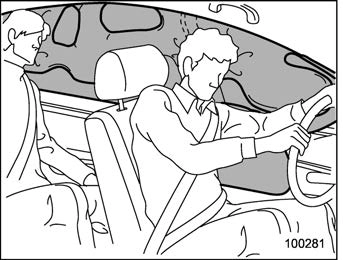
The SRS side airbag is stored in the door side of each front seat seatback, which bears an “SRS AIRBAG” label.
In a moderate to severe side impact collision, the SRS side airbag on the impacted side of the vehicle deploys between the occupant and the door panel and supplements the seatbelt by reducing the impact on the occupant’s chest and waist. The SRS side airbag operates only
for front seat occupants.
Your vehicle is equipped with a SUBARU SRS curtain airbag system that complies with the Federal Motor Vehicle Safety Standard (FMVSS) No. 226.
The SRS curtain airbag on each side of the cabin is stored in the roof side (between the front pillar and a point over the rear seat). An “SRS AIRBAG” mark is located at the top of each center pillar.
In a moderate to severe side impact collision, the SRS curtain airbag on the impacted side of the vehicle deploys between the occupant and the side win- dow and supplements the seatbelt by reducing the impact on the occupant’s head.
In a rollover, SRS curtain airbags on both sides of the vehicle deploy between the occupant and the side window and supple- ment the seatbelt by reducing the impact to the occupant’s head.
In an offset frontal collision, SRS curtain airbags on both sides of the vehicle deploy between the occupant and the side win- dow and supplement the seatbelt by reducing the impact to the occupant’s head and chest.
! Operation
The SRS side airbag and SRS curtain airbag can function only when the ignition switch is in the “ON” position.
The following airbags deploy indepen- dently of each other since each has its own impact sensor.
Therefore, they may not both deploy in the same accident. Also, the SRS side airbag and SRS curtain airbag deploys indepen- dently of the driver’s and front passenger’s SRS frontal airbags in the steering wheel and instrument panel.
For the locations of the sensors and control modules, refer to “Components”
P83.
After the deployment, the SRS side airbag immediately starts to deflate. The time required from detection of an impact to deflation of an SRS side airbag after deployment is shorter than the blink of an eye.
The SRS curtain airbag remains inflated
for a while following deployment then slowly deflates.
The SRS side airbag and SRS curtain airbag deploy even when no one occupies the seat on the side on which an impact is applied.
When the SRS side airbag and SRS curtain airbag deploy, a sudden, fairly loud inflation noise will be heard and some smoke will be released. These occur- rences are a normal result of the deploy- ment. This smoke does not indicate a fire in the vehicle.
The SRS side airbag and SRS curtain airbag are designed as follows:
The SRS side airbag and SRS curtain airbag are not designed to deploy in the following cases:
The SRS curtain airbags are also de- signed to deploy when the vehicle is in an extremely inclined state such as during a rollover. They are not designed to deploy in most lesser inclined state.
SRS side airbag and SRS curtain airbag deployment depend on the level of force experienced in the passenger compart- ment during a side impact collision. That level differs from one type of collision to another, and it may have no bearing on the visible damage done to the vehicle itself.
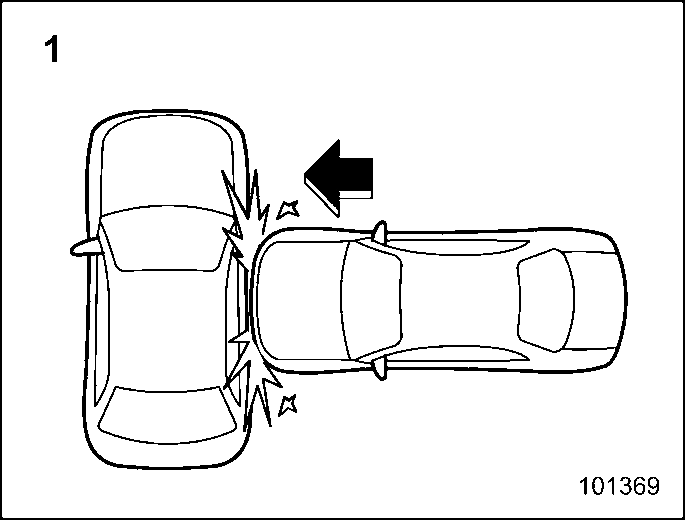
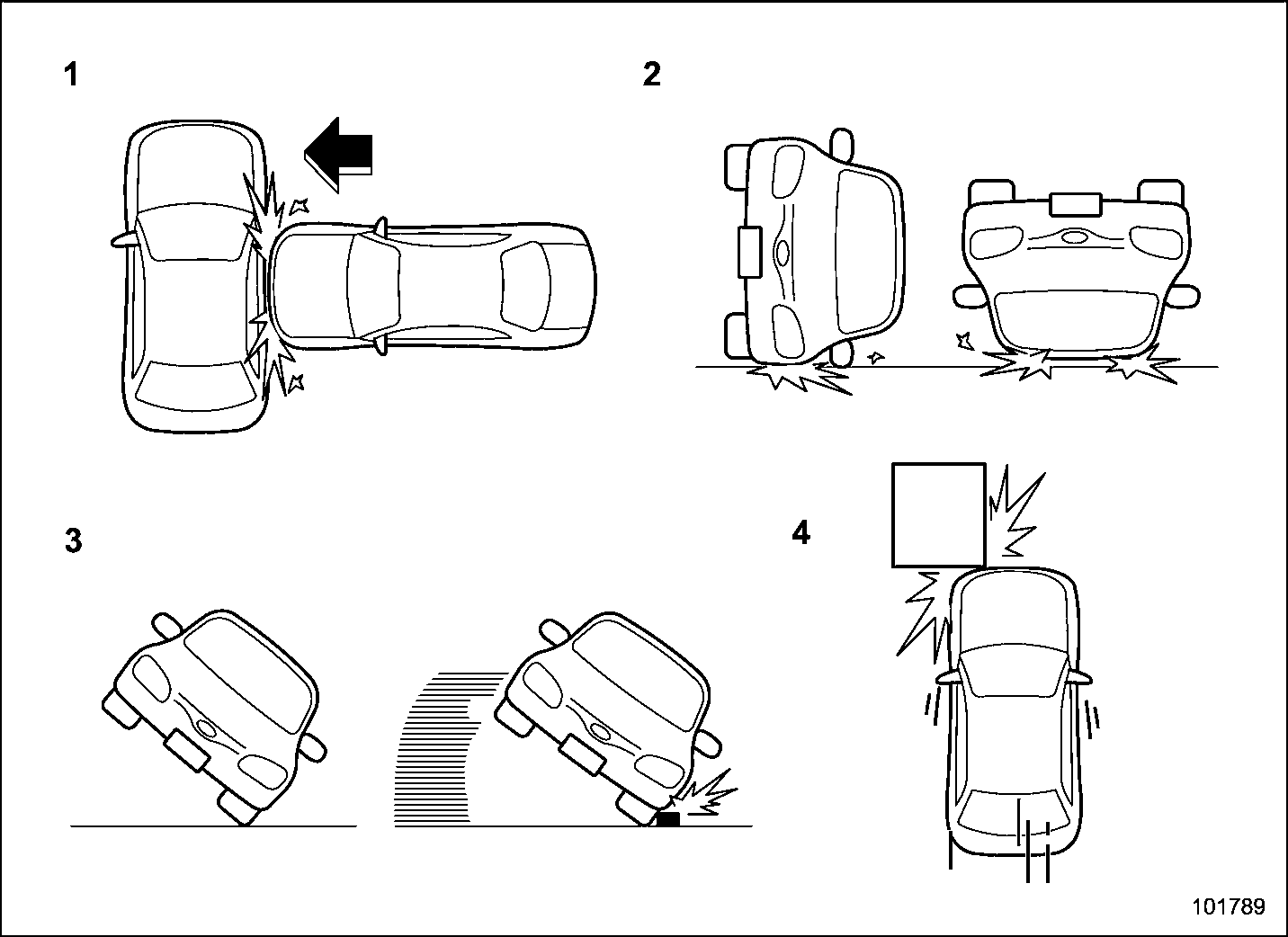 The vehicle is involved in a severe side impact near the front seat or the rear seat.
 Hitting a curb, edge of pavement or hard surface
It is possible that the SRS side and curtain airbags will deploy if a serious impact occurs to the underside of your vehicle. Some examples are shown in the illustra- tion.
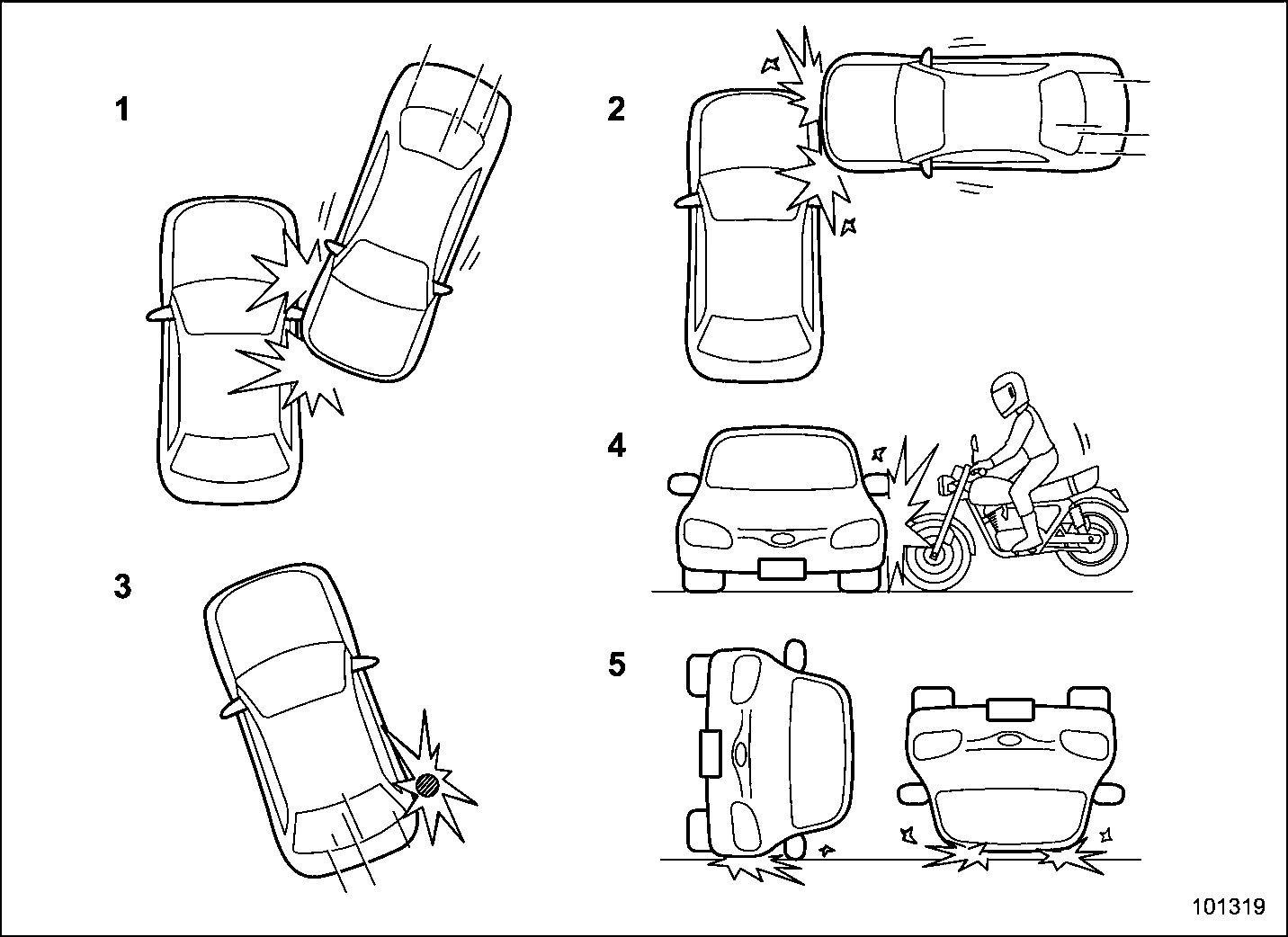 The vehicle is involved in an oblique side- on impact.
There are many types of collisions which might not necessarily require SRS side airbag deployment. In the event of acci- dents like those illustrated, the SRS side airbag may not deploy depending on the level of accident forces involved.
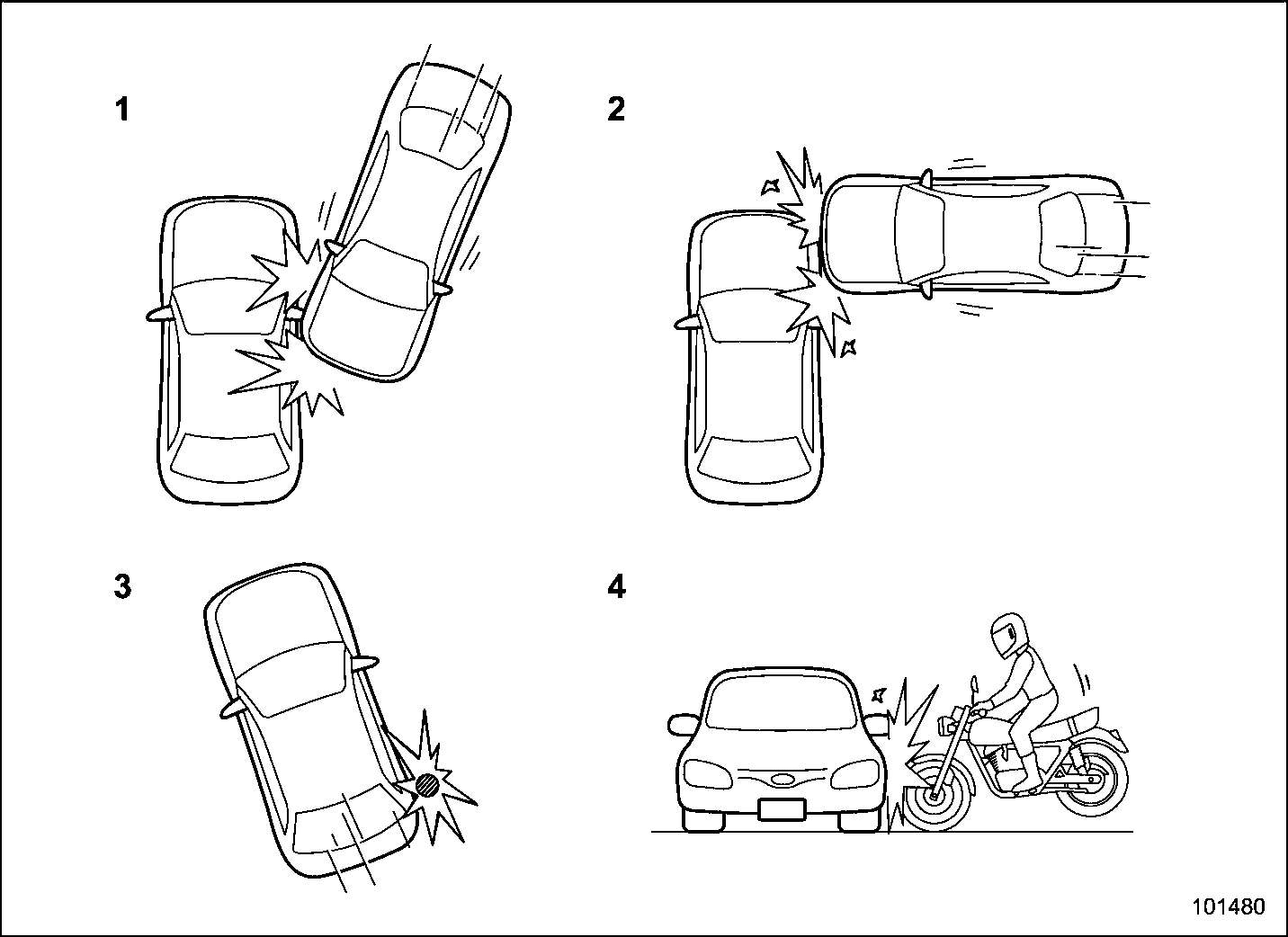 The vehicle is involved in an oblique side- on impact.
There are many types of collisions which might not necessarily require SRS curtain airbag deployment. In the event of acci- dents like those illustrated, the SRS curtain airbag may not deploy depending on the level of accident forces involved.
ary).
In the event of accidents like those illustrated, the SRS side airbag and SRS curtain airbag are not designed to deploy in most cases.
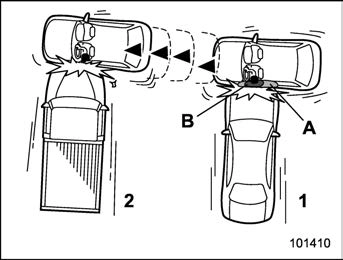
In an accident where the vehicle is struck from the side more than once, the SRS side airbag and SRS curtain airbag deploy only once on the first impact.
Example: In the case of a double side impact collision, first with one vehicle and immediately followed by another from the
same direction, once the SRS side airbag and SRS curtain airbag are activated on the first impact, they will not be activated on the second.
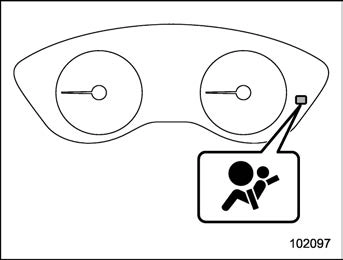
SRS airbag system warning light
A diagnostic system continually monitors the readiness of the SRS airbag system (including front seatbelt pretensioners) with the ignition switch in the “ON” position. The SRS airbag system warning light will show normal system operation by illumi- nating for approximately 6 seconds when the ignition switch is turned to the “ON” position.
The following components are monitored by the indicator:
In the event that the SRS airbag is deployed, replacement of the system should be performed only by an author- ized SUBARU dealer. When the compo- nents of the SRS airbag system are replaced, use only genuine SUBARU parts.
NOTE
In the following cases, contact your SUBARU dealer as soon as possible.
seatback is cut, frayed, or otherwise damaged.
Always consult your SUBARU dealer if you want to install any accessory parts on your vehicle.
Changing or moving any parts of the front seats, rear seat, seatbelts, front bumper, front side frame, radiator panel, instrument panel, combination meter, steering wheel, steering column, tire, suspension or floor panel can affect the operation of the SUBARU advanced airbag system. If you have any questions, you may contact the following SUBARU distributors.
Subaru of America, Inc.
Customer Retailer Services Department One Subaru Drive
P.O. Box 9103
Camden, NJ 08101-9877
1-800-SUBARU3 (1-800-782-2783)
2850 Pukoloa Street, Ste. 101, Honolulu,
HI 96819
877-215-0338
Shen’s Corporation dba Prestige Automo- biles
491 East Marine Corps Drive, Dededo, Guam 96929
671-633-2698
P.O. Box 11204, San Juan, Puerto Rico 00910
787-793-2828
Subaru Canada, Inc. Consumer Support Department
560 Suffolk Court, Mississauga, Ontario
L5R 4J7
1-800-894-4212
There are currently no SUBARU distribu- tors in any other U.S. territories. If you are in such an area, please contact the SUBARU distributor or dealer from which you bought your vehicle.
2-1. Keys 111
2-2. Keyless access with push-button start
2
system (if equipped) 112
Locking and unlocking by holding the access
key fob 116
Unlock using PIN Code Access 119
Power saving function 121
Power saving function of access key fob 122
Disabling keyless access function 122
Selecting audible signal operation 125
Warning chimes and warning indicator 125
When access key fob does not operate properly 125
Replacing battery of access key fob. 125
Replacing access key fob 125
Certification for keyless access with push-
button start system 125
2-3. Immobilizer 127
Security indicator light 127
Key replacement 127
Certification for immobilizer system 127
2-4. Remote keyless entry system 129
Locking the doors 130
Unlocking the doors 130
Unlocking the rear gate. 130
Vehicle finder function 130
Sounding a panic alarm 131
2-5. Door locks 133
2-6. Alarm system 136
2-7. Child safety locks 139
2-8. Windows. 140
2-9. Rear gate 143
Keys and doors
2-10. Moonroof (if equipped) 151
Keys 111
Download Manual