Trailer towing
Your vehicle is designed and intended to be used primarily as a passenger-carrying vehicle. Towing a trailer puts additional loads on your vehicle’s engine, drivetrain, brakes, tires and suspension and has an adverse effect on fuel economy.
If you do decide to tow a trailer, your safety and satisfaction depend upon proper use of correct equipment and cautious opera- tion of your vehicle.
Seek the advice of your SUBARU dealer to assist you in purchasing a hitch and other necessary towing equipment appropriate for your vehicle. Do not use towing equip- ment other than genuine SUBARU towing equipment. In addition, be sure to follow the instructions for proper installation and use provided by the trailer or caravan’s manufacturer.
SUBARU assumes no responsibility for injuries or vehicle damage that result from trailer towing equipment, or from any errors or omissions in the instructions accompanying such equipment or for your failure to follow the proper instructions. Regularly check that the hitch mounting bolts and nuts are tightened securely.
SUBARU warranties do not apply to vehicle damage or malfunction caused by trailer towing. If you use your vehicle to tow a trailer, more frequent maintenance will be required due to the additional load. (Refer to “Maintenance schedule under severe driving conditions” in the “Warranty and Maintenance Booklet”.)
Under no circumstances should a trailer be towed with a new vehicle or a vehicle with any new powertrain component (engine, transmission, differential, wheel bearings, etc.) for the first 1,000 miles (1,600 km) of driving.
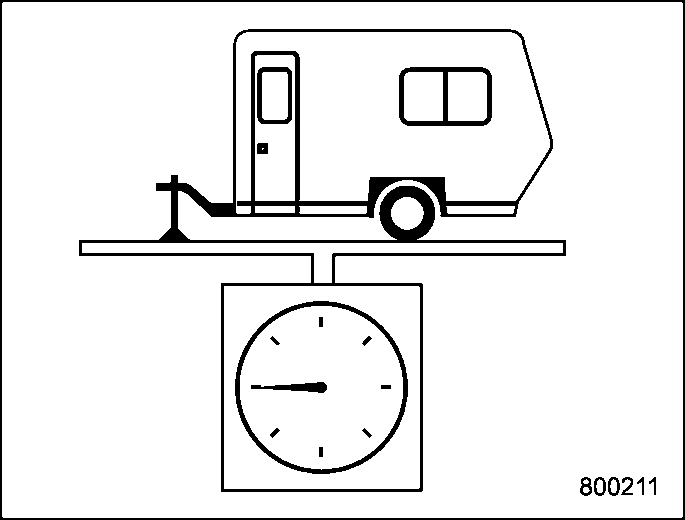
Total trailer weight
The total trailer weight (trailer weight plus its cargo load) must never exceed the maximum total trailer weight in the follow- ing table.
Gross Vehicle Weight
The Gross Vehicle Weight (GVW) must never exceed the Gross Vehicle Weight Rating (GVWR).
Gross Vehicle Weight (GVW) is the com- bined total of the weight of the vehicle, driver, passengers, luggage, trailer hitch, trailer tongue load and any other optional equipment installed on your vehicle. Therefore, the GVW changes depending on the situation. Determine the GVW each time before going on a trip by putting your vehicle and trailer on a vehicle scale.
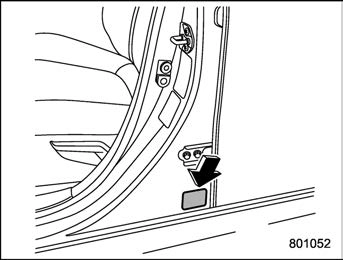
Certification label
GVWR of your vehicle that is given by SUBARU is shown on the certification label located at the bottom of driver’s side door pillar of your vehicle.
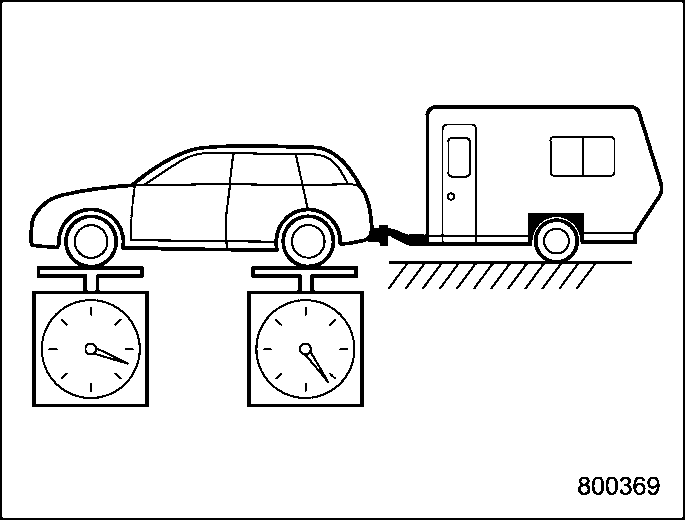
Gross Axle Weight
The total weight applied to each axle (GAW) must never exceed the Gross Axle Weight Rating (GAWR). The front and rear GAWs can be adjusted by relocating passengers and luggage inside the vehi- cle. The front and rear GAWR of your vehicle that is given by SUBARU are also shown on the certification label located at the bottom of driver’s side door pillar.
To check both GVWR and GAWR and to confirm that the total weight and weight distribution are within safe driving limits, you should have your vehicle and trailer weighed at a commercial weighing station.
Be sure that all cargo is firmly secured to
prevent a change in weight distribution while driving.
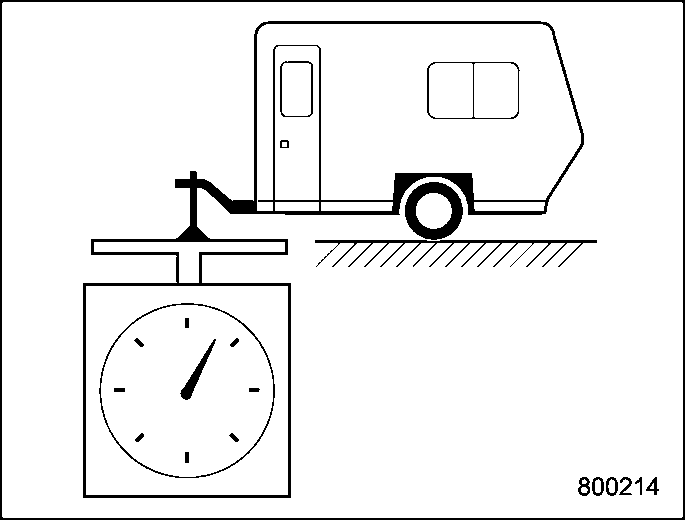
Tongue load
Ensure that the trailer tongue load is from 8 to 11% of the total trailer weight and does not exceed the maximum value of 150 lbs (68 kg).
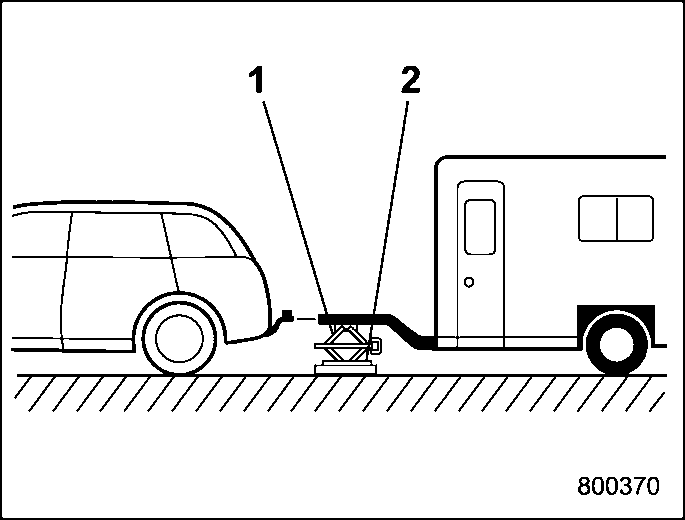
The tongue load can be weighed with a bathroom scale as shown in the illustration above. When weighing the tongue load, be sure to position the towing coupler at the height at which it would be during actual towing, using a jack as shown.
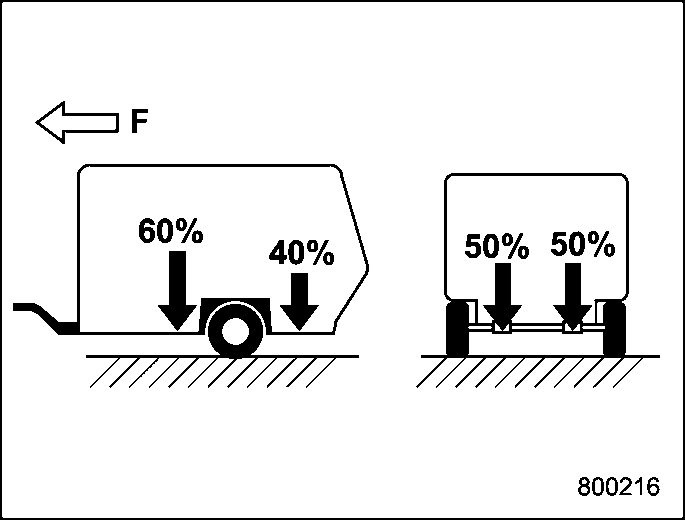
F: Front
The tongue load can be adjusted by proper distribution of the load in the trailer. Never load the trailer with more weight in the back than in the front; approximately 60 percent of the trailer load should be in the front and approximately 40 percent in the rear. Also, distribute the load as evenly as possible on both the left and right sides.
Be sure that all cargo is firmly secured to prevent a change in weight distribution while driving.
& When you do not tow a trailer
Do not use a trailer hitch other than a genuine SUBARU trailer hitch. A genuine SUBARU trailer hitch is available from your SUBARU dealer.
When the ball is not used, place the ball cap and store securely.
If your trailer’s total weight (trailer weight plus its cargo weight) exceeds 1,000 lbs (453 kg), the trailer is required to be equipped with its own brake system. Electric brakes or surge brakes are re- commended, and must be installed prop- erly. Check that your trailer’s brakes con- form with Federal, state/province and/or other applicable regulations. Your SUBARU’s brake system is not designed to be tapped into the trailer’s hydraulic brake system. Please ask your SUBARU dealer and professional trailer supplier for more information about the trailer’s brake system.
In case the trailer hitch connector or hitch ball should break or become discon- nected, the trailer could get loose and create a traffic safety hazard.
For safety, always connect the towing vehicle and trailer with trailer safety chains. Two chains should be used in total, one to the right side and the other to the left side trailer tongue. Pass the chains crossing each other under the trailer tongue to prevent the trailer from dropping onto the ground in case the trailer tongue should disconnect from the hitch ball. Allow sufficient slack in the chains taking tight turn situations into account; however, be careful not to let them drag on the ground.
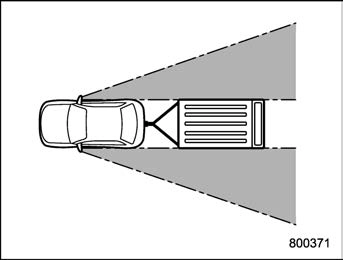
After hitching a trailer to your vehicle, check that the standard side mirrors provide a good rearward field of view without significant blind spots. If significant blind spots occur with the vehicle’s stan- dard side mirrors, use towing mirrors that conform with Federal, state/province and/ or other applicable regulations.
Connection of trailer lights to your vehicle’s electrical system requires modifications to the vehicle’s lighting circuit to increase its capacity and accommodate wiring changes. To ensure the trailer lights are connected properly, please consult your SUBARU dealer. Check for proper opera- tion of the turn signals and the brake lights each time you connect a trailer to your vehicle.
! Tires
Make sure that all the tires on your vehicle are properly inflated. Refer to “Tires”
P501.
Trailer tire condition, size, load rating and proper inflation pressure should be in accordance with the trailer manufacturer’s specifications. Also check federal, state, province and/or other applicable regula- tions.
In the event your vehicle gets a flat tire when towing a trailer, ask a commercial road service representative or profes- sional to repair the flat tire.
If you carry a regular size spare tire in your vehicle or trailer as a precaution against getting a flat tire, be sure that the spare tire is firmly secured.
problems are apparent, do not tow the trailer.
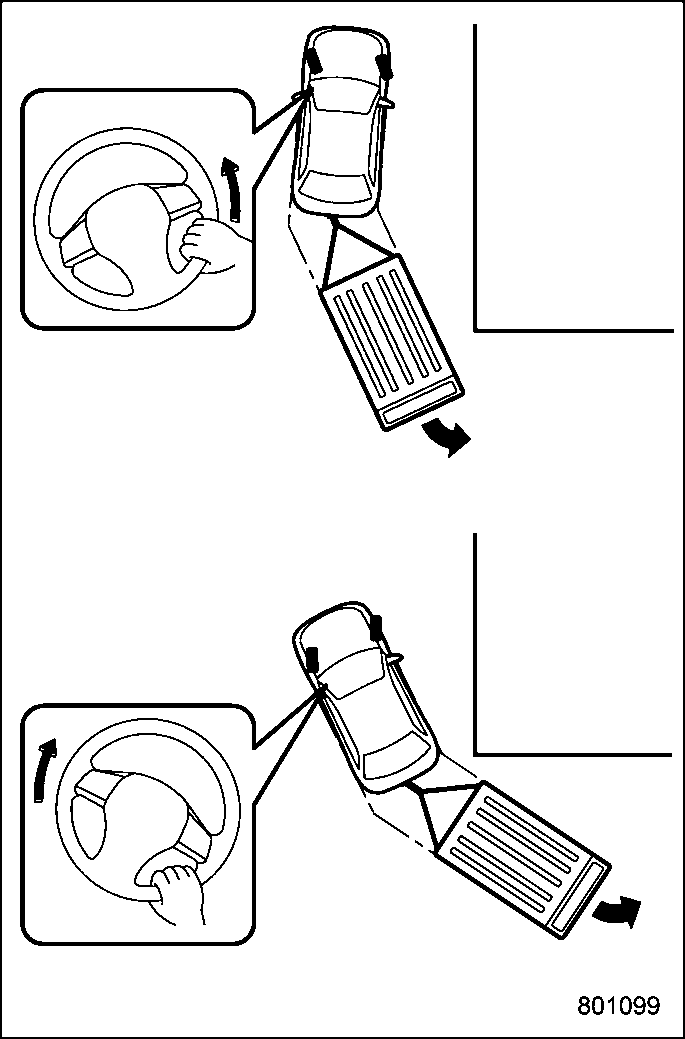
To reverse around a corner, perform the following procedure.
 : Coolant temperature high warning light
  : AT OIL TEMP warning light
If the coolant temperature high warning light and/or the AT OIL TEMP warning light illuminates, immediately turn off the air conditioner and stop the vehicle in the nearest safe location. For further instruc- tions and additional information, refer to the following sections.
P172
. Avoid using the accelerator pedal to stay stationary on an uphill slope instead of using the parking brake or foot brake. That may cause the transmission fluid to over- heat.
Always block the wheels under both vehicle and trailer when parking. Apply the parking brake firmly. You should not park on a hill or slope. If parking on a hill or slope cannot be avoided, you should take the following steps:
In case of emergency
9-1. If you park your vehicle in case of an emergency 420
9-2. Maintenance tools 420
9-3. Temporary spare tire 422
9-4. Flat tires 423
9-5. Jump starting 428
9-6. Engine overheating 430
9-7. Towing 431
9-8. Access key fob – if access key fob does
not operate properly 435
9-9. Rear gate – if the rear gate cannot be
opened 437
9-10. Moonroof (if equipped) – if the moonroof
does not close 438
9-11. If your vehicle is involved in an accident 438
9
Download Manual