Refueling
 WARNING: When refueling always shut the engine off and never allow sparks or open flames near the fuel tank filler valve. Never smoke or use a cell phone while refueling. Fuel vapor is extremely hazardous under certain conditions. Avoid inhaling excess fumes. WARNING: The fuel system may be under pressure. If you hear a hissing sound near the fuel filler inlet, do not refuel until the sound stops. Otherwise, fuel may spray out, which could cause serious personal injury. WARNING: Do not remove the fuel pump nozzle from its fully inserted position when refueling. WARNING: Do not overfill the fuel tank. The pressure in an overfilled tank may cause leakage and lead to fuel spray and fire. WARNING: Stop refueling when the fuel pump nozzle automatically shuts off for the first time. Failure to follow this will fill the expansion space in the fuel tank and could lead to fuel overflowing. WARNING: Wait at least five seconds before removing the fuel pump nozzle to allow any residual fuel to drain into the fuel tank. WARNING: Do not pry open the fuel tank filler valve. This could damage the fuel system. Failure to follow this instruction could result in fire, personal injury or death. WARNING: When refueling always shut the engine off and never allow sparks or open flames near the fuel tank filler valve. Never smoke or use a cell phone while refueling. Fuel vapor is extremely hazardous under certain conditions. Avoid inhaling excess fumes. WARNING: The fuel system may be under pressure. If you hear a hissing sound near the fuel filler inlet, do not refuel until the sound stops. Otherwise, fuel may spray out, which could cause serious personal injury. WARNING: Do not remove the fuel pump nozzle from its fully inserted position when refueling. WARNING: Do not overfill the fuel tank. The pressure in an overfilled tank may cause leakage and lead to fuel spray and fire. WARNING: Stop refueling when the fuel pump nozzle automatically shuts off for the first time. Failure to follow this will fill the expansion space in the fuel tank and could lead to fuel overflowing. WARNING: Wait at least five seconds before removing the fuel pump nozzle to allow any residual fuel to drain into the fuel tank. WARNING: Do not pry open the fuel tank filler valve. This could damage the fuel system. Failure to follow this instruction could result in fire, personal injury or death. |
Note: Your vehicle may not have a fuel tank filler cap.
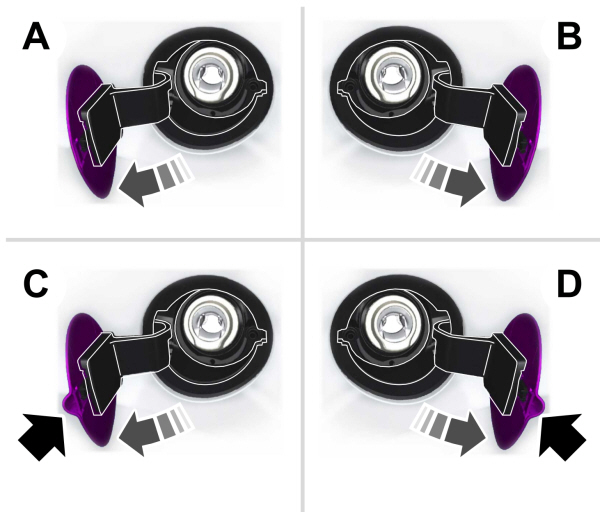
A Left-hand side.To open the fuel filler door, press the center rear edge of the fuel filler door and then release. Left-hand side.To open the fuel filler door, press the center rear edge of the fuel filler door and then release.B Right-hand side.To open the fuel filler door, press the center rear edge of the fuel filler door and then release.C Left-hand side.Pull the rear of the fuel filler door to open it.D Right-hand side.Pull the rear of the fuel filler door to open it. |
- Fully open the fuel filler door.
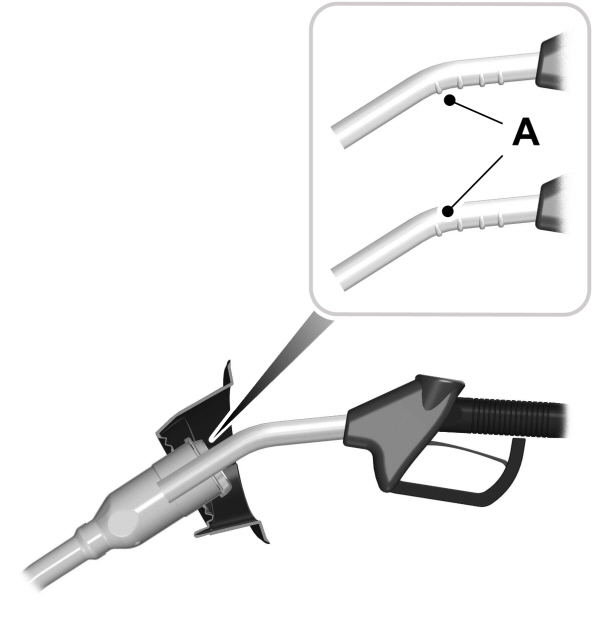
Note: When you insert the correct size fuel pump nozzle a spring loaded inhibitor opens.
- Insert the fuel pump nozzle up to the first notch on the nozzle A.Keep it resting on the cover of the fuel tank filler pipe opening.
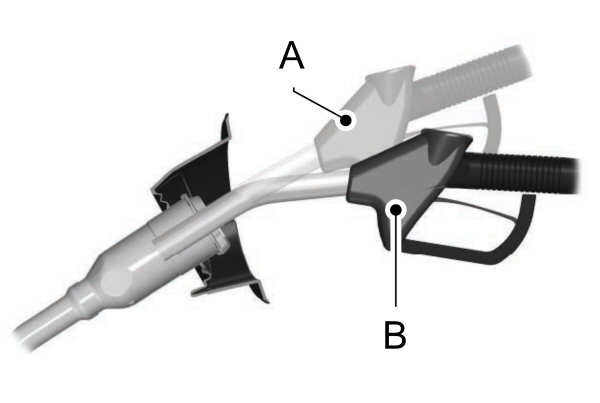
- Hold the fuel pump nozzle in position B when refueling.Holding the nozzle in position A can affect the flow of fuel and shut off the fuel nozzle before the tank is full.
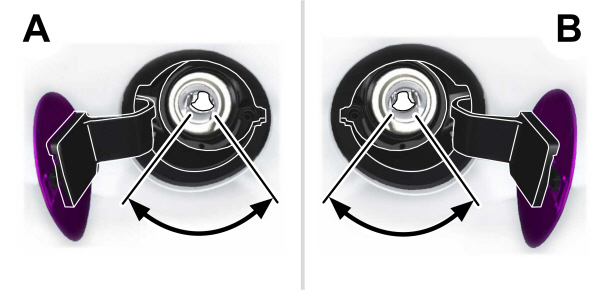
- Operate the fuel pump nozzle within the area shown.
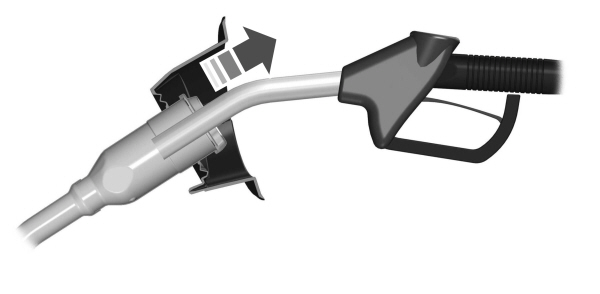
- When you finish refueling slightly raise the fuel pump nozzle and slowly remove it.
- Fully close the fuel filler door.
Note: Do not attempt to start the engine if you have filled the fuel tank with incorrect fuel.Incorrect fuel use can cause damage not covered by the vehicle warranty.Have your vehicle immediately checked.
SYSTEM WARNINGS (IF EQUIPPED)
If the fuel filler inlet does not fully close a warning message appears in the information display.
- Stop your vehicle as soon as it is safe to do so and switch the engine off.
- Shift into park (P) or neutral (N).
- Apply the parking brake.
- Fully open the fuel filler door.
- Check the fuel filler inlet and the area around it for any items or debris that may be obstructing its movement.
- Fully insert a fuel pump nozzle or the fuel filler funnel provided with your vehicle into the fuel filler inlet.This action should dislodge any debris that may be preventing the fuel filler inlet from fully closing.
- Fully close the fuel filler door.
Note: If this action corrects the problem the message may not immediately reset.If the message remains and a warning lamp illuminates, have your vehicle checked as soon as possible.
FUEL CONSUMPTION
ADVERTISED CAPACITY
The advertised capacity is the maximum amount of fuel that you can add to the fuel tank after running out of fuel. Included in the advertised capacity is an empty reserve. The empty reserve is an unspecified amount of fuel that remains in the fuel tank when the fuel gauge indicates empty.
Note: The amount of fuel in the empty reserve varies and should not be relied upon to increase driving range.
FUEL ECONOMY
Your vehicle calculates fuel economy figures through the trip computer average fuel function. See General Information.
The first 1,000 mi (1,500 km) of driving is the break-in period of the engine. A more accurate measurement is obtained after 2,000 mi (3,000 km).
IMPACTING FUEL ECONOMY
- Incorrect tire inflation pressures.
- Fully loading your vehicle.
- Carrying unnecessary weight.
- Adding certain accessories to your vehicle such as bug deflectors, rollbars or light bars, running boards and ski racks.
- Using fuel blended with alcohol. See Fuel Quality.
- Fuel economy may decrease with lower temperatures.
- Fuel economy may decrease when driving short distances.
- You may get better fuel economy when driving on flat terrain than when driving on hilly terrain.
Download Manual