Automatic transmission fluid check
6F35 TRANSMISSION (IF EQUIPPED)
Note: Transmission fluid should be checked by an authorized dealer. If required, fluid should be added by an authorized dealer.
The automatic transmission does not have a transmission fluid dipstick.
Refer to your scheduled maintenance information for scheduled intervals for fluid checks and changes. Your transmission does not consume fluid. However, the fluid level should be checked if the transmission is not properly working. For example, if the transmission slips or shifts slowly or if you notice some sign of fluid leakage. See Scheduled Maintenance.
Do not use supplemental transmission fluid additives, treatments or cleaning agents. The use of these materials may affect transmission operation and result in damage to internal transmission components.
6F55 TRANSMISSION (IF EQUIPPED)
 WARNING: The dipstick and surrounding components are hot. Use gloves when moving components and checking the transmission fluid level. Failure to follow this warning could result in serious personal injury. WARNING: The dipstick and surrounding components are hot. Use gloves when moving components and checking the transmission fluid level. Failure to follow this warning could result in serious personal injury. |
Note: Automatic transmission fluid expands when warmed. To obtain an accurate fluid check, drive the vehicle approximately 20 mi (30 km) until it is warmed up. If your vehicle has been operated for an extended period at high speeds, in city traffic during hot weather or pulling a trailer, the vehicle should be switched off until normal operating temperatures are reached to allow the fluid to cool before checking. Depending on vehicle use, cooling times could take up to 30 minutes or longer.
Refer to your scheduled maintenance information for scheduled intervals for fluid checks and changes. Your transmission does not consume fluid. However, the fluid level should be checked if the transmission is not working properly. For example, if the transmission slips or shifts slowly or if you notice some sign of fluid leakage.
- Drive the vehicle 20 mi (30 km) or until it reaches normal operating temperature
- Park the vehicle on a level surface and engage the parking brake.
- With the parking brake engaged and your foot on the brake pedal, start the engine and move the gearshift lever through all of the gear ranges. Allow a minimum of 10 seconds for each gear to engage.
- Put the gearshift lever in park (P) and leave the engine running.
Note: You will need to move the air filter assembly to access the transmission dipstick.
- Remove the dipstick, wiping it clean with a clean, dry lint free rag. If necessary, refer to Under hood overview in this chapter for the location of the dipstick.
- Install the dipstick making sure it is fully seated in the filler tube by turning it to the locked position.
- Remove the dipstick and inspect the fluid level. The fluid should be in the designated areas for normal operating temperature.
MOVING THE AIR FILTER ASSEMBLY (ACCESSING THE DIPSTICK)
| WARNING: Do not start the engine with the air filter removed. This can cause damage not covered by the vehicle Warranty and can result in serious injury. |
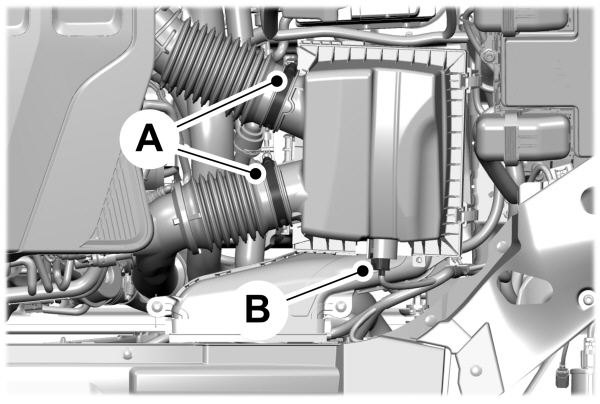
- Shut the engine off.
- Clean the area around the clamps that connect the air filter assembly to the rubber hoses (A).
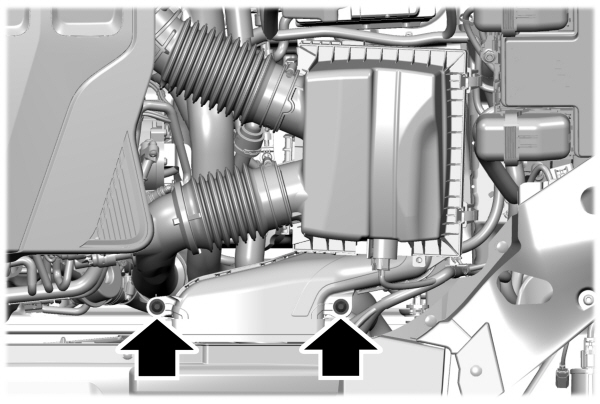
- Remove the two fasteners that attach the air filter assembly to the front of the vehicle.
- Loosen the clamps holding the air filter assembly to the rubber hoses (A).
- Disconnect the sensor (B), pull the air filter assembly up to disconnect the air filter assembly from the seated grommets located underneath the air filter assembly.
- The transmission fluid level indicator can now be accessed.
- To install, reverse the removal procedure.
CHECKING THE FLUID LEVEL
LOW FLUID LEVEL
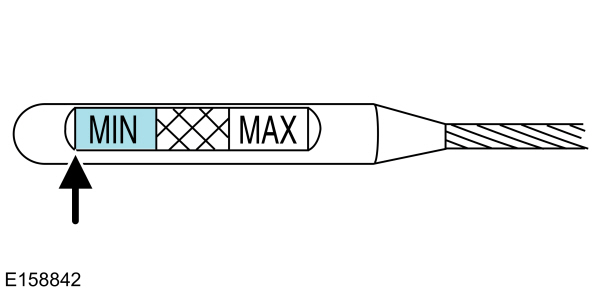
If the fluid level is below the MIN range of the dipstick, add fluid to reach the hash mark level.
Note: If the fluid level is below the MIN level, do not drive the vehicle. An underfill condition may cause shift or engagement concerns or possible damage.
CORRECT FLUID LEVEL
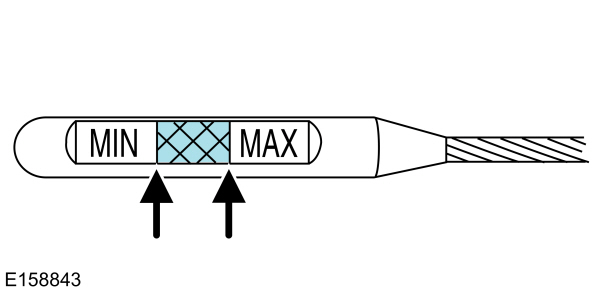
The transmission fluid should be checked at normal operating temperature 180°F-200°F (82°C-93°C) on a level surface. The normal operating temperature can be reached after approximately 20 mi (30 km) of driving.
The transmission fluid level should be targeted within the cross-hatch area if at normal operating temperature 180°F-200°F (82°C-93°C).
HIGH FLUID LEVEL
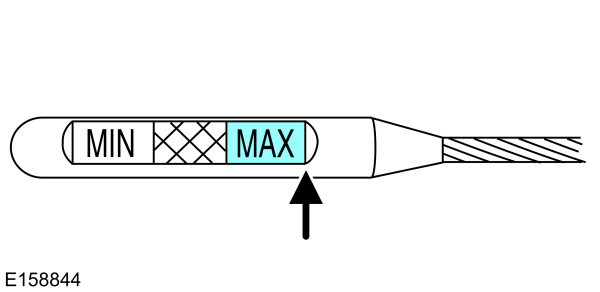
If the fluid level is above the MAX range of the dipstick, remove fluid to reach the hashmark level.
Note: Fluid level above the MAX level may cause shift or engagement concerns or possible damage. High fluid levels can be caused by an overheating condition. If your vehicle has been operated for an extended period at high speeds, in city traffic during hot weather or pulling a trailer, the vehicle should be switched off until normal operating temperatures are reached. Depending on vehicle use, cooling times could take up to 30 minutes or longer.
ADJUSTING AUTOMATIC TRANSMISSION FLUID LEVELS
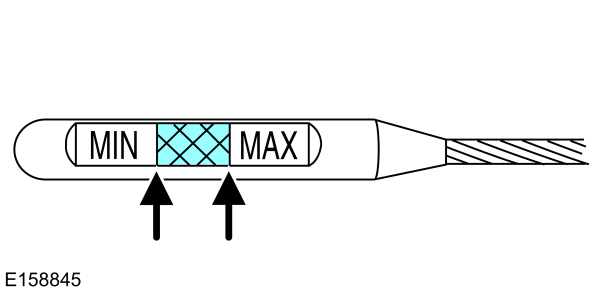
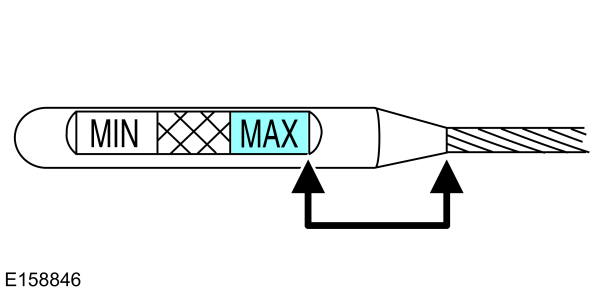
Before adding any fluid, make sure the correct type is used. The type of fluid used is normally indicated on the dipstick and also in the Technical Specifications section in this chapter.
Note: An overfill condition of transmission fluid may cause shift or engagement concerns or possible damage.
Do not use supplemental transmission fluid additives, treatments or cleaning agents. The use of these materials may affect transmission operation and result in damage to internal transmission components. Reinstall the air filter assembly. After the fluid level has been checked and adjusted as necessary, do the following:
- Shut the engine off.
- Loosen the clamp holding the air filter assembly to the rubber hose.
- Rotate the air filter assembly 90 degrees clockwise without disconnecting the sensor.
- Seat the air filter assembly back into the grommets by pushing down on the air filter assembly.
- Tighten the clamp.
- Install and tighten two bolts that attach air filter assembly to the front of the vehicle.
- Install the bolt cover (if equipped).
- Reinstall the harness retaining clip into the front of the air filter assembly.
Download Manual