Seats, mirrors and steering wheel
Vehicle features and options
This chapter describes model-specific equipment, systems, and functions that are currently available, or may become available in the future, even if they are not present in the vehicle.
Additional information:
Vehicle equipment.
Sitting safely
An ideal seat position that meets the needs of the occupants can make a vital contribution to relaxed, fatigue-free driving.
In the event of an accident, the correct seat position plays an important role. Follow the information in the following chapters.
Additional information:
Seats.
Seat belts.
Head restraints.
Airbags.
Seats
Safety information

Only adjust the seat on the driver's side when the vehicle is stationary

Move the backrest to its most upright position
Keep the travel path of the seats unobstructed when adjusting
Adjusting seats
General information
The current seat position can be stored using the memory function.
Overview
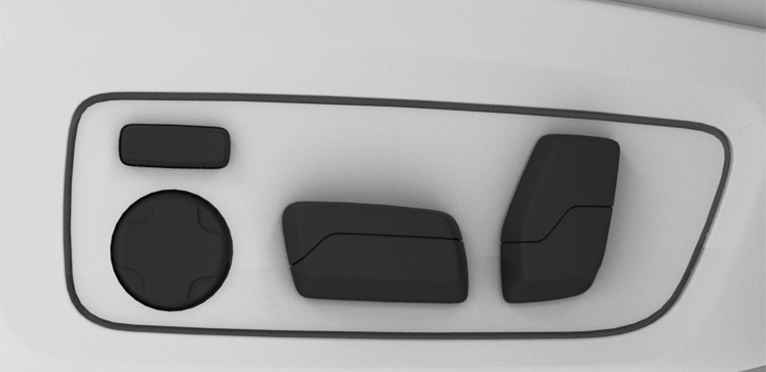
The switches for setting the seats are located on the front seats.
Setting the longitudinal direction
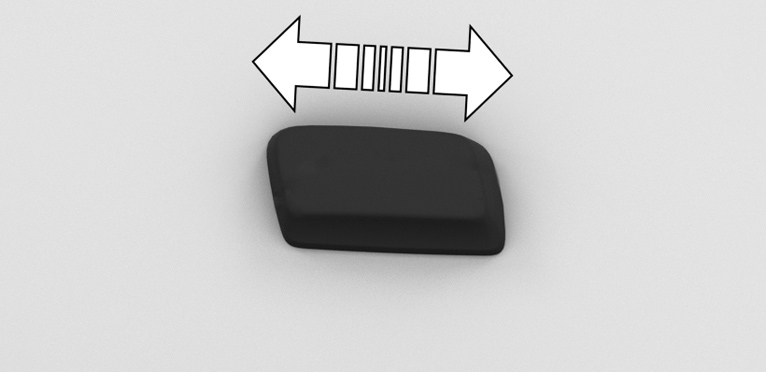
Press switch forward or backward.
Adjusting the height
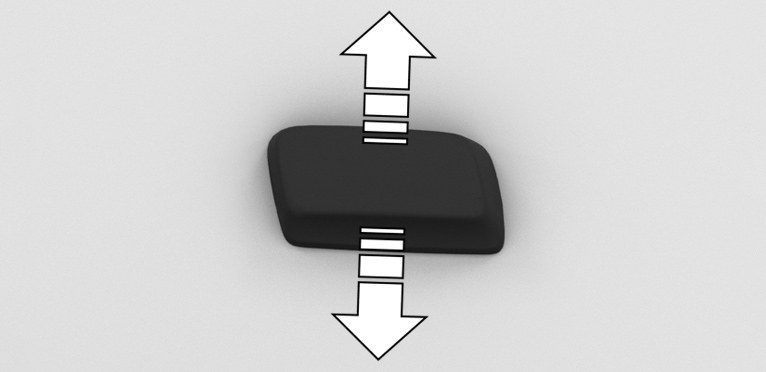
Press switch up or down.
Adjusting seat tilt
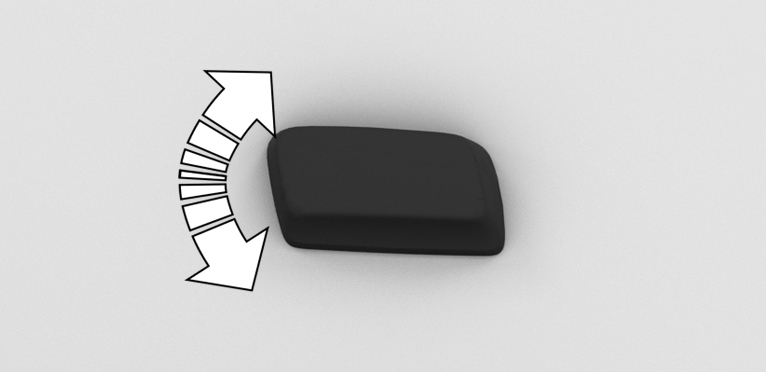
Tilt switch up or down.
Adjusting backrest tilt
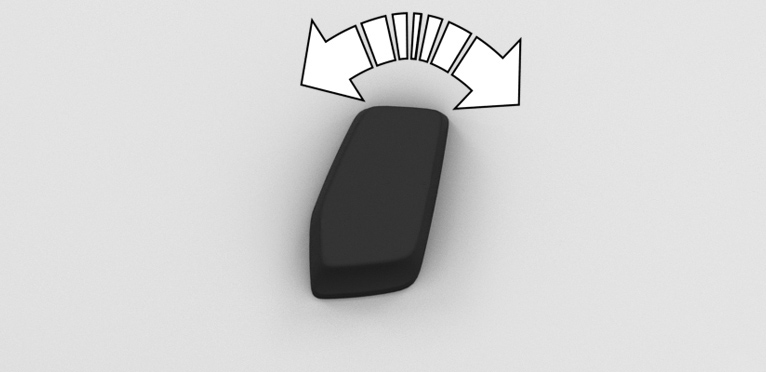
Tilt switch forward or backward.
Adjusting the seat position automatically
General information
The seat setting for the driver's seat is stored in the active BMW ID or in the active driver profile. If the BMW ID or the driver profile is reactivated at a later time, the saved position will be called up automatically.
Activate/deactivate the function
 Apps menu
"Vehicle"
"Seat comfort"
Select driver’s seat.
"Use automatically"
Select the desired setting.
Thigh support
Sport seat
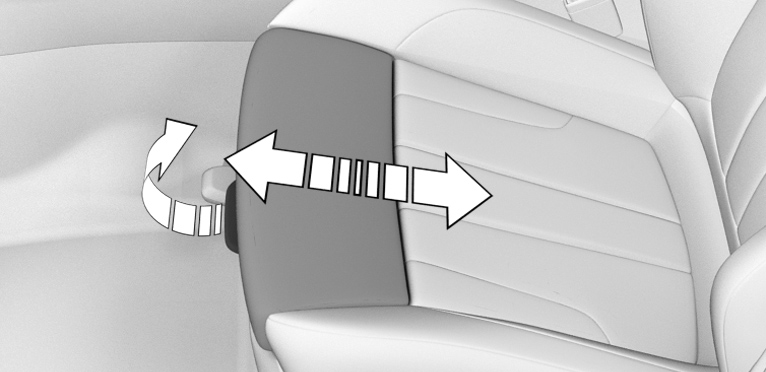
Pull the lever at the front of the seat and push the thigh support forward or back.
Lumbar support
Principle
The curvature of the seat backrest can be adjusted in a way that it supports the lumbar region of the spine. The lower back and the spine are supported for upright sitting position.
Adjusting the lumbar support

Press the front/rear section of the button:
The curvature is increased/decreased.
Press the upper/lower section of the button:
The curvature is shifted up/down.
Backrest width
Principle
Adjusting the backrest width may improve side support when cornering.
General information
The backrest width is changed by adjusting the side sections of the backrest.
Adjusting the backrest width
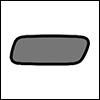
Press the front section of the button:
The backrest width decreases.
Press the rear section of the button:
The backrest width increases.
Calibrating the front seats
General information
As soon as the electric seat setting no longer functions precisely, a Check Control message is displayed on the control display.
To restore the accuracy of the electric seat setting, the front seats must be calibrated.
Safety information
Keep the travel path of the seats unobstructed when adjusting
Calibrating the front seat
Press the longitudinal direction switch forward until the seat stops.
Press the switch forward again until the seat stops.
Readjust the seat to the desired position.
As soon as the message on the control display disappears, the calibration is complete. If the message remains active, repeat the calibration.
If the message is still shown after repeated calibration, have the vehicle checked by an authorized service center or another qualified service center or repair shop.
Seat belts
General information
The vehicle is fitted with five seat belts to ensure occupant safety. However, they can only offer protection when adjusted correctly.
Always make sure that seat belts are being worn by the occupants before driving off. The airbags supplement the seat belts as an additional safety device. The airbags do not replace seat belts.
All seat belt anchorage points are designed to achieve the best possible protective effect for the seat belts when used properly and with the correct seat settings.
The two outer seat belt buckles of the rear seats are intended for the persons sitting on the left and right.
The center seat belt buckle of the rear seats is intended for the person sitting in the middle.
Additional information:
Notes on sitting safely.
Safety information
Do not allow more than one person to fasten a single seat belt
Putting on the seat belt correctly
Lock the wider rear seat backrest
Do not change the seat belt system and have it inspected after an accident
Correct use of seat belts
Wear the seat belt tight to your body over your lap and shoulders, without twisting it.
Wear the seat belt deep on your hips over your lap. The seat belt must not press on your stomach.
Do not rub the seat belt against sharp edges, or guide it or jam it in across hard or fragile objects.
Avoid thick clothing.
Re-tighten the seat belt frequently upward around your upper body area.
Buckling the seat belt
Guide the seat belt slowly over shoulder and hip to put it on.
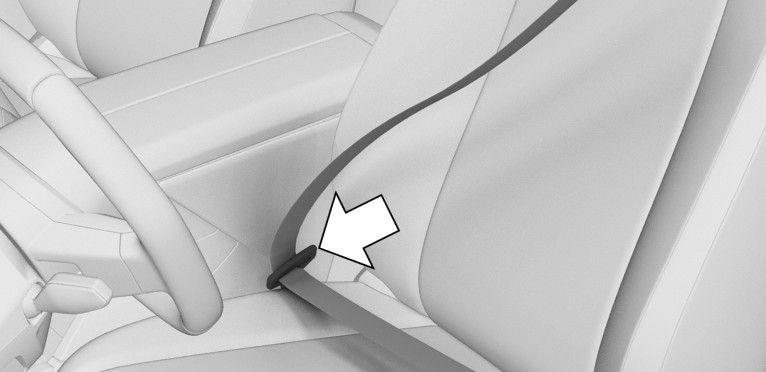
Insert the buckle tongue into the seat belt buckle. The seat belt buckle must engage audibly.
To ease accessibility to the seat belt buckle, an adjustable slider is available on the belt to help position the buckle when not in use.
Unbuckling the seat belt
Hold down the seat belt firmly.
Press the red button in the seat belt buckle.
Guide the seat belt back into its roll-up mechanism.
Middle seat belt in the rear
Buckling the seat belt
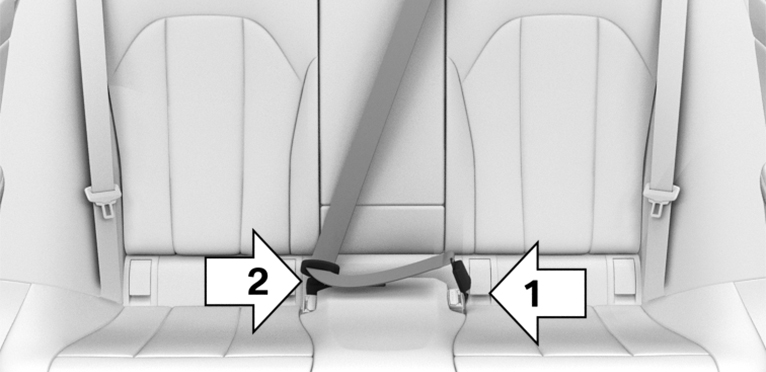
Release buckle tongue from the fixture on the rear shelf.
Insert the lower buckle tongue in the belt lock, arrow 1.
Insert the upper buckle tongue in the seat belt buckle, arrow 2.
The seat belt buckles must engage audibly.
Unbuckling the seat belt
Hold down the seat belt firmly.
Press the red button in the belt buckle.
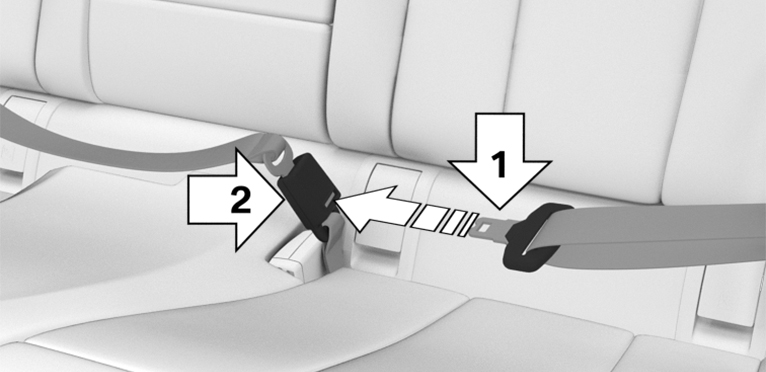
Open the belt lock, arrow 2, with the buckle tongue, arrow 1.
Guide the seat belt to the fixture on the rear shelf.
Seat belt reminder
General information
Make sure that the seat belts are positioned correctly.
The seat belt reminder becomes active in the following situations:
When the seat belt on the driver's side or on the passenger's side is not fastened.
When the seat belt is unfastened while driving.
When objects are lying on a seat.
Display in the instrument cluster
The indicator light in the instrument cluster illuminates after turning on the drive-ready state when the seat belt reminder is active.
A Check Control message is displayed where applicable. Check whether the seat belt has been fastened correctly.
|
Icon |
Meaning |
|---|---|
|
|
Seat belt on the driver's seat is not buckled. |
|
|
Seat belt on the passenger seat or another seat in the vehicle is not buckled. |
|
|
Seat belt is buckled on the corresponding seat. |
|
|
Seat belt is not buckled on the corresponding seat. |




Rear Occupant Alert
Principle
At the end of a trip, the system informs the driver of the possible presence of occupants on the rear seats.
General information
If a door with access to the rear row seating is operated within 30 minutes before starting off, a message appears on the control display when the trip is completed and a signal tone sounds.
If the trip is continued within 30 minutes, the message is displayed again after the trip has been completed.
Activate/deactivate the function
Apps menu
"System settings"
"Rear Occupant Alert"
Select the desired setting.
Safety mode
Depending on vehicle equipment, the driver and front passenger seat belt straps are automatically tightened once after driving off, if the seat belt is fastened.
If necessary, in critical driving situations, e.g., during emergency braking, the front seat belts are automatically pretensioned.
After a critical driving situation without an accident, the front seat belts are loosened again. If the belt tension does not loosen automatically, stop the vehicle and unbuckle the seat belt using the red button in the buckle. Fasten the seat belt before continuing to drive.
Front head restraints
Safety information
Adjust the head restraints correctly
Keep the travel path of the head restraint unobstructed
Do not attach objects on the head restraint
Adjusting the height
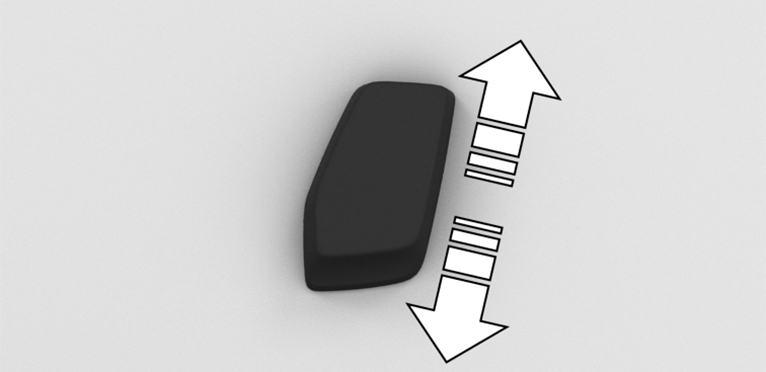
Press switch up or down.
Adjusting the height: M Sport seat
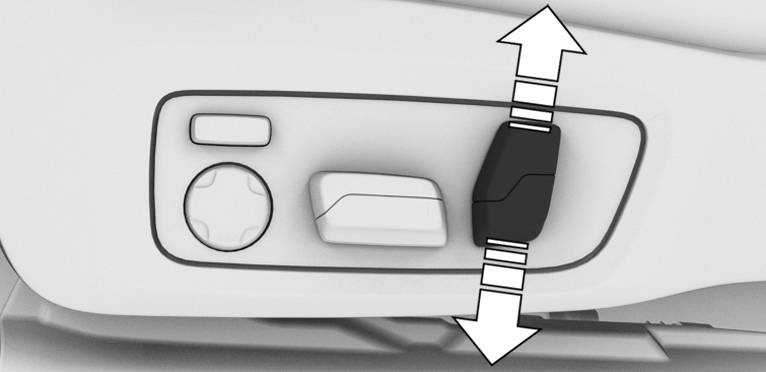
Press switch up or down.
Adjusting the height: M Carbon bucket seat
The height of the head restraints cannot be set.
Adjusting the distance
The distance to the back of the head is adjusted via the backrest inclination.
Adjust the distance so that the head restraint is as close as possible to the back of the head.
Removing the head restraints
The head restraints cannot be removed.
Rear head restraints
Safety information
Adjust the head restraints correctly
Keep the travel path of the head restraint unobstructed
Do not attach objects on the head restraint
Folding down the head restraints
General information
To improve the view to the rear, the head restraints can be folded down. Only fold down the head restraint if no one will be sitting in the corresponding seat.
Folding down the head restraints
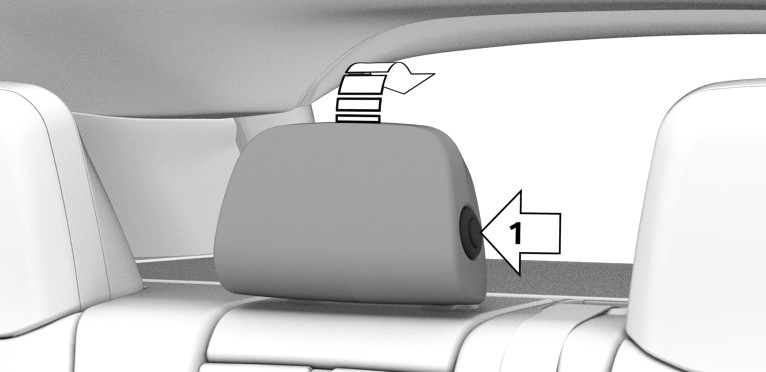
Press button, arrow 1, and fold the head restraint back.
To return the head restraint to its initial position, fold the head restraint forward as far as it will go. Make sure that the head restraint engages correctly.
Adjusting the height
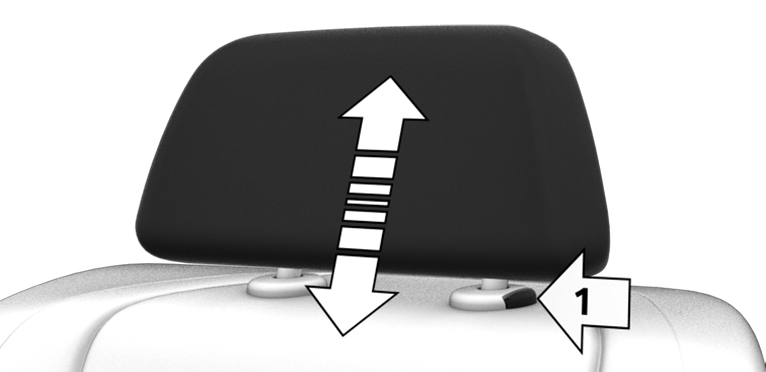
To lower: press the button, arrow 1, and push the head restraint down.
To raise: push the head restraint up.
After setting the height, make sure that the head restraint engages correctly.
Removing the head restraint
The head restraints cannot be removed.
Exterior mirrors
General information
The front passenger's side exterior mirror is more curved than the driver's side mirror.
The exterior mirror adjustment is stored in the active BMW ID or in the active driver profile. If the BMW ID or the driver profile is reactivated at a later time, the stored position is called up automatically.
The current exterior mirror adjustment can be stored using the memory function.
Safety information
Estimating distances correctly
Overview
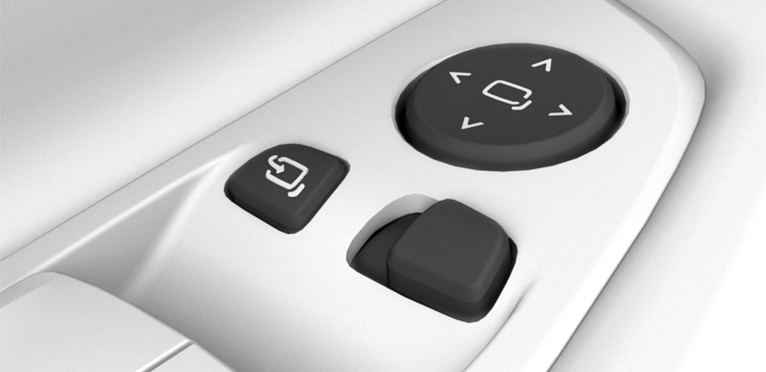
|
Icon |
Meaning |
|---|---|
|
|
Fold the exterior mirror in and out. |
|
|
Adjust the exterior mirrors. |
|
|
Select exterior mirror, Automatic Curb Monitor. |
Adjusting the exterior mirrors

Press the button.
The selected exterior mirror moves along with the button movement.
Selecting the exterior mirror
To change over to the other mirror:
Slide the switch.
Malfunction
In case of an electrical malfunction, adjust the exterior mirror by pressing on the edges of the mirror glass.
Folding in/folding out the exterior mirrors
Fold in the exterior mirrors in a car wash
Press the button.
Folding is possible up to a speed of approx. 15 mph/20 km/h.
Folding the exterior mirrors in and out is helpful in the following situations:
In car washes.
On narrow roads.
Exterior mirrors that were folded in are folded out automatically at a speed of approx. 25 mph/40 km/h.
Automatic heating
Both exterior mirrors are automatically heated as needed and when the drive-ready state is switched on.
Automatic dimming
The exterior mirror on the driver's side is automatically dimmed. Photocells in the interior mirror are used to control this.
Automatic Curb Monitor
Principle
If reverse gear is engaged, the mirror glass on the passenger's side is tilted downward. This improves your view of the curb and other low-lying obstacles when parking, for instance.
Activating the Automatic Curb Monitor
slide the switch to the driver's side mirror position.
Engage selector lever position R.
Deactivating the Automatic Curb Monitor
Slide the switch to the front passenger's side exterior mirror position.
Interior mirror, automatic dimming feature
General information
The interior mirror is dimmed automatically.
Photocells are used for control:
In the mirror glass.
On the rear of the mirror.
Overview
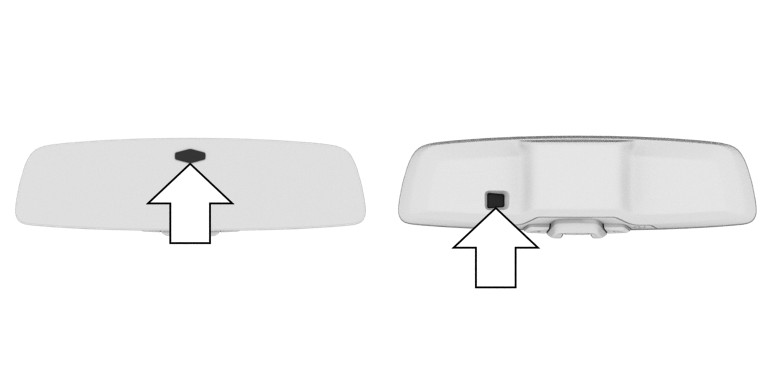
Functional requirements
Keep the photocells clean.
Do not cover the area between the interior mirror and the windshield.
Steering wheel
Safety information
Adjust the steering wheel while the vehicle is stationary only
Manual steering wheel adjustment
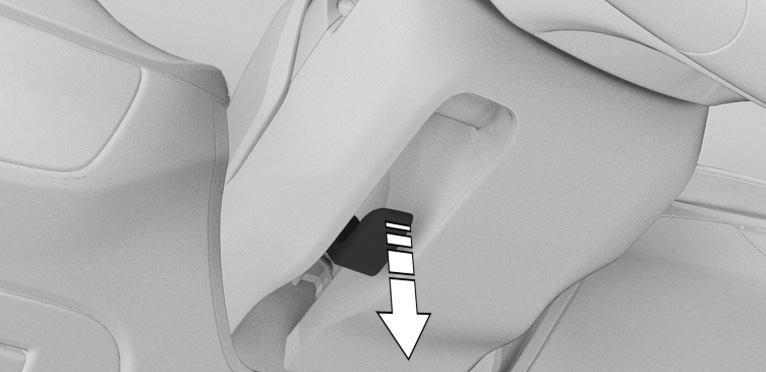
Fold the lever down completely.
Grip the steering wheel with both hands and move the steering wheel to the preferred height and angle to suit your seat position.
Fold the lever back up.
Steering wheel heating
Overview
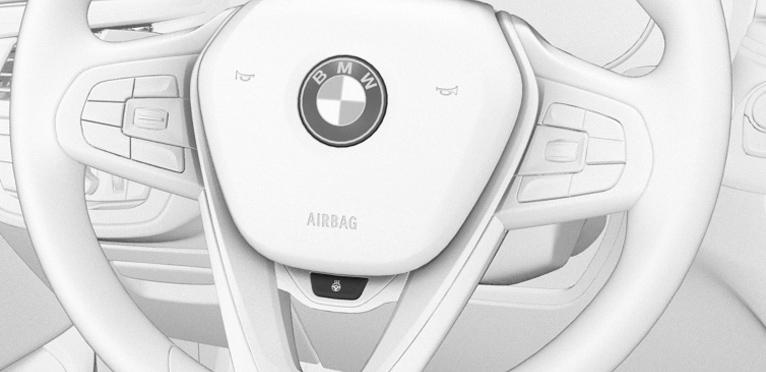
Button for steering wheel heating
Turning the steering wheel heating on/off
 Press the button.
A Check Control message is displayed.
If the trip is resumed within approx. 15 minutes after an intermediate stop, the steering wheel heating turns on automatically if the function was turned on at the completion of the last trip.
Manual transmission: electric steering wheel lock
Turning on standby state
The steering wheel automatically locks when the driver's door is opened from the inside.
To unlock, switch on the standby state.
Memory function
Principle
The following settings can be stored and, if necessary, retrieved using the memory function:
Seat position.
Exterior mirror adjustment.
Height of the Head-up display.
General information
Two memory locations with different settings can be set for each driver profile.
The following settings are not stored:
Backrest width.
Lumbar support.
Safety information
Only retrieve the memory function when the vehicle is stationary
Keep the travel path of the seats unobstructed when adjusting
Overview
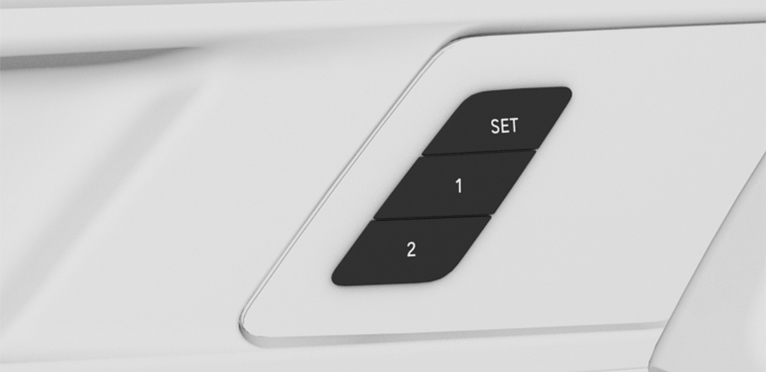
The memory buttons are located on the front doors.
Storing settings
Set the desired position.

Press the button. The LED illuminates.
Press the desired memory button 1 or 2 while the LED is illuminated. A signal sounds.
Calling up settings
Press the desired memory button 1 or 2.
The stored position is called up.
The procedure stops when a seat setting switch or one of the memory buttons is pressed again.
The adjustment of the seat position on the driver's side is interrupted after a short time while driving.
Seat climate control
Various climate control functions are available for the seats.
Additional information:
Climate control.
Download Manual