Information
Using this Owner's Manual
Orientation
The fastest way to find certain subjects is via the A-Z index.
An initial overview of the vehicle is provided in the "Image search".
Validity of the Owner's Manual
Production of the vehicle
At the time of production at the plant, the printed Owner's Manual is the most current resource. Due to updates after the editorial deadline, differences may exist between the printed Owner's Manual and the Integrated Owner's Manual in the vehicle.
Notes on updates can be found in the appendix of the printed Owner's Manual for the vehicle.
After a software update in the vehicle
After a vehicle software update such as via Remote Software Upgrade the Integrated Owner's Manual for the vehicle will contain the latest information.
Media at a glance
General information
The contents of the Owner's Manual are available in various media formats. The following Owner's Manual media formats are available:
Printed Owner's Manual.
Integrated Owner's Manual in the vehicle.
Printed Owner's Manual
The printed Owner's Manual shows all standard, country-specific, and optional equipment that is currently available, or may become available in the future, for specific models.
Integrated Owner's Manual in the vehicle
Principle
The Integrated Owner's Manual shows all standard, country-specific, and optional equipment that is currently available, or may become available in the future, for specific models. The Integrated Owner's Manual can be displayed on the control display.
Selecting the Owner's Manual
 Apps menu
"All apps"
"Owner's Manual"
Select the desired method of accessing the contents.
Scrolling through the Owner's Manual
Swipe up or down until the next or previous contents are displayed.
Context help
General information
The Integrated Owner's Manual can be accessed from any menu. Depending on the selected function, either the associated description or the main menu of the Integrated Owner's Manual will be displayed.
Selecting context help from a menu
Press and hold the desired menu item.
"General help"
Selecting context help from a Check Control message
Directly from the Check Control message on the control display:
"Owner's Manual"
Supplementary Owner's Manuals
Also follow the Supplementary Owner's Manuals, which are included in addition to the onboard literature.
Additional sources of information
Authorized service center
An authorized service center, e.g., a BMW dealer or service center, will be happy to answer any questions you may have.
Internet
Vehicle information and general information on BMW,for instance, on technology, are available on the Internet: www.bmwusa.com.
BMW Driver’s Guide app
The BMW Driver's Guide app shows all standard, country-specific, and optional equipment that is currently available, or may become available in the future, for specific models. The app can be displayed on smartphones and tablets.
BMW Driver’s Guide Web
The BMW Driver's Guide website shows all standard, country-specific, and optional equipment that is currently available, or may become available in the future, for specific models. The BMW Driver’s Guide Web can be displayed in any current browser.
Icons and displays
Icons in the Owner's Manual
|
Icon |
Meaning |
|---|---|
|
|
Precautions that must be followed in order to avoid the possibility of injury to yourself and to others as well as serious damage to the vehicle. |
|
|
Measures that can be taken to help protect the environment. |
|
"..." |
Texts in vehicle used to select individual functions. |
|
›...‹ |
Verbal instructions to use with the voice activation system. |
|
››...‹‹ |
Responses generated by the voice activation system. |

Action steps
Action steps to be carried out are presented as a numbered list. These steps must be carried out in the order shown.
First action step.
Second action step.
Bulletpoint lists
Items or actions without strict order or alternative options are shown as a bulletpoint list.
First possibility.
Second possibility.
Icons on vehicle parts

This symbol on a vehicle component indicates that further information on the component is available in the Owner's Manual.
Vehicle features and options
This Owner's Manual shows all standard, country-specific, and optional equipment that is currently available, or may become available in the future, for specific models, i.e., model series. Therefore, this Owner's Manual also describes and illustrates equipment, systems and functions that are not available in a vehicle, for example due to the following situations:
Selected optional equipment
National-market version or national-market equipment
Options for later release and software update
This also applies to safety functions and systems.
Before starting a journey, verify whether the described equipment or function is available in the vehicle. For information on whether a function is currently available in the vehicle or when the function can be installed in the vehicle, contact an authorized service center or another qualified service center.
A claim for the availability of equipment, a system or a function in the vehicle cannot be derived based on the description in the Owner's Manual.
When using these functions and systems, the applicable laws and regulations must be observed.
For any equipment and models not described in this Owner's Manual, refer to the printed Owner's Manuals and, if applicable, the included Supplementary Owner's Manual.
An authorized service center is happy to answer any questions that you may have about the features and options applicable to the vehicle.
Status of the Owner's Manual
Basic information
The manufacturer of the vehicle pursues a policy of constant development to ensure that our vehicles continue to embody the highest quality and safety standards. In rare cases, therefore, the features described in this Owner's Manual may deviate from those in the vehicle.
Validity of the Owner's Manual
Production of the vehicle
At the time of production at the plant, the printed Owner's Manual is the most current resource. Due to updates after the editorial deadline, differences may exist between the printed Owner's Manual and the Integrated Owner's Manual in the vehicle.
Notes on updates can be found in the appendix of the printed Owner's Manual for the vehicle.
After a software update in the vehicle
After a vehicle software update such as via Remote Software Upgrade the Integrated Owner's Manual for the vehicle will contain the latest information.
For Your Own Safety
Intended use
Heed the following when using the vehicle:
Owner's Manual.
Information on the vehicle. Do not remove stickers.
Technical vehicle data.
The traffic, speed, and safety laws where the vehicle is driven.
Vehicle documents and statutory documents.
Warranty
The vehicle is technically configured for the operating conditions and registration requirements applicable in the country of first delivery, also known as homologation. If the vehicle is to be operated in a different country it might be necessary to adapt the vehicle to potentially differing operating conditions and registration requirements. Noncompliance with homologation requirements in a certain country may affect warranty coverage. Please consult the New Vehicle Limited Warranty Booklet for further information on warranty matters.
Maintenance and repairs
Advanced technology, for instance the use of modern materials and high-performance electronics, requires suitable maintenance and repair work.
The vehicle manufacturer therefore recommends having necessary work performed by an authorized service center, e.g., a BMW dealer or service center. If a different repair shop is selected, BMW recommends selecting a workshop that performs the appropriate work such as maintenance and repair according to BMW specifications with properly trained personnel. In the Owner's Manual, such workshops are referred to as "another qualified service center or repair shop".
If work is not carried out properly, for instance maintenance and repair, there is a risk of subsequent damages and related safety risks.
Improperly performed work on the vehicle paintwork can lead to a failure or fault of components, e.g., the radar sensors, and thereby result in a safety hazard.
Parts and accessories
BMW recommends the use of parts and accessory products approved by BMW.
Approved parts and accessories, and advice on their use and installation are available from an authorized service center.
BMW parts and accessories have been tested by BMW for their safety and suitability in BMW vehicles.
BMW warrants genuine BMW parts and accessories.
BMW does not evaluate whether each individual product from another manufacturer can be used with BMW vehicles without presenting a safety hazard, even if a country-specific official approval was issued. BMW does not evaluate whether these products are suitable for BMW vehicles under all usage conditions.
California Proposition 65 Warning
For vehicles sold in California, the law requires vehicle manufacturers to provide the following warning:

Engine exhaust and a wide variety of Automobile components and parts

Operating, servicing and maintaining
Service and warranty
We recommend that you read this publication thoroughly. The vehicle is covered by the following warranties:
New Vehicle Limited Warranty.
Rust Perforation Limited Warranty.
Federal Emissions System Defect Warranty.
Federal Emissions Performance Warranty.
California Emission Control System Limited Warranty.
Detailed information about these warranties is listed in the New Vehicle Limited Warranty Booklet.
The vehicle has been specifically adapted and designed to meet the particular operating conditions and homologation requirements in your country and continental region in order to deliver the full driving pleasure while the vehicle is operated under those conditions. If you wish to operate the vehicle in another country or region, you may be required to adapt the vehicle to meet different prevailing operating conditions and homologation requirements. You should also be aware of any applicable warranty limitations or exclusions for such country or region. In such case, please contact Customer Relations for further information.
Maintenance
Maintain the vehicle regularly to sustain the road safety, operational reliability and the New Vehicle Limited Warranty.
Specifications for maintenance measures:
BMW maintenance system.
Maintenance.
Maintenance Booklet, available online and accessible via a QR code in the New Vehicle Limited Warranty Booklet.
Warranty and Service Guide Booklet for Canadian models.
If the vehicle is not maintained or is improperly maintained, this could result in serious damage to the vehicle.
A failure to maintain the vehicle or improper maintenance may affect your warranty coverage. Please consult the New Vehicle Limited Warranty Booklet for further information on warranty matters.
Refer to section on engine oil change regarding recommended service intervals for oil changes.
Data memory
General information
Electronic control devices are installed in the vehicle. Electronic control units process data they receive from vehicle sensors, self-generate or exchange with each other. Some control units are necessary for the vehicle to function safely or provide assistance while driving, for instance driver assistance systems. Furthermore, control units facilitate comfort or infotainment functions.
Information about stored or exchanged data can be requested from the manufacturer of the vehicle, in a separate booklet, for example.
Personal reference
Each vehicle is marked with a unique vehicle identification number. Depending on the country, the vehicle owner can be identified with the vehicle identification number, license plate and corresponding authorities. In addition, there are other options to track data collected in the vehicle to the driver or vehicle owner such as via the ConnectedDrive account that is used.
Operating data in the vehicle
Control units process data to operate the vehicle.
For example, this includes:
Status messages for the vehicle and its individual components, e.g., wheel RPM, wheel speed, deceleration, lateral acceleration, engaged seat belt indicator.
Ambient conditions, e.g., temperature, rain sensor signals.
The processed data is only processed in the vehicle itself while the vehicle is being operated. Data is not stored beyond the operating time.
Electronic components, e.g. control units and vehicle keys, contain components for storing technical information. Information about the vehicle condition, component usage, maintenance recommendations, events or faults can be stored temporarily or permanently.
This information generally documents the state of a component, a module, a system, or the surrounding area, for instance:
Operating states of system components such as fill levels, tire pressure, battery status.
Malfunctions and faults in important system components, for instance lights and brakes.
Responses by the vehicle to special driving situations such as airbag deployment or engagement of the driving stability control systems.
Information on vehicle-damaging events.
The data is required to perform the control unit functions. Furthermore, it also serves to detect and correct malfunctions, and helps the vehicle manufacturer to optimize vehicle functions.
The majority of this data is stored temporarily and is only processed within the vehicle itself. In some circumstances the vehicle may store some data for an additional but limited period of time.
When servicing, for instance during repairs, service processes, warranty cases, and quality assurance measures, this technical information can be read out from the vehicle together with the vehicle identification number.
An authorized service center or another qualified service center or repair shop can read out the information. The diagnostic socket required by law in the vehicle is used to read out data.
The data is collected, processed, and used by the relevant organizations in the service network. The data documents technical conditions of the vehicle, which can be used to determine vehicle maintenance status, and facilitate quality improvement.
Vehicle fault and event memories can be reset by an authorized service center or another qualified service center or repair shop when performing repair or servicing work.
Data entry and data transfer into the vehicle
General information
Depending on the vehicle equipment, comfort and individual settings can be stored in the vehicle and modified or reset at any time.
For example, this includes:
Settings for the seat and steering wheel positions.
Chassis and climate control settings.
If necessary, data can be transferred to the entertainment and communication system of the vehicle, for instance via smartphone.
This includes the following depending on the respective equipment:
Multimedia data such as music, films or photos for playback in an integrated multimedia system.
Address book data for use in conjunction with an integrated hands-free system or an integrated navigation system.
Entered navigation destinations.
Data on the use of Internet services.
This data can be stored locally in the vehicle or is found on a device that has been connected to the vehicle, e.g., a smartphone, USB stick or MP3 player. If this data is stored in the vehicle, it can be deleted at any time.
This data is only transmitted to third parties upon personal request as part of the use of online services. The transmission depends on the selected settings for the use of the services.
Incorporation of mobile devices
Depending on the vehicle equipment, mobile devices connected to the vehicle, for instance smartphones, can be controlled via the vehicle control elements.
The sound and picture from the mobile devices can be played back and displayed through the multimedia system. Certain information is transferred to the mobile devices at the same time. Depending on the type of incorporation, this includes, for instance, position data and other general vehicle information. This optimizes the way in which selected apps, for instance navigation or music playback, work.
There is no further interaction between the mobile device and the vehicle such as active access to vehicle data.
How the data will be processed further is determined by the provider of the particular app being used. The extent of the possible settings depends on the respective app and the operating system of the mobile device.
Services
General information
If the vehicle has a wireless network connection, it will enable data to be exchanged between the vehicle and other systems. The wireless network connection is realized via an in-vehicle transmitter and receiver unit or via personal mobile devices brought into the vehicle, for instance smartphones. This wireless network connection enables 'online functions' to be used. These include online services and apps supplied by the vehicle manufacturer or by other providers.
Services from the vehicle manufacturer
Where online services from the vehicle manufacturer are concerned, the corresponding functions are described in the appropriate place, for instance the Owner's Manual or manufacturer's web page. The relevant legal information pertaining to data protection may also be found on the manufacturer’s website. Personal data may be used to perform online services. Data is exchanged over a secure connection, for instance with the IT systems of the vehicle manufacturer intended for this purpose.
Any collection, processing, and use of personal data above and beyond that needed to provide the services must always be based on a legal permission, contractual arrangement or consent. It is also possible to activate or deactivate the data connection as a whole. This excludes functions and services required by law such as Assist systems.
Services from other providers
When using online services from other providers, these services are the responsibility of the relevant provider and subject to their data privacy conditions and terms of use. The vehicle manufacturer has no influence on the content exchanged during this process. Information on the way in which personal data is collected and used in relation to services from third parties, the scope of such data, and its purpose, can be obtained from the relevant service provider.
Event Data Recorder (EDR)
This vehicle is equipped with an event data recorder (EDR). The main purpose of an EDR is to record, in certain crash or near crash-like situations such as an air bag deployment or hitting a road obstacle, data that will assist in understanding how a vehicle’s systems performed. The EDR is designed to record data related to the driving dynamics and safety systems for a short time: max. 30 seconds, typically less.
The EDR in this vehicle is designed to record the following data, for example:
How various systems in the vehicle were operating.
Whether or not the driver and passenger seat belts were fastened.
How far, if at all, the driver was depressing the accelerator and/or brake pedal.
How fast the vehicle was traveling.
This data can help provide a better understanding of the circumstances in which crashes and injuries occur.
EDR data is recorded by the vehicle only if a nontrivial crash situation occurs; no data is recorded by the EDR under normal driving conditions and no personal data, for instance name, gender, age, and crash location, are recorded.
However, other parties such as law enforcement could combine the EDR data with the type of personally identifying data routinely acquired during a crash investigation.
To read data recorded by an EDR, special equipment is required, and access to the vehicle or the EDR is needed. In addition to the vehicle manufacturer, other parties such as law enforcement that have the special equipment can read the information if they have access to the vehicle or the EDR.
Vehicle identification number
General information
Depending on the national-market equipment, the vehicle identification number is located in different positions in the vehicle. This chapter describes all possible positions for the series.
Engine compartment
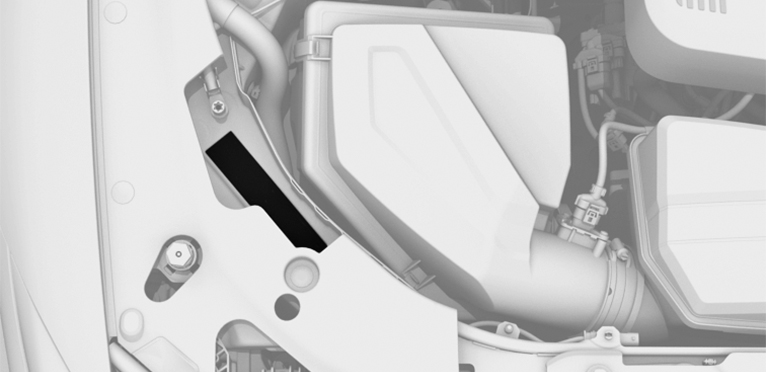
The engraved vehicle identification number can be found in the engine compartment, on the right-hand side of the vehicle.
Right nameplate
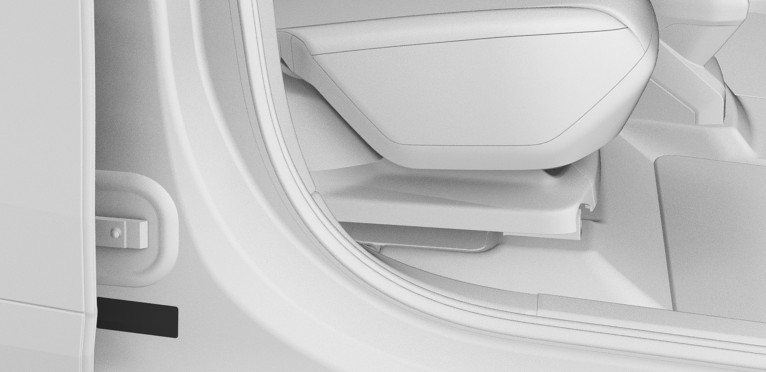
The vehicle identification number can be found on the nameplate, on the right-hand side of the vehicle.
Left nameplate
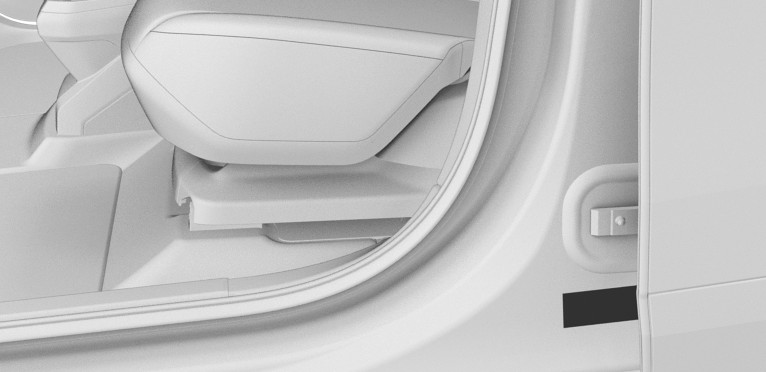
The vehicle identification number can be found on the nameplate, on the left-hand side of the vehicle.
Windshield
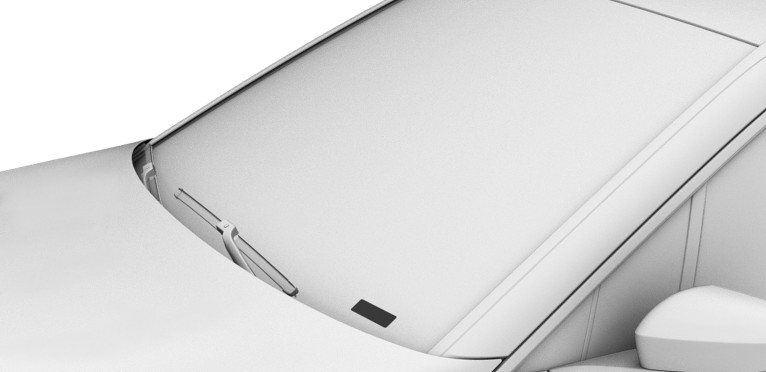
The vehicle identification number can also be found behind the windshield.
iDrive
It is also possible to display the vehicle identification number via iDrive.
Apps menu
"All apps"
"Mobile devices"
"Settings"
"Vehicle ID (VIN):"
Reporting safety defects
For US customers
The following only applies to vehicles owned and operated in the US.
If you believe that the vehicle has a defect which could cause a crash or could cause injury or death, you should immediately inform the National Highway Traffic Safety Administration (NHTSA), in addition to notifying BMW of North America, LLC, P.O. Box 1227, Westwood, New Jersey 07675-1227, Telephone 1-800-831-1117.
If NHTSA receives similar complaints, it may open an investigation, and if it finds that a safety defect exists in a group of vehicles, it may order a recall and remedy campaign.
However, NHTSA cannot become involved in individual problems between you, your dealer, or BMW of North America, LLC.
To contact NHTSA, you may call the Vehicle Safety Hotline toll-free at 1-888-327-4236 (TTY: 1-800-424-9153); go to http://www.safercar.gov; or write to: Administrator, NHTSA, 1200 New Jersey Avenue, SE., Washington, DC 20590. You can also obtain other information about motor vehicle safety from http://www.safercar.gov.
For Canadian customers
Canadian customers who wish to report a safety-related defect to Transport Canada, Defect Investigations and Recalls, may call the toll-free hotline 1-800-333-0510. You can also obtain other information about motor vehicle safety from http://www.tc.gc.ca/roadsafety.