Jump Starting
If your vehicle has a discharged battery, it can be jump started using a set of jumper cables and a battery in another vehicle or by using a portable battery booster pack. Jump starting can be dangerous if done improperly, so please follow the procedures in this section carefully.
Note:
When using a portable battery booster pack, follow the manufacturer’s operating instructions and precautions.
WARNING:
Do not attempt jump starting if the battery is frozen. It could rupture or explode and cause personal injury.
CAUTION:
Do not use a portable battery booster pack or any other booster source with a system voltage greater than 12 Volts or damage to the battery, starter motor, alternator or electrical system may occur.
PREPARATIONS FOR JUMP START
The battery in your vehicle is located in the front of the engine compartment, behind the left headlight assembly.
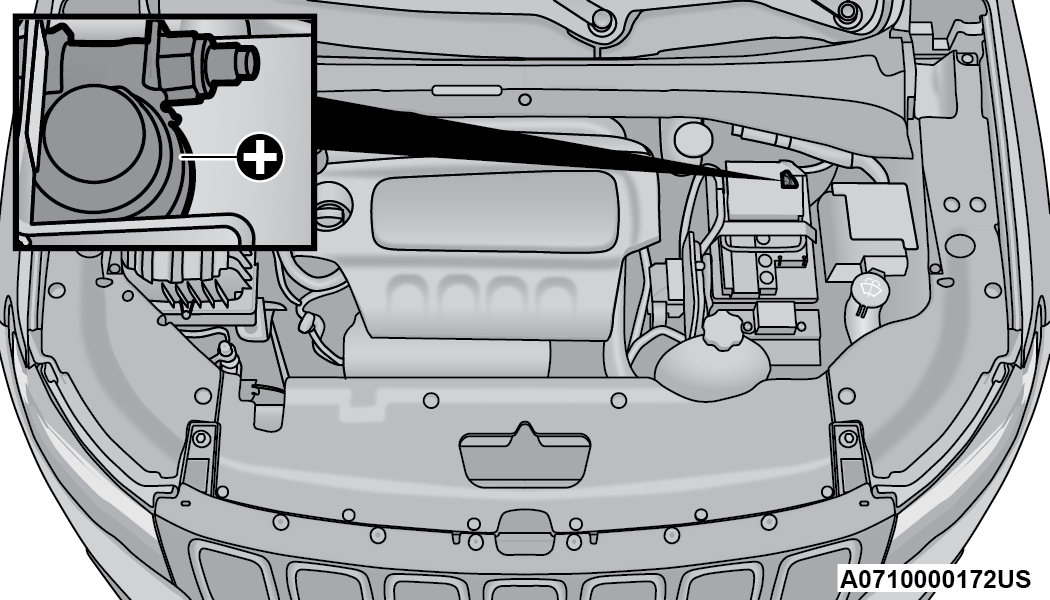
>Positive (+) Battery Post
Note:
The positive (+) battery post is covered with a protective cap. Lift up on the cap to gain access to the post.
See below steps to prepare for jump starting:
-
Apply the parking brake, shift the automatic transmission into PARK (P) and turn the ignition to OFF.
-
Turn off the heater, radio, and all electrical accessories.
-
Pull upward and remove the protective cover over the positive (+) battery post.
-
If using another vehicle to jump start the battery, park the vehicle within the jumper cables reach, set the parking brake and make sure the ignition is OFF.
WARNING:
-
Take care to avoid the radiator cooling fan whenever the hood is raised. It can start anytime the ignition switch is ON. You can be injured by moving fan blades.
-
Remove any metal jewelry such as rings, watch bands and bracelets that could make an inadvertent electrical contact. You could be seriously injured.
-
Batteries contain sulfuric acid that can burn your skin or eyes and generate hydrogen gas which is flammable and explosive. Keep open flames or sparks away from the battery.
WARNING:
Do not allow vehicles to touch each other as this could establish a ground connection and personal injury could result.
JUMP STARTING PROCEDURE
WARNING:
Failure to follow this jump starting procedure could result in personal injury or property damage due to battery explosion.
CAUTION:
Failure to follow these procedures could result in damage to the charging system of the booster vehicle or the discharged vehicle.
Connecting The Jumper Cables
-
Connect the positive (+) end of the jumper cable to the positive (+) post of the discharged vehicle.
-
Connect the opposite end of the positive (+) jumper cable to the positive (+) post of the booster battery.
-
Connect the negative (-) end of the jumper cable to the negative (-) post of the booster battery.
-
Connect the opposite end of the negative (-) jumper cable to a good engine ground. A “ground” is an exposed metallic/unpainted part of the engine, frame or chassis, such as an accessory bracket or large bolt. The ground must be away from the battery and the fuel injection system.
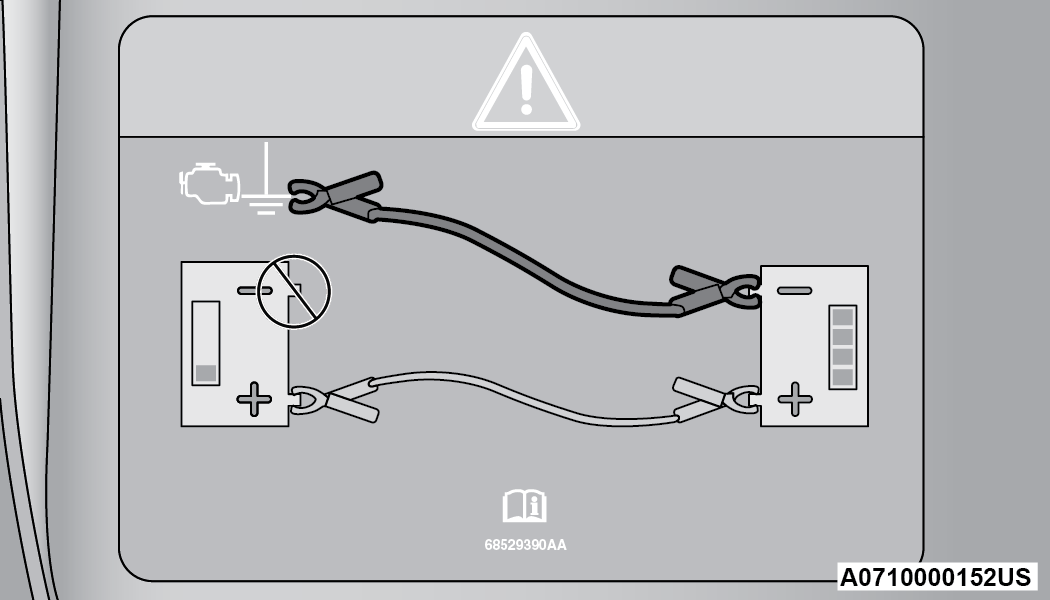
>Jump Starting Label
WARNING:
Do not connect the jumper cable to the negative (-) post of the discharged battery. The resulting electrical spark could cause the battery to explode and could result in personal injury.
-
Start the engine in the vehicle that has the booster battery, let the engine idle for a few minutes, and then start the engine in the vehicle with the discharged battery.
-
Once the engine is started, follow the disconnecting procedure below.
Disconnecting The Jumper Cables
-
Disconnect the negative (-) end of the jumper cable from the engine ground of the vehicle with the discharged battery.
-
Disconnect the opposite end of the negative (-) jumper cable from the negative (-) post of the booster battery.
-
Disconnect the positive (+) end of the jumper cable from the positive (+) post of the booster battery.
-
Disconnect the opposite end of the positive (+) jumper cable from the positive (+) post of the vehicle with the discharged battery.
If frequent jump starting is required to start your vehicle, you should have the battery and charging system inspected at an authorized dealer.
CAUTION:
Accessories plugged into the vehicle power outlets draw power from the vehicle’s battery, even when not in use (i.e., cellular devices, etc.). Eventually, if plugged in long enough without engine operation, the vehicle’s battery will discharge sufficiently to degrade battery life and/or prevent the engine from starting.
Download Manual