Jump Starting the Vehicle
 WARNING: The gases around the battery can explode if exposed to flames, sparks or lit cigarettes. An explosion could result in personal injury or vehicle damage. WARNING: Batteries contain sulfuric acid which can burn skin, eyes and clothing, if contacted. WARNING: Use only an adequate-sized cable with insulated clamps. WARNING: The gases around the battery can explode if exposed to flames, sparks or lit cigarettes. An explosion could result in personal injury or vehicle damage. WARNING: Batteries contain sulfuric acid which can burn skin, eyes and clothing, if contacted. WARNING: Use only an adequate-sized cable with insulated clamps. |
Note: Do not disconnect the battery from your vehicle’s electrical system.
Preparing Your Vehicle
Note: Do not attempt to push-start your automatic transmission vehicle. Automatic transmissions do not have push-start capability. Attempting to push-start a vehicle with an automatic transmission may cause transmission damage.
Note: Use only a 12-volt supply to start your vehicle.
Note: Do not disconnect the battery of the disabled vehicle as this could damage the vehicle's electrical system.
Park the booster vehicle close to the hood of the disabled vehicle, making sure the two vehicles do not touch, and switch off all accessories.
Connecting the Jumper Cables
| WARNING: Do not attach the cables to fuel lines, engine rocker covers, the intake manifold or electrical components as grounding points. Stay clear of moving parts. To avoid reverse polarity connections, make sure that you correctly identify the positive (+) and negative (-) terminals on both the disabled and booster vehicles before connecting the cables. |
Note: In the illustration, the bottom vehicle represents the booster vehicle.
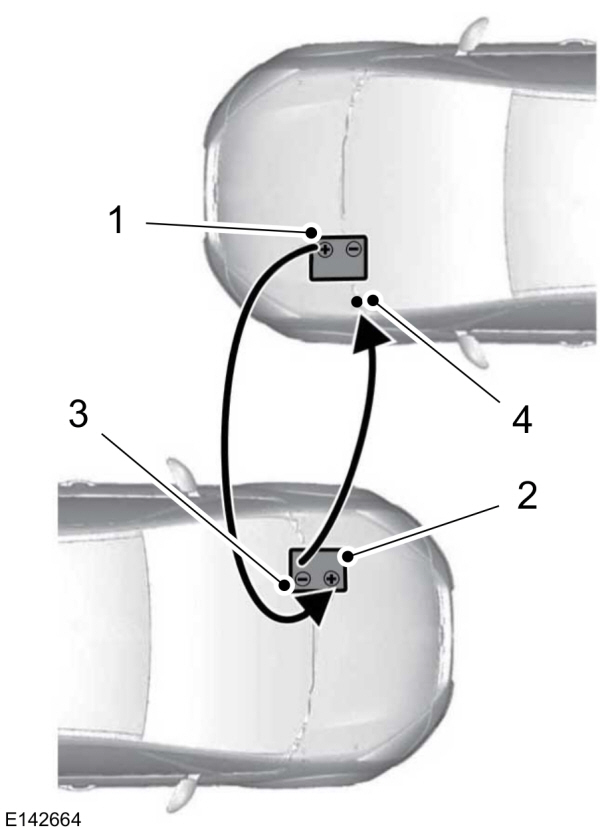
- Connect the positive (+) jumper cable to the positive (+) terminal of the discharged battery.
- Connect the other end of the positive (+) cable to the positive (+) terminal of the assisting battery.
- Connect the negative (-) cable to the negative (-) terminal of the assisting battery.
- Make the final connection of the negative (-) cable to an exposed metal part of the stalled vehicle's engine, or connect the negative (-) cable to a ground connection point if available.
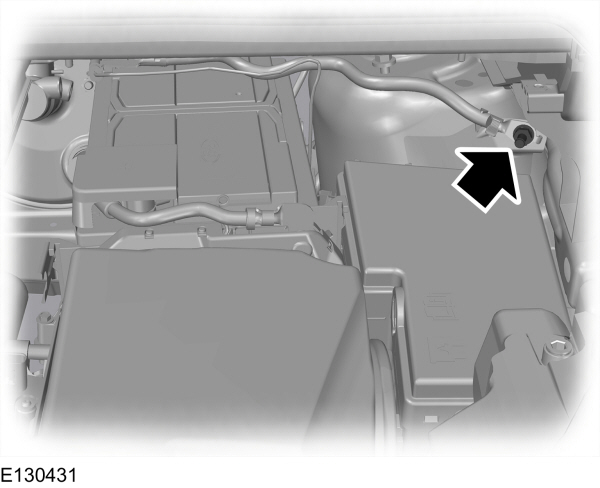
| WARNING: Do not connect the end of the second cable to the negative (-) terminal of the battery to be jumped. A spark may cause an explosion of the gases that surround the battery. |
Jump Starting
- Start the engine of the booster vehicle and rev the engine moderately, or press the accelerator gently to keep your engine speed between 2000 and 3000 rpms, as shown in your tachometer.
- Start the engine of the disabled vehicle.
- After starting the disabled vehicle, run both vehicle engines for an additional three minutes before disconnecting the jumper cables.
Removing the Jumper Cables
Remove the jumper cables in the reverse order that they were connected.
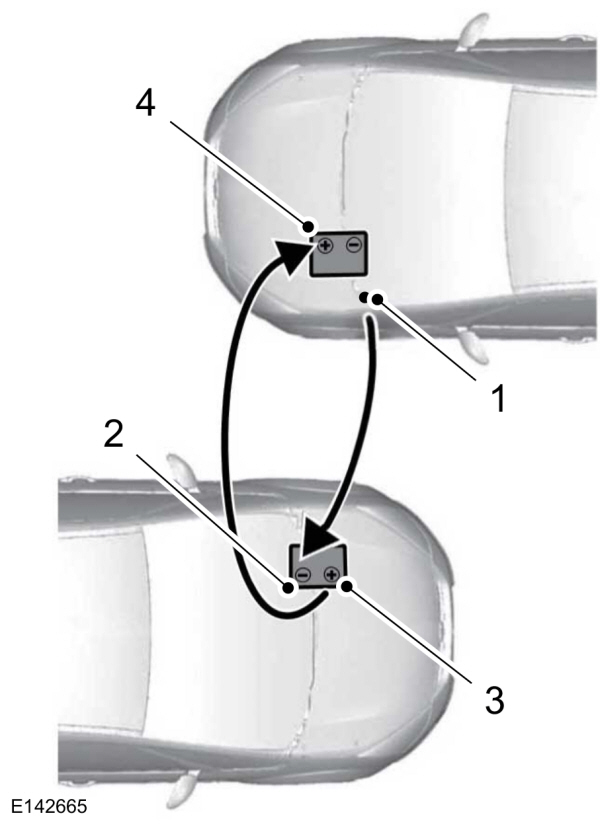
- Remove the jumper cable from the ground metal surface or connecting point, if available.
- Remove the jumper cable on the negative (-) terminal of the booster vehicle's battery.
- Remove the jumper cable from the positive (+) terminal of the booster vehicle's battery.
- Remove the jumper cable from the positive (+) terminal of the disabled vehicle's battery.
After starting your vehicle and removing the jumper cables, allow it to idle for several minutes so the battery can recharge.
Post-Crash Alert System
The system flashes the turn signal lamps and sounds the horn (intermittently) in the event of a serious impact that deploys an airbag (front, side, side curtain or Safety Canopy) or the seatbelt pretensioners.
The horn and lamps will turn off when:
- The hazard control button is pressed
- The panic button (if equipped) is pressed on the remote entry transmitter
- Your vehicle runs out of power
Download Manual