Changing a Road Wheel
 WARNING: Failure to follow these guidelines could result in an increased risk of loss of vehicle control, injury or death. WARNING: Do not attempt to change a tire on the side of the vehicle close to moving traffic. Pull far enough off the road to not obstruct the flow of traffic and avoid the danger of being hit when operating the jack or changing the wheel. WARNING: Switch the ignition off and apply the parking brake. If your vehicle has a manual transmission, shift into first or reverse gear. If your vehicle has an automatic transmission, shift into park (P). WARNING: Make sure that your vehicle is on firm and level ground with the front wheels pointing straight ahead and set up a warning triangle if available. WARNING: To help prevent your vehicle from moving when changing a wheel, shift the transmission into park (P), set the parking brake and use an appropriate block or wheel chock to secure the wheel diagonally opposite to the wheel being changed. For example, when changing the front left wheel, place an appropriate block or wheel chock on the right rear wheel. WARNING: Failure to follow these guidelines could result in an increased risk of loss of vehicle control, injury or death. WARNING: Do not attempt to change a tire on the side of the vehicle close to moving traffic. Pull far enough off the road to not obstruct the flow of traffic and avoid the danger of being hit when operating the jack or changing the wheel. WARNING: Switch the ignition off and apply the parking brake. If your vehicle has a manual transmission, shift into first or reverse gear. If your vehicle has an automatic transmission, shift into park (P). WARNING: Make sure that your vehicle is on firm and level ground with the front wheels pointing straight ahead and set up a warning triangle if available. WARNING: To help prevent your vehicle from moving when changing a wheel, shift the transmission into park (P), set the parking brake and use an appropriate block or wheel chock to secure the wheel diagonally opposite to the wheel being changed. For example, when changing the front left wheel, place an appropriate block or wheel chock on the right rear wheel. |
Make sure all passengers are out of your vehicle
Note: : The use of tire sealants can damage the tire pressure monitoring system.
Note: The tire pressure monitoring system indicator light will illuminate when the spare tire is in use. To restore the full function of the monitoring system, all road wheels equipped with tire pressure monitoring sensors must be mounted on the vehicle.
Note: If your vehicle has a tire pressure monitoring system, the warning indicator flashes if you fit the spare wheel to your vehicle. To restore the correct operation of the tire pressure monitoring system, you must have the repaired road wheel and tire assembly refitted to your vehicle. See Tire Pressure Monitoring System. To prevent damage occurring to the tire pressure monitoring system sensors, make sure you have the damaged tire repaired or replaced by a tire professional.
If the spare wheel is the same type and size as your vehicle road wheel, you can fit the spare wheel and continue to drive in the normal manner.
If the spare wheel is not the same type and size as your vehicle road wheel, it has a label showing the maximum driving speed limit.
The spare wheel is under the rear of your vehicle
The jack and tools are behind a cover in the sidewall at the left rear of the cargo area.
| WARNING: Do not get under a vehicle that is supported by a jack. WARNING: Only use the jack provided as original equipment with your vehicle. WARNING: Only use the spare wheel and tire assembly provided as original equipment with your vehicle. WARNING: Make sure there is no grease or oil on the threads or the surface between the wheel studs and the wheel nuts. This can cause the wheel nuts to loosen while driving. WARNING: The jack supplied with this vehicle is only intended for changing a flat tire in an emergency. Do not attempt to do any other work on your vehicle when it is supported by the jack, as your vehicle could slip off the jack. Failure to follow this instruction could result in personal injury or death. WARNING: Never place anything between the vehicle jack and the ground. WARNING: Never place anything between the vehicle jack and your vehicle. |
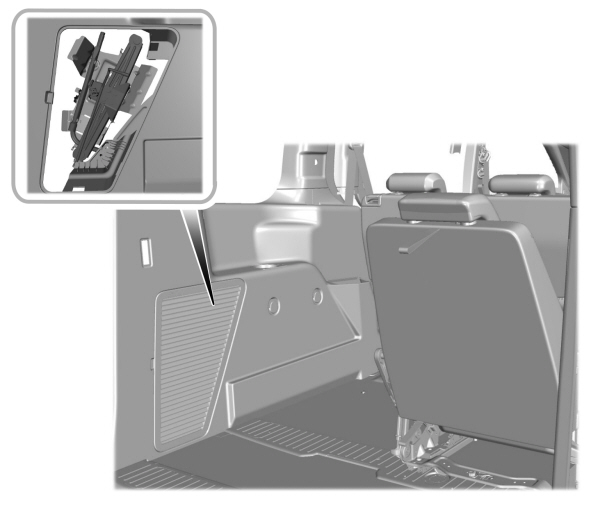
Remove the cover in the cargo area to access the jack and tools. Turn the wing nut counter-clockwise until the jack can be removed. Remove the lug wrench and wheel cover removal tool from the stowage clips by pulling them straight out.
- Park on a level surface, set the parking brake and activate the hazard flashers.
- Move the transmission selector lever to the park (P) position and switch the ignition off.
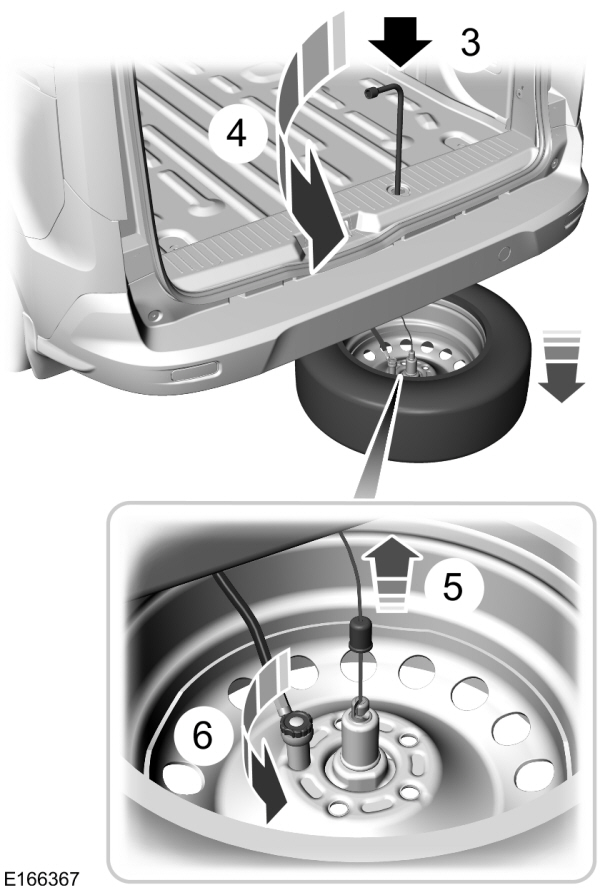
- Open the cap in the rear of the vehicle and insert the end of the lug wrench into the guide hole.
- Turn the handle counterclockwise and lower the spare tire until it rests on the ground and the cable is slack.
- Detach the first cable by pulling the cap up and sliding it away from the wheel. Then turn the end of the cable so it fits through the slot and remove the cable and bracket.
- Detach the safety cable by unscrewing the bolt.
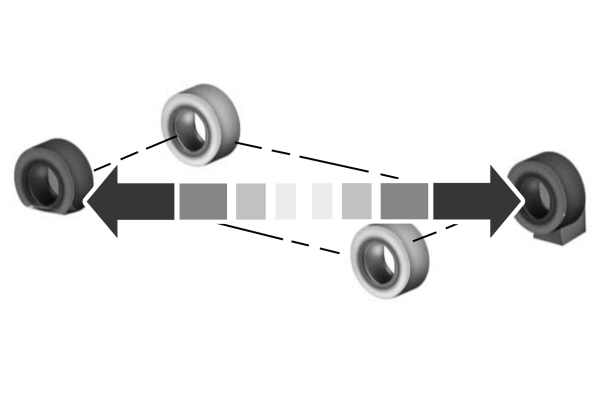
- Block the diagonally opposite wheel.
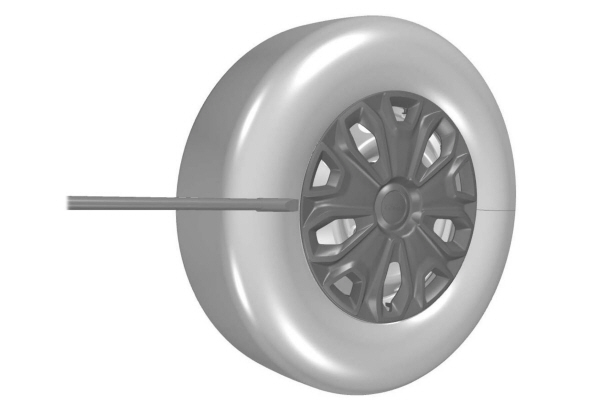
- Install the wheel cover remover to the lug wrench. Insert the tip of the removal tool into the gap between the rim and the wheel cover and carefully remove the cover.
| WARNING: When you install a wheel, remove any corrosion, dirt or foreign materials present on the mounting surfaces of the wheel or the surface of the wheel hub, brake drum or brake disc that contacts the wheel. Make sure to secure any fasteners that attach the rotor to the hub so they do not interfere with the mounting surfaces of the wheel. Installing wheels without following these steps can cause the wheel nuts to loosen and the wheel to come off while your vehicle is in motion, resulting in loss of vehicle control, personal injury or death. |
- Loosen each wheel lug nut one-half turn counterclockwise but do not remove them until the wheel is raised off the ground.
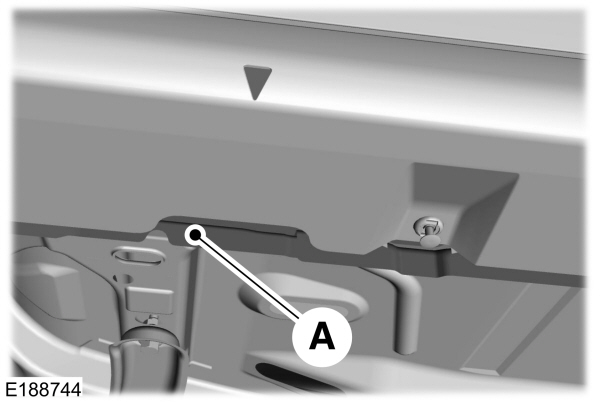
| WARNING: Only use the specified jacking points. If you use any other locations you could damage vehicle components, such as brake lines. |
- Arrows on the sill panel cover show the location of the jacking points (A).
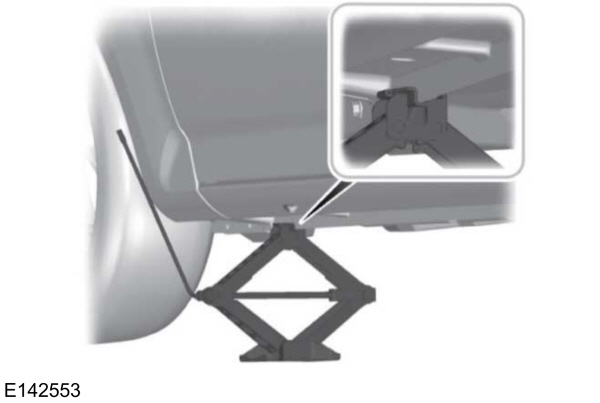
- Align the slot on top of the jack with the sheet metal flange indicated by the jack locator triangle next to the tire you are changing. Turn the jack handle clockwise until the wheel is completely off the ground.
Note: Passengers should not remain in the vehicle when the vehicle is being jacked.
- Remove the lug nuts with the lug wrench.
- Replace the flat tire with the spare tire, making sure the valve stem is facing outward. Reinstall the lug nuts until the wheel is snug against the hub. Do not fully tighten the lug nuts until the wheel has been lowered.
- Lower the wheel by turning the jack handle counterclockwise.
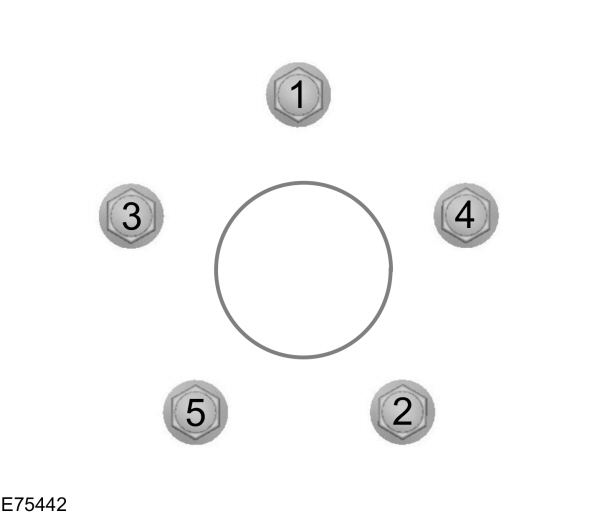
- Remove the jack and fully tighten the lug nuts in the order shown. Tighten the lug nuts to the correct specification. See Lug Nuts.
- Fit the wheel cover onto the rim making sure the valve stem aligns with the indent in the ring on the back of the cover. Tap it with the palm of your hand to lock it into place.
Stowing the Flat or Spare Tire
Do not raise the spare wheel carrier without the wheel attached. Damage can occur to the winch mechanism if lowered without a wheel attached.
Note: Failure to follow spare tire stowage instructions may result in failure of cable or loss of spare tire.
Note: Do not lay alloy wheels face down on the ground, this will damage the paint. When stowing the flat tire use a sheet or mat under the wheel to protect the paint.
- Stow the flat or spare tire with the valve stem facing downward.
- Slide the wheel partially under the vehicle and install the retainer through the wheel center. Pull on the cables to align the components at the end of the cables.
- Attach the second cable by screwing the bolt into one of the holes in the wheel.
- Turn the end of the first cable so it fits through the slot and install the cable. Then slide the cap over the retainer.
- Turn the jack handle clockwise to raise the tire to its stowed position underneath the vehicle. The effort to turn the jack handle increases significantly when the tire is raised to the maximum tightness. Tighten to the best of your ability.
- Check that the tire is flat against the frame and is fully tight. Try to push or pull, then turn the tire to be sure it will not move. Loosen and retighten, if necessary. Failure to properly stow the spare tire may result in failure of the winch cable and loss of the tire.
- Repeat this tightness check procedure when servicing the spare tire pressure (every six months, per scheduled maintenance information), or at any time that the spare tire is disturbed through service of other components.
Return the jack and tools to the storage position in the cargo area.
Download Manual