Front Seats
Seat Adjustment
Manual Seats
Warning
You can lose control of the vehicle if you try to adjust a driver seat while the vehicle is moving.
Adjust the driver seat only when the vehicle is not moving.
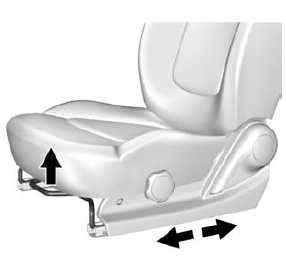
To adjust the seat:
- Lift the bar under the front edge of the seat cushion to unlock the seat.
- Slide the seat to the desired position and release the bar.
- Try to move the seat back and forth to be sure it is locked in place.
Seat Height Adjuster
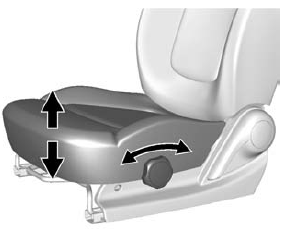
If available, turn the knob to raise or lower the seat.
Reclining Seatbacks
Warning
If either seatback is not locked, it could move forward in a sudden stop or crash. That could cause injury to the person sitting there.
Always push and pull on the seatbacks to be sure they are locked.
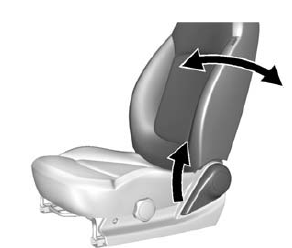
To recline the seatback:
- Lift the lever.
- Move the seatback to the desired position, and then release the lever to lock the seatback in place.
- Push and pull on the seatback to make sure it is locked in place.
To return the seatback to the upright position:
- Lift the lever fully without applying pressure to the seatback, and the seatback will return to the upright position.
- Push and pull on the seatback to make sure it is locked.
Warning
Sitting in a reclined position when the vehicle is in motion can be dangerous. Even when buckled up, the safety belts cannot do their job.
The shoulder belt will not be against your body. Instead, it will be in front of you. In a crash, you could go into it, receiving neck or other injuries.
The lap belt could go up over your abdomen. The belt forces would be there, not at your pelvic bones. This could cause serious internal injuries.
For proper protection when the vehicle is in motion, have the seatback upright. Then sit well back in the seat and wear the safety belt properly.
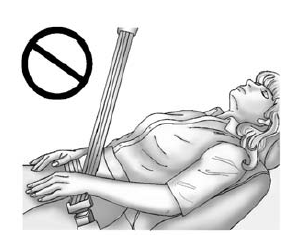
Do not have a seatback reclined if the vehicle is moving.
Front Seat Armrest
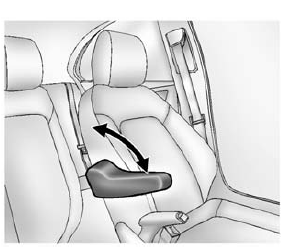
There is an armrest on the inboard side of the driver seat. To raise or lower the armrest, push up or pull down on the armrest.
Heated Front Seats
Warning
If you cannot feel temperature change or pain to the skin, the seat heater may cause burns. To reduce the risk of burns, people with such a condition should use care when using the seat heater, especially for long periods of time. Do not place anything on the seat that insulates against heat, such as a blanket, cushion, cover, or similar item. This may cause the seat heater to overheat. An overheated seat heater may cause a burn or may damage the seat.
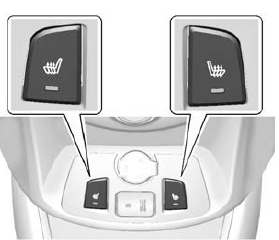
If available, the buttons are below the climate control system. To operate, the engine must be running.
Press  or
or
 to heat the driver or passenger seat.
The indicator light on the control turns on when this feature is on. Press the control again to turn this feature off.
The passenger seat may take longer to heat up.
Download Manual