Wiper Operation
Wiper Operation
The windshield wipers and washers can be used when the vehicle is on. Move the wiper lever up or down to the desired position.
Headlight-Wiper Integration
When the headlights are in the AUTO position, they automatically turn on when the front wipers operate several times within a certain interval. The headlights turn off shortly after the wipers are turned off or if there is enough ambient light.
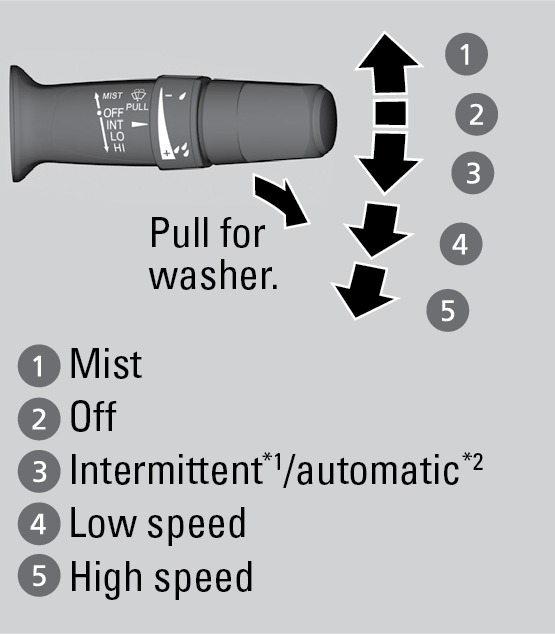
Intermittent Wipers*1
When you move the lever to the INT position, the wipers operate based on the delay adjustment.
Rotate the adjustment ring to adjust the wiper delay.
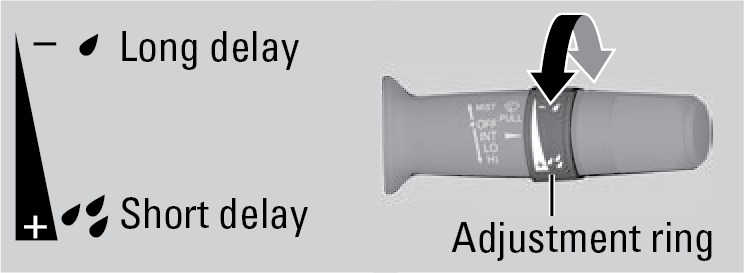
*1 models without automatic intermittent wipers
*2 models with automatic intermittent wipers
Automatic Rain-Sensing Wipers*2
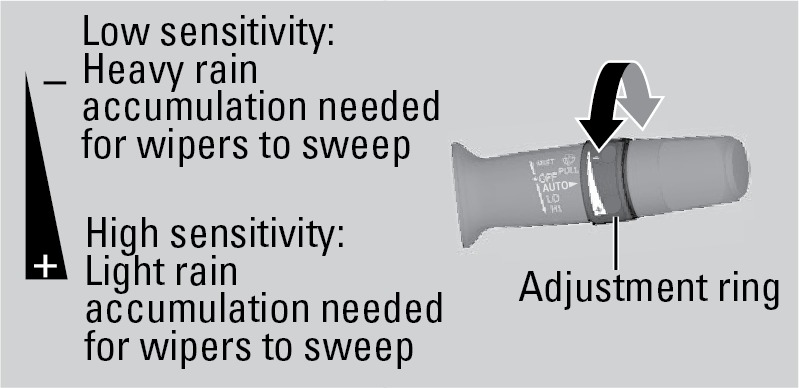
When you move the lever to the AUTO position while driving in rainy weather, the wipers operate based on the amount of detected rainfall.
Rotate the adjustment ring to adjust the rainfall sensor sensitivity. Set the wipers to OFF when the rain stops.
Ensure the wiper lever is in the OFF position before entering a car wash or cleaning the windshield. Wiper-system damage may happen otherwise.
Do not use the wipers when the windshield is dry. The windshield will get scratched, or the rubber blades will get damaged.
In cold weather, the blades may freeze to the windshield, becoming stuck. Operating the wipers in this condition may damage the wipers. Use the defroster to warm the windshield, or manually clear the windshield of ice and snow before turning on the wipers.
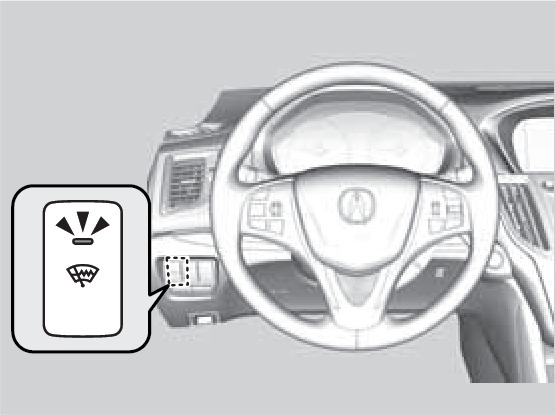
Headlight Washers*
Canadian models
Turn the headlights on. Press the headlight washer button to operate the washers.
The headlight washers also operate when you first turn on the windshield wipers.
Heated Windshield Button*
Canadian models
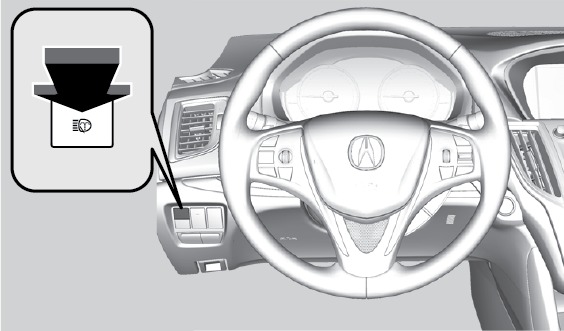
Turn the vehicle on. Press the heated windshield button to de-ice the windshield.
The heated windshield may automatically activate when the outside temperature is below 4° C, and deactivate when the temperature reaches 6° C.
* if equipped
*2 models with automatic intermittent wipers
Adjusting the Seats
Adjusting the Seats
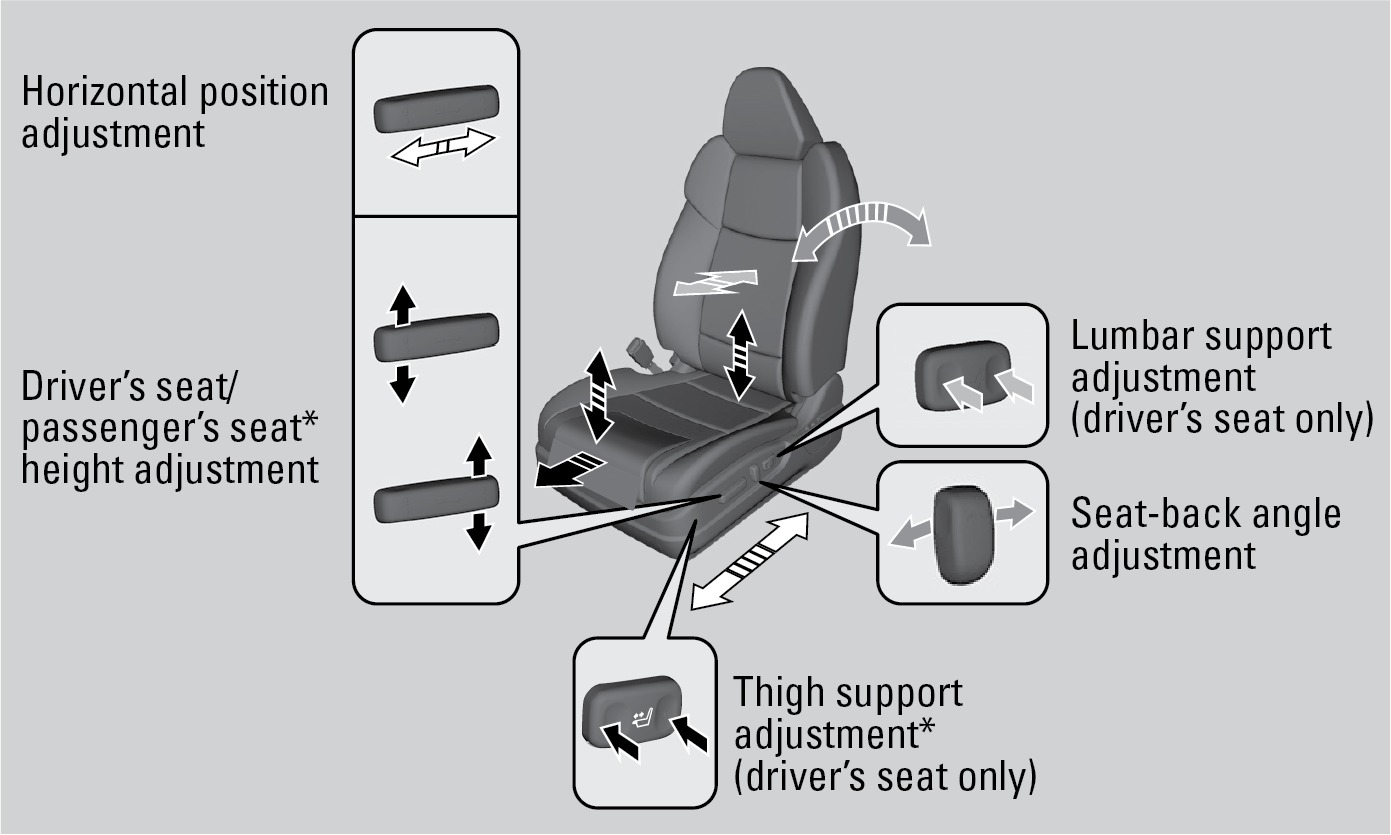
Make seat adjustments before driving to ensure the best comfort and safety.
Adjusting the Front Seats
Adjust the driver's seat as far back as possible while allowing you to maintain full control of the vehicle. You should be able to sit upright and well back in the seat, adequately press the pedals without leaning forward, and grip the steering wheel comfortably. The passenger's seat should be adjusted so that it is as far back from the front airbag in the dashboard as possible.
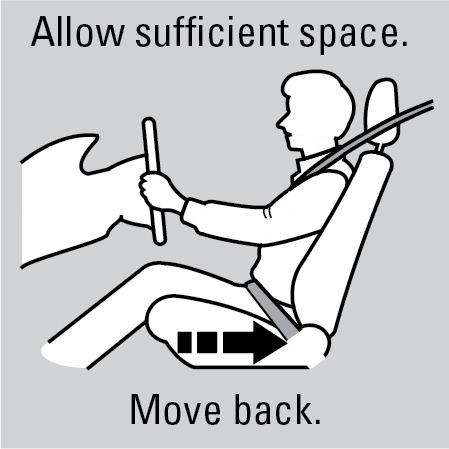
The National Highway Traffic Safety Administration and Transport Canada recommend that drivers allow at least 10 inches (25 cm) between the center of the steering wheel and the chest.
Sitting too close to a front airbag can result in serious injury or death if the front airbags inflate.
Always sit as far back from the front airbags as possible while maintaining control of the vehicle.
Reclining the seat-back too far can result in serious injury or death in a crash. Adjust the seat-back to an upright position, and sit well back in the seat.
Sitting improperly or out of position can result in serious injury or death in a crash.
Always sit upright, well back in the seat, with your feet on the floor.
*if equipped
Adjusting the Head Restraints
Your vehicle is equipped with head restraints in all seating positions. Head restraints are most effective for protection against whiplash and other rear-impact crash injuries.
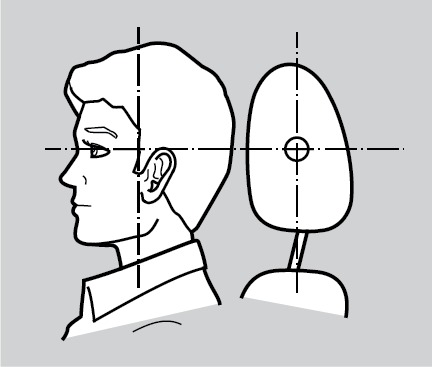
The center of the back of the occupant's head should rest against the center of the restraint. The tops of the occupant's ears should be level with the center height of the restraint.
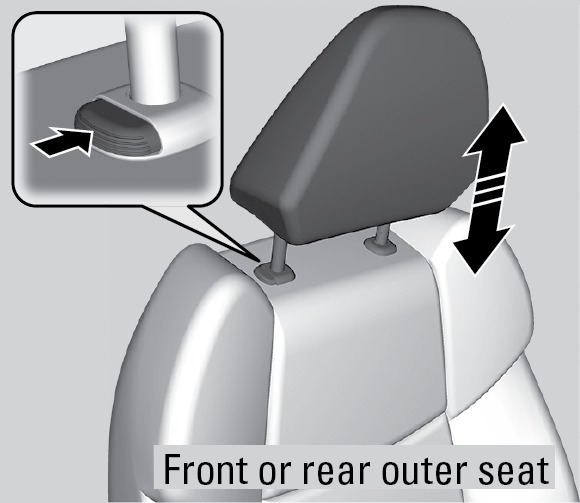
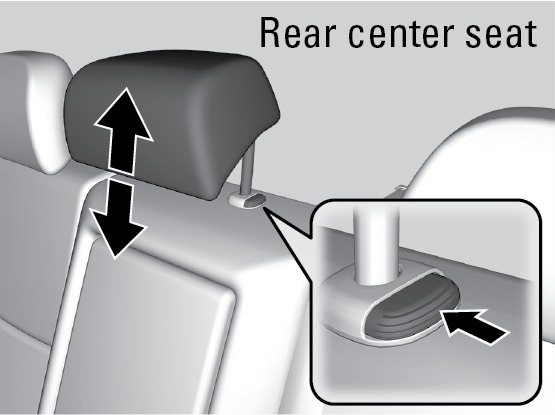
To raise the head restraint: Pull it upward.
To lower the head restraint: Push it down while pressing the release button.
To remove the head restraint: Pull the restraint up as far as it will go. Then push the release button, and pull the restraint up and out.
To reinstall a head restraint: Insert the legs back in place, then adjust the head restraint to an appropriate height while pressing the release button. Pull up on the restraint to make sure it is locked in position.
For a head restraint system to work properly:
Do not hang any items on the head restraints or from the restraint legs.
Do not place any objects between an occupant and the seat-back.
Install each restraint in its proper location.
Improperly positioning head restraints reduces their effectiveness and increases the likelihood of serious injury in a crash.
Make sure head restraints are in place and positioned properly before driving.
Failure to reinstall, or correctly reinstall, the head restraints can result in severe injury during a crash.
Always replace the head restraints before driving.
Floor Mats
Position the front and rear seat floor mats properly, and anchor them. If they are not properly positioned, the floor mats can interfere with the front seat functions.
Do not put additional floor mats on top of the anchored mats.
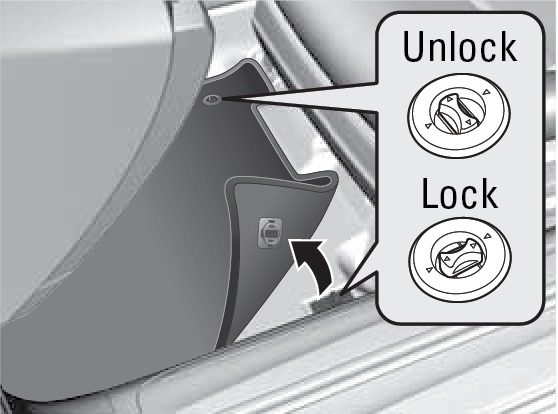
Folding the Rear Seats
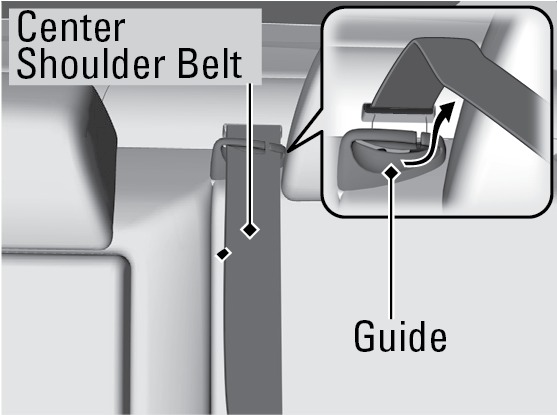
Remove the center shoulder belt from the guide.
Pull a seatback-release lever in the trunk.
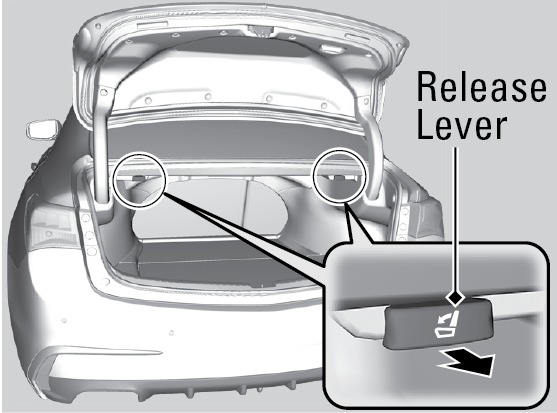
Fold the seatback.
Download Manual