Seatbelts
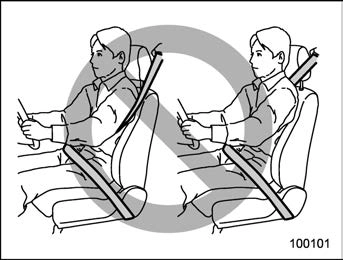
Your vehicle is equipped with a crash sensing and diagnostic module, which will record the use of the seatbelt by the front
passenger when any of the SRS frontal, side and curtain airbags deploy.
Use a child restraint system that is suitable for your vehicle. Refer to “Child restraint systems” 1-24.
If a child is too big for a child restraint system, the child should sit in the rear seat and be restrained using the seatbelts. According to accident statistics, children are safer when properly restrained in the rear seating positions than in the front seating positions. Never allow a child to stand up or kneel on the seat.
If the shoulder portion of the belt crosses the face or neck, move the child closer to the belt buckle to help provide a good shoulder belt fit. Take care to securely place the lap belt as low as possible on the hips and not on the child’s waist. If the shoulder portion of the belt cannot be
properly positioned, use a child restraint system. Never place the shoulder belt under the child’s arm or behind the child’s back.
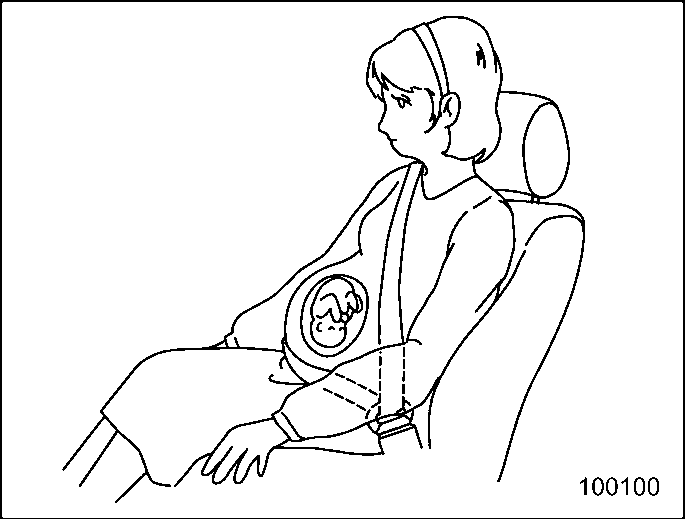
Expectant mothers also need to use the seatbelts. They should consult their doctor for specific recommendations. The lap belt should be worn securely and as low as possible over the hips, not over the waist.
The driver’s seatbelt has an Emergency Locking Retractor (ELR).
The emergency locking retractor allows normal body movement but the retractor locks automatically during a sudden stop,
impact or if you pull the belt very quickly out of the retractor.
Each passenger’s seatbelt has an Auto- matic Locking Retractor/Emergency Lock- ing Retractor (ALR/ELR). The Automatic Locking Retractor/Emergency Locking Retractor normally functions as an Emer- gency Locking Retractor (ELR). The ALR/ ELR has an additional locking mode “Automatic Locking Retractor (ALR) mode” intended to secure a child restraint system. When the seatbelt is once drawn out completely and is then retracted even slightly, the retractor locks the seatbelt in that position and the seatbelt cannot be extended. As the belt is rewinding, clicks will be heard which indicate the retractor functions as an ALR. When the seatbelt is retracted fully, the ALR mode is released.
When securing a child restraint system on the rear seats by the use of the seatbelt, change the seatbelt to the Automatic Locking Retractor (ALR) mode.
After removing the child restraint system, make sure that the seatbelt retracts fully and the retractor returned to the Emer- gency Locking Retractor (ELR) mode.
For instructions on how to convert the retractor to the ALR mode and restore it to the ELR mode, refer to “Installing child restraint systems with ALR/ELR seatbelt”
1-29.
 Seatbelt warning light and chime
Refer to “Seatbelt warning light and chime”
3-13.
Driver’s seat: Adjust the seatback to the upright position. Move the seat as far from the steering wheel as practical while still maintaining full vehicle control.
Front passenger’s seat: Adjust the seat- back to the upright position. Move the seat as far back as possible.
strong pull, then pull it out slowly again.
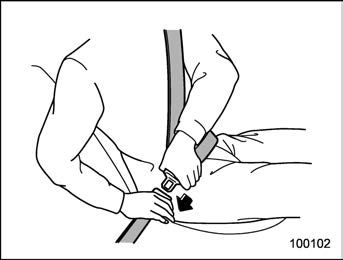
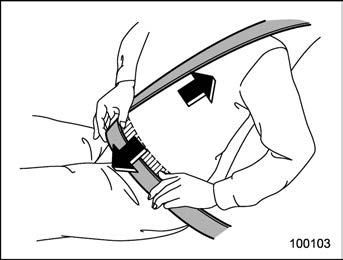
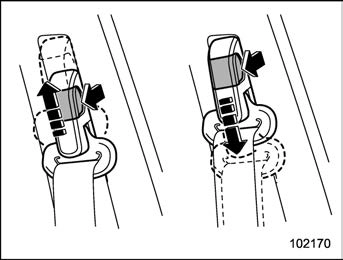
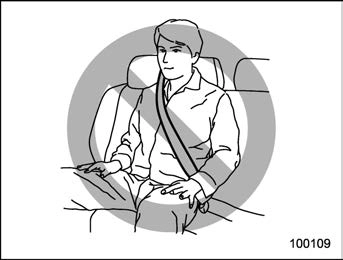
The shoulder belt anchor height should be adjusted to the position best suited for the driver/front passenger. Always adjust the anchor height so that the shoulder belt passes over the middle of the shoulder without touching the neck.
Pull the release knob and slide the anchor up.
Pull the release knob and slide the anchor down.
Pull down on the anchor to make sure that it is locked in place.
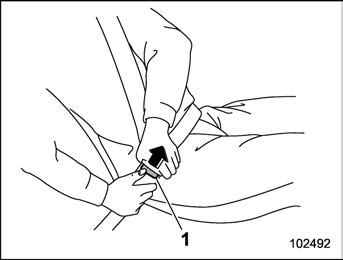
1) Button
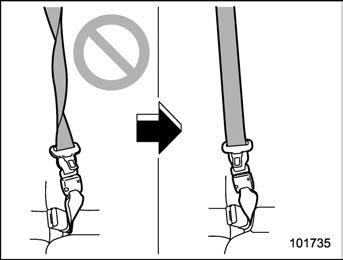
avoid the seatbelt being tangled or twisted.
Before closing the door, make sure that the belts are retracted properly to avoid catching the belt webbing in the door.
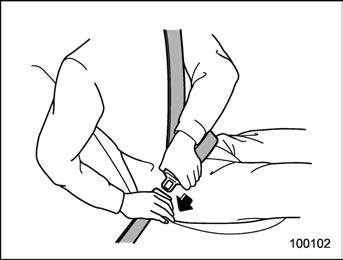
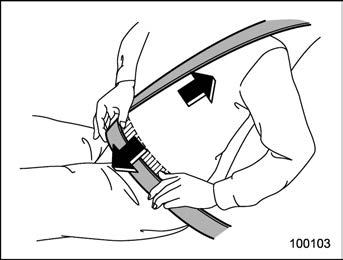
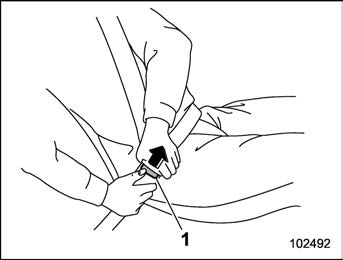
1) Button
Before closing the door, make sure that the belts are retracted properly to avoid catching the belt webbing in the door.
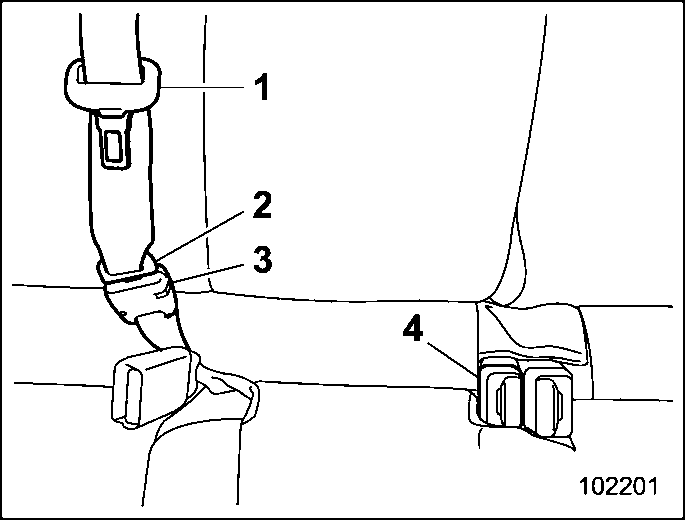
 Center seatbelt tongue plate
 Center seatbelt buckle
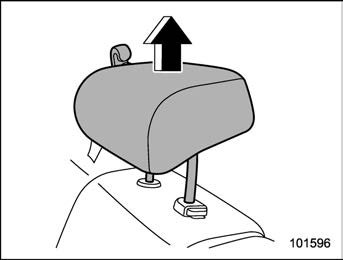
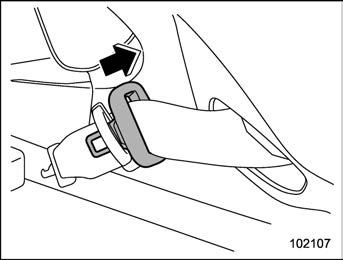
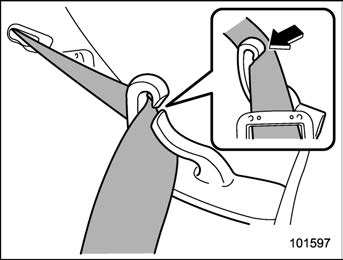
gap in the belt guide; then slide the rest of the belt in, so that the whole belt fits inside.
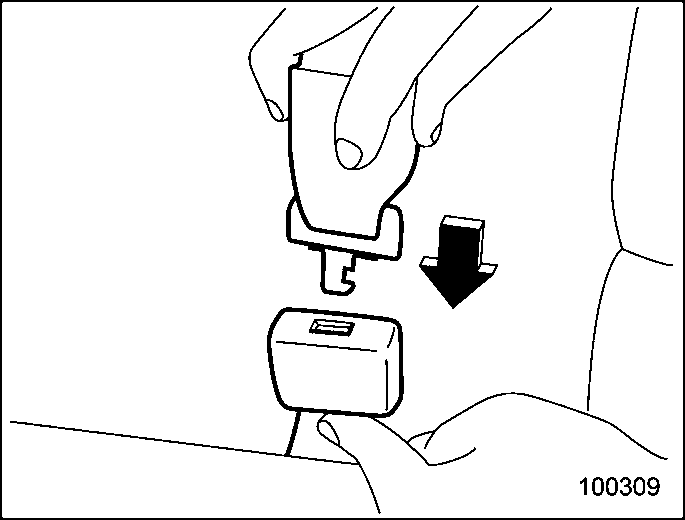
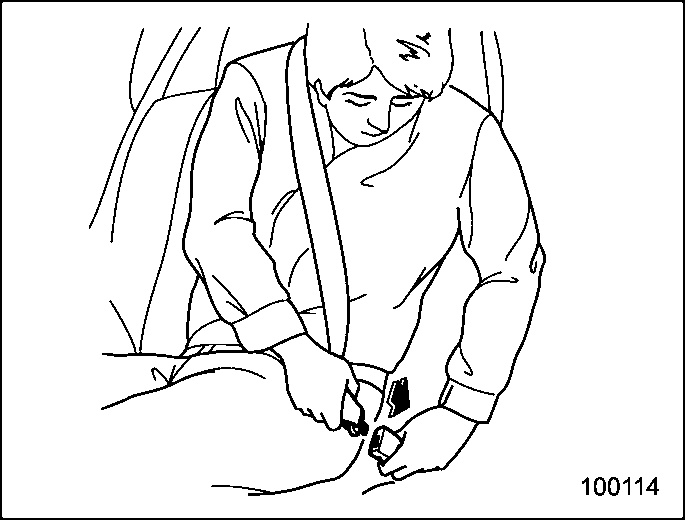
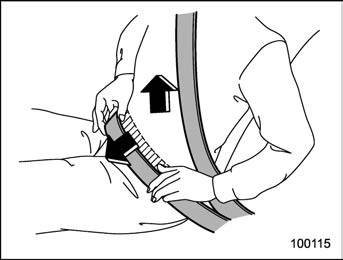
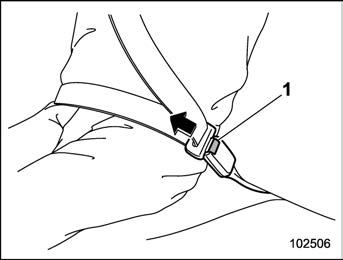
1) Button
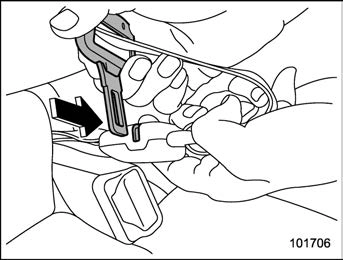
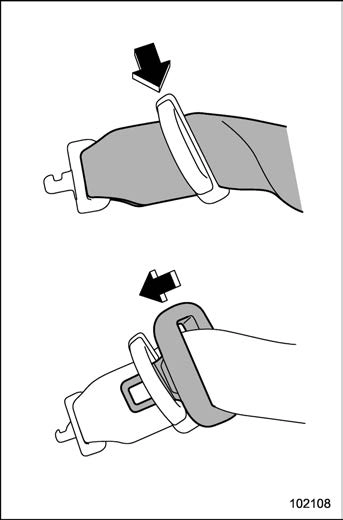
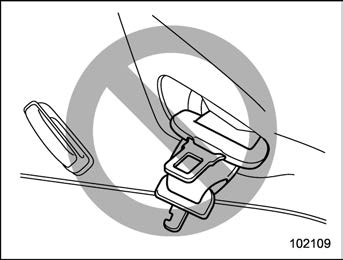 Allow the retractor to roll up the belt. You should hold the webbing end and guide it back into the retractor while it is rolling up. Insert the connector (tongue) into the belt holder.
To clean the seatbelts, use a mild soap and lukewarm water. Never bleach or dye the belts because this could seriously affect their strength.
Inspect the seatbelts and attachments including the webbing and all hardware periodically for cracks, cuts, gashes, tears, damage, loose bolts or worn areas. Re- place the seatbelts even if only minor damage is found.
Download Manual