Starting and Stopping the Engine
|
areas. Exhaust fumes are toxic. Always open the garage door before you start the engine. Failure to follow this instruction could result in personal injury or death.
|
 WARNING: Extended idling at high engine speeds can produce very high temperatures in the engine and exhaust system, creating the risk of fire or other damage.
 WARNING: Do not park, idle or drive your vehicle on dry grass or other dry ground cover. The emission system heats up the engine compartment and exhaust system, creating the risk of fire.
  WARNING: Do not start the engine in a closed garage or in other enclosed
 WARNING: Do not use starting fluid, for example ether, in the air intake system. Such fluid could cause immediate explosive damage to the engine and possible personal injury.
 WARNING: Exhaust leaks may result in entry of harmful and potentially lethal fumes into the passenger compartment. If you smell exhaust fumes inside your vehicle, have your vehicle inspected immediately. Do not drive if you smell exhaust fumes.
The powertrain control system meets all Canadian interference-causing equipment standard requirements regulating the impulse electrical field or radio noise.
If you stop your vehicle and leave the engine idling for long periods, we recommend that you do one of the following:
Turn the key to position 0.
Turn the key to position I. Electrical accessories, for example the radio, operate without the engine running.
Turn the key to position II. All electrical circuits and accessories are operational and the warning lamps and indicators illuminate.
209
Turn the key to position III. Release the key when the engine starts.
PUSH BUTTON IGNITION SWITCH (IF EQUIPPED)
E321258 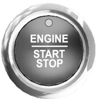
When the ignition is on or in accessory mode, press the push button ignition switch once without your foot on the brake pedal.
When the ignition is off, press the push button ignition switch once without your foot on the brake pedal.
All electrical circuits and accessories are operational and the warning lamps and indicators illuminate.
Note: Your vehicle has a battery saver feature that shuts your vehicle off when it detects a certain amount of battery drain, or after approximately 30 minutes of inactivity in accessory mode.
With the transmission in park (P), press the brake pedal and press the push button ignition switch. An indicator light on the button illuminates when the ignition is on and when the engine starts.
Note: The system may not function if the passive key is close to metal objects or electronic devices, for example keys or a cell phone.
Note: A valid key must be inside your vehicle to switch the ignition on and start the engine.
Before starting your vehicle, check the following:
• Make sure that the headlamps and electrical accessories are off.
• Make sure that the parking brake is on.
• Make sure that the transmission is in park (P).
Note: Do not touch the accelerator pedal.
E322354
Note: The engine may continue cranking for up to 15 seconds or until it starts.
Note: The engine takes longer to start at lower temperatures. It may crank for several seconds when very cold.
210
Before starting your vehicle, check the following:
Note: Do not touch the accelerator pedal.
E321258 
Note: The engine may continue cranking for up to 15 seconds or until it starts.
Note: The engine takes longer to start at lower temperatures. It may crank for several seconds when very cold.
Before starting your vehicle, check the following:
E322357
Note: Wait until the glow plug indicator turns off.
Note: Do not touch the accelerator pedal.
E322354
Note: The engine may continue cranking for up to 15 seconds or until it starts.
Note: The engine takes longer to start at lower temperatures. It may crank for several seconds when very cold.
If it illuminates, wait until the glow plug indicator turns off before starting the engine.
Before starting your vehicle, check the following:
Note: Do not touch the accelerator pedal.
E321258 
211
Note: The engine may continue cranking for up to 15 seconds or until it starts.
Note: The engine takes longer to start at lower temperatures. It may crank for several seconds when very cold.
The engine does not start until the glow plug indicator turns off.
This may take several seconds in extremely cold conditions.
Before starting your vehicle, check the following:
• Make sure that the headlamps and electrical accessories are off.
• Make sure that the parking brake is on.
• Make sure that the transmission is in park (P).
Note: Do not touch the accelerator pedal.
E322354
Note: The green ready indicator illuminates letting you know that your vehicle is ready for driving. Since your vehicle is equipped with a silent key start, the engine may not start when your vehicle starts.
When the engine starts for the first time on your drive, the idle speed increases, this helps to warm up the engine. If the engine idle speed does not slow down, have your vehicle checked by an authorized dealer.
Before starting your vehicle, check the following:
• Make sure the headlamps and electrical accessories are off.
• Make sure the parking brake is on.
• Make sure the transmission is in park (P).
Note: Do not touch the accelerator pedal.
E321258 
Note: The green ready indicator illuminates letting you know that your vehicle is ready for driving. Since your vehicle is equipped with a silent key start, the engine may not start when your vehicle starts.
When the engine starts for the first time on your drive, the idle speed increases, this helps to warm up the engine. If the engine idle speed does not slow down, have your vehicle checked by an authorized dealer.
The system does not function if:
• The passive key frequencies are jammed.
• The key battery has no charge.
The system allows you to start the engine within 10 seconds of switching it off, even if it does not detect a valid passive key.
212
Within 10 seconds of switching the engine off, fully press the brake pedal and press the push button ignition switch. After 10 seconds, you can no longer start the engine if the system does not detect a valid passive key.
When you start the engine, it remains running until you press the push button ignition switch, even if your vehicle does not detect a valid passive key. If you open and close a door when the engine is running, the system searches for a valid passive key.
Equipped)
|
|
 WARNING: Failure to follow engine block heater instructions could result in property damage or serious personal injury.
 WARNING: Do not use your heater with ungrounded electrical systems or two-pronged adapters. There is a risk of electrical shock.
 WARNING: Do not fully close the hood, or allow it to drop under its own weight when using the engine block heater. This could damage the power cable and may cause an electrical short resulting in fire, injury and property damage.
We recommend that you do the following for a safe and correct operation:
213
The engine block heater warms the engine coolant. This allows the climate control system to quickly respond. The equipment includes a heater element installed in the engine block and a wire harness. You can connect the system to a grounded
220-240 volt AC electrical source.
Note: The engine block heater is most effective when outdoor temperatures are below 0°F (-18°C).
Make sure the receptacle terminals are clean and dry prior to use. Clean them with a dry cloth if necessary.
The heater uses 0.4 to 1.0 kilowatt-hours of energy per hour of use. The system does not have a thermostat. It achieves maximum temperature after approximately three hours of operation. Using the engine block heater longer than three hours does not improve system performance and unnecessarily uses electricity.
E322405
E321258 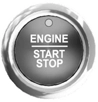
|
|
 WARNING: Switching off the engine when your vehicle is still moving results in a significant decrease in braking assistance. Higher effort is required to apply the brakes and to stop your vehicle. A significant decrease in steering assistance could also occur. The steering does not lock, but higher effort could be required to steer your vehicle. When you switch the ignition off, some electrical circuits, for example airbags, also turn off. If you unintentionally switch the ignition off, shift into neutral (N) and restart the engine.
E322405
214
|
|
 WARNING: Switching off the engine when your vehicle is still moving results in a significant decrease in braking assistance. Higher effort is required to apply the brakes and to stop your vehicle. A significant decrease in steering assistance could also occur. The steering does not lock, but higher effort could be required to steer your vehicle. When you switch the ignition off, some electrical circuits, for example airbags, also turn off. If you unintentionally switch the ignition off, shift into neutral (N) and restart the engine.
E321258 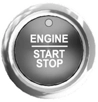
Automatic engine stop is a feature that switches the engine off if it has been idling for an extended period to help you save fuel.
Automatic engine stop turns the engine off. The ignition also turns off in order to save battery power. Before the engine shuts down, a message appears in the information display showing a timer counting down. If you do not intervene within 30 seconds, the engine shuts down. Another message appears in the information display to inform you that the engine has shut down in order to save fuel. Start your vehicle as you normally do.
Note: You cannot permanently switch off the automatic shutdown. If you switch it off, it turns on each time you switch the ignition on.
215
3. Switch Auto Engine Off on or off.
Note: You cannot permanently switch off the automatic shutdown. If you switch it off, it turns on each time you switch the ignition on.
Note: You cannot permanently switch off the automatic engine shutdown feature. When you switch it off temporarily, it turns on at the next ignition cycle.
You can stop the engine shutdown, or reset the timer, at any point before the
30-second countdown has expired by doing any of the following:
• Pressing the brake pedal or accelerator pedal.
• Pressing the OK or RESET button during the countdown.
If you are unable to start your vehicle, locate the backup slot in one of two positions:
Type Two
E269950
Note: If your vehicle is equipped with Type One, make sure to place the key properly into the backup slot.
Note: If your vehicle is equipped with Type Two, make sure the buttons are facing the rear of the vehicle and the key ring up. Place the key into the backup slot.
With the key in the backup slot, press the brake pedal, then press the push button ignition switch to start your vehicle.
– Warning Lamps
Malfunction Indicator Lamp
If it illuminates when the engine is running, the on-board diagnostics system is detecting
a malfunction of the vehicle emission control system.
216
If it flashes, engine misfire could be occurring. Increased exhaust gas temperatures could damage the catalytic converter or other vehicle components. Avoid heavy acceleration and deceleration, and have your vehicle checked as soon as possible.
If it illuminates when the engine is running, this indicates a powertrain or four-wheel drive
fault. If it flashes when you are driving, immediately reduce the vehicle speed. Avoid heavy acceleration and deceleration, and have your vehicle checked as soon as possible.
If both lamps illuminate when the engine is running, stop your vehicle as soon as it is safe to do so. Continuing to drive your vehicle could cause reduced power or the engine to stop. Switch the ignition off and attempt to restart the engine. Have your vehicle checked as soon as possible.
|
Message |
Action |
|
Cranking Time Exceeded |
Displays if you exceed the starting time limit. You cannot attempt to start the engine for 15 minutes. If you cannot start the engine after 15 minutes passes, have your vehicle imme- diately checked. |
|
Starting System Fault |
Displays if you are unable to start your vehicle with a correctly coded key. The system has detected a fault that requires service. Have your vehicle checked as soon as possible. |
|
No Key Detected |
Displays if the system does not detect a valid passive key. |
217
The speed at which the engine idles immediately after starting is optimized to minimize vehicle emissions and maximize cabin comfort and fuel economy.
You can only attempt to start the engine for a limited amount of time before the starting system temporarily disables. If you exceed the starting time limit, a message may appear and you cannot attempt to start the engine for at least 15 minutes.
If you disconnect the battery, your vehicle may exhibit some unusual driving characteristics for approximately 5 mi (8 km) after you reconnect it. This is because the engine management system must realign itself with the engine. You can disregard any unusual driving characteristics during this period.
If you cannot start the engine after 3 attempts, wait 10 seconds and do the following:
Note: Make sure that the parking brake is applied.
Note: Make sure that the transmission is in park (P) or neutral (N).
E322354
The speed at which the engine idles immediately after starting is optimized to minimize vehicle emissions and maximize cabin comfort and fuel economy.
You can only attempt to start the engine for a limited amount of time before the starting system temporarily disables. If you exceed the starting time limit, a message may appear and you cannot attempt to start the engine for at least 15 minutes.
If you disconnect the battery, your vehicle may exhibit some unusual driving characteristics for approximately 5 mi (8 km) after you reconnect it. This is because the engine management system must realign itself with the engine. You can disregard any unusual driving characteristics during this period.
218
If you cannot start the engine after 3 attempts, wait 10 seconds and do the following:
Note: Make sure that the parking brake is applied.
Note: Make sure that the transmission is in park (P) or neutral (N).
Note: The engine cranks for a short period of time and then it stops.
E321258 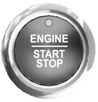
If the system does not detect a passive key and you are unable to start the engine, insert the passive key into the backup position and press the push button ignition switch to start the engine. See Accessing the Passive Key Backup Position (page 216).
– Frequently Asked Questions - Diesel, Vehicles Without: Push Button Start
The speed at which the engine idles immediately after starting is optimized to minimize vehicle emissions and maximize cabin comfort and fuel economy.
You can only attempt to start the engine for a limited amount of time before the starting system temporarily disables. If you exceed the starting time limit, a message may appear and you cannot attempt to start the engine for at least 15 minutes.
If you disconnect the battery, your vehicle may exhibit some unusual driving characteristics for approximately 5 mi (8 km) after you reconnect it. This is because the engine management system must realign itself with the engine. You can disregard any unusual driving characteristics during this period.
If you cannot start the engine, do the following:
Note: Make sure that the parking brake is applied.
Note: Make sure that the transmission is in park (P) or neutral (N).
219
E322354
2. Turn the key to position III until the engine starts.
The speed at which the engine idles immediately after starting is optimized to minimize vehicle emissions and maximize cabin comfort and fuel economy.
You can only attempt to start the engine for a limited amount of time before the starting system temporarily disables. If you exceed the starting time limit, a message may appear and you cannot attempt to start the engine for at least 15 minutes.
If you disconnect the battery, your vehicle may exhibit some unusual driving characteristics for approximately 5 mi (8 km) after you reconnect it. This is because the engine management system must realign itself with the engine. You can disregard any unusual driving characteristics during this period.
If you cannot start the engine, do the following:
Note: Make sure that the parking brake is applied.
Note: Make sure that the transmission is in park (P) or neutral (N).
E321258 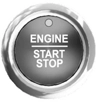
If the system does not detect a passive key and you are unable to start the engine, insert the passive key into the backup position and press the push button ignition switch to start the engine. See Accessing the Passive Key Backup Position (page 216).
220
Download Manual