Maintenance
Service your vehicle regularly to help maintain its roadworthiness and resale value. There is a large network of authorized dealers that are there to help you with their professional servicing expertise. We believe that their specially trained technicians are best qualified to service your vehicle properly and expertly. They are supported by a wide range of highly specialized tools developed specifically for servicing your vehicle.
If your vehicle requires professional service, an authorized dealer can provide the necessary parts and service. Check your warranty information to find out which parts and services are covered.
Use only recommended fuels, lubricants, fluids and service parts conforming to specifications. See Capacities and Specifications (page 529).
|
|
 WARNING: Make sure that you fully latch the hood before driving. Failure to follow this instruction could result in personal injury or death.
455
456
457
458
459
460
461
Checking the Engine Oil Level
Note: If the oil level is between the maximum and minimum marks, the oil level is acceptable. Do not add oil.
Note: The oil consumption of new engines reaches its normal level after approximately 3,000 mi (5,000 km).


E270482
A B C
Minimum. Nominal. Maximum.
Do not use supplemental engine oil additives because they are unnecessary and could lead to engine damage that the vehicle warranty may not cover.
462
Note: Do not add oil further than the maximum mark. Oil levels above the maximum mark may cause engine damage.
Note: Immediately soak up any oil spillage with an absorbent cloth.
Depending on your cluster, there are two paths to reset the engine oil change reminder.
For filling information, please refer to the Capacities and Specifications section of your owner's manual. See Engine Oil Capacity and Specification (page 463).
When the engine is cold, check the concentration and level of the coolant at the intervals listed in the scheduled maintenance information. See Scheduled Maintenance (page 602).
Note: Make sure that the coolant level is between the minimum and maximum marks on the coolant reservoir.
Note: Coolant expands when it is hot. The level may extend beyond the MAX mark.
If the coolant level is at or below the minimum mark, add prediluted coolant immediately.
Maintain coolant concentration within 48% to 50%, which equates to a freeze point between -29°F (-34°C) and -35°F (-37°C). Coolant concentration should be checked using a refractometer. We do not recommend the use of hydrometers or coolant test strips for measuring coolant concentration.
463
|
|
 WARNING: Do not remove the coolant reservoir cap when the engine is on or the cooling system is hot. Wait 10 minutes for the cooling system to cool down. Cover the coolant reservoir cap with a thick cloth to prevent the possibility of scalding and slowly remove the cap. Failure to follow this instruction could result in personal injury.
 WARNING: Do not add engine coolant when the engine is on or the cooling system is hot. Failure to follow this instruction could result in personal injury.
 WARNING: Do not add coolant further than the MAX mark.
 WARNING: Do not put coolant in the windshield washer reservoir. If sprayed on the windshield, coolant could make it difficult to see through the windshield.
Note: Do not use stop leak pellets, cooling system sealants, or non-specified additives as they can cause damage to the engine cooling or heating systems. Resulting component damage may not be covered by the vehicle Warranty.
Note: Automotive fluids are not interchangeable.
It is very important to use prediluted coolant approved to the correct specification in order to avoid plugging the small passageways in the engine cooling system. See Capacities and Specifications (page 524). Do not mix different colors or types of coolant in your vehicle. Mixing of engine coolants or using an incorrect coolant may harm the engine or cooling system components and could void the vehicle Warranty.
Note: If prediluted coolant is not available, use the approved concentrated coolant diluting it to 50/50 with distilled water. See Capacities and Specifications (page 524). Using water that has not been deionized may contribute to deposit formation, corrosion and plugging of the small cooling system passageways.
To top up the coolant level do the following:
Note: We do not recommend the use of recycled coolant.
If you have to add more than 1.1 qt (1 L) of engine coolant per month, have your vehicle checked as soon as possible.
Operating an engine with a low level of coolant can result in engine overheating and possible engine damage.
In case of emergency, you can add a large amount of water without engine coolant in order to reach a vehicle service location. Service your vehicle as soon as possible.
Water alone, without engine coolant, can cause engine damage from corrosion, overheating or freezing.
Do not use the following as a coolant substitute, as they can cause engine damage from overheating or freezing:
• Alcohol.
• Methanol.
464
Do not add extra inhibitors or additives to the coolant. These can be harmful and compromise the corrosion protection of the coolant.
If you drive in extremely cold climates, you may need to increase the coolant concentration above 50%.
Note: A coolant concentration of 60% provides improved freeze point protection. Coolant concentrations above 60% decrease the overheat protection characteristics of the coolant and could cause engine damage.
If you drive in extremely hot climates, you may need to decrease the coolant concentration to 40%.
Note: Coolant concentrations below 40% decrease the freeze and corrosion protection characteristics of the coolant and could cause engine damage.
Change the coolant at specific mileage intervals. Refer to the scheduled maintenance information. See Normal Scheduled Maintenance (page 605).
Note: Dispose of used coolant in the appropriate manner.
Follow your community's regulations and standards for recycling and disposing of automotive fluids.
Fail-safe cooling allows you to temporarily drive your vehicle before any incremental component damage occurs. The fail-safe distance depends on ambient temperature, vehicle load and terrain.
If the engine begins to overheat, the coolant temperature gauge moves toward the red zone:
A warning lamp illuminates and a message may appear in the information display.
If the engine reaches a preset
over-temperature condition, the engine automatically switches to alternating cylinder operation. Each disabled cylinder acts as an air pump and cools the engine.
When this occurs, your vehicle still operates, however:
• Engine power is limited.
• The air conditioning system turns off.
Continued operation increases the engine temperature, causing the engine to completely shut down. Your steering and braking effort increases in this situation.
When the engine temperature cools, you can re-start the engine. Have your vehicle checked as soon as possible to minimize engine damage.

465
|
|
 WARNING: Do not remove the coolant reservoir cap when the engine is on or the cooling system is hot. Wait 10 minutes for the cooling system to cool down. Cover the coolant reservoir cap with a thick cloth to prevent the possibility of scalding and slowly remove the cap. Failure to follow this instruction could result in personal injury.
Your vehicle has limited engine power when in the fail-safe mode, drive your vehicle with caution. Your vehicle does not maintain high-speed operation and the engine could operate poorly.
Remember that the engine is capable of automatically shutting down to prevent engine damage. In this situation:
Note: Driving your vehicle without repair increases the chance of engine damage.
Engine Coolant Temperature Management (If Equipped)
|
|
 WARNING: To reduce the risk of crash and injury, be prepared that the vehicle speed may reduce and the vehicle may not be able to accelerate with full power until the coolant temperature reduces.
If you tow a trailer with your vehicle, the engine may temporarily reach a higher temperature during severe operating conditions, for example ascending a long or steep grade in high ambient temperatures.
At this time, you may notice the coolant temperature gauge moves toward the red zone and a message may appear in the information display.
You may notice a reduction in vehicle speed caused by reduced engine power in order to manage the engine coolant temperature. Your vehicle may enter this mode if certain high-temperature and high-load conditions take place. The amount of speed reduction depends on vehicle loading, grade and ambient temperature. If this occurs, there is no need to stop your vehicle. You can continue to drive.
The air conditioning may automatically turn on and off during severe operating conditions to protect the engine from overheating. When the coolant temperature decreases to the normal operating temperature, the air conditioning turns on.
If the coolant temperature gauge moves fully into the red zone, or if the coolant temperature warning or service engine soon messages appear in your information display, do the following:
466
The air filter restriction gauge is in the upper housing of the air filter assembly.
Check the air filter restriction gauge whenever you open the hood to carry out general engine maintenance. Change the air filter element when the restriction gauge reads near the change filter line and the gauge is yellow. Allowing the restriction gauge to reach maximum affects engine performance and fuel economy.
467
After operating your vehicle during heavy snowfall or extreme rain, do the following:
• Snow: At the earliest opportunity, open the hood and clear any snow and ice from the air filter housing inlet and reset the air filter restriction gauge.
• Extreme rain: The air filter element dries out after approximately 15–30 minutes of driving at highway speeds. At the earliest opportunity, open the hood and reset the air filter restriction gauge.
|
|
 WARNING: To reduce the risk of vehicle damage and personal burn injuries, do not start your engine with the air cleaner removed and do not remove it while the engine is running.
Change the air filter element at the correct service interval. See Scheduled Maintenance (page 602).
Use the correct specification air filter element. See Motorcraft Parts (page 531).
Note: Failure to use the correct air filter element may result in severe engine damage. Resulting component damage may not be covered by the vehicle Warranty.
E254171
468
|
|
 WARNING: To reduce the risk of vehicle damage and personal burn injuries, do not start your engine with the air cleaner removed and do not remove it while the engine is running.
Change the air filter element at the proper intervals. See Scheduled Maintenance (page 602).
When changing the air filter element, use only the air filter element listed. See Capacities and Specifications (page 524).
Note: Failure to use the correct air filter element could result in severe engine damage that the vehicle Warranty may not cover.
Note: When servicing the air cleaner, do not allow foreign material to enter the air induction system. The engine is susceptible to damage from even small particles.
469
|
Message |
Action |
|
Filter OK |
Indicates the engine air filter is performing as expected. |
|
Check Filter See Manual |
Indicates that there is a higher than expected restriction across the engine air filter, which could represent an air filter at full useful life or a filter with an obstruction. When this displays, inspect the engine air filter and replace if necessary. After the inspection or engine air filter replacement, you must reset the system in order to change the status from Check Filter to Filter OK. |
|
System Fault See Manual |
Indicates that there is an error within the electronic air filter maintenance minder system requiring service. |
DRAINING THE FUEL FILTER WATER TRAP - DIESEL
The fuel water trap is above the frame rail under the driver side of the vehicle.
Make sure the ignition is off before performing the following steps.
|
|
 WARNING: Do not drain the water-in-fuel separator while the engine is running. Failure to follow this warning may result in fire, serious injury, death or property damage.
 WARNING: Do not dispose of fuel in the household refuse or the public sewage system. Use an authorized waste disposal facility.
Your vehicle's fuel system has a fuel filter and water separator to remove water from the fuel.
If the water in fuel indicator illuminates when the engine is running, stop your vehicle as soon as safely possible, shut off the engine, then drain the fuel and water separator.
Note: Allowing water to stay in the fuel system after the water in fuel indicator illuminates could result in extensive damage or failure of the fuel injection system.
A Front of Vehicle.
470
Note: The water in fuel warning lamp turns off after approximately two seconds with the engine running.
Note: The in-tank pump will turn off automatically after approximately 30 seconds.
Your fuel filters must be changed at the correct service interval or when you see the low fuel pressure message appear. Refer to scheduled maintenance for the correct service interval.
Your vehicle has a lifetime fuel filter that integrates with the fuel tank. It does not need regular maintenance or replacement.

|
plastic-cased battery, excessive pressure on the end walls could cause acid to flow through the vent caps, resulting in personal injury and damage to the vehicle or battery. Lift the battery with a battery carrier or with your hands on opposite corners.
Failure to do so may cause serious personal injury or property damage. |
 WARNING: When lifting a
 WARNING: Keep batteries out of reach of children. Batteries contain sulfuric acid. Avoid contact with skin, eyes or clothing. Shield your eyes when working near the battery to protect against possible splashing of acid solution. In case of acid contact with skin or eyes, flush immediately with water for a minimum of 15 minutes and get prompt medical attention. If acid is swallowed, call a physician immediately.
 WARNING: Battery posts, terminals and related accessories contain lead and lead compounds, chemicals known to the State of California to cause cancer and reproductive harm. Wash your hands after handling.
 WARNING: This vehicle may have more than one battery. Removing the battery cables from only one battery does not disconnect your vehicle electrical system. Make sure you disconnect the battery cables from all batteries when disconnecting power.
The battery is in the engine compartment. See Under Hood Overview (page 456).
Your vehicle has a maintenance-free battery. It does not require additional water during service.
471
For longer, trouble-free operation, keep the top of the battery clean and dry and the battery cables tightly fastened to the battery terminals. If any corrosion is present on the battery or terminals, remove the cables from the terminals and clean with a wire brush. You can neutralize the acid with a solution of baking soda and water.
We recommend that you disconnect the negative battery cable terminal from the battery if you plan to store your vehicle for an extended period.
Note: If you only disconnect the negative battery cable terminal, make sure it is isolated or placed away from the battery terminal to avoid unintended connection or arcing.
To maintain correct operation of the battery management system, if you add any electrical devices to your vehicle, do not connect the ground connection directly to the negative battery terminal. A connection at the negative battery terminal can cause inaccurate measurements of the battery condition and potential incorrect system operation.
Note: If you add electrical accessories or components to your vehicle this may adversely affect battery performance, durability and the performance of other electrical systems on your vehicle.
If you replace the battery make sure it matches the electrical requirements of your vehicle.
If you disconnect or replace the battery and your vehicle has an automatic transmission, it must relearn its adaptive strategy. Because of this, the transmission may shift firmly when first driven. This is normal operation while the transmission fully updates its operation to optimum shift feel.
To disconnect or remove the battery, do the following:
Note: The engine management system has a power hold function and remains powered for a period of time after you switch the ignition off. This is to allow diagnostic and adaptive tables to be stored. Disconnecting the battery without waiting can cause damage not covered by the vehicle Warranty.
Note: Before reconnecting the battery, make sure the ignition remains switched off.
Note: Make sure the battery cable terminals are fully tightened.
Note: After cleaning or replacing the battery, make sure you reinstall the battery cover or shield.
If you disconnect or replace the vehicle battery, you must reset the following features:
• Window bounce-back. See Windows
(page 137).
• Clock Settings.
• Pre-set radio stations.
• Steering Angle Sensor.
472
Note: To calibrate the steering angle sensor, drive the vehicle above 30 mph (50 km/h) for a minimum of 1.2 mi (2 km). Make sure to drive straight ahead for a minimum of 30 seconds. Several vehicle functions are disabled and a warning light could appear until the sensor is calibrated.
The battery management system monitors battery conditions and takes actions to extend battery life. If excessive battery drain is detected, the system temporarily disables some of the following features:
A message may appear in the information display to alert you that battery protection actions are active.
After battery replacement, or in some cases after charging the battery with an external charger, the battery management system requires eight hours of vehicle sleep time to relearn the battery state of charge.
The headlamps on your vehicle are properly aimed at the assembly plant. If your vehicle has been in an accident, contact an authorized dealer to check and realign your headlamps.
E142592
D Horizontal reference line.
During this time your vehicle must remain fully locked with the ignition off.
Note: If you add electrical accessories or components to the vehicle, it may adversely affect battery performance and durability. This may also affect the performance of other electrical systems in the vehicle.
Make sure that you dispose of old batteries in an environmentally friendly way.
Seek advice from your local authority about recycling old batteries.
473
E167358
Horizontal aim is not required for this vehicle and is not adjustable.
Replacement bulbs are specified in the chart below. Headlamp bulbs must be marked with an authorized D.O.T. marking for North America to make sure they have the proper lamp performance, light brightness, light pattern and safe visibility. The correct bulbs will not damage the lamp assembly or void the lamp assembly warranty and will provide quality bulb illumination time.
|
Lamp |
Specification |
Power (Watt) |
|
Central high mounted stop lamp. |
912 |
16 |
|
Central high mounted cargo lamp. Vehicles with cargo box. |
LED |
LED |
|
Daytime running lamp (XLT optional, Lariat, Platinum, King Ranch, Limited). |
LED |
LED |
|
Daytime running lamp (XLT optional, XL). |
H11 |
55 |
474
Note: LED lamps are not serviceable. See an authorized dealer if they fail.
475
|
|
 WARNING: Make sure the bulbs have cooled down before removing them. Failure to follow this warning could result in serious personal injury.
Accessing the Halogen High Beam and Low Beam Bulbs
E183762
476
E183500
A.
B.
C.
Low beam headlamp bulb. Turn signal lamp bulb.
High beam headlamp bulb.
E183763
Note: Handle a halogen headlamp bulb carefully and keep out of children’s reach. Grasp the bulb only by its plastic base and do not touch the glass. The oil from your hand could cause the bulb to break the next time the headlamps are operated.
477
Note: If the bulb is accidentally touched, clean it with rubbing alcohol before installing it.
|
|
 WARNING: Make sure the bulbs have cooled down before removing them. Failure to follow this warning could result in serious personal injury.
E183500
A.
B.
C.
Low beam headlamp bulb. Turn signal lamp bulb.
High beam headlamp bulb.
E183762
478
E183763
E183762
479
E338050
E187289
A.
B.
Stoplamp, rear and turn signal bulb.
Reversing lamp bulb.
procedure.
E163826
1. Make sure the fog lamps are off.
480
Changing a Rear Turn Signal Lamp Bulb
E187289
A.
B.
Stoplamp, rear and turn signal bulb.
Reversing lamp bulb.
E187289
A.
Stoplamp, rear and turn signal bulb.
(page 476).
481
E187289
A.
B.
Stoplamp, rear and turn signal bulb.
Reversing lamp bulb.
E187290
(page 476).
The license plate bulbs are behind the rear bumper.
482
4. To install, reverse the removal procedure.
Your vehicle has LED lamps. These are not serviceable items. See an authorized dealer if they fail.
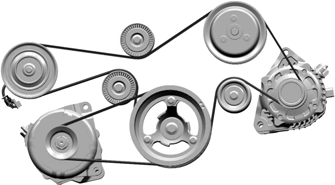
E312231
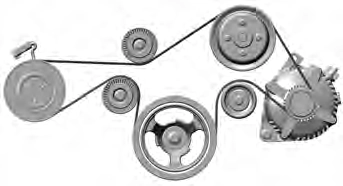
E176088
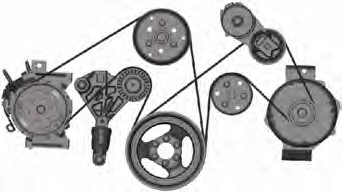
E249449
483
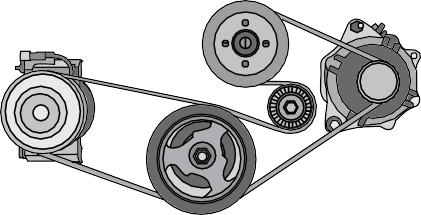
E167467
Note: The short drive belt is on the inner groove closest to the engine. The long drive belt is on the outer groove farthest from the engine.
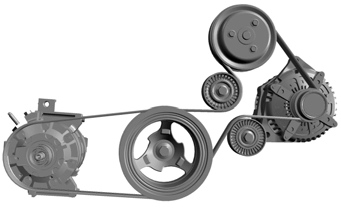
E318007
Note: The long drive belt is on the inner groove closest to the engine. The short drive belt is on the outer groove farthest from the engine.
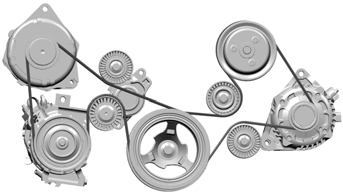
E313075
Note: The short drive belt is on the inner groove closest to the engine. The long drive belt is on the outer groove farthest from the engine.
484
Note: The generator drive belt is on the inner groove closest to the engine. The water pump belt is on the outer groove farthest from the engine.
E249450
485
Download Manual