Connecting a Trailer
|
|
 WARNING: Do not adjust the spring bars so that your vehicle's rear bumper is higher than before attaching the trailer. Doing so will defeat the function of the weight-distributing hitch, which may cause unpredictable handling, and could result in serious personal injury.
Do not tow a trailer until you drive your vehicle at least 1,000 mi (1,600 km).
Do not use a hitch that either clamps onto the bumper or attaches to the axle. You must distribute the load in your trailer so that 10-15% of the total weight of the trailer is on the trailer coupler.
Consult your local motor vehicle laws for towing a trailer.
See the instructions included with towing accessories for the proper installation and adjustment specifications.
Service your vehicle more frequently if you tow a trailer. See Normal Scheduled Maintenance (page 605).
If you use a rental trailer, follow the instructions the rental agency gives you.
When attaching the trailer wiring connector to your vehicle, only use a proper fitting connector that works with the vehicle and trailer functions.
Account for the trailer coupler weight as part of your vehicle load when calculating the total vehicle weight.
Do not exceed the load limits. See
Calculating the Load Limit (page 363).
|
|
 WARNING: Do not adjust the spring bars so that your vehicle's rear bumper is higher than before attaching the trailer. Doing so will defeat the function of the weight-distributing hitch, which may cause unpredictable handling, and could result in serious personal injury.
When hooking-up a trailer using a weight-distributing hitch
Note: The second measurement should be greater than the first.
371
Once the trailer is level or slightly nose down toward the vehicle:
Note: If your vehicle does not recognize the trailer, press and hold the brake pedal for a few seconds.
Note: Trailer profiles store trailer types, dimensions, preferences, trailer specific mileage and fuel economy.
Note: Disabling the trailer detection notification makes the default trailer profile active when a connection is detected.
When attaching the trailer wiring connector to your vehicle, only use a proper fitting connector that works with the vehicle and trailer functions.
Install trailer safety chains to the trailer hitch as recommended by the manufacturer. Cross the chains under the trailer coupler and allow enough slack for turning tight corners. Do not allow the chains to drag on the ground.
Note: Do not attach safety chains to the bumper. Always connect the safety chains to the frame or hook retainers of your trailer hitch.
372
E265060 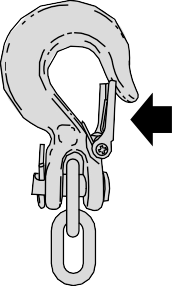
If the trailer safety chain hook has a latch, make sure the latch is fully closed.
Electric brakes and manual, automatic or surge-type trailer brakes are safe if you install them properly and adjust them to the manufacturer's specifications. The trailer brakes must meet local and federal regulations.
Separate functioning brake systems are required for safe control of towed vehicles and trailers weighing more than 1500 lb (680 kg) when loaded.
|
|
 WARNING: Never connect any trailer lamp wiring to the vehicle's tail lamp wiring; this may damage the electrical system resulting in fire. Contact your authorized dealer as soon as possible for assistance in proper trailer tow wiring installation. Additional electrical equipment may be required.
373
Perform a trailer light illumination sequence to confirm that all lights are functioning by using the FordPass app.
Note: The FordPass app allows one person to confirm that all lights are functioning.
Applies the electronic parking brake when you shift to park (P).
The electronic park hold button illuminates when activated.
The feature prevents your vehicle from moving in any direction when you are aligned with your trailer coupler and shift to park (P).
Note: The feature is active for the current key cycle.
You can also press a zoom button when using the camera views to switch the feature on.
The alarm is set when the following occur:
When the trailer is disconnected in this state, the vehicle alarm sounds and an alert is sent to your FordPass app.
Note: For reliable trailer detection, the trailer’s lamps must be SAE certified for each intended purpose.
Note: If the trailer is not compatible with the feature, the turn signals flash twice.
|
Message |
Description |
|
Trailer Disconnected |
The system senses a trailer connection becomes disconnected, either intentionally or unintentionally, during a given ignition cycle. |
|
Trailer Wiring Fault |
There are certain faults in your vehicle wiring and trailer wiring or brake system. |
|
Trailer Battery Not Charging See Manual |
There is a fault with your trailer battery, or your trailer battery voltage is very low. |
|
Trailer Tire Low Specified: |
One or more tires on your trailer is below the specified tire pressure. |
|
Trailer Tire Over Temperature |
Displays when one or more tires on the trailer is above the recommended temper- ature. |
|
Trailer Tire Pressure Sensor Fault |
A trailer tire pressure sensor is malfunc- tioning. If the warning stays on or continues to come on, have the system checked as soon as possible. |
|
Trailer Tire Pressure Monitor Fault |
The trailer tire pressure monitoring system is malfunctioning. If the warning stays on or continues to come on, have the system checked. |
|
Trailer Tire Pressure Monitor Capability Not Detected |
The system cannot detect the trailer tire pressure monitoring system. |
|
Trailer Tire Pressure Indication Not Setup See Manual |
The trailer tire pressure monitoring system is not setup. |
374
Download Manual